
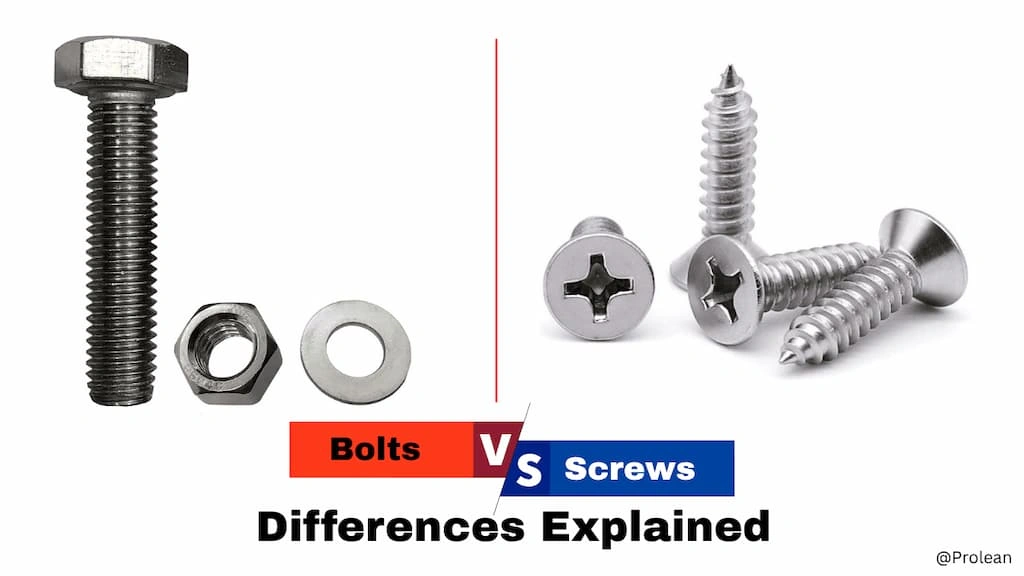
Bolts vs screws
Although bolts and screws have the same functionality of fastening multiple components in the mechanical assemblies, they have differences in design, installation, features, and other aspects. These fasteners involve helical threads on the cylindrical body. The one key difference is that bolts are installed along with the counterpart nuts, while screws create their own internal threads in the material.
Tightening the nut into fine bolt threads provides pressure from the tail end to form joints, whereas screws need power drivers to rotate and fix them into the holes of joining parts.
Understanding the difference between bolts and screws is critical to decide which one can provide the best fastening solution for your project.
This article will make a comparative analysis of Bolts Vs Screws, including their design, features, installation, uses, benefits, and limitations.
Let’s get started.
What Are the Bolt Fasteners?
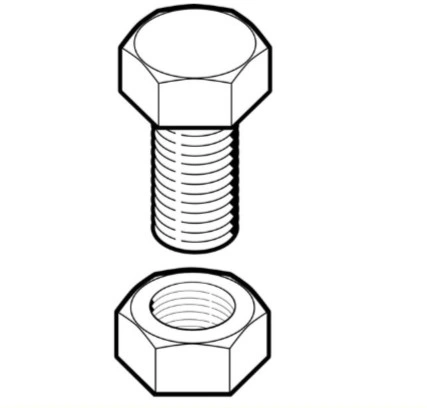
But & bolt schematic
First, what’s a bolt? Well, it is a type of fastener with external threads, having a section of plain shank and clamps multiple parts using nuts and washers. There are different types of bolts used in manufacturing, such as hex, anchor, flange, eye, and U-bolts.
Hot forging, thread rolling, and machining are some techniques to make the bolts. Especially, bolts manufacturing with CNC machining is popular, as it can customize them and offer excellent precision & repeatability.
Now, let’s look at the advantages & disadvantages of bolts in fittings & assemblies compared to screws.
| Advantages | Disadvantages |
| Bolts support heavy loads and structural joints, ideal for high-stress uses. | It requires access from both sides & needs nuts for installation |
| These are easy to disassemble and can be un-fasten quickly. | Slower installation increases assembly time compared to single-piece fasteners. |
| Torqueing with a nut/washer allows precise control of clamp force and joint stiffness | Needs lock washers, threadlocker, or locking nuts if there is high vibration |
| Bolts can join parts with clearance holes using a captive threaded insert. | Larger hole & more material removal is required |
| Bolts are available in many materials and strength grades | It might not be feasible for low-load or disposable assemblies due to the high cost |
What are the Screw Fasteners?
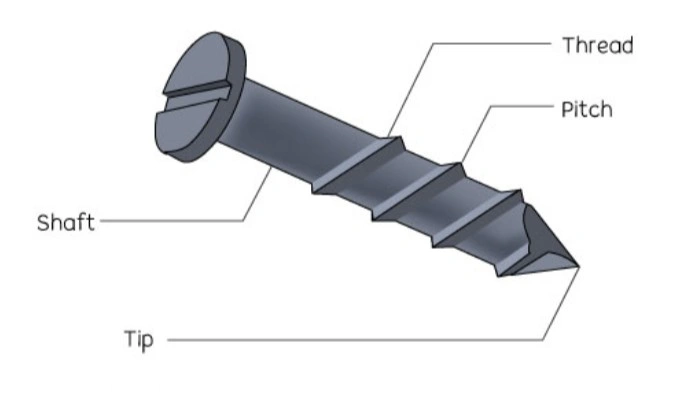
Screw diagram
First, let’s define a screw: It is a threaded fastener designed to be inserted into a material, typically without the nut. Screws are driven into the mating hole or directly into the material with the help of screwdrivers.
Uses of Screws involve fastening metal, plastic, wood, and composite parts by creating threads or engaging with the hole’s internal threads. They have an essential role in machinery assembly, furniture, and woodworking, providing robust axial clamping of two or more individual parts.
Now, let’s look at the advantages & disadvantages of screw fasteners in the table below:
| Advantages | Disadvantages |
| Screws can be installed from one side with a driver or drill | Lower tensile/shear strength and not suitable for heavy structural loads |
| Good for thin materials & wood/plastics, as a special thread forms a grip on thin sheet | Risk of thread stripping or pull-out in soft material parts & difficult to disassemble |
| Single-piece fastener reduces part count, handling, and labor cost. | A lower consistent preload than the torqued bolt fitting |
| Thread-forming and specialty screws improve pull-out resistance | Some types are semi-permanent and hard to remove when required. |
| Screws are available in many head/drive styles, beneficial where appearance or flush surfaces matter | Higher risk of stripping, splitting, and misalignment |
Try Ancastings Now!
Bolts Vs Screws: Design & Features 
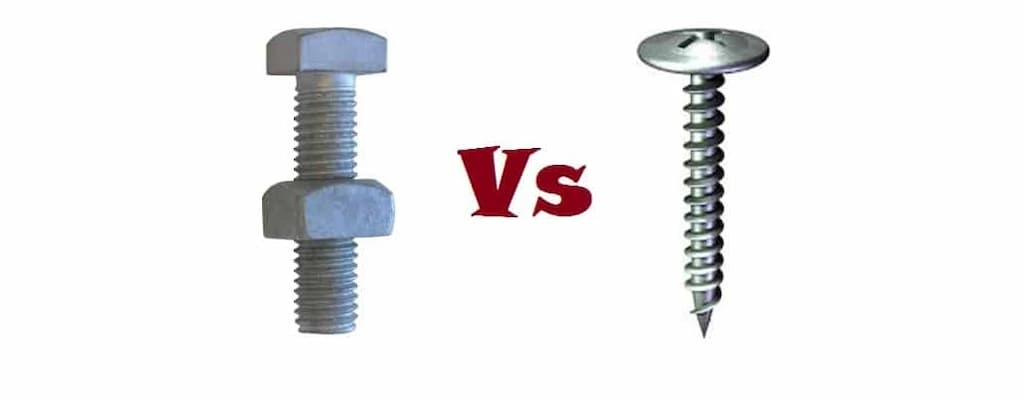
Bolt and nut comparison
The primary design of both bolts and screws has similar considerations, like tensile strength, bending loads, fatigue cycles, thread size, and material type. Consequently, ISO 965, 4017, and ISO 885:2000 are the standards you can take reference from while designing.
The bolts feature nuts to clamp the parts strongly. They need the correct sizing of holes for insertion and to apply the clamping force. Meanwhile, wrenches and sockets are used for tightening nuts and bolts.
On the other hand, screws do not require any nuts for fastening. Instead, manual or power screw drivers are used to drive in and make the threads on the pre-drilled holes or directly into the material.
Bolt Design
- These are designed to assemble unthreaded parts with the help of a tapped hole or nuts.
- A partially threaded shank is designed for smooth bearing across the shear plane.
- The head design options for bolts include hex, flange, etc.
- The control-tightening is considered with the use of the correct torque and applied angle.
Screw Design
- The screw directly engages the material in pre-tapped holes or directly into the surface.
- The fully threaded body improves the engagement area and enhances the mating strength.
- Screw heads can be designed as flat, pan, round, socket, etc.
- The head contains a countersunk feature or a low profile to sit flush and insert scews into the material.
Bolts Vs Screws: Installation Method
Bolts have a slightly complex installation procedure compared to screws. They fasten the components along with the washers and nuts. Washers avoid direct contact with the surface and improve the load distribution. Additionally, pre-drilled or tapped holes on the parts are necessary for the installation.
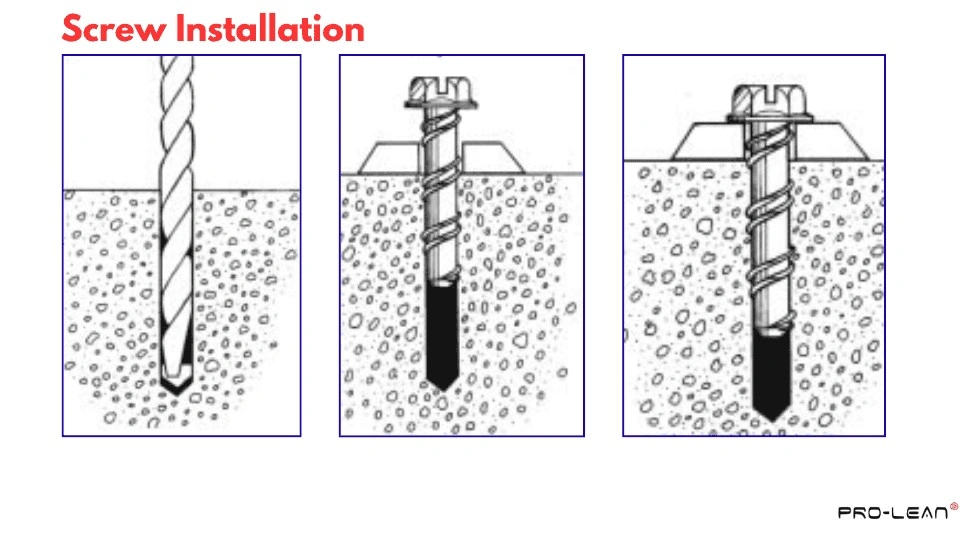
Screw installation
On the other hand, screws have a self-threading feature. After driving in a screw in a hole or material, it cuts the internal threads and sits on the mating surface. So, it has a much simpler installation procedure.
Bolt Installation
- First, drill the holes on the mating component, ensuring their alignment for fastening.
- Place the bolt into the holes, making a snug fit.
- Place a washer, if needed. Then, tighten the bolt by applying clamp force on the nut. You can use a manual or a machine wrench.
Screw Installation
- First, mark in the material where you need to insert the screw if there is no pre-drilled hole.
- If it already has a hole, place the screw over it, ensuring the alignment between the mating parts.
- Select the appropriate screwdriver based on the head geometry and apply the correct torque to drive the screw into the material.
- Continue the torque until the screw reaches the desired length inside the material.
Try Ancastings Now!
Bolts Vs Screws: Application Preferences
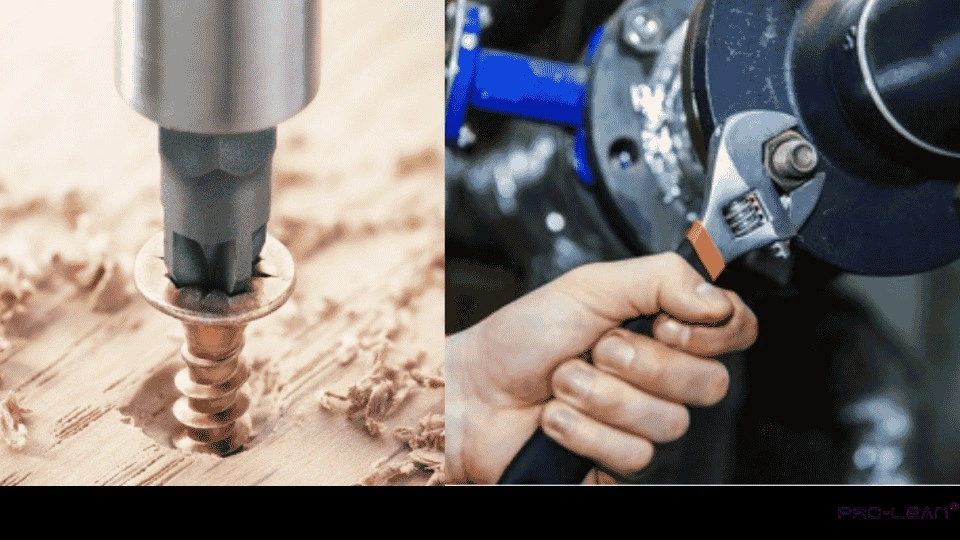
uses of bolt & screw
Bolts provide higher joint strength than screws. They are suitable for high-load bearing & heavy-duty applications that require periodic disassembly for repair and maintenance.
On the other hand, screws are favourable for light-duty assemblies when there is only one side access for joining. They are much quicker to install and can be used for a range of materials and applications.
Applications of Bolt Fastening
- Construction and Infrastructure: Bolts support heavy-structural connections with durable clamping while ensuring safety. E.g., steel beam joints, bridge construction, and anchor bolts.
- Industrial Machinery: For strong & reliable joints to ensure machine rigidity. Machines can be unbolted if required. E.g., machine bases & frames, housing, press joints, auto engines, etc.
- Automobile: These automotive fasteners make high-strength joints to form a stable connection and reduce vibration & dynamic loading. E.g., engine block assembly, suspension system, brake calipers, and body panels.
- Aerospace: Used as aerospace fasteners in aircraft, drones, and rockets for safety and reliability, ideal for joining critical components. E.g., landing gear assembly, hydraulic systems, airframes, etc.
Applications of Screw Fastening
- Electronics: For quick, one-sided fastening while ensuring lightweight. E.g., home appliances, electronic housing, electrical connectors, etc.
- Furniture & Woodworking: Strong threaded engagement in woods & furniture items. E.g., cabinets, chairs, tables, modular elements, etc.
- Sheet Metal Work: To join thin sheet metal parts, such as duct joints, metal panels, roofing, trims, and sheet metal housings.
Read More: Types of Aircraft Fasteners
Factors to Consider While Choosing Between Bolts and Screws
Choosing between bolts and nuts entirely depends on the application requirements and the scenario of assembly. Therefore, you must consider the fastening purpose, functionality, desired strength, operating environment, and other similar factors.
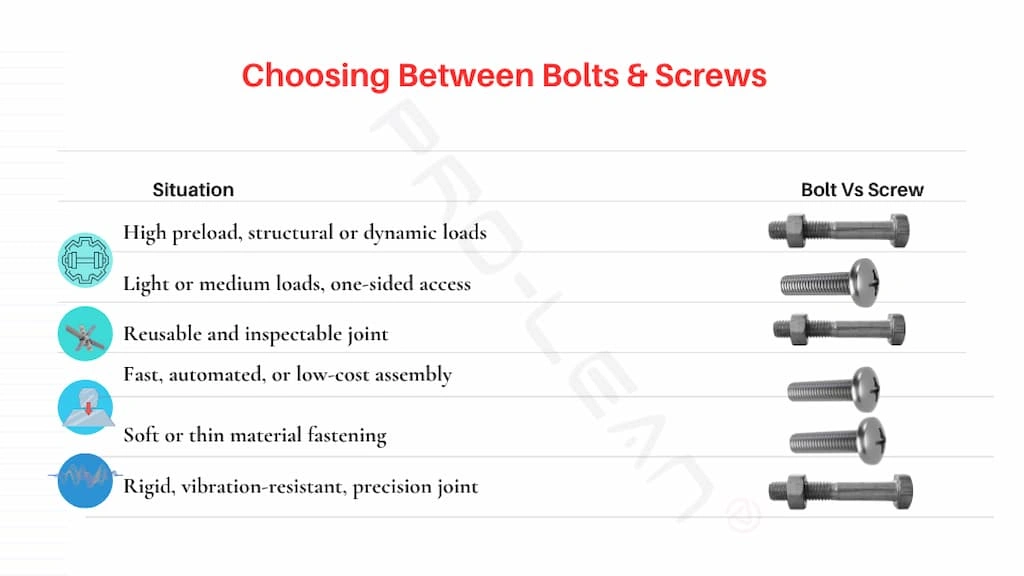
Choosing bolts & screws
The list below further elaborates on these selection factors:
- Desired Load Capacity: Consider the pre-load and dynamic loads that the joint needs to withstand without excessive vibration and misalignment.
- Access for Fastening: The bolts need access from both sides for installation, whereas screws can be installed with one-sided access. So, analyze your scenario and choose accordingly.
- Disassembly Requirement: Does your assembly need frequent disassembly for repair & maintenance? If yes, choose bolts.
- Material Compatibility: Bolts are best suited for metal-to-metal fastening, whereas screws can be best suited for joining dissimilar materials.
- Cost & Production Volume: Bolts can be slightly expensive for light-to-medium duty uses, whereas screws can be a cost-effective option if assembled items need to be produced in high volumes.
Role of Material Selection for Screws and Bolts.
Screw material directly impacts the performance and reliability of assembled products or systems. It is especially critical in extreme operating conditions like marine, humid, and corrosive environments.
If the bolt material is not compatible with the assembly parts and operating environment, it compromises the strength and may even lead to failure, and sme for the screw material. Therefore, you must choose the right material.
The common material options are steel alloys, stainless grades, aluminum, brass, and PEEK. However, based on the requirement, you can choose from a large pool of materials. For example, titanium is often used for custom bolts in structural assemblies of machinery.
Furthermore, coating is also important; zinc, nickel, chrome, and other superior materials can be coated over screws & bolts to prevent corrosion, wear, and material degradation.
Thread Size Chart for Bolts & Screws
Designers, engineers, and mechanics use thread size charts in the thread manufacturing process. It provides a direction regarding hole diameter for tap-drilling, thread size, engagement, etc. Meanwhile, these charts follow the ISO metric standard.
The chart involves different columns providing information like pitch, major diameter, tap-drill size, etc., for corresponding sizes.
Let’s look at an example.
| Size | Pitch (mm) | Major Ø (mm) | Tap drill (mm) |
| M1.6 | 0.35 | 1.6 | 1.25 |
| M2 | 0.4 | 2 | 1.6 |
| M2.5 | 0.45 | 2.5 | 2.05 |
| M3 | 0.5 | 3 | 2.5 |
| M3.5 | 0.6 | 3.5 | 2.9 |
| M4 | 0.7 | 4 | 3.3 |
| M4.5 | 0.75 | 4.5 | 3.7 |
| M5 | 0.8 | 5 | 4.2 |
| M6 | 1 | 6 | 5 |
| M8 | 1.25 | 8 | 6.75 |
| M10 | 1.5 | 10 | 8.5 |
| M12 | 1.75 | 12 | 10.25 |
| M14 | 2 | 14 | 12 |
| M16 | 2 | 16 | 14 |
| M18 | 2.5 | 18 | 15.5 |
| M20 | 2.5 | 20 | 17.5 |
Courtesy: Allied Machine
Tips for Using Bolts and Screws
The strength of the joint and overall quality of assembly also depend on the installation. Any deviation in alignment between mating parts can cause several issues and even impact the structural integrity.
The following are some tips to install bolts & nuts correctly:
- Choose the Right Material: Select fastener material with the desired coating for the operating environment. E.g., zinc coating for outdoor use.
- Thread Engagement: Ensure thread engagement is higher than the nominal diameter before applying torque to the screws and while fastening the nuts with the bolt.
- Correct Torque & Lubrication: Follow the manufacturer’s torque spec or a trusted torque chart and apply lubrication to reduce the friction.
- Hole Preparation: Drill accurate pilot holes, deburr, and use the right clearance. For through-bolts, use clearance so the bolt bears on the nut & washer without affecting the edges.
- Control clamping flat washers to spread the load and prevent embedding, whereas use locking methods if there is high vibration
Summing Up
Overall, screw and bolts are both essential fasteners in mechanical assemblies. But they have different preferences regarding when to use them. Bolts are ideal for high-strength joints and can be used for heavy-duty applications. Additionally, they are also easy to disassemble whenever required. On the other hand, screws are ideal for quick fastening of parts in light & medium-duty applications.
If you are still confused which one to choose between bolt & screw, contact us now. Our engineers can help you make the right decision. Additionally, we also offer extensive bolt & screw manufacturing services at Ancastings, tailored to your needs. We also provide accurate estimation and DFM feedback according to your design. You just upload the design file on our online platform, and get a quote with information like detailed costing & lead time.
FAQs
What is the difference between bolt and nut?
A bolt is a fastener with external threads, whereas a nut is the internally threaded (female) component that mates with the bolt for clamping.
What is the difference between a screw, a bolt, and a nut?
Screws are threaded fastener that cut or engages internal threads to secure joining parts, whereas. Bolts & nuts are paired components and clamp parts by working together.
Are bolts stronger than screws?
Typically, Yes! But the strength depends on the size of the fastener and the thread engagement. For the same size of nut and bolt, the bolt can outperform the screw.