
Many people find it difficult to choose between 2020 and 8020 aluminum for their particular use case. They usually do not know the differences in their properties which leads them to choose the wrong material and they incur loss.
In this blog post we will cover both 2020 & 8020 aluminum, their differences as well as their uses.
What is 2020 Aluminum?

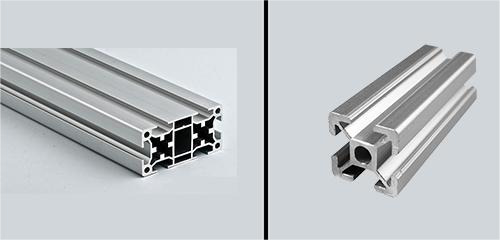
2020 aluminum profile is a T slotted extrusion of 20×20 mm. It’s mostly made out of 6063-T5 aluminum. It has one open T slot on all four surfaces and those surfaces prevent dirt accumulation. You will normally find this profile in CNC machines, 3D printers and industrial structures.
What is 8020 Aluminum?

8020 aluminum profile mostly measures 80×80 mm and works as a structural framing system. Its standard T slots permit modular assembly. These high grade materials withstand heavy loads with ease. Manufacturing plants often use them in automation systems and heavy machinery where structural strength is most important.
8 Main Differences between 2020 & 8020 Aluminum
1. Flexibility & Strength
2020 aluminum achieves a yield strength of 152 MPa and a tensile strength of 214 MPa. Its robust nature makes it perfect for lightweight products such as small enclosures & frames. This profile gives less flexibility but maintains good structural stability.
8020 aluminum gives better performance with a yield strength of 214 MPa and its tensile strength reaches up to 241 MPa. Its great flexibility meets complex design requirements. These features make it a better choice for heavy duty structures.
2. Chemical Composition
The alloy composition separates these profiles. 2020 profile uses 6063-T5 alloy. In contrast 8020 uses either 6061-T6 or 6105-T5 alloy
This detailed table gives complete composition of both materials.
| Element | 2020 Aluminum | 8020 Aluminum |
|---|---|---|
| Magnesium (Mg) | 0.45-0.9% | 0.6-1.2% |
| Aluminum (Al) | 97.5-99.35% | 80% |
| Copper (Cu) | ≤ 0.1% | ≤ 0.4% |
| Iron (Fe) | ≤ 0.35% | ≤ 0.7% |
| Silicon (Si) | 0.2-0.6% | 0.4-0.8% |
| Manganese (Mn) | ≤ 0.1% | ≤ 0.15% |
3. Weight & Hardness
2020 aluminium’s Brinell Hardness is 60 HB and weighs 0.5 kg/m². Its light weight makes it an excellent choice for those engineering projects where weight savings are required.
8020 Aluminum weighs 2.1 kg/m² and has a great Brinell hardness of 95 HB. This great hardness is due to better alloy composition of this material. This feature makes it best for heavy duty industrial applications where wear resistance is very important.
4. Machinability
2020 aluminum machining process requires more cutting force due to its great strength and hardness. Tools wear out quickly when working with this material. Manufacturers must use proper lubrication and durable tools. Precision applications require post machining treatment (like stress relief) to overcome internal stress.
8020 aluminum is easily machined with low cutting force. Its soft composition greatly reduces tool wear. Manufacturers can easily create precision parts and complex designs. This material guarantees high quality surface finishes with low production costs.
5. Thermal Stability
Higher temperatures affect both aluminum profiles properties. Up to 225°C, 2020 aluminum remains stable. Above this temperature its hardness starts to decrease rapidly.
8020 aluminum performs better at higher temperatures. Its fine composition and thick walls help maintain mechanical properties under thermal stress. This stability makes it more suitable for high temperature operations and thermal stress involving applications.
6. Customization
8020 aluminum has excellent modular properties due to multiple configuration options and its large T-slot dimension. Its large cross sectional area can accommodate various accessories. With this, users can build multi dimensional structures and integrate complex frameworks. These properties make 8020 aluminum perfect for complex industrial applications that need frequent adjustments.
2020 aluminum features a simple T slot design with four open slots. This basic setting limits possibilities for customization. Its compact profile limits connection options and accessory compatibility that makes it suitable for simple infrastructure applications only.
7. Cost Comparison
Basic manufacturing process and smaller size of 2020 aluminum makes it a budget friendly choice. Its simple profile reduces tooling complexity as well as raw material requirements. This results in lower production costs for small projects.
In contrast price of 8020 aluminum is higher because of its special properties. Its material composition and large dimensions increase manufacturing costs. However industrial applications that require long term stability benefit from better durability and robustness of 8020 which justifies its additional investment.
8. Corrosion Resistance
2020 aluminum has a natural oxide layer that gives it basic protection against rust. 6063-T5 alloy composition gives standard levels of resistance to salt, moisture and pollution. Long term outdoor use may require additional surface treatment.
8020 aluminum gives better corrosion resistance due to its special alloy composition and thicker walls. It also gives great protection against environmental damage and rust. These features make it perfect for outdoor use and harsh industrial environments.
Applications of 2020 and 8020 Aluminum
Applications of 2020
Military Equipment
Military uses 2020 aluminum in manufacturing of missile components, ballistic protection systems and construction of tank armor.
Aerospace
Aircraft manufacturers use 2020 aluminum in wing structures, fuselage frames and spacecraft parts.
Automotive
Automotive industry uses 2020 aluminum in engine brackets, structural frames and components of vehicle chassis. This material choice maintains structural strength and also improves fuel efficiency.
Applications of 8020 Aluminum
Electronic
8020 Aluminum’s excellent electromagnetic shielding properties and heat dissipation make it perfect for server racks, PLC panels and electronic enclosures that require strong environmental protection.
Mechanical Equipment
Industrial facilities use 8020 aluminum to build conveyor systems, machinery frames as well as heavy duty enclosures.
Automotive
Production facilities rely on 8020 aluminum for their production line frameworks, robotic cell enclosures and structures of assembly stations. These applications require long term durability and high weight bearing capacity.
Advantages & Disadvantages of 2020 vs 8020 Aluminum
2020 Aluminum
Advantages
- 2020 aluminum’s fatigue resistance guarantees structural stability even under extreme cyclic loading conditions. This property makes it indispensable for high performance automotive and aerospace applications.
- Standard T-slot design in 2020 aluminum design permits easy modification and component integration. Its precise extrusion profile allows efficient assembly of structural elements and accessories in aerospace and industrial environments.
- Many industries benefit from adaptability of 2020 aluminum. Commercial aircraft, aerospace and defense sectors use it for components from fuselage frames to structural bulkheads and wing structures.
Disadvantages
- 2020 aluminum requires careful temperature monitoring and special welding techniques. If proper procedures are not followed then thin profile of material may bend during welding.
- Heat treatment of 2020 aluminum requires accurate temperature control. If thermal processing is not done correctly then structural integrity and mechanical properties of material can be impaired.
8020 Aluminum
Advantages
- 8020 aluminum’s superior structure gives strong protection against rust. This feature makes it an excellent choice for outdoor use, intense environments and industrial applications.
- 6105-T5 or 6061-T6 alloy composition of 8020 aluminum creates a strong profile. This combination guarantees structural stability and high weight bearing capacity in heavy use.
- T slot system in 8020 aluminum offers many customization options. Users can easily add parts through different processes like cutting, drilling, extrusion and tapping. These modifications do not affect structural strength of material.
Disadvantages
- Manufacturing process for aluminum 8020 is complex. It requires multiple production steps and strict temperature monitoring. Die and tooling manufacturing requires extensive quality control measures.
- Due to thick walls and large profile, 8020’s weight is considerable. It is heavier than 2020 aluminum per unit length which limits its use in lightweight structures.
2020 vs 8020 Aluminum – Which is Better?

Your specific application needs should decide your choice between 8020 & 2020 aluminum.
8020 aluminum is good for industrial applications that need great weight bearing capacity and structural strength.
In contrast 2020 aluminum is perfect for those projects which need low cost and precise parts. It works best for aerospace and small scale applications
Also check environmental conditions, budget and load requirements before you make a final decision.
To Sum Up
2020 and 8020 aluminum profiles have specific roles for industrial purposes. 2020 aluminum is excellent choice for precision work and aerospace due to its fatigue resistance and light weight properties. However 8020 aluminum stands out in industrial automation due to its modular design and great strength.
If you need CNC machining services for any kind of aluminum – 2020, 8020, etc – then Ancastings is best option. You can contact us at any time.
Related Questions
How 2020 aluminum is different from 8020 aluminum?
2020 aluminum has 20×20 mm profile and uses 6063 T5 alloy. It is suitable for light weight use. In contrast 8020 aluminum comes in different dimensions and mostly uses 6061-T6 or 6105-T5 alloy. It is great in heavy industrial use.
What are suitable finishes for 2020 and 8020 aluminum parts?
These aluminum parts accept various finishing methods. Powder coating allows for personalized color change. Anodizing gives better protection against rust. Mechanical finishing options are polishing, blasting and buffing.
Where can we get 2020 and 8020 aluminum products?
You can get these products from industrial suppliers, manufacturers or authorized distributors. Some famous vendors are McMaster-Carr and 80/20 Inc.