
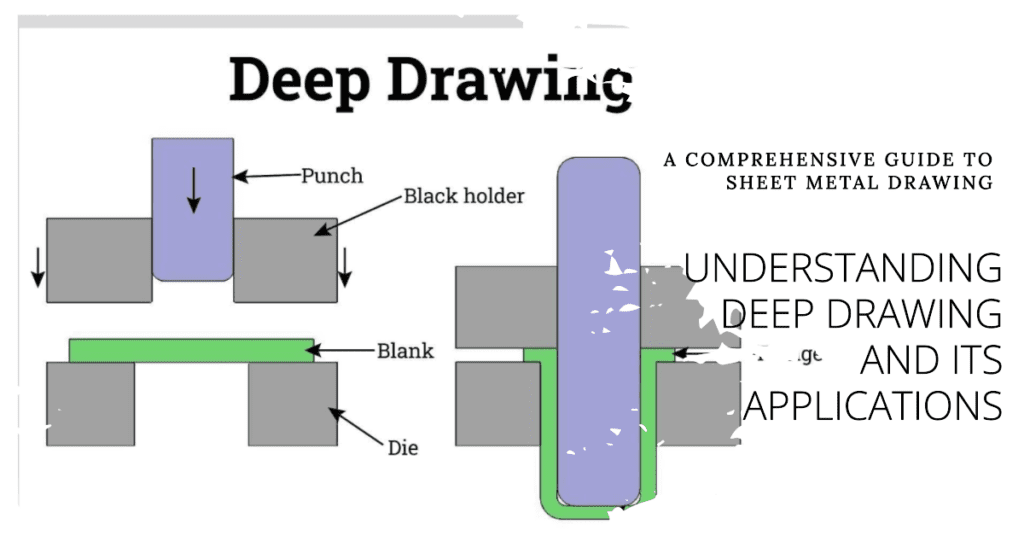
Sheet metal drawing, a crucial manufacturing process, stands as a cornerstone in the creation of hollow, multifaceted components with a sharp focus on precision. This technique is instrumental in the production of a diverse range of items we frequently encounter, be it in household goods or specialized industrial equipment. The art of drawing metal sheets has enabled revolutionary advancements in design paradigms and provided pathways for improved functional capabilities.
This article endeavors to demystify the intricate domain of sheet metal drawing, focusing specifically on its more specialized variant, deep drawing. We’ll delve into its foundational principles, the technical aspects, and myriad benefits.
What is Sheet Metal Drawing?
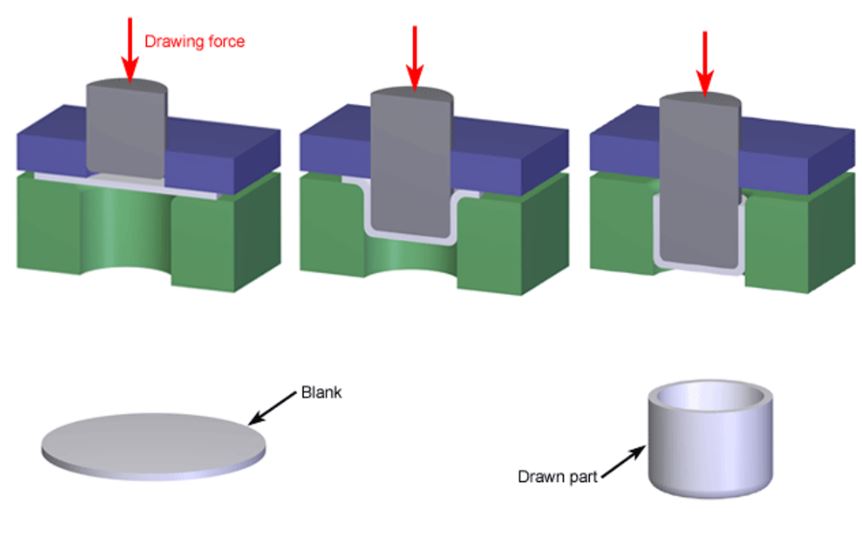
Sheet Metal drawing process
Sheet metal drawing is not merely a process but an art, where flat metal sheets transform a three-dimensional shape by getting drawn over a die without thinning or altering the sheet’s thickness. This subtle yet complex operation is pivotal for industries aiming to produce accurate and consistent hollow shapes.
The core idea behind sheet metal drawing revolves around the concept of plastic deformation. Unlike elastic deformation, where a material returns to its original state after removing the applied force, plastic deformation involves permanent changes in the shape. Sheet metal drawing leverages this property of metals, forming them into new shapes forming their integral properties.
Table 1: Step-by-step procedure of sheet metal drawing
| Step | Description |
|---|---|
| Selection of Sheet Metal | The first step involves choosing the right type of metal. Depending on the desired end product, various metals used in the drawing, such as Steel, Aluminum, Brass, and Copper, can be selected. |
| Die Preparation | The die, a critical component in this process, is designed to be the inverse of the final component. It’s constructed with extreme precision to ensure the drawn sheet acquires the desired shape. |
| Drawing Operation | Once the metal sheet is clamped securely, it’s drawn or pulled over the die, resulting in the metal sheet taking the shape of the die. |
Related to: Drawing Aluminum: Things You Should Know
What Are the Key Factors Affecting Sheet Metal Drawing?
Certain parameters play a pivotal role in determining the success and efficiency of the drawing process:
- Sheet Metal Thickness: A metal’s thickness can influence how smoothly it can be drawn. Metals with extreme thickness might require more force and might not be as malleable.
- Material Properties: Metals with high ductility (like copper and aluminum) are preferable as they can be drawn more easily without cracking.
- Die Design: A well-designed die ensures that the drawing process is seamless and the final product is free from defects.
Deep Drawing sheet metal : The Fundamentals
Delving deeper into the metal-forming universe, we encounter the specialized technique known as deep drawing. Going beyond the conventional drawing processes, deep drawing stretches sheet metal into profound, elongated shapes. This technique finds its applications in myriad industries and is especially prized for its capability to create intricate hollow shapes with depth dimensions exceeding their diameter.
Deep drawing, at its essence, is a sheet metal forming process where the metal sheet is radially drawn into a forming die by the mechanical action of a punch. The depth of the formed part can be greater than its diameter, which is what differentiates deep drawing from other standard drawing processes.
The Deep Drawing Process
Understanding deep drawing requires a grasp of its systematic approach. The table below outlines the major steps involved in the deep drawing process.
Table 2: Step-by-step procedure of sheet metal deep-drawing
| Step | Description |
|---|---|
| Blank Placement | A flat, round sheet of metal, referred to as a blank, is placed over the die cavity. |
| Punch Action | The punch descends and pushes the metal sheet into the die. The blank holder applies a controlled force to ensure smooth metal flow into the die cavity. |
| Metal Flow | As the punch descends, the metal flows radially outward. This outward flow ensures that the thickness of the drawn part remains fairly consistent. |
| Final Product Ejection | Once the punch reaches its maximum depth, it retracts, leaving the formed metal in the die. The drawn part is then ejected and prepared for any subsequent operations. |
Factors Influencing the Deep Drawing Process
Several critical factors can influence the success of a deep drawing operation:
- Metal Type: Not all metals are suitable for deep drawing. Metals with high ductility, such as aluminum, are often preferred.
- Sheet Thickness: The thickness of the metal sheet should be in proportion to the final product’s size and depth.
- Punch and Die Design: The design, shape, and smoothness of the punch and die can impact the final product’s quality.
- Lubrication: Adequate lubrication reduces friction, preventing tearing and reducing wear on the tools.
Applications and Industries Benefiting from Deep Drawing
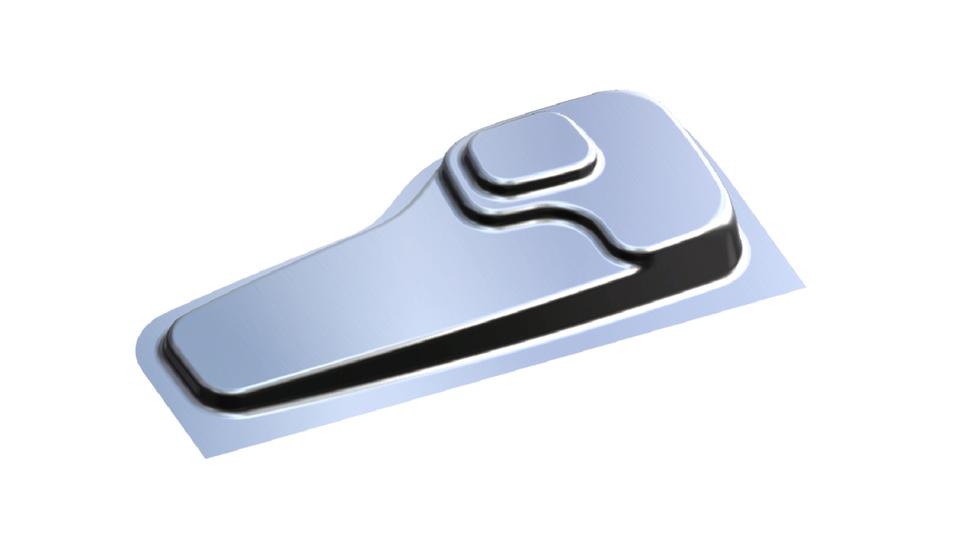
Deep-drawn part
Deep drawing, a cornerstone of sheet metal fabrication, offers the unique ability to create intricate, seamless shapes with high structural integrity. The advantages of deep drawing, such as its ability to produce large quantities of uniform, high-quality parts, have led to its widespread application across diverse industries. Below, we outline several sectors and applications where deep drawing is an invaluable asset.
1. Automotive Industry
Deep drawing plays a pivotal role in the mass production of automotive components.
- Production of fuel tanks, mufflers, and fenders.
- Creating door panels and various engine components.
- Manufacturing of hubcaps and wheel casings.
2. Kitchenware and Appliances
The aesthetics and functionality of many kitchen appliances are enhanced thanks to deep drawing.
- Forming stainless steel sinks.
- Crafting pots, pans, and other cookware.
- Constructing parts for appliances like washing machines and refrigerators.
3. Electronics and Telecommunication
The precision and consistency of deep drawing meet the stringent requirements of the electronics sector.
- Manufacturing casings for mobile phones and other handheld devices.
- Crafting connector housings and shield cans for electronic components.
- Producing antenna structures and other telecommunication equipment.
4. Aerospace and Defense
In industries where performance and reliability are paramount, deep drawing offers the needed precision.
- Creating components for jet engines.
- Manufacturing fuselage parts and other structural elements.
- Crafting ammunition casings and other defense equipment.
Table: Key Industries and Corresponding Applications of Deep Drawing
| Industry | Key Applications |
|---|---|
| Automotive | Fuel tanks, mufflers, door panels, and engine components. |
| Kitchenware & Appliances | Stainless steel sinks, cookware, and appliance parts. |
| Electronics | Mobile casings, connector housings, shield cans. |
| Aerospace & Defense | Jet engine components, fuselage parts, ammunition casings. |
Advantages and Limitations of Sheet Metal Drawing
Any manufacturing process comes with its unique set of pros and cons. Understanding the strengths and weaknesses of sheet metal drawing is pivotal for manufacturers to determine its feasibility for specific applications.
Advantages of Sheet Metal Drawing
1. Cost-Efficiency:
Sheet metal drawing offers several advantages, including high-volume production with consistent quality, resulting in reduced cost per piece. Additionally, as the metal gets reshaped rather than removed, waste generation is minimal, making the process economical and environmentally friendly.
2. Superior Finish:
The process offers excellent surface finish possibilities, making post-production finish enhancements often unnecessary. Additionally, since drawn parts are seamless, these can be essential for containers holding liquids or gases.
3. Versatility:
The sheet metal drawing process can achieve intricate designs and depths ( Complex geometries) that might be challenging with other methods. While Various metals, from aluminum to steel, can undergo sheet metal drawing
4. Strength and Durability:
As the metal is stretched and deformed, it undergoes work hardening, often resulting in stronger components. Despite the deformation, the thickness of the drawn parts remains fairly consistent, ensuring durability.
Limitations of Sheet Metal Drawing
1. Initial Setup Costs:
One of the limitations of sheet metal drawing is the relatively high cost of designing and manufacturing the die, especially for complex shapes. Additionally, several preliminary trials might be required before mass production to perfect the process, incurring additional costs.
2. Material Restrictions:
To ensure successful sheet metal drawing, the metal used must have good ductility as brittle materials can crack during the process. Additionally, extremely thin or thick metals might not be suitable for specific drawing applications due to thickness limitations.
3. Depth Restrictions:
There’s a maximum limit to how much a sheet can be drawn in a single operation, termed as the drawing ratio. Extremely deep components might require multiple drawing operations.
Modern Innovations in Sheet Metal Drawing
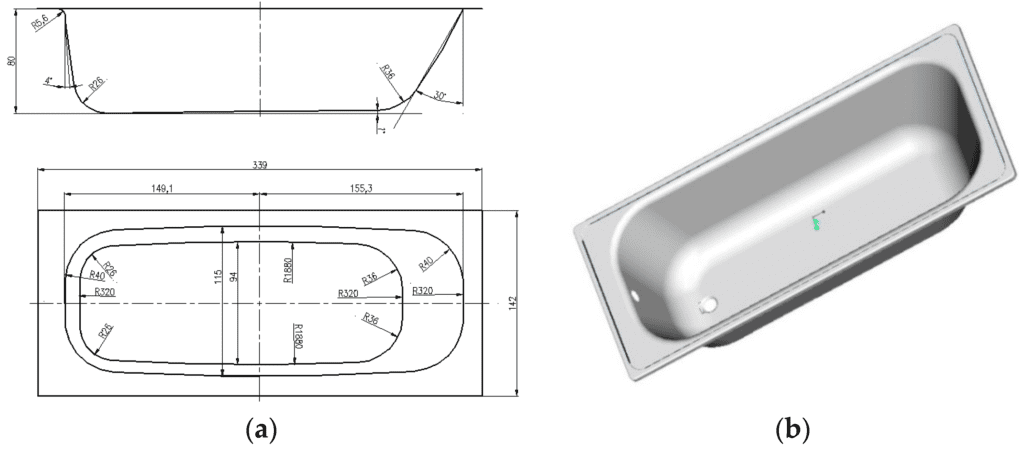
a) 2D drawing of a basin. b) CAD Design for deep-drawing
The sheet metal drawing arena has not remained static. With the infusion of technology and the changing demands of industries, the process has undergone significant advancements. Modern innovations have refined traditional methodologies, bringing forth efficiencies, capabilities, and enhancements that were once deemed impossible.
Computer-Aided Design (CAD) and Simulation
One of the most significant introductions to sheet metal drawing is the use of CAD software and simulation tools.
- Enhanced Accuracy: CAD allows for precise design of the desired final product, ensuring that all dimensions are accurate and as per requirements.
- Virtual Testing: Simulation tools let engineers virtually test the drawing process, identifying potential cracks or deformities in the design phase itself.
- Iterative Designs: Design flaws can be quickly rectified with the aid of software, reducing the need for costly physical prototypes.
Automated Drawing Machines
The emergence of automated machinery has streamlined the sheet metal drawing process. Automated machines in sheet metal drawing offer several advantages. They produce consistent pieces, ensuring uniform quality throughout, function faster than manual operations, significantly reducing production time, and come with sensors that provide real-time feedback, allowing for adjustments on-the-fly to maintain product quality.
Nanotechnology in Lubricants
The application of nanotechnology in drawing lubricants has revolutionized the drawing process.
- Reduced Friction: Nanoparticles in lubricants can significantly reduce friction between the sheet metal and the die, reducing wear and tear.
- Enhanced Surface Finish: With advanced lubricants, the final product’s surface finish can be markedly improved.
- Eco-friendly Options: Many nanotech lubricants are designed to be environmentally friendly, reducing the ecological footprint of the manufacturing process.
Hybrid Techniques
Incorporating elements from other metal-forming techniques, hybrid methodologies are offering new avenues. Hydro-mechanical deep drawing is a type of deep drawing that combines traditional methods with hydraulic pressures to form more complex shapes. On the other hand, magnetic pulse drawing uses magnetic fields to draw metals without any physical contact, resulting in a surface finish that is free of defects.
Table: Modern Innovations and Their Impact on Sheet Metal Drawing
| Innovation | Impact |
|---|---|
| CAD & Simulation | Precision in design, reduction in design flaws, and cost efficiency. |
| Automated Machinery | Speed, consistency, and adaptability in production. |
| Nanotech Lubricants | Superior lubrication, improved sheet metal surface finish, and eco-friendliness. |
| Hybrid Techniques | Ability to achieve more intricate designs and superior finish. |
Try Ancastings Now!
Challenges and Solutions in Sheet Metal Drawing
While sheet metal drawing offers unparalleled benefits for various industries, it is not devoid of challenges. Addressing these challenges head-on with practical solutions is essential to maintain the efficiency and quality of the drawing process.
The table below provides a direct comparison between the challenges of sheet metal drawing and the strategies or solutions devised to overcome them.
Tabl: Challenges & solutions in sheet metal fabrication
| SN | Challenges in Sheet Metal Drawing | Solutions to Overcome Challenges |
|---|---|---|
| 1 | Wrinkling: When the metal sheet is drawn into the die, it can sometimes wrinkle due to compressive stresses, especially at the flange area. | Blank Holder Force Control: Implementing a variable blank holder force can prevent wrinkles. By adjusting the force during different drawing stages, the sheet can be drawn smoothly without wrinkles. |
| 2 | Cracking: During the drawing process, especially at corners and sharp bends, the sheet metal might develop cracks if stretched beyond its ductility limit. | Proper Material Selection: Opting for metals with high ductility can minimize cracking risks. Moreover, pre-treating metals to enhance their ductility can further reduce cracking chances. |
| 3 | Spring-back: After the drawing process, the metal may slightly return to its original shape, which can lead to dimensional inaccuracies in the finished product. | Advanced Die Design: By considering spring-back during the die design phase and compensating for it, manufacturers can achieve the desired dimensions in the final product. |
| 4 | Uneven Thickness: In certain drawing conditions, the metal can thin out in some areas while maintaining its thickness in others, leading to inconsistent product quality. | Optimization of Drawing Speed and Process: Drawing speed, punch shape, and other process parameters can be adjusted to maintain even thickness throughout the drawn product. |
| 5 | Lubrication Challenges: Ensuring adequate lubrication throughout the drawing process can be challenging, especially for deep-drawn components. | Advanced Lubrication Techniques: Using nanotechnology-based lubricants or opting for dry lubrication methods can ensure smooth drawing even in challenging scenarios. |
Facing challenges is part and parcel of any manufacturing process. However, the innovations and research in sheet metal drawing ensure that manufacturers are equipped with effective solutions to maintain optimal product quality and production efficiency. As the industry continues to evolve, further advancements are bound to streamline the process and address any emerging challenges.
Die Design in Deep Drawing Process: Key Considerations
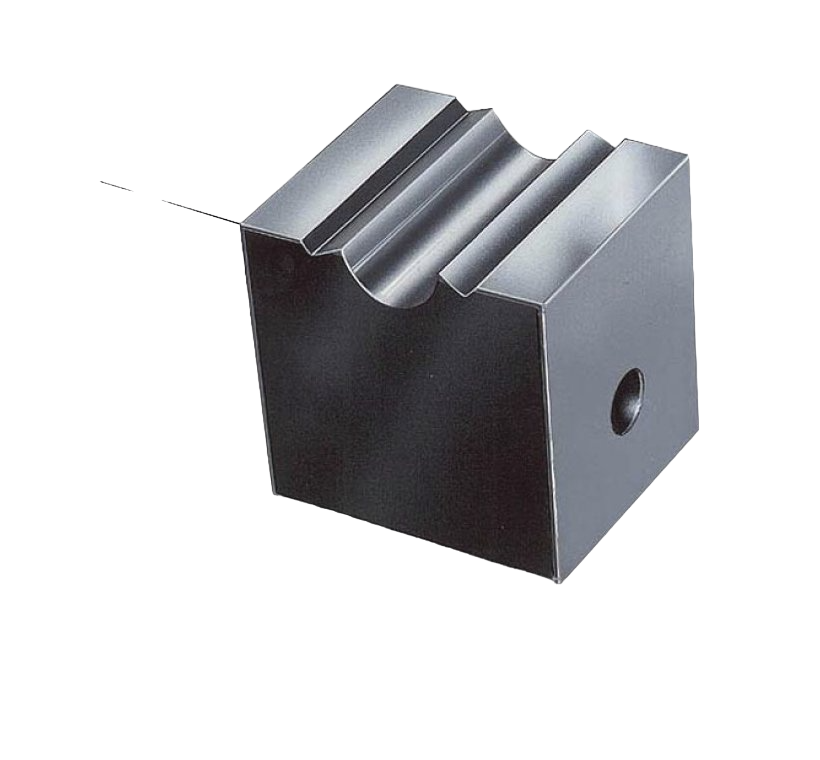
Example of deep-drawing die
The deep drawing process in sheet metal fabrication is highly dependent on the precision and quality of die design. As one of the primary determinants of the final product’s quality and dimensional accuracy, the die design must factor in various technical and operational considerations. This section offers a deep dive into the core considerations that play a decisive role in the die design for the deep drawing process.
1. Die Material Selection
The choice of die material is pivotal, as it influences the wear resistance, durability, and performance of the die during repeated drawing processes.
Key Factors in Material Selection:
- Hardness: A harder material can resist wear and deformation, enhancing die life.
- Conductivity: Some materials facilitate better heat dispersion, crucial when working with metals that generate significant heat during the drawing process.
- Cost-effectiveness: While it’s essential to choose quality materials, it’s equally important to factor in costs, especially for large production runs.
2. Determining Die Clearance
Die clearance – the gap between the punch and the die – has a direct bearing on the flow of the metal and the overall quality of the drawn product. Optimal die clearance is crucial in the deep drawing process as it reduces the risk of tearing or shearing of the metal, helps in achieving uniform metal thickness throughout the product, and prevents defects such as wrinkling or puckering.
3. Designing the Radius
The design of the punch and die radius plays a fundamental role in the success of the deep drawing process. When designing the radius for deep drawing, two main factors to consider are the metal’s ductility and the drawing depth. The radius should be adjusted based on the metal’s ductility to prevent cracking, and a deeper draw might require a larger radius to prevent wrinkling.
4. Incorporation of Lubrication Channels
Proper lubrication is paramount in the deep drawing process to minimize friction and ensure a consistent and defect-free drawing process.
Table: Vital Considerations in Die Design for Deep Drawing
| Consideration | Significance | Recommended Practices or Tolerances |
|---|---|---|
| Die Material | Determines the longevity and efficiency of the die. | Opt. for materials with high hardness and good conductivity. |
| Die Clearance | Affects metal flow, product quality, and risk of defects. | Typically 5-10% of sheet thickness; adjust based on specific metal properties. |
| Punch and Die Radius | Directly influences the quality of the drawn product and the risk of defects like cracking or wrinkling. | Vary based on metal ductility and desired drawing depth. |
| Lubrication Channels | Ensures a smooth drawing process, reduces friction, and improves product surface quality. | Design channels to adequately cover the entire drawing area. |
Ancastings’ Sheet Metal Drawing Services: Accuracy and Perfection
In the competitive realm of sheet metal fabrication, Ancastings stands out as a beacon of excellence, offering a suite of metal drawing services that are both comprehensive and tailored to individual needs. But what sets Ancastings apart in this domain?
Our Services stand out in the highly competitive sheet metal fabrication industry, offering comprehensive and tailored metal drawing services. We utilize cutting-edge technology in their machinery, regularly updated to ensure precision, efficiency, and reliability.
Our cutting-edge technology and experienced team provide comprehensive and tailored metal drawing services, ensuring that client requirements are met at every stage of the product lifecycle. Additionally, we invest in rigorous quality control measures, ensuring that every product leaving their facility meets the highest standards of excellence.
Why Choose Ancastings’ Sheet Metal Drawing Services?
- State-of-the-art machinery: Utilizing advanced technologies for precision and efficiency.
- Skilled professionals: A team that brings unparalleled expertise to the table.
- Holistic service offering: Covering every facet of the sheet metal drawing process.
- Unwavering commitment to quality: Assurance of top-notch products, every time.
In conclusion, Our sheet Metal Drawing Services offer more than just manufacturing support. They provide solutions, expertise, and a commitment to excellence, ensuring that clients receive nothing short of the best. Whether it’s a simple component or a complex assembly, Ancastings is the go-to destination for all deep drawing needs.
Conclusion
Deep drawing stands as a revolutionary technique in the realm of sheet metal fabrication, enabling industries to achieve intricate designs with impeccable precision and structural integrity. From the automotive sector to kitchenware, electronics, and aerospace, this method has consistently proven its worth, delivering products of unmatched quality. As with any technology, having the right partner can make a significant difference.
Through cutting-edge technology, unparalleled expertise, and an unwavering commitment to excellence, Ancastings is redefining the standards in sheet metal drawing, ensuring that clients’ visions are transformed into tangible, high-quality products. As the industries evolve, so will the techniques, but the essence of deep drawing and the value it brings to manufacturing will remain timeless.
FAQs
1. What is deep drawing in sheet metal fabrication?
Deep drawing is a process where sheet metal is radially drawn into a forming die, producing a deep, hollow shape like cans or caps. The depth of the drawn parts often exceeds their diameter.
2. Can deep drawing be used for all metals?
While many metals can be deep drawn, the process works best with metals that have high ductility, such as stainless steel, aluminum, and copper.
3. What are some common challenges in the deep drawing process?
Challenges include wrinkling, cracking, spring-back, uneven thickness, and lubrication issues. However, with advanced techniques and proper precautions, these can be effectively managed.
4. Why is die design crucial in the deep drawing process?
A well-designed die ensures that the sheet metal is drawn evenly and accurately, minimizing defects and ensuring that the final product adheres to specified dimensions and tolerances.
5. How does Ancastings ensure the quality of its sheet metal products?
Ancastings adopts rigorous quality control measures, uses state-of-the-art machinery, and leverages the expertise of seasoned professionals to ensure top-notch product quality.