
For manufacturing, taper turning is important to produce accurate conical shapes. This process finds application in many industries, even in automotive component and aerospace part manufacturing. In this article we will discuss the main techniques, calculations and real world applications of taper turning.
What is Taper Turning?
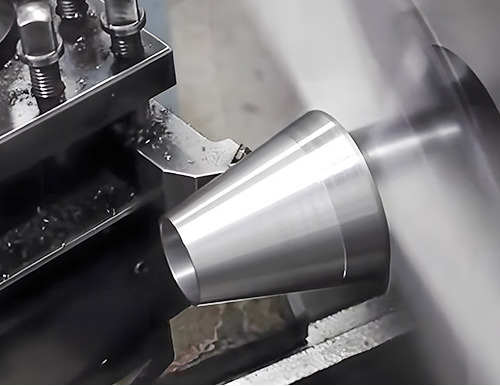
Taper turning makes a smoothly angled surface by gradually changing the diameter of a rotating work piece. This process is performed by a cutting tool that moves along a straight line- removing material to form a cone like shape. Every tapered surface has some specific taper angle which is the angle between the surface of tapered piece and the workpiece axis.
Methods of Taper Turning
1. Form Tool Method
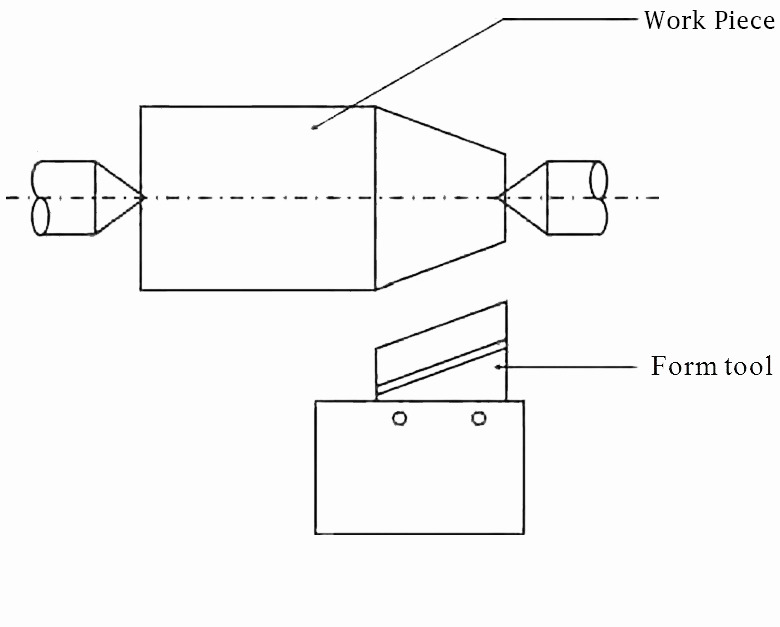
A cutting tool shaped to half the taper angle is used in form tool method. This tool is placed at right angle to the spinning workpiece by the operator. When the part rotates backwards or counterclockwise, the tool engages straight down, removing material all the way across the part. This works fine for short tapers, but causes vibration. Therefore the cutting speeds are typically reduced in order to gain the right level of accuracy.
2. Tailstock Set Over Method
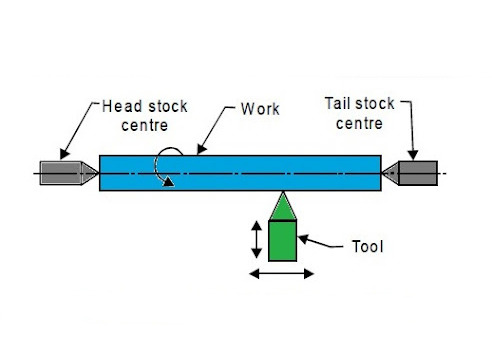
This method of taper turning involves moving the tailstock from the lathe’s centre position. The first part of the process involves mounting the workpiece between centers, and moving the tailstock sideways off the main axis. It forms the taper by having its cutting tool move parallel to lathe bed.
Machinists calculate the needed offset using: The Offset = (Length × Taper per Foot)/24.
For long workpieces with shallow angles below 8 degrees, this method is best suited.
3. Compound Rest Method
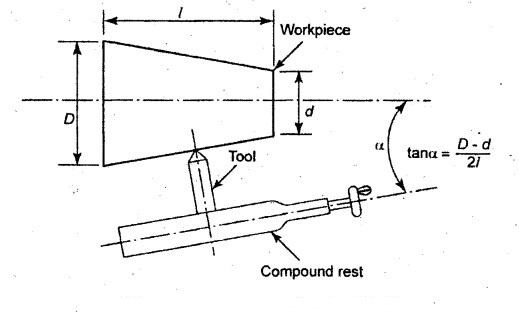
The compound rest method is to swivel the compound rest to half the required taper angle. While the workpiece rotates on the chuck, the tool moves along an angled path which it follows. To find the taper angle, use: tan θ = (D-d)/(2L).
It is very good at making short, steep (up to 45 degrees) tapers on both sides of center.
4. Taper Turning Attachment Method
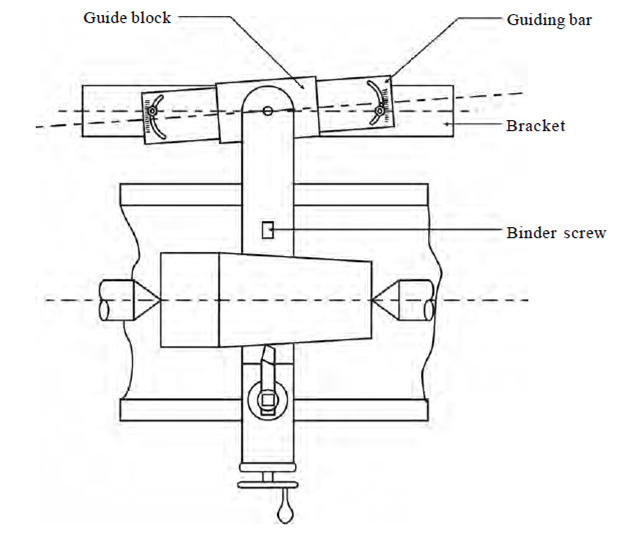
The setup has a guide bar, which can pivot up to 10° either way, mounted behind the lathe bed. This bar is followed by a guide block connected to the crossslide, for precise control. The compound rest handwheel is used to adjust the cutting depth by an operator.
The method provides power feed options and is suited for tapers up to 300 mm long. It works for internal or external tapers without changing the main setup and keeps the centers aligned.
5. Combining Feed Methods
In this advanced approach, an angled cutting-path is created by using both length wise and cross wise feeds at once. The feed rates are adjusted through the apron gears to control their movement by the operators. It produces accurate tapers but needs lots of skill. The technique works on both CNC and manual lathes; and for complex taper shapes, it provides precise control.
Taper Turning calculations
Determining Taper Angle
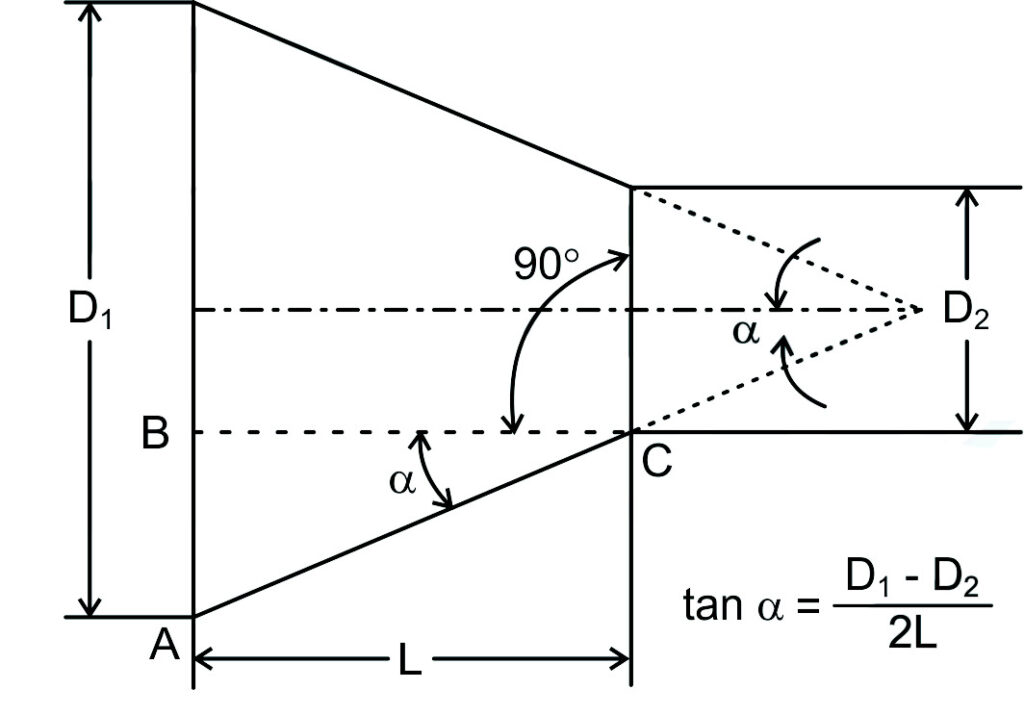
To find the taper angle (α), use this formula: tan α = (D-d) / 2L. In this case “D” is the large diameter, “d” is the small diameter, and L is the taper length.
Taper per Foot (TPF)
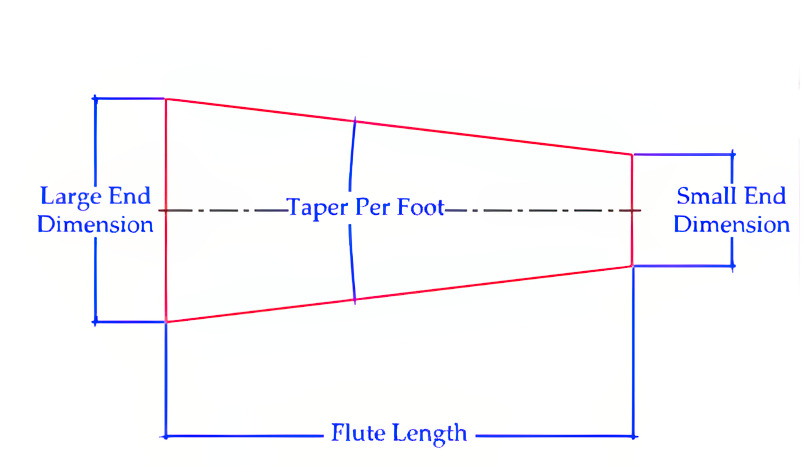
The decrease in diameter over one foot of length is shown by TPF. You can find TPF using: TPF = (D-d)/L × 12. Once TPF is known, it is possible to calculate the tailstock offset with O = (TPF × L)/24.
CNC Taper Turning Calculations
When using in CNC operations the taper radius at any point x along the taper follows the formula r = r0 – (x x TPF) where r0 is the initial-radius. In order to calculate the machining time, the formula is given as Time = Length of Cut / ( (Feed-per-revolution X RPM) ). These formulas permit fine control over tool paths, and keep tolerances down to ±0.01 mm.
Benefits of Taper Turning
- Tapered joints exhibit a wedge effect which produces self locking connections. This provides a way to split loads uniformly across contact places, for maximum mechanical stability.
- Tapered parts decrease part weight by eliminating material in certain areas while maintaining structural integrity. And that’s especially useful in automobile and aerospace sectors.
- Modern taper turning equipment has safety devices to protect you, such as automated controls, very accurate feed systems and protective shields. These features protect operating personnel from metal debris and spinning parts.
- Internal boring on the lathe machine can be accurately performed by taper turning. This simplifies hole expansion and permits control of diameter reduction.
- Tapered parts reduce width of recirculation in wake area and the resistance caused by wind. At the same time, they increase vortex shedding frequency to improve aerodynamic proficiency.
- Modern taper turning typically reaches tolerances of ±0.0002 inches of total diameter variation. It guarantees excellent part alignment and also exact fits.
Applications of Taper Turning in Different Industries
Aerospace Sector
For its complex systems, the aerospace industry requires tapered parts with very high precision. Taper turning makes parts like struts, parts of landing gear, engine casings, aircraft rudders and turbine shafts.
Machine Tool Components Manufacturing
Precise machine tool components are manufactured with the aid of taper turning. It helps produce reamers, tool holders, machine pins, spindles and arbors. The safe tool mounting and right alignment are guaranteed by these precision engineered parts.
Construction and Engineering
Strong, precisely produced components are needed for large scale construction projects. So these special parts such as valves, columns, beams, couplings and flanges are made with taper turning.
Automotive Industry
Taper turning is used in the automotive sector to make drivetrain parts. This technique allows everything from tie rods and suspension components, to axles and gear shafts, to fit exactly where they’re supposed to. The precise fitting of all these items directly affects how a vehicle will actually perform on the road.
Various Limitations and Considerations of Taper Turning
- Knowledgeable operators and special equipment are necessary when setting up taper turning operations. At small batch manufacturing, this increases production costs for threaded or tapered parts by 2–3 times.
- Grinding a tool is an important way to assure a sharp cutting edge. Grinding needs skill and accuracy as improper grinding will have adverse effects on the tool as well as the taper quality.
- It takes a lot of training on the part of the operators to learn how to make depth adjustments, take angle calculations and control the feed rate. Therefore, operators need to learn many setups, and multiple machining parameters.
- Taper turning has high tooling expenses and initial setup time, but it is cost effective for large production volumes. For small batch manufacturers, investment made in dedicated equipment is often not justifiable.
- The accurate positioning of tool at the workpiece centerline is important to produce precise tapers. Poor surface finish and dimensional errors can occur from even a tiny deviation of 0.001 inches.
- The taper turning process removes more material than any of the regular turning processes. This produces an enormous amount of coolant waste and metal chips which require safe disposal.
Conclusion
Taper turning is a very good machining method to make tapered components for many industries. It also brings several important advantages such as minimised component weight, improved performance and outstanding precision. It, however, needs special machinery and skilled operators.
With our modern CNC equipment and our highly skilled team, we provide outstanding taper turning results to the highest quality standards at Ancastings. Contact us to see how our taper turning capability can help with your manufacturing.
FAQs
How does the tailstock set-over method work for taper turning?
The operator removes the tailstock from the workpiece centerline. This offset position is what creates an angle between the cutting tool and the workpiece. The workpiece rotates and the taper is generated due to this angle.
How does a taper turning attachment enhance the taper turning process?
The taper turning attachment provides exact control of the taper angle. It supports accurate and consistent cuts with no adjustment of the main machine setup.
What safety precautions should be observed during taper turning operations?
Workpiece must always be tightly clamped and the correct protective gear must always be worn. Limit speed to 1000 RPM and often inspect tools for any signs of wear or invalidity that may cause accidents.
Which factors determine the choice of a particular taper turning method for a particular job?
The factors are material, production rate, availability of equipment, taper angle and the degree of accuracy required in the final part.