
According to the Nickel Institute, nickel is the fifth most abundant element on Earth. It’s a highly versatile alloying element that combines readily with other metals to impart exceptional strength and corrosion resistance. However, these same properties present significant challenges in CNC machining alloys.
This article explores various nickel alloys used in industry, their machining processes, and the specific challenges they pose during CNC machining operations.
Understanding Nickel Alloys: Groups and Characteristics
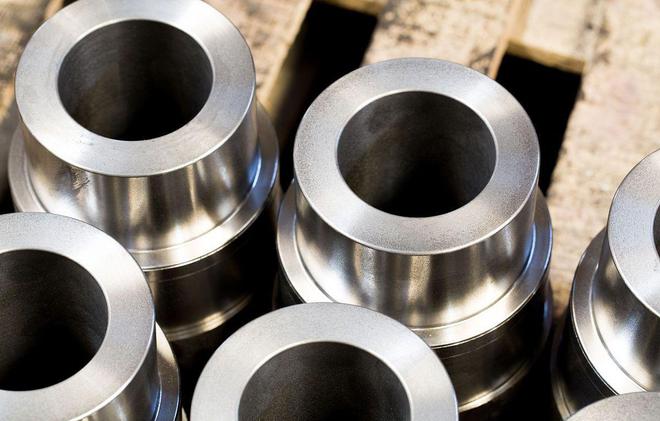
Nickel forms thousands of alloys, so it’s hard to get track of each one. To better comprehend them, nickel-based alloys are classified into five major groups on the basis of similar characteristics:
Group A – Alloys with High Nickel Content
These alloys have a high percentage of nickel, usually over 95%. So, they share most inherent properties of nickel: excellent corrosion resistance, and superior thermal and electrical conductivity. Popular nickel alloys include Nickel 200, 201, and 205.
Group B – Nickel Copper Alloys
Nickel-copper alloys (Monel series) have 52 to 67% nickel; another major share is copper with trace amounts of other elements. They offer more strength than Group A (pure nickel) alloys but have slightly less toughness. Cold work improves their corrosion resistance, particularly in marine and chemical environments. Inconel 400 /Alloy 400 and Invar 36 are the well-known alloys in this group.
Group C – Nickel Chromium Alloys
Group C consists of nickel-chromium alloys, which resemble austenitic stainless steel in composition. The chromium presence gives them oxidation resistance, particularly at high temperatures. Chromium forms a protective oxide layer, preventing further corrosion. These alloys also have solid-solution strength due to the same nickel-chromium matrix. Inconel 600 and Nirmonic 75 are notable members of this group.
Group D1-D2 Age Hardenable Alloys
This group is split into:
- D1 (Unaged): These alloys rely on cold work for strength and exhibit good toughness before heat treatment.
- D2 (Aged): After aging, these alloys undergo precipitation hardening, which increases their strength and durability. Adding elements like aluminum or titanium forms precipitates that enhance the alloy’s ability to withstand extreme forces and temperatures.
Group E – High-Machinable Alloy
Group E is a class of a single highly machinable alloy, Monel R-405. It has added sulfur, which improves the machinability factor. In corrosion resistance and other physical properties, it’s similar to group B alloys. However, mechanical properties are slightly different.
| Group | Alloy | Composition | Characteristics | Applications |
| Group A | Nickel 200 | 99.6% Nickel | Excellent corrosion resistance, good thermal conductivity | Chemical processing, marine environments, electronic components |
| Nickel 201 | 99.6% Nickel (low carbon) | Similar to Nickel 200, better for high-temperature applications | Caustic evaporators, electroplating equipment | |
| Nickel 205 | 99.6% Nickel | High electrical conductivity, improved mechanical properties | Electrical components, anode plates | |
| Group B | Inconel 400 | 63% Nickel, 30% Copper | High strength, and excellent corrosion resistance in seawater | Marine engineering, heat exchangers |
| Invar 36 | 36% Nickel, 64% Iron | Extremely low thermal expansion | Air craft controls, thermostats, optical instruments | |
| Group C | Inconel 600 | 72% Nickel, 14-17% Chromium, 6-10% Iron | Oxidation resistance at high temperatures, good mechanical strength | Jet exhaust lines, evaporator tubes, thermal processing equipment |
| Nimonic 75 | 80% Nickel, 20% Chromium | High strength at elevated temperatures, good oxidation resistance | Gas turbine blades, industrial furnaces | |
| Group D1 | Duranickel 301 | 94% Nickel, 4.75% Iron | Age-hardenable, high strength, corrosion resistance | Aerospace, high-stress components |
| Group D2 | Inconel 718 | 50-55% Nickel, 17-21% Chromium, 2.8-3.3% Molybdenum | Precipitation hardened, high strength, heat resistance | Jet engines, gas turbines, nuclear reactors, gate valves |
| Group E | Monel R-405 | 63% Nickel, 30% Copper, 0.03% Sulfur | Enhanced machinability, corrosion resistance | High-speed machining, marine, chemical equipment |
Machining Operations for Nickel Alloys
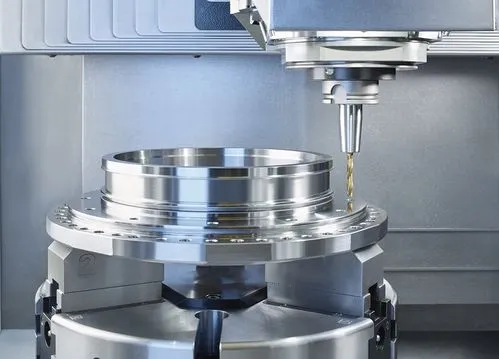
In industry, nickel alloys undergo different machining processes to get the desired shape, size, and form. Among them, the most employed machining processes are:
Turning
Turning is a machining operation that uses a single-point cutting tool to remove materials from a rotating workpiece. This operation is carried out on a CNC lathe where the tool moves along the surface to shape cylindrical parts.
For nickel alloys, turning requires precision due to their toughness. You need to use positive rake angles to minimize the tool and ensure the material is cut rather than pushed. Carbide tools are best for the job as they can withstand the high temperatures generated during the process.
Nickel Development Institute suggests that turning nickel alloys requires 30-50% lower speeds than machining steel. Usually, it’s between 50 to 100 FPM (feet per minute).
To control chips during the turning process, tools with chip curlers or breakers are preferred. Research shows that these tools can extend tool life by up to 40%.
Milling
Milling is the use of a rotary cutter to shape a material. In the case of Nickel Alloys, climb milling is preferred over conventional (up) milling to minimize word-hardening. Considering nickel toughness, High-Speed Steel (HSS) or carbide end mills are perfect for nickel.
Moreover, to prevent excessive heat during the process, experts suggest keeping feed rates low. For heavy-duty milling, specialized cutters with 12° to 18° positive rake angles work best.
Drilling
When drilling nickel alloys, steady feed rates are critical to avoid work hardening at the bottom of the hole. HSS drills are generally effective for group A and B alloys, while cobalt drills are best for tougher group C and D alloys – these cobalt drills last 50% longer than HSS ones.
For deep hole drilling, spade drills or gun drills are common. This operation requires high-pressure cutting fluid to evacuate chips and prevent heat buildup. Drilling speeds, for softer alloys, are in the range of 10 to 18 SFM (surface feet per minute) while 5 to 12 SFM for harder grades.
Grinding
Most machining processes often accompany grinding to attain the desired surface finish and dimensional precision. The key to successful grinding of nickel alloys is to use abrasive materials like aluminum oxide or silicon carbide.
Research suggests that centerless grinding techniques are effective for achieving precision with nickel alloys, as they help maintain roundness and dimensional accuracy.
Boring
The boring process enlarges holes that have already been drilled or cast. In nickel alloys, that’s difficult to achieve, considering its work hardness. To reduce tool wear, carbide-tipped boring bars are used.
Machinists suggest that boring operations for nickel alloys should be performed at lower speeds than for softer materials, usually around 30-60 SFM. They need to receive proper lubrication: with sulfurized oil or similar high-performance coolants.
Statistically, boring operations on nickel alloys experience tool wear rates 30-40% higher than standard steels – that means frequent tool changes.
Tapping
Threading a pre-existing hole is termed tapping. Again, HSS and cobalt-based tapping tools work well due to their heat resistance and durability. For the hardest nickel alloys, serial taps—where each successive tap increases the thread diameter—are required to prevent tool breakage.
Furthermore, using a 60% thread depth instead of the standard 75% reduces the torque required for tapping and decreases the likelihood of tap breakage. Tapping speeds are usually slower than drilling, in range of 10 to 20 SFM. And fluids have to be used generously for a smoother operation.
EDM (Electrical Discharge Machining)
EDM is a non-conventional machining process that uses electrical discharges (sparks) to remove material. This is process is employed to make precise internal cuts and create geometries which traditional process fail to make. Wire EDM is quite common for nickel alloys, while sinker EDM can be used for geometries that need internal cavities.
EDM is slower than traditional machining, with material removal rates between 0.1 to 0.5 cubic inches per minute, but it provides unmatched precision, making it suitable for aerospace, medical, and high-performance applications. Since no cutting tool is present or in contact with the material, there are no issues with tool wear and material deformation.
Waterjet Cutting
Waterjet cutters are the best solution for cutting thick plates of nickel alloys without generating heat. They use high-pressurized water mixed with abrasive to cut through the piece. This process is used in larger setups to cut out nickel alloys up to 10 inches thick with an accuracy of ±0.005 inches.
The lack of heat-affected zones (HAZ) makes waterjet cutting valuable when precision and material integrity are critical. It may offer less precision than EDM, but it’s quite quicker (typical speed is 6 to 10 IPM).
Challenges in Nickel Alloy Machining
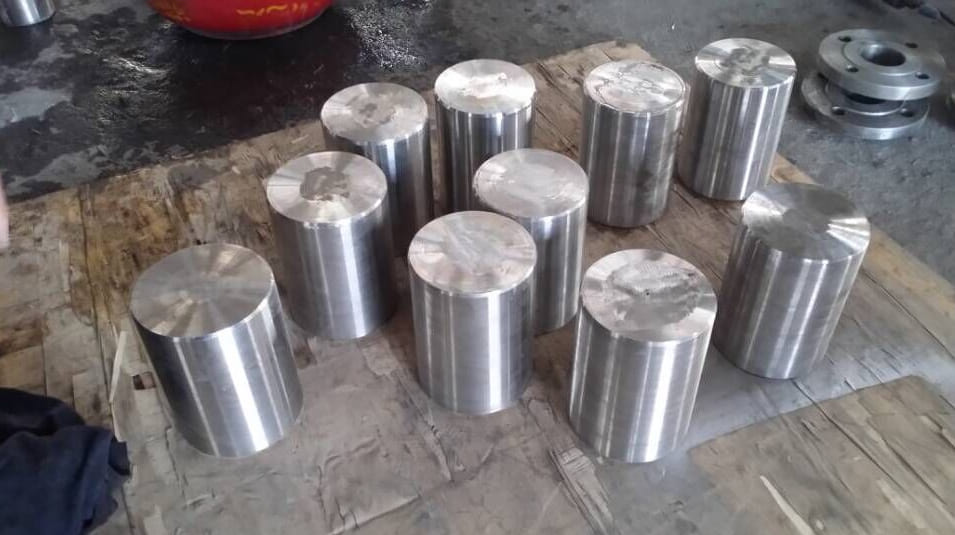
Nickel Alloys can withstand high temperatures without losing much strength. But, they can be troublesome when it comes to machining. Machinists face multiple challenges:
Excessive Heat Generation
Nickel alloys are notorious for generating excessive heat during machining. This heat primarily arises from two sources: frictional contact between the cutting tool and the material, and plastic deformation during machining.
Since nickel alloys are poor heat conductors, the frictional heat doesn’t disperse, instead, it’s concentrated in the cutting region. This localized temperature spike brings surface changes to the material and strains the tool.
Work Hardening
Work hardening in nickel alloys is exacerbated by the simultaneous effects of plastic deformation, heat generation, and continuous machining. Though all materials undergo some level of work hardening, nickel alloys harden more aggressively. Each successive layer being machined becomes progressively harder due to this process.
Tool Adhesion
Another common problem related to heat generation is tool adhesion, where chips from the nickel alloy stick to the cutting tool. Most of the tools cannot withstand elevated temperatures over 800℃. In most cases, that results in the welding of workpiece material to the tool. As the tool becomes less effective, cutting becomes more difficult.
Tool Failure Risk
Nickel alloys can accelerate tool wear and lead to premature tool failure due to their toughness. The combination of excessive heat, high cutting forces, and material hardness places a huge stress on the cutting tool. Add in the elevated temperatures – the thermal cracking can weaken the structural integrity of the tool.
Considerations When CNC Machining Nickel Alloys
We have already shared many helpful tips against each machining process. Here’s a generalized version of what things you need to collectively set right for machining nickel alloys:
Designs Considerations
When designing parts for machining with nickel alloys, it’s important to account for the material’s work hardening and heat generation. The geometry should be simple, with smooth transitions to avoid excessive tool wear and poor surface finishes. Complex shapes or sharp corners can exacerbate these issues, leading to difficulties in maintaining tolerances and tool stability.
Maybe the product could be designed such that it has a couple of simpler geometries that assemble later. To optimize machinability, the design should also allow for effective heat dissipation.
Cutting Tools
Nickel requires tools that surpass its hardness. Carbide tools are widely preferred for continuous cuts because of their durability and heat resistance, while HSS tools are suitable for interrupted cuts or finishing operations.
For better chip evacuation, tools with 6 to 8 flutes serve better. Moreover, chip curlers or breakers are best for preventing material buildup on the tool.
Machining Parameters (Cutting Speed, Feed Rate)
The machining parameters have to be carefully optimized to reduce heat generation and work hardening. The cutting speed and feed rate vary across the different machining processes and have to be adjusted accordingly. For instance, milling operations are often carried out at 100 to 330 SPM. While for turning that is 50 to 100 SFM.
Cutting Fluids
Cutting fluids play a crucial role in the machining of nickel alloys, primarily by controlling temperature and reducing friction. High-pressure coolant, typically at 1000 psi or more, is recommended for optimal heat dissipation. Both water and sulfurized mineral oil can be used as coolants.
Applications of Machined Nickel Alloys
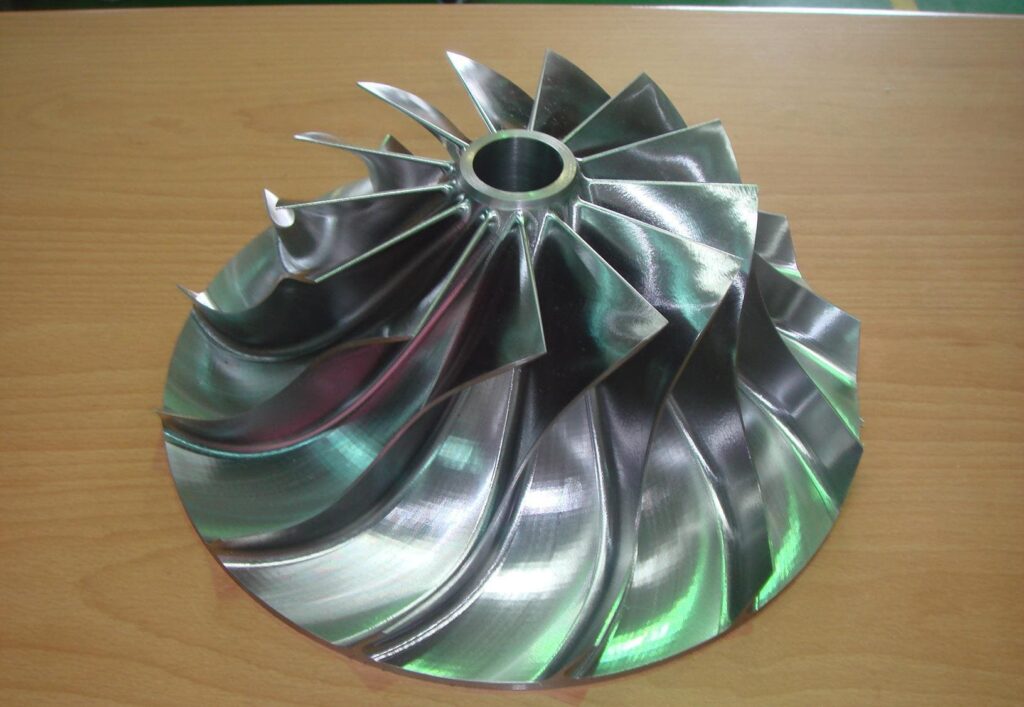
Nickel Alloys have characteristics – high strength, heat, and corrosion resistance – that make them a perfect fit for applications across a range of industries:
| Industry | Applications |
| Aerospace | Turbine blades, rocket engine components |
| Chemical Processing | Tanks, piping, mixing devices |
| Oil and Gas | Pumps, pipes, pressure vessels, heat exchangers |
| Medical Equipment | Surgical instruments, orthopedic implants, stents (Nitinol®) |
| Electrical & Electronics | Electrical contacts, transformers, memory storage devices |
| Marine Applications | Propellers, bilge pumps, valves |
| Precision Instruments | Hermetic seals, temperature switches |
| Power Generation | Heat exchangers, gas turbines, nuclear reactor components |
| Automotive | Exhaust systems, turbochargers |
Ancastings – Your Perfect Partner for CNC Machining Nickel Alloys
Are you a researcher or product owner working with nickel alloys and in need of expert machining service? Ancastings is here to bring your designs to life.
Why Choose Us?
At Ancastings, we have been providing a comprehensive range of metal CNC machining services for years. Whether you need CNC turning, milling, or Wire EDM for metal parts, we have state-of-the-art tools and an experienced team ready to guide you through the process.
Our machining services aren’t limited to nickel alloys—we also work with tool steel, titanium, magnesium, stainless steel, copper, and brass. Contact us today for instant support and solutions from our expert team.