
“Metal welding permanently joins the parts by melting and forming the weld pool at the joining position. The resulting joint is strong, durable, and corrosion resistive.”
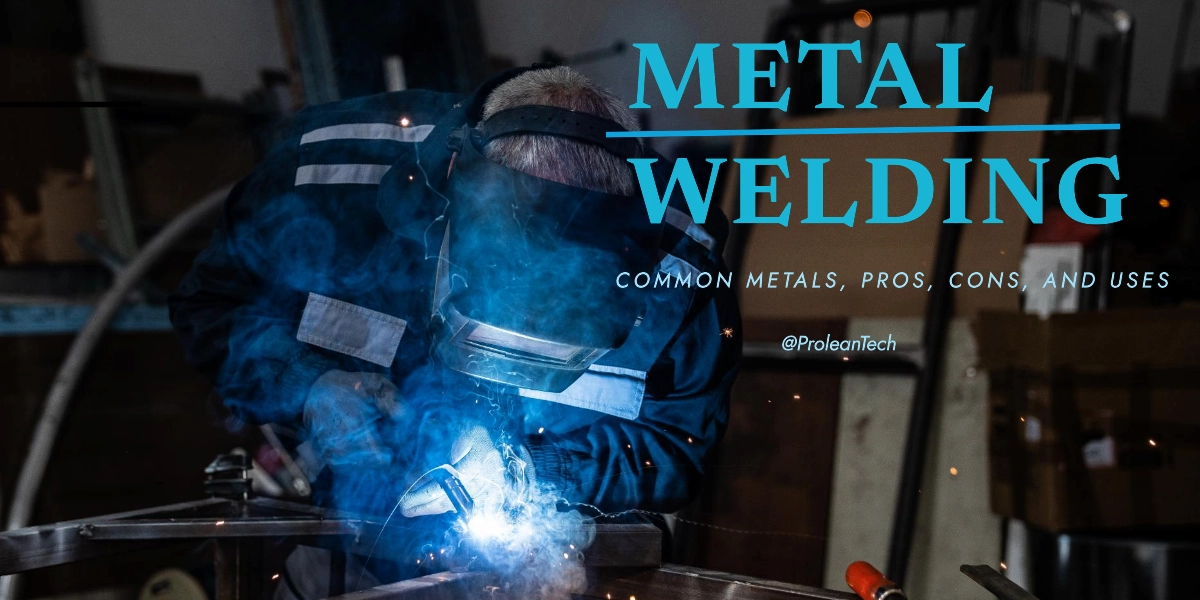
Do you know which joining techniques are used to assemble metallic components and products? The answer depends on what kind of joints are required; metal welding, riveting, and brazing are a few to name. However, the Welding Process in Manufacturing is the most popular technique for creating permanent joints between metal parts.
Different metals and alloys, such as aluminum, steel, copper, brass, and titanium, can be welded together using a suitable technique. In this article, we will elaborate on the procedure, advantages, disadvantages, and application areas of metal bending.
What is Metal Welding?
The welding process utilizes heat, pressure, or both to melt and fuse the material at the joining position. At the micro-level, atoms at the edge of one part come close enough to the atoms at the edge of another piece for interatomic attraction and become a single item. Source.
Subsequently, this metal joining process can be broadly classified into two categories; Fusion Welding and Sold-state Welding. Fusion Welding methods apply intense heat from a suitable source to melt the material and form a weld pool, which later solidifies and forms a durable solid joint. On the other hand, solid state or pressure welding involves metal joining with pressure and heat without melting and forming the molten pool at the joining location.
- Fusion Welding
Welding sources (such as an electric arc, laser, or gas flame) melt the base metal and filler metal to form the weld pool. The liquid material’s homogenous composition bonds the pieces at the atomic level. As the molten pool starts to cool, nucleation initiates grain growth. These grains expand and meet, creating grain boundaries, which are high-energy interfaces that provide strength and toughness to the weld. 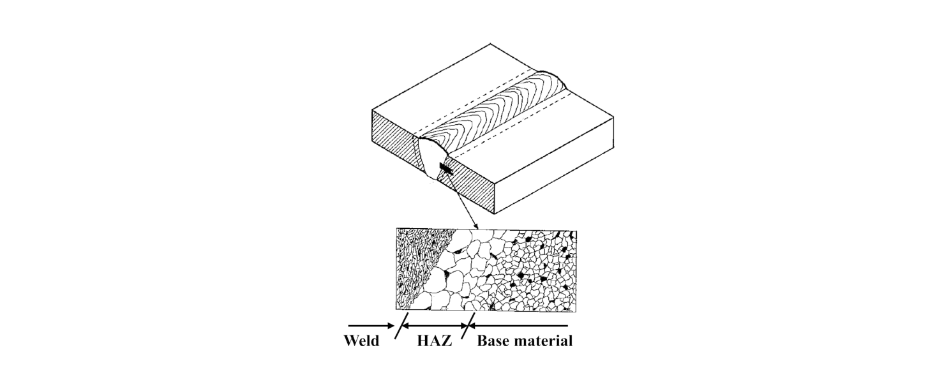
Fusion welding mechanism. Courtesy: ResearchGate
- Arc Welding( MIG, TIG, SAW, or Stick Welding)
- Gas Welding
- Spot Welding
- Laser Beam Welding
- Plasma Welding
- Solid State Welding
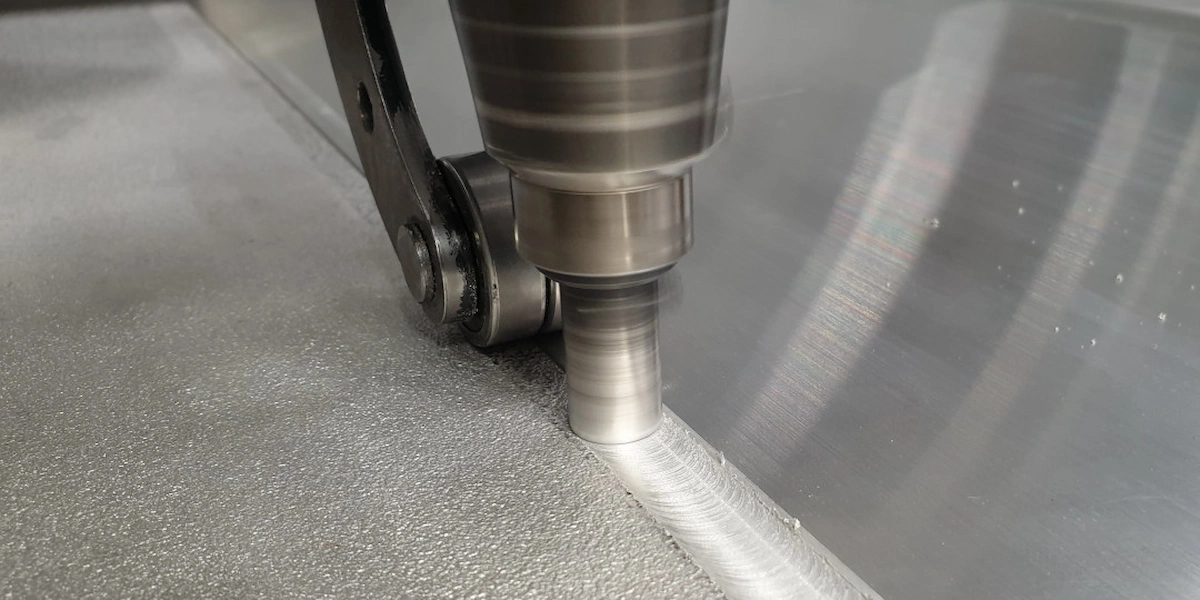
Solid state welding
Instead of melting, solid-state metal welding applies sufficient pressure to the materials, which causes plastic deformation and promotes atomic diffusion at the interface. The diffusion or atomic bonding of welding parts is carried out below their melting points. As a result, this type of Sheet Metal Welding process significantly reduces the risk of thermal defects on weld components.
- Friction Welding
- Ultrasonic Welding
- Forge Welding
- Roll Welding
Try Ancastings Now!
Which Metals Can Be Welded?
Next, what are the types of metal used in welding? The straight answer is many. However, aluminum, steel, copper, titanium, and brass are the common metals and alloys that can be joined with metal welding.
- Aluminium Welding
Aluminum is a lightweight material that can be welded with both fusion and solid-state welding methods. Welding can join aluminum parts of different shapes or thicknesses into a single item. TIG and MIG are the two main welding methods for joining aluminum components. Consequently, its thermal conductivity allows for fast welding speeds for aluminum alloys, 300-500 mm/min.
Considerations for welding aluminum are as follows;
- Remove the refractory oxide layer from the surface before welding.
- Higher heat inputs are due to its thermal conductivity for maintaining the weld pool.
- Inert gas shielding with argon or helium to prevent oxidation during the metal welding process.
- Stainless Steel Welding
The high chromium and nickel content in iron, combined with other alloying elements, form stainless steel. It is a highly corrosion-resistant material with good strength, more than aluminum and iron. The effective techniques in welding stainless steel are stick, laser, TIG, and MIG welding.
The considerations for stainless steel welding are;
- Any rust or debris in the welding area can weaken the strength of welding joints.
- The risk of cracking is a big concern. Low heat transfer capability and higher thermal expansion rate might wrap or crack the area near the welding point. Thus, adequate heat input should be ensured.
- An appropriate filler rod is essential to join the dis-similar grades of stainless steel or other metals based on differences in their melting points.
- Copper Welding
Copper and its alloys show high thermal conductivity, which means the input heat can be transferred into the surroundings immediately. This is the main challenge in welding copper parts. However, it can be solved by pre-heating the copper workpieces before proceeding with the welding.
Copper parts can be welded using TIG, MIG, Stic, GTAW, and SMAW welding methods. Next, solid-state metal welding, like brazing, is also suitable.
- Other Metals
Several other metals and alloys are also used in metal welding, and their parts are joined together using distinct welding processes to achieve the desired shape or geometry.
- Carbon Steel
- Titanium
- Nickel
- Brass
- Bronze
Welding of Dissimilar Metals
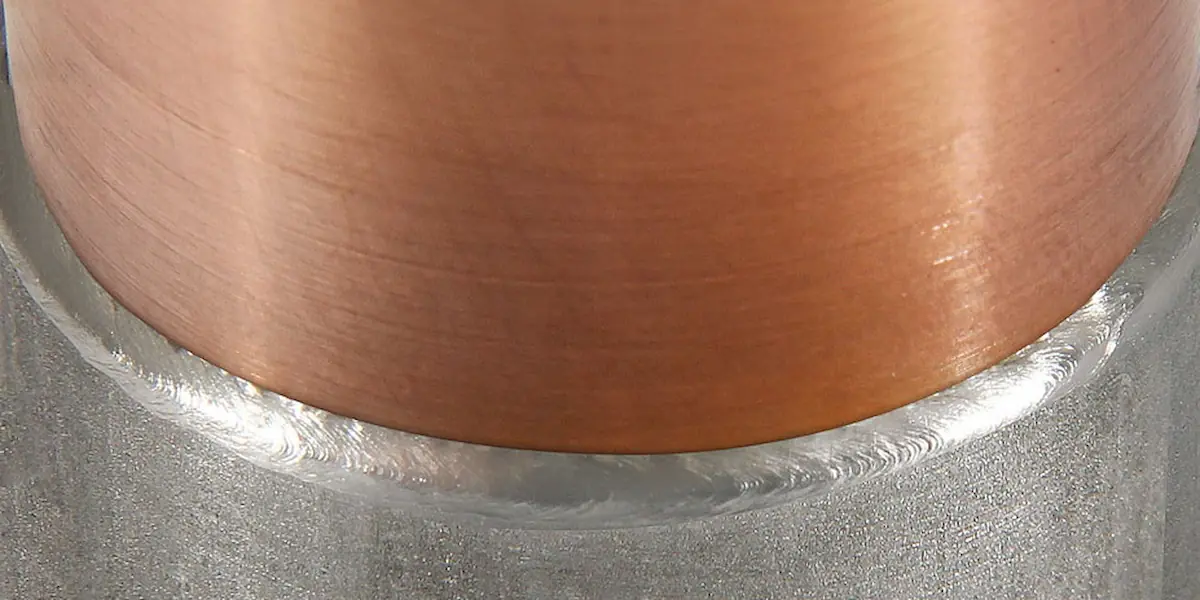
Copper and Aluminum welding
Welding techniques can join dissimilar grades or materials with a suitable filler, but they need to be metallurgically compatible. Additionally, it would be best if you analyzed the weldability of parts.
Table: Dissimar Metal Welding
|
Dissimilar Metal Combination |
Recommended Technique |
Filler Material |
|
Carbon Steel to Stainless Steel |
TIG Welding, MIG Welding |
ER309L, ER309LSi, 309L |
|
Aluminum to Steel |
Friction Stir Welding (FSW), Explosion Welding |
4047 Aluminum Filler, 4043 Aluminum Filler |
|
Copper to Stainless Steel |
TIG Welding, MIG Welding |
ERNiCu-7 (for TIG), ERCu (for MIG) |
|
Aluminum to Copper |
Friction Stir Welding (FSW), Ultrasonic Welding |
Al-Si Filler Alloys, 4047 Aluminum Filler |
|
Nickel Alloy to Stainless Steel |
TIG Welding, MIG Welding |
ERNiCr-3, ERNiFeCr-1 |
|
Brass to Stainless Steel |
TIG Welding, MIG Welding |
ERCuNi, ERCu (Silicon B |
Try Ancastings Now!
What are the Advantages of the Metal Welding?
Joining metallic components with the welding process offers several Welding benefits in strength, durability, and cost. Here are the advantages of this permanent joining technique;
- Permanent & Durable Joints: Metal weld joints offer almost similar strength to parent materials. Additionally, they are highly durable compared to other metal joining techniques like adhesions or riveting. Their lifespan often ranges from 10 to 25 years.
- Dissimilar metals welding: An appropriate filler can be used to weld dissimilar metals, such as aluminum and steel, copper and bronze, and other combinations.
- Joint Precision: Welding techniques like Gas Tungsten Arc Welding give excellent control over welding speed and heat input and maintain tolerances as low as ±0.005 inches.
- Cost Effectiveness: Welding involves fusing two pieces of metal together, which means less material is required to create a joint than other methods and less overall cost. Meanwhile, its welding speed also helps reduce costs.
- Structural Integrity or Parts: Unlike bolts & riveting, metal welding parts maintain their structural integrity without machining or extra processes.
What are the Disadvantages of Metal Welding?
- The heat-affected zone is the main cost of the metal welding process; the intense heat used to melt the material at the welding position also affects the thermal properties of surrounding materials.
- Another limitation is thickness, which typically applies to parts above 0.5 mm.
- The skill of the operators heavily influences the skill level of the operator.
- The vibrations in automotive vehicles, industrial process components, and other applications might affect the strength of metal joints.
Metal Welding Applications? Weld Components & Products
Metal welding provides essential connections for structural integrity, mechanical function, and durability. It is used in industrial manufacturing, construction, automotive, aerospace, and numerous other areas for strong and reliable joints.
Application Examples:
- Car bodies and frames
- Exhaust systems and fuel tanks welding
- Assembly of engine components
- Fabrication of industrial plant components & systems
- Construction of aircraft fuselages and wings
- Different components welding in shipbuilding(hull, deck, etc)
- Consumer goods, kitchenware, and agricultural equipment
- Repair & maintenance of metallic parts, products, and systems.
- Electrical enclosures and frame structures
Are You Looking for Metal Welding Parts?
Choosing an experienced and reliable manufacturing partner is equally important to getting optimal welding components and products results. Ancastings is a China-based manufacturing company with over a decade of experience handling Sheet Metal Services with welding and other assembly offerings.
We have expert engineers and operators who can weld different metals according to your design. So, send us your design so we can leverage our Metal Welding Service.
Try Ancastings Now!
Summing Up
Welding is the key technology for creating permanent joints between metal and alloy parts, such as aluminum, stainless steel, copper, titanium, brass, etc. Which welding technique to use entirely depends on the type of workpiece metal, welding position, and required strength. However, TIG, MIG, plasma, & Stick welding are the most common. Sometimes, fillers might be needed to join metals with distinct properties.
Overall, metal welding creates robust, durable, and uniform joints on metallic parts for automotive, aerospace, electronics, industrial processing, and other industries.
FAQs
Q-1: Can I weld any metallic parts?
Not all metallic parts can be welded. It depends on the chemical composition, physical properties, and compatibility of workpieces. For example, high-carbon steels are prone to cracking while welding.
Q-2: Can welding join dissimilar metals or alloys?
Yes, welding can join dissimilar metals or alloys. However, specialized fillers are required to address differences in melting points, thermal expansion, and chemical properties of dissimilar metals.
Q-3: How durable are metal weld parts?
Yes! Metal welding permanently joins the parts. The lifespan of a particular weld joint depends on weld quality, environmental conditions, metal type, etc.
Q-4: Which welding method is best for Stainless Steel?
TIG and MIG welding are often considered the best methods for stainless steel due to their precision and control, which result in clean, strong welds.
Q-5: Which welding method is best for Aluminum?
TIG welding is ideal for aluminum as it provides excellent control over the welding process and produces high-quality welds.
Q-6: What should I consider when choosing a welding method for metal components?
When choosing a welding method for metal components, consider the types of metals being welded, their thickness, the desired joint strength, and the welding position.