Choosing between 3 axis vs 5 axis CNC machining is not just a technical decision: it directly impacts production capabilities, part quality, and long-term operational costs, because precision, efficiency, and complexity are the pillars of modern manufacturing. Our comprehensive analysis provides an expert breakdown of both technologies, equipping engineers, manufacturers, and buyers with the insights needed to make the most informed and cost-effective decision.
Fundamental Mechanics: 3 Axis vs 5 Axis CNC
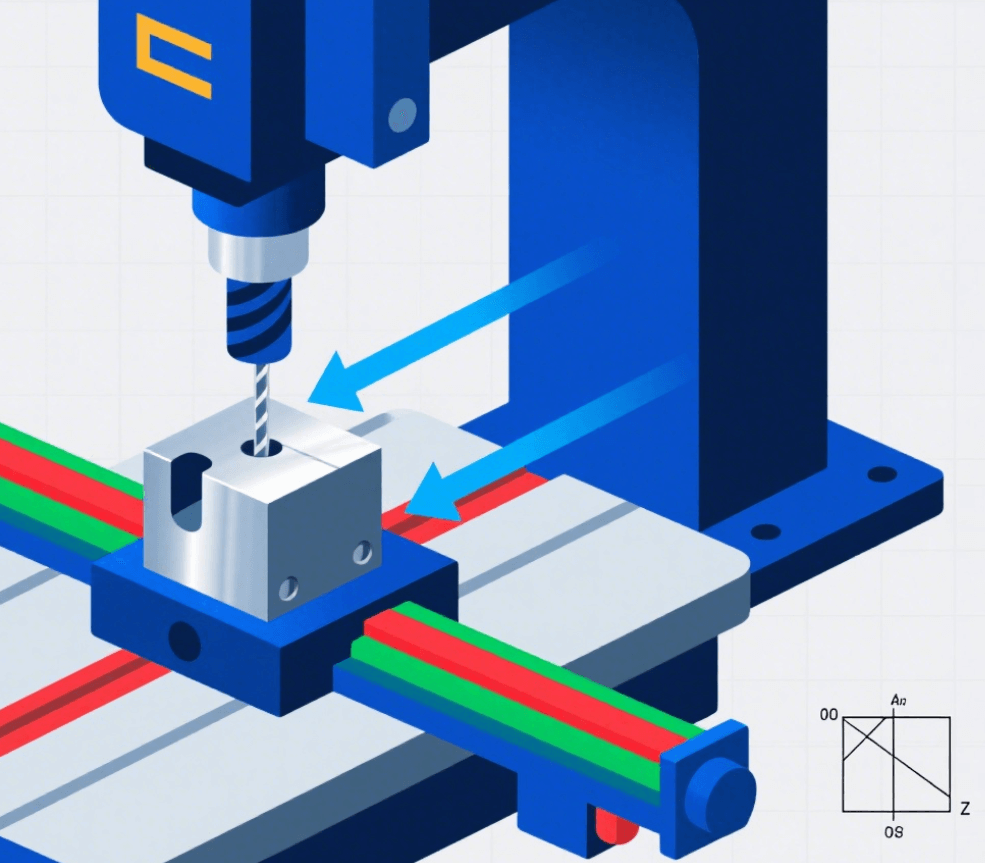
At its foundation, 3 axis CNC machining operates along three linear axes—X, Y, and Z. The cutting tool moves in straight, coordinated paths across these axes, making it best suited for simpler geometries, flat surfaces, pockets, and basic hole drilling. This configuration is widely used in applications where parts are relatively low in complexity, production runs are standardized, and cost efficiency is a top priority. However, because the tool can only approach the workpiece from one direction at a time, multiple setups are often required to machine angled or curved features, which can increase cycle time and alignment risks.
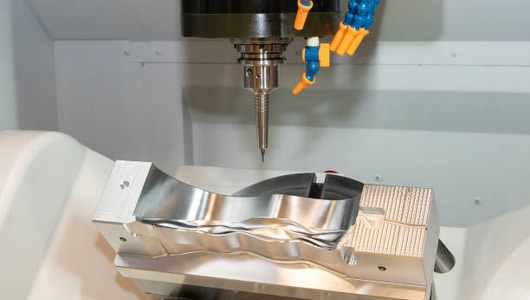
In contrast, the 5 axis CNC machining introduces rotational motion across two additional axes—commonly referred to as the A and B axes. This extended range of motion allows the cutting tool to approach the workpiece from virtually any angle. As a result, manufacturers can create complex contours, undercuts, deep cavities, and intricate 3D surfaces in a single setup. The flexibility of 5 axis CNC machining not only eliminates the need for manual repositioning but also reduces errors, improves surface quality, and accelerates production of high-precision components. This makes it indispensable in industries such as aerospace, automotive, medical devices, and advanced mold making, where tight tolerances and multi-surface accuracy are critical.
The mechanical design of a CNC system directly defines its capabilities. While 3 axis CNC machining delivers reliability and cost efficiency for straightforward parts, 5 axis CNC machining offers unparalleled accuracy, flexibility, and efficiency when producing complex, high-value components. Choosing the right configuration can determine not only part quality but also overall manufacturing competitiveness.
Precision and Surface Finish
The choice between 3-axis and 5-axis CNC machining becomes most apparent when evaluating precision and surface finish—key factors in part quality and performance.
3-Axis Machining: Precision with Limitations
A 3-axis CNC machine delivers exceptional accuracy on prismatic parts and features aligned with its linear X, Y, and Z axes. However, its primary limitation arises with complex geometries. Machining multiple sides or curved surfaces necessitates several manual repositionings. Each new setup introduces the potential for cumulative misalignment errors, compromising final part tolerances and often leaving visible witness lines on the surface.
5-Axis Machining: Integrated Accuracy & Superior Finish
5-axis CNC technology eliminates this fundamental constraint. By dynamically rotating the workpiece (or toolhead) along two additional axes, the cutting tool maintains optimal orientation and consistent distance from the part. This allows for:
- Unmatched Geometric Accuracy: Complex contours and angled features are machined in a single, unified setup, virtually eliminating misalignment errors.
- Superior Surface Quality: The ability to use shorter cutting tools and maintain ideal positioning reduces vibration and allows for higher feed rates, resulting in a finer, more uniform surface straight off the machine.
- Streamlined Production: The reduction in setups not only boosts accuracy but also significantly cuts down on overall production time.
For simple parts, 3-axis CNC machining remains highly capable and cost-effective. However, for industries like aerospace, automotive, and medical where complex designs demand micron-level tolerances and flawless surface integrity, 5-axis CNC machining is the unequivocal choice for integrated precision and superior finish.
Production Efficiency and Operational Costs
Strategic Efficiency: Calculating the True Cost of CNC Machining
In competitive B2B manufacturing, true cost-effectiveness extends beyond initial price tags to encompass total operational efficiency, throughput, and long-term ROI. The choice between 3-axis and 5-axis CNC machining technology represents a fundamental strategic decision between immediate affordability and transformative process optimization.
3-Axis CNC: The Value of Simplicity
- Lower Capital Outlay: Significantly reduced machine acquisition and installation costs.
- Reduced Programming Complexity: Shorter programming cycles and a broader pool of qualified operators lower engineering expenses.
- Ideal Application: Unbeatable for high-volume production of standardized parts and low-complexity prototypes where minimal setups are required.
5-Axis CNC: The Efficiency Paradigm
- Higher Initial Investment: Substantially greater capital expenditure and specialized programming expertise required.
- Operational Transformation: This investment unlocks unparalleled efficiencies that redefine manufacturing workflows:
- Single-Setup Machining: Complex components are finished in one clamping, eliminating cumulative tolerancing errors.
- Dramatically Reduced Cycle Times: Concurrent 5-axis motion and optimized tool paths slash machining hours.
- Lower Touch Labor: Automation of complex operations minimizes skilled labor requirements per part.
- Agile Production: Excels in high-mix, low-volume environments, enabling rapid changeovers and flexible manufacturing.
For standardized production, the 3-axis CNC machining offers compelling economies. However, manufacturers managing complex designs, tight tolerances, or diverse product portfolios find that 5-axis CNC machining delivers superior long-term ROI. The technology justifies its premium through radical reductions in labor, rework, and time-to-market, ultimately securing a competitive edge in precision-focused industries.
Software, Programming, and Workforce Expertise
Beyond capital investment, the selection between 3-axis and 5-axis CNC machining is fundamentally constrained by programming complexity and the required level of operator expertise. This human factor is often the critical determinant of successful implementation.
- 3 axis CNC programming is straightforward and widely accessible, with most CAM software supporting efficient 3 axis toolpaths. Operator training is relatively simple.
- 5 axis CNC programming requires advanced CAM solutions capable of simulating multi-axis toolpaths. Operators must understand machine kinematics, collision avoidance, and complex tool orientation, necessitating a highly skilled workforce.
The integration of 5-axis CNC is not just a hardware upgrade but a capability investment. Organizations must conduct a clear-eyed assessment of their in-house programming talent and operator skill base. While the expertise barrier is higher, cultivating these advanced skills unlocks unparalleled manufacturing agility and becomes a significant competitive moat.
Application Suitability: When to Choose 3 Axis or 5 Axis CNC
The choice between 3 axis CNC vs 5 axis CNC largely depends on component geometry, production volume, and industry requirements.
3 axis CNC is ideal for:
- Flat panels, standard brackets, and simple molds
- High-volume production of identical parts
- Situations with budget or workforce limitations
5 axis CNC excels in:
- Aerospace parts with complex contours
- Automotive components with curved surfaces
- High-value medical devices requiring tight tolerances
- Sculpted furniture or artistic wood/metal projects
Rule of thumb: For intricate, multi-surfaced parts with minimal setup tolerance, 5 axis CNC machining offers unmatched precision and efficiency.
Conclusion: Strategic Decision-Making in CNC Selection
Selecting between 3-axis and 5-axis CNC technology transcends a mere technical choice; it is a foundational business strategy that dictates production agility, cost structure, and competitive positioning. While 3 axis CNC machining are reliable, cost-effective, and suitable for straightforward components, 5 axis CNC machining deliver superior flexibility, precision, and operational efficiency for complex, high-value projects.
Aligning CNC capabilities with production requirements enables manufacturers to optimize part quality, reduce cycle times, and achieve long-term operational gains. Investing in the right CNC technology is a decisive step toward building a more efficient, agile, and competitive manufacturing enterprise.
5-axis CNC machining technology unlocks unparalleled design freedom, superior production efficiency, and a sustainable competitive advantage—especially when you partner with an industry leader like Ancastings.
Ancastings Precision is a leading provider of 5-axis CNC machining services, combining state-of-the-art equipment, deeply experienced engineering teams, and rigorous quality management systems to deliver end-to-end solutions—from complex prototypes to high-volume production. We help you:
- Produce Complex Parts with Precision—Complete intricate geometries in a single setup, ensuring exceptional accuracy and consistency.
- Shorten Lead Times—Leverage advanced toolpath optimization and process expertise to accelerate time-to-market.
- Reduce Total Cost—Minimize manual intervention, consolidate machining steps, and decrease scrap rates.
- Meet Demanding Industry Standards—Ideal for aerospace, medical, automotive, and other high-value sectors.
Whether you are in the R&D phase or optimizing your production supply chain, Ancastings offers the technical expertise and responsive support to become your trusted manufacturing partner.
Contact Ancastings Today to request a customized 5-axis machining quote or technical consultation. Let us help you turn innovative ideas into reality—and capture new market opportunities.
Latest Blogs:
- How CNC Design Impacts Sterilization Cycle Time & Cost
- Magnesium Alloy Housings: CNC Anti‑Oxidation & Deformation Control
- Preventing Built-Up Edge When Machining Soft Aluminum for Semiconductor Gas Distribution Panels
- White Layer Formation in Medical Grinding: Risks & Removal
- Titanium TC4 Robot Arms: 5-Axis CNC for 30% Lighter Weight & High Rigidity