
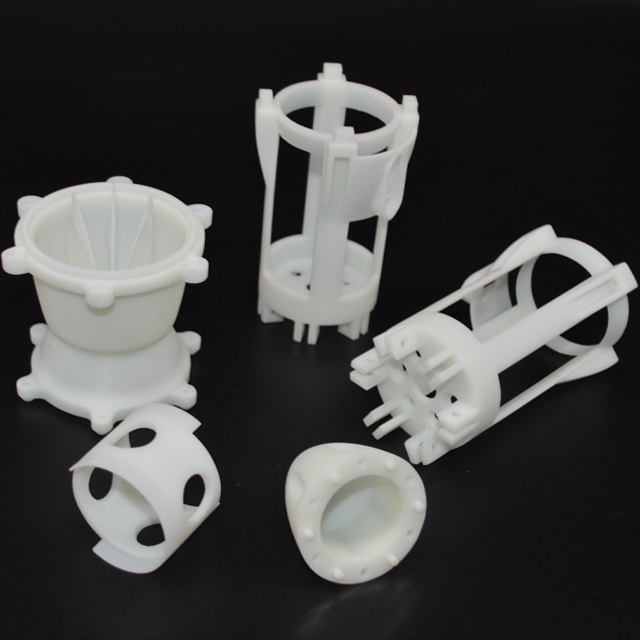
Ceramic CNC machining is a precision manufacturing process for shaping advanced ceramic materials into functional, dimensionally accurate parts. Unlike metals, ceramics possess extreme hardness, low thermal expansion, and exceptional wear resistance—making them ideal for aerospace, medical, electronics, and defense applications. However, these same properties make machining more complex, requiring specialized tools, cutting strategies, and process control.
In this article, we’ll break down the process, parameters, and essential tips for machining ceramic CNC parts to help engineers, product designers, and procurement managers make informed decisions. Whether you need zirconia dental implants, alumina insulators, or silicon nitride bearings, mastering these fundamentals ensures you get the best results.
Understanding Ceramic CNC Machining
Ceramic CNC machining transforms ultra-hard materials—alumina (Al₂O₃), zirconia (ZrO₂), silicon carbide (SiC), and silicon nitride (Si₃N₄)—into high-performance components through computer-controlled material removal. Unlike metals, these ceramics combine extreme hardness (1,500-2,500 HV) with critical brittleness, demanding specialized processes to prevent micro-cracking and edge chipping.
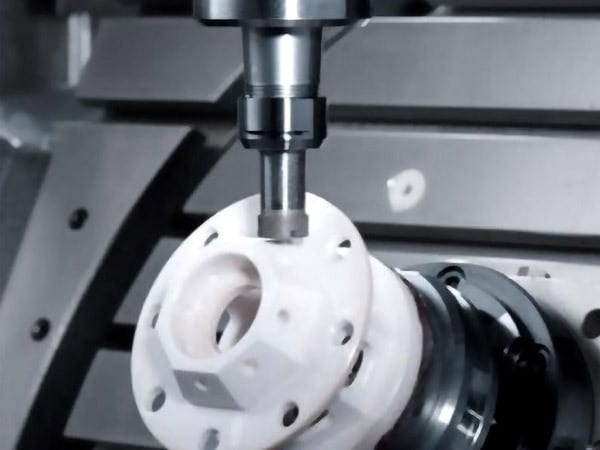
Key advantages of ceramic CNC machining:
- Tight tolerances down to ±0.005 mm
- High surface quality (Ra ≤ 0.2 μm achievable)
- Compatibility with complex geometries
- Stability in extreme thermal environments
Advanced Ceramic Materials for Precision CNC Machining
Alumina (Al₂O₃)
- Key Properties: 1,600 HV hardness | 10⁻¹⁴ Ω·cm resistivity | 8.0 MPa√m fracture toughness
- Applications: Laser-cut RF insulators | HIP-processed implant sleeves | Vacuum chamber feedthroughs
- Machining Edge: Optimal for <5μm wall thickness in MEMS sensor housings
Zirconia (ZrO₂)
- Performance Advantages: 9.0 MPa√m fracture toughness | 1,200°C thermal stability | 0.98 biocompatibility index
- Critical Uses: CAD/CAM dental prosthetics | ATJ-method surgical guides | Hybrid ceramic bearings
- Technical Note: Y-TZP grade enables 0.02mm precision in arthroplasty components
Silicon Carbide (SiC)
- Extreme Specifications: 2,800 HV hardness | 4.5 W/m·K thermal conductivity | 0.05% creep at 1,650°C
- Sector Solutions: CVD-coated rocket nozzles | Plasma etch electrodes | Fusion reactor divertors
- Machining Challenge: Requires diamond grinding after CNC roughing for Ra<0.1μm
Silicon Nitride (Si₃N₄)
- Engineering Benefits: 3.2 g/cm³ density | 1,000 MPa flexural strength | 0.2 friction coefficient
- Industrial Deployment: HIPSN turbine blades | Magnetic drive bearings | Laser sintering platforms
- Precision Benchmark: Holds ±0.01mm in 50mm RBSN rotors
The Ceramic CNC Machining Process
Step 1 – Material Preparation
The starting condition of the ceramic material has a direct impact on machining difficulty, tool wear, and overall cost. Ceramics can be processed in three primary states:
- Green State (Unfired): This is the “soft” stage, where ceramic powder has been shaped but not yet sintered. Green machining is highly cost-effective because it allows for faster cutting speeds, reduced tool wear, and complex geometry creation without significant risk of fracture. However, designers must account for sintering shrinkage (typically 15–25%) in their CAD models.
- White State (Partially Sintered): Partially sintered ceramics are denser and stronger than green ceramics, allowing for more precise cuts. This stage is used when the part requires both dimensional accuracy and a surface finish close to the final specification before firing.
- Fully Sintered State: At this stage, the ceramic has reached its maximum hardness, density, and brittleness. Fully sintered machining is performed only when extremely tight tolerances or post-sintering adjustments are required. The hardness often exceeds that of tungsten carbide, demanding diamond tooling and low-material-removal strategies.
Step 2 – Tooling Selection
The extreme hardness and brittleness of ceramics make diamond-based tooling essential. Tool selection depends on the ceramic grade, machining stage, and part geometry:
- PCD (Polycrystalline Diamond): Offers excellent wear resistance and is suitable for high-volume production of sintered ceramics.
- CBN (Cubic Boron Nitride): Best for certain high-temperature ceramics where thermal stability is critical, although CBN is generally less effective than PCD for oxide ceramics.
- Diamond-Coated Carbide: A cost-effective solution for green machining and prototyping; provides good wear resistance without the expense of solid diamond tools.
Tool geometry must also be optimized: sharp cutting edges minimize cutting forces, and positive rake angles reduce surface damage. Many manufacturers also employ custom tool profiles to match intricate part contours.
Step 3 – Machining Strategy
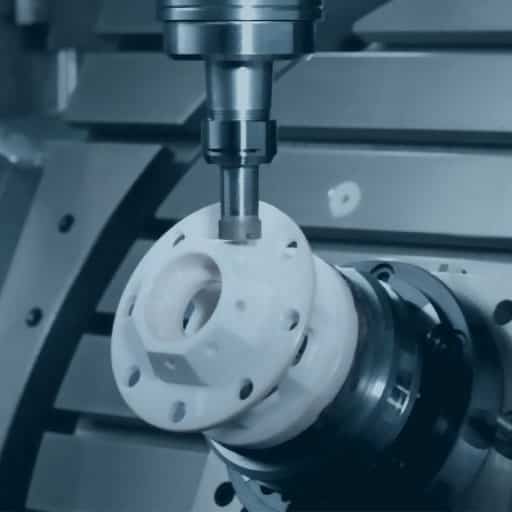
Ceramic CNC machining demands an approach that minimizes mechanical and thermal shock. Standard metal-cutting parameters are unsuitable and must be replaced with carefully controlled values:
- Spindle Speed: 12,000–24,000 RPM depending on ceramic type and tooling. Higher speeds improve surface finish but require rigid machine setups and precise balancing.
- Feed Rate: 0.02–0.05 mm/rev to reduce chipping risk, especially on edges and thin walls.
- Depth of Cut: For sintered ceramics, depths of 0.1–0.3 mm are recommended; deeper cuts should be avoided to prevent crack propagation.
- Coolant Application: Flood coolant is avoided for thermal-shock-sensitive ceramics. Instead, minimal-mist lubrication or directed air blast is preferred to control heat and evacuate chips.
- Toolpath Optimization: Smooth entry/exit strategies and constant tool engagement prevent sudden load changes that can fracture the workpiece.
For extremely fragile parts, ultrasonic-assisted CNC machining can be implemented, where high-frequency vibration reduces cutting forces and improves edge integrity.
Step 4 – Finishing Operations
Achieving final tolerances and surface finishes in ceramic components often requires a combination of advanced finishing processes:
- Grinding: Using diamond grinding wheels to achieve sub-micron tolerances and surface finishes as fine as Ra 0.1 μm.
- Lapping: Produces flat, mirror-like surfaces, critical for sealing surfaces and optical applications.
- Polishing: For aesthetic or functional applications where optical clarity or ultra-low friction is required.
- Ultrasonic Machining: Ideal for intricate features, holes, and slots in fully sintered ceramics without inducing thermal or mechanical stress.
In many high-performance applications—such as aerospace sealing faces or semiconductor wafer carriers—these finishing stages determine whether the part meets or exceeds its functional lifetime.
Parameters Defining Success in Ceramic CNC Machining
1. Toolpath Optimization: Preventing Brittle Fracture
Precision toolpath engineering is critical for avoiding stress concentrations in ceramics. Key strategies include:
- Constant Chip Load: Maintains <0.05mm/tooth engagement to distribute cutting forces evenly
- Spline-Based Transitions: Replaces sharp 90° turns with radiused contours (R≥5mm)
- Entry/Exit Protocols: Ramps or helical plunges prevent edge chipping at penetration points
Implementation Tip: CAM software with ceramic-specific modules (e.g., Autodesk PowerMill Ceramic) automatically generates fracture-minimizing paths
2. Thermal Management: Controlling Microfracture Risk
Ceramics fracture at ΔT>80°C due to thermal shock. Proven solutions:
- Pulsed Cooling: 2-second air blast / 5-second pause cycles maintain ΔT<50°C
- Cryogenic Mist: Liquid nitrogen aerosol (-196°C) for high-MRR operations
- Infrared Monitoring: Real-time surface temp tracking with ±5°C accuracy
Critical Benchmark: Maintain workpiece temperature between 20-80°C during machining
3. Advanced Fixturing: Stress Distribution Engineering
Conventional clamps create >100MPa stress points – fatal for ceramics. Alternatives:
- Hydrostatic Chucks: Oil-pressure systems distribute <5MPa uniform holding force
- Viscoelastic Pads: Silicone-based interfaces absorb 90% clamping vibrations
- Vacuum Fixtures: 0.5bar suction ideal for thin-walled components
Design Rule: Support structures must cover ≥70% of workpiece contact area
Applications of Ceramic CNC Machining
Aerospace Components
Ceramic CNC machining enables the production of heat shields, high-precision bearings, and wear plates that maintain structural integrity at temperatures exceeding 1,200°C. Their exceptional thermal stability and wear resistance make them ideal for components exposed to extreme aerospace operating environments, including turbine housings and re-entry vehicle surfaces.
Medical & Dental Devices
From zirconia dental crowns to orthopedic joint replacements and surgical instruments, ceramic CNC machining parts offer biocompatibility, corrosion resistance, and high compressive strength. These properties ensure long-term performance in the human body while meeting stringent FDA and ISO standards.
Electronics & Semiconductor Manufacturing
In the semiconductor and electronics sectors, ceramic substrates, electrical insulators, and precision heat sinks provide unmatched thermal conductivity and electrical isolation. Their stability under high-frequency and high-voltage conditions makes them essential for advanced microelectronics, RF devices, and cleanroom production tools.
Tips for Machining Ceramic CNC Parts
1. Apply Design for Manufacturability (DFM) Principles
Reduce the risk of fractures by avoiding sharp internal corners and deep thin walls. Incorporating generous radii in designs lowers stress concentrations and improves machinability.
2. Prioritize Pre-Sinter Machining When Possible
Machining in the green or white state significantly lowers tooling costs and machining time. Post-sinter adjustments should be reserved for final tolerance corrections.
3. Monitor Tool Wear in Real Time
Even minor diamond-tool degradation can lead to microcracks in ceramic CNC machining parts—defects that may only be visible during final inspection. Implement tool-wear monitoring systems for consistent quality.
4. Invest in Precision Fixturing
Rigid and vibration-free workholding is essential for maintaining micron-level tolerances and ensuring repeatability in complex part geometries.
5. Partner with Specialized Ceramic CNC Machining Vendors
Work exclusively with suppliers experienced in machining technical ceramics. Their expertise in tooling, process control, and finishing ensures your parts meet both performance and cost targets.
Conclusion
Ceramic CNC machining unlocks capabilities unattainable with metals – creating components that thrive in:
- Extreme Environments: 1,650°C thermal stability (vs. 800°C for superalloys)
- Aggressive Media: Zero corrosion in pH 0-14 solutions
- Critical Wear Zones: 10X longer service life than tungsten carbide
Its ability to transform ultra-hard, brittle materials into precision-engineered components is invaluable in industries demanding exceptional wear resistance, thermal stability, and biocompatibility. By understanding the process, selecting the right parameters, and following proven tips, you can ensure high-quality, cost-effective ceramic CNC machining parts that meet your exact specifications.
Ready to bring your ceramic component designs to life?
Contact Ancastings Precision today for expert ceramic CNC machining services tailored to your project.
- How CNC Design Impacts Sterilization Cycle Time & Cost
- Magnesium Alloy Housings: CNC Anti‑Oxidation & Deformation Control
- Preventing Built-Up Edge When Machining Soft Aluminum for Semiconductor Gas Distribution Panels
- White Layer Formation in Medical Grinding: Risks & Removal
- Titanium TC4 Robot Arms: 5-Axis CNC for 30% Lighter Weight & High Rigidity