
CNC micromachining is a high-precision manufacturing process that produces components at sub-millimeter scales, achieving exceptionally tight tolerances—often within ±1 micron. Unlike conventional machining, this advanced discipline requires specialized machine dynamics, ultra-precision spindles, and micro-scale tooling engineered to remove material with minimal thermal distortion. For procurement teams, sourcing CNC micromachining services ensures access to cutting-edge technology capable of fabricating intricate micro-features essential for industries like medical devices, microelectronics, and aerospace sensors.
Modern micro CNC machining leverages high-speed spindles (50,000–150,000 RPM), air-bearing linear stages, and laser metrology systems to guarantee part accuracy. Leading facilities also incorporate stringent environmental controls—regulating temperature and eliminating vibrations—to maintain micron-level precision throughout production.
Core Techniques in CNC Micromachining
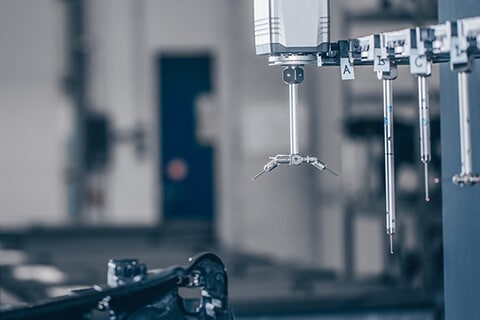
CNC micromachining is not a singular process but an ecosystem of precision manufacturing methods, each optimized for specific material behaviors and geometric constraints. Below, we dissect the key methodologies and their technical considerations:
1. High-Speed Micro Milling
- Tooling: Utilizes ultra-fine carbide or PCD (polycrystalline diamond) end mills, typically ranging from Ø0.1–0.4 mm, with specialized coatings (TiAlN, diamond-like carbon) to mitigate wear.
- Spindle Requirements: Air-bearing or hydrostatic spindles (50,000–150,000 RPM) ensure minimal runout (<1 µm) to prevent tool deflection and breakage.
- Challenges: Chip evacuation becomes critical at micro-scales—flood coolant or high-pressure air blast systems are mandatory to avoid recutting and workpiece damage.
- Applications: Microfluidic channels, optical mold inserts, and medical implant texturing.
2. Micro Turning
- Tooling & Workholding: Sub-millimeter diamond or CBN inserts paired with ultra-precision collet systems (runout <2 µm) for micro-shafts, pins, and medical screws.
- Process Constraints: Surface finish (Ra <0.1 µm) demands rigid machine bases and active vibration damping to suppress chatter.
- Advanced Variants: Swiss-type micro-turning integrates live tooling for complex, small-diameter components (e.g., catheter guidewires).
3. Laser Micromachining
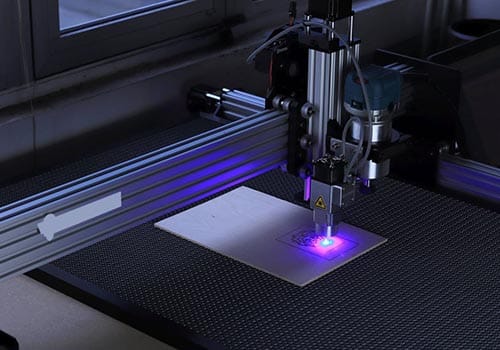
- Process Types: Femtosecond (ultrashort pulse) lasers excel in non-thermal ablation, while UV lasers provide clean cuts in polymers and thin metals.
- Key Advantages:
- Zero tool wear, enabling consistent feature replication (e.g., stent cutting).
- Capable of <10 µm kerf widths in ceramics, glass, or heat-sensitive films.
- Limitations: Recast layer formation in metals requires secondary finishing (chemical etching, electropolishing).
4. Micro-EDM (Electrical Discharge Machining)
- Die-Sinking vs. Wire EDM:
- Micro die-sinking EDM achieves ±1 µm tolerances in hardened tool steels (e.g., micro-injection mold cavities).
- Wire EDM (Ø0.02–0.1 mm wire) produces sharp internal corners and deep slots unreachable via milling.
- Critical Parameters: Pulse duration (<1 µs) and dielectric fluid purity dictate surface integrity (white layer <2 µm).
Selecting the Right Process: Engineering Trade-Offs
- Material Constraints:
- Brittle materials (Si, glass)? Laser or ultrasonic machining avoids fracture.
- High-melting-point alloys? EDM outperforms mechanical methods.
- Feature Complexity:
- True 3D contours? Micro-milling is optimal but limited by tool reach.
- High-aspect-ratio holes? EDM drilling avoids taper.
- Throughput vs. Precision:
- Laser/EDM suits prototyping; micro-milling scales better for batch production.
For engineers, the decision matrix extends beyond capability—thermal management, tool life economics, and post-processing demands must align with end-use requirements (e.g., biomedical implants vs. MEMS sensors).
Applications of Micro CNC Machining
Precision micromachining serves as an enabling technology for industries where conventional manufacturing tolerances are inadequate. Below, we examine critical applications of CNC micromachining, their technical demands, and the validation protocols required to ensure component performance:
1. Medical Devices & Surgical Instruments
- Critical Components:
- Vascular stents (laser-cut NiTi or CoCr, strut widths <100 µm) require burr-free edges to prevent thrombogenesis.
- Micro-surgical tools (scissors, forceps) demand mirror finishes (Ra <0.05 µm) to minimize tissue trauma.
- Implantable sensors & drug-delivery ports necessitate hermetic sealing surfaces with leak rates <1×10⁻⁹ mbar·L/s.
- Validation: SEM (scanning electron microscopy) for edge quality, AFM (atomic force microscopy) for surface roughness mapping.
2. Aerospace & Defense Systems
- Performance-Driven Applications:
- Fuel injector nozzles (diesel/kerosene) with Ø50–200 µm orifices require ±2 µm positional accuracy to ensure combustion efficiency.
- MEMS-based inertial sensors (gyroscopes, accelerometers) demand sub-micron feature alignment for drift stability.
- Turbine blade cooling channels (EDM-drilled, Ø0.3–0.8 mm) must maintain ±5 µm wall uniformity under thermal cycling.
- Validation: White-light interferometry for 3D profilometry, X-ray CT for internal feature inspection.
3. Semiconductor & Microelectronics
- Process-Critical Tooling:
- Wafer handling end-effectors (ceramic or PEEK) require nanoscale smoothness to prevent particle contamination.
- Microfluidic chips (PCR, lab-on-a-chip) need channel depth uniformity within ±1 µm for laminar flow control.
- Interposer substrates (2.5D/3D ICs) rely on laser-drilled vias <20 µm with near-vertical sidewalls (taper <1°).
- Validation: Optical profilometry for surface defects, confocal microscopy for via geometry.
4. Optics & Photonics
- Precision Requirements:
- Fiber-optic ferrules (ZrO₂, stainless steel) must achieve <0.5 µm bore concentricity to minimize insertion loss.
- Freeform optical molds (for AR/VR lenses) require <10 nm RMS form error to avoid wavefront distortion.
- Laser diode mounts demand thermal expansion-matched interfaces with flatness <λ/4 (≈150 nm @ 633 nm).
- Validation: Laser interferometry for wavefront error, ultra-precision CMMs with 0.1 µm repeatability.
Procurement Considerations for Micromachined Parts
Purchasing managers must verify supplier capabilities beyond machine specifications:
- Metrology Infrastructure: Does the vendor offer ISO 17025-accredited measurement systems (e.g., Zygos interferometers, Zeiss SEMs)?
- Process Control: Are statistical methods (e.g., CPK >1.67) applied to ensure lot-to-lot consistency?
- Material Expertise: Can the supplier handle exotic alloys (MP35N, Inconel 718) or brittle ceramics (Al₂O₃, SiC) without microfractures?
For mission-critical components, first-article inspection (FAI) reports with full GD&T validation are non-negotiable. The difference between a functional micro-part and a scrap item often lies in the last 0.5 µm. Purchasing managers often assess whether suppliers can validate parts using advanced metrology—white-light interferometry, CMM systems, or SEM analysis—before approving production.
Challenges and Engineering Considerations
While CNC micromachining unlocks capabilities impossible with conventional methods, it operates at the bleeding edge of manufacturing physics—where traditional rules no longer apply. Here’s what separates true precision engineering from basic small-part machining:
1. The Tooling Paradox
At 50µm diameters, cutting tools behave more like brittle needles than robust cutters. A 0.1mm end mill spinning at 100,000 RPM experiences centrifugal forces approaching 50,000 g—enough to explosively fragment standard carbide grades. Leading solutions now incorporate:
- Single-crystal diamond tooling with negative-rake geometries for ductile-mode cutting of silicon
- Ion-beam sharpened tungsten carbide achieving 50nm edge radii
- Active damping toolholders using piezoelectric elements to counteract chatter in real-time
2. Material Science at Microscale
The “size effect” fundamentally alters material behavior when feature sizes approach grain structures:
- Copper becomes spring-like, requiring cryogenic cooling to prevent smearing
- Medical-grade PEEK demonstrates anisotropic cutting forces depending on polymer chain orientation
- Additively manufactured metals show 300% more variability in micro-machinability versus wrought stock
3. The Metrology Gap
Validating micron-scale features demands instrumentation rivaling semiconductor fabs:
- X-ray computed tomography becomes essential for internal channel inspection
- Helium-ion microscopy provides atomic-level surface defect analysis
- Coherence scanning interferometry measures step heights below 1nm
Best Practices for Selecting Micromachining Services
For professionals sourcing CNC micromachining services, consider these factors:
Machine Tool DNA
- Not all “precision” machines are equal: Look for intrinsic accuracy specs like:
- <0.5µm volumetric uncertainty (ISO 230-2)
- Thermal growth compensation <0.1µm/°C
- Active vibration cancellation below 10nm
Process Mastery Indicators
- Material-specific parameter libraries showing documented experience with your exact alloy/polymer
- Micro-tool life optimization protocols (e.g., laser dressing of micro-drills between uses)
- Surface engineering expertise like controlled fracture machining of optical crystals
Cost Realities
- The 1µm premium: Achieving ±1µm vs ±5µm often doubles costs—but may be unnecessary for non-critical dimensions
- Hidden value drivers: A shop charging $250/hour that eliminates post-processing may outperform a $150/hour vendor requiring manual deburring
For components where failure isn’t an option—think neural probe arrays or satellite gyroscopes—the supplier selection process of CNC micromachining should resemble a semiconductor qualification rather than conventional machining RFQs.
Conclusion
Choosing the right CNC micromachining supplier is as critical as selecting the proper machine or process. Beyond equipment and technical capabilities, consistent quality, validated inspection methods, and the ability to handle complex geometries at scale are what define a reliable supplier.
Ancastings Precision integrates cutting-edge micro CNC machining, precision micromachining, and laser micromachining systems in climate-controlled cleanrooms capable of maintaining sub-micron accuracy. For medical device manufacturers, aerospace suppliers, semiconductor producers, and optical engineers, partnering with Ancastings translates to:
• 30-50% reduction in production risk through validated process controls
• Guaranteed compliance with ISO 13485, AS9100, and ITAR standards
• First-article success rates exceeding 98% for complex micro-components
Our vertically integrated quality system combines real-time SPC monitoring with advanced metrology (including µCT scanning and white-light interferometry) to deliver consistently precise results – even for the most demanding micro-manufacturing applications.
If your upcoming CNC micromachining projects require tight tolerances, diverse material capabilities, and dependable delivery, Ancastings’ micromachining services offer the expertise and infrastructure needed to turn demanding specifications into repeatable results.