
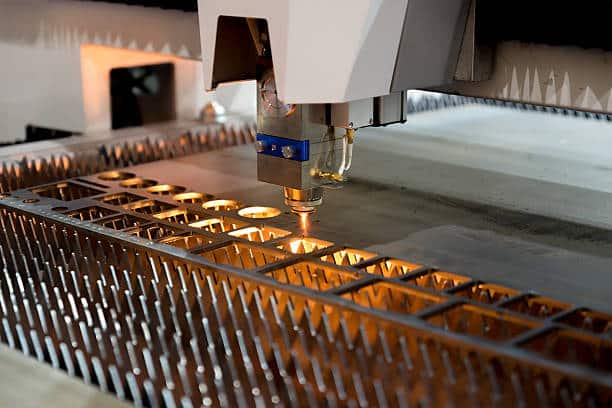
In Industry 4.0 manufacturing, CNC laser cutting machines deliver unprecedented micron-level accuracy – transforming aerospace shims, medical implants, and architectural grids from digital designs to physical reality. These systems recalibrate production economics through:
- Material versatility: Cutting 0.1–30mm steel/aluminum/titanium/composites
- Speed benchmarks: 10x faster than plasma on 3mm stainless
- Tolerance ceilings: ±0.05mm repeatability without tool wear
This guide explores the mechanics, capabilities, and strategic advantages of CNC laser cutting machines, offering actionable insights for manufacturers seeking to optimize production throughput and quality.
What Is a CNC Laser Cutting Machine and How Does It Work?
A CNC laser cutting machine leverages a high-intensity, focused laser beam—precisely controlled via computer numerical control (CNC)—to thermally process materials through melting, burning, or vaporization. This non-contact cutting method enables exceptional edge quality and dimensional accuracy, particularly in complex geometries. Unlike traditional mechanical cutting, CNC laser cutting minimizes mechanical stress on the workpiece, eliminates tool degradation, and greatly reduces the potential for material contamination, making it ideal for high-precision applications across metalworking, aerospace, electronics, and medical manufacturing.
Core Components Include:
- Laser Resonator: Generates the laser beam (CO₂, fiber, or Nd:YAG types).
- Beam Delivery System: Mirrors and fiber optics direct the laser beam to the cutting head.
- CNC Controller: Translates CAD/CAM inputs into motion instructions.
- Assist Gas Nozzles: Oxygen, nitrogen, or air are used to remove molten material and improve edge quality.
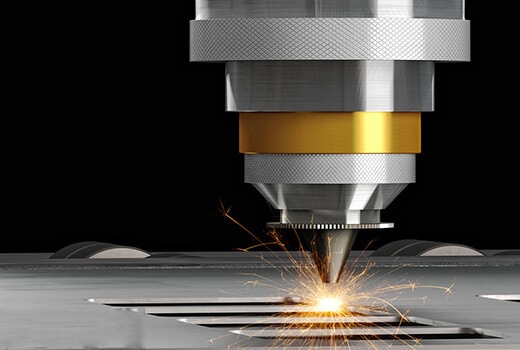
By converting vector-based CNC design software inputs into precise cutting commands, these machines can produce geometrically complex parts with tolerances as tight as ±0.05 mm — a standard in automotive and electronics manufacturing.
Types of CNC Laser Cutting Machines and Their Applications
There are several types of CNC cutting machines that use lasers, each optimized for specific materials and use cases:
1. CO₂ Laser Cutting Machines
- Best for: Non-metallic materials (acrylic, wood, plastics, textiles)
- Wavelength: 10.6 µm
- Features: High cut edge quality, especially for organic materials
2. Fiber Laser Cutting Machines
- Best for: Stainless steel, aluminum, brass, copper
- Wavelength: 1.06 µm (ideal for reflective metals)
- Advantages: Lower maintenance, higher energy efficiency, compact design
3. Hybrid and Flying Optics Systems
- Combine mechanical motion with fixed lasers
- Offer high-speed performance for medium-thickness sheet metals
Industry Applications Include:
- Aerospace: Precision part trimming with minimal heat distortion
- Automotive: High-throughput cutting of chassis and body panels
- Medical Devices: Micron-level accuracy for stents and surgical tools
- Architecture & Signage: Custom perforation, engraving, and artistic detailing
CNC Laser Cutting Machine VS Traditional CNC Cutting Machines
When compared to plasma, flame, and mechanical routers, CNC laser cutting machines stand out in the following aspects:
| Parameter | CNC Laser Cutting | Traditional CNC Cutting |
|---|---|---|
| Cutting Speed | Faster for thin materials (≤8mm steel) | Slower, especially on complex paths |
| Precision | ±0.05 mm or better | ±0.1–0.2 mm |
| Heat Affected Zone (HAZ) | Minimal | Significant (especially plasma/flame) |
| Maintenance | Lower (fiber lasers) | Higher (wear parts) |
| Initial Cost | Higher | Lower |
The initial capital investment for laser-based systems is indeed higher, but the total cost of ownership (TCO) often balances out through lower consumable usage, reduced rework, and faster cycle times.
How CNC Design Software Powers Laser Cutting Efficiency
At the heart of modern CNC laser cutting machine workflows is advanced CNC design software. These tools streamline the entire path from concept to cut, integrating features such as:
- 2D/3D CAD Modeling: Support for complex geometries and assembly views
- CAM Path Optimization: Nesting, kerf compensation, lead-ins/outs, and cutting strategy selection
- Real-time Simulation: Detect collisions, thermal stress, and warping before production
- Post-Processing: G-code generation tailored to specific CNC controllers (Fanuc, Siemens, etc.)
Top software solutions in this space include:
- AutoCAD + SheetCAM for customizable paths
- SolidWorks + Lantek Expert Cut for manufacturing suites
- Fusion 360 with integrated cloud-based simulation and collaboration tools
These software platforms not only reduce programming time but also enable agile prototyping and rapid iteration — critical for lean and just-in-time manufacturing systems.
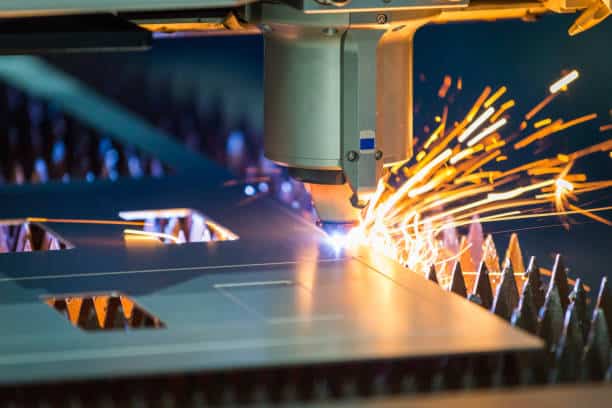
Optimizing Production with CNC Laser Cutting Technology
Manufacturers seeking to gain a competitive edge must view their CNC laser cutting machine not merely as a cutting tool but as a strategic asset. Key practices include:
- Material Optimization: Use nesting software to maximize sheet utilization
- Gas Selection Strategy: Nitrogen for oxide-free edges; oxygen for thicker sections with faster cut speeds
- Preventive Maintenance: Regular lens cleaning, alignment checks, and filter replacement
- Integration with MES/ERP Systems: Real-time production tracking, predictive maintenance scheduling, and cost traceability
By integrating these machines into a broader digital manufacturing strategy, companies can achieve higher OEE (Overall Equipment Effectiveness) and accelerate time-to-market.
Conclusion
CNC laser cutting machines have become a cornerstone of advanced production workflows. Whether operating in a high-mix, low-volume environment or managing continuous high-volume throughput, the strategic selection of a CNC cutting machine—equipped with advanced motion control, intelligent nesting software, and adaptive beam modulation—can drive measurable improvements in production efficiency, part accuracy, and material utilization.
Prior to capital investment, manufacturers must rigorously evaluate variables such as cut path complexity, substrate reflectivity and thickness, cycle time requirements, and automation compatibility. When aligned with skilled programming and shop-floor integration, CNC laser cutting evolves beyond equipment—it becomes a core enabler of lean manufacturing and a key differentiator in competitive markets.