
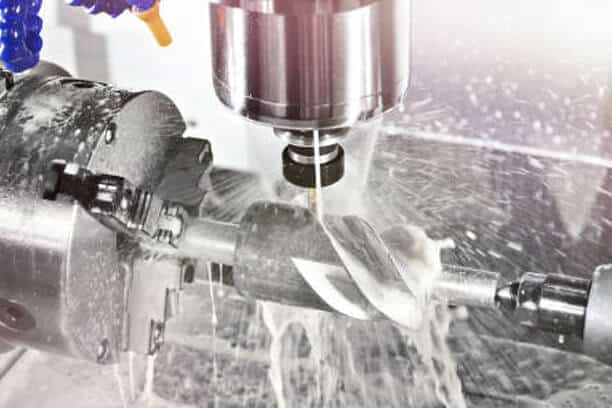
CNC machining transforms digital blueprints into real-world components with tolerances as fine as ±0.005 mm and surface finishes reaching Ra 0.4 µm in today’s precision-driven industries—from aerospace and automotive to medical technology. The ability to produce high-accuracy, repeatable, and scalable CNC machining parts ultimately depends on the architecture and mechanical integrity of the CNC machine itself.
This technical guide explores the hidden infrastructure that enables this level of precision. By dissecting the CNC machining parts production ecosystem, it reveals how machine design, component alignment, and control intelligence collectively determine tolerance capability, thermal stability, and production scalability.
For engineers evaluating suppliers, validating quality systems, or considering capital equipment investment, this article serves as a technical due diligence framework—helping you understand what truly defines a high-performance CNC machining service.
The Machine Frame and Bed: The Foundation of Micron-Level Precision
Every micron of precision in CNC machining parts begins at the base—the machine bed and frame. This structural foundation does more than support weight; it absorbs vibration, resists torsional stress, and manages thermal expansion during long machining cycles.
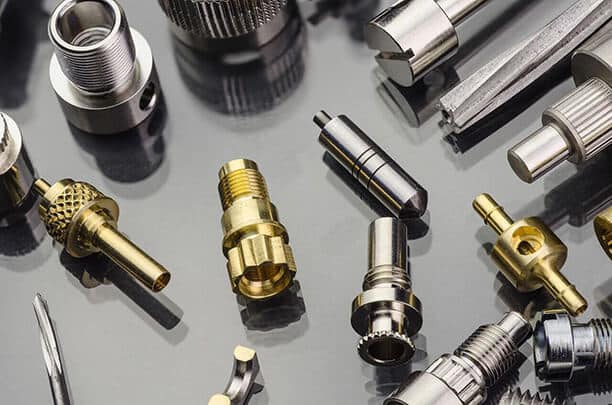
- Materials Used: High-grade cast iron, granite composites, or polymer-mineral compounds are standard. These materials are selected not only for strength but for their exceptional vibration-damping and thermal resistance characteristics.
- Core Function: By minimizing deflection under load and suppressing harmonic resonance during tool engagement, the bed ensures that precision is maintained from the first part to the thousandth.
- Direct Impact on CNC Machining Parts: Whether the component is a tight-tolerance shaft, a critical sealing surface, or a heat-sensitive polymer housing, the bed’s rigidity ensures consistent dimensional integrity across materials, geometries, and machining speeds.
In applications such as aerospace turbine housings, medical instrument enclosures, or optical alignment parts, even a 2-micron shift can compromise functionality. The rigidity of the bed ensures that every CNC machining part retains consistent dimensional integrity regardless of material or cycle length.
In essence, the machine frame is the silent enabler of accuracy—without it, even the best spindle and controller cannot compensate for vibration or instability.
Spindle System: Where RPM Meets Rigidity
The spindle is the mechanical heart of CNC precision machining. Its rotational accuracy dictates both the cutting quality and the achievable surface finish.
The heart of CNC precision machining parts production – where RPM meets rigidity:
| Parameter | Standard Spindle | Precision Spindle |
|---|---|---|
| Max RPM | 8,000–15,000 | 20,000–42,000 |
| Runout | 0.005 mm | ≤0.001 mm (ISO 230-3) |
| Critical For | Automotive bushings | Aerospace turbine blades |
Thermal Control: Liquid-cooled spindles maintain a stable 22 °C ± 1 °C during continuous machining—essential when working with heat-sensitive materials like titanium or Inconel.
A high-performance spindle ensures ultra-smooth finishes, stable surface geometry, and tight tolerances. For aluminum CNC machining parts, a high-RPM spindle enables rapid material removal while preserving dimensional accuracy and surface smoothness.
Linear Motion Systems: Precision in Every Axis
The accuracy of CNC machining parts depends heavily on linear motion systems. Two main technologies define axis control:
- Ball Screws: Deliver ±0.002 mm precision, ideal for mold bases and general-purpose machining where high torque and rigidity are required.
- Linear Motors: Enable rapid 0.5G acceleration, essential for complex 5-axis aerospace components and high-speed cutting with zero backlash.
Modern CNC machines employ laser-calibrated encoders to detect even sub-micron deviations, ensuring absolute position feedback. This technology enables manufacturers to produce CNC machining parts with consistent repeatability even in high-speed operations.
CNC Controller Intelligence: The Brain Behind Precision
Controllers such as Siemens 840D, FANUC 31i, or Heidenhain iTNC transform mechanical movement into digital precision.
- Adaptive Machining: Real-time tool load adjustment during Inconel roughing
- Compliance Features: FDA 21 CFR Part 11 data logging for medical parts
- Collision Avoidance: 3D simulation preventing $250k crash damage
When ordering CNC precision machining parts, understanding a vendor’s control system capability directly correlates with achievable surface quality and dimensional accuracy—especially for complex multi-axis parts.
Tool Changer & ATC: Automation that Drives Throughput
For CNC machining parts that require multiple operations such as drilling, contouring, tapping, and slotting, a high-speed Automatic Tool Changer (ATC) is indispensable.
The ATC module allows the machine to automatically switch tools during the machining cycle without operator intervention. This significantly improves throughput, especially when producing high-mix, low-volume or complex, high-precision parts.
- Tool Magazine Capacity: Depending on the machine architecture, tool changers can hold anywhere from 12 to over 120 tools. More advanced systems may include matrix or chain-style magazines designed for quick access and compact footprints.
- Indexing Time: The speed at which the tool changer swaps tools directly impacts the cycle time—especially for parts with intricate features requiring 10+ tool changes per run. High-speed ATCs can complete a full change in under 2 seconds, reducing idle time between operations.
- Tool Life Management: Modern CNC control systems integrate software that tracks each tool’s usage in real time, monitoring parameters such as spindle load, runtime, and number of tool changes. This enables predictive replacement before tool failure occurs—critical for minimizing scrap and ensuring dimensional consistency across production batches.
In environments such as aerospace, medical device manufacturing, and automotive prototyping—where hundreds or thousands of CNC machining parts are processed weekly—automated tool changing minimizes manual intervention, eliminates inconsistency, and enables lights-out production.
Furthermore, ATCs help reduce human error by automating tool sequence selection and reducing the need for manual fixture adjustments.
For any operation prioritizing speed, accuracy, and scalability, investing in a robust tool changing system is not optional—it’s foundational to modern CNC precision machining.
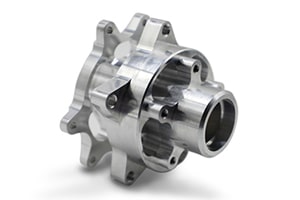
Workholding & Fixtures: The Unsung Heroes of Accuracy
Even the best machine won’t perform without solid workholding. Vises, chucks, vacuum plates, and custom jigs ensure the part stays secure throughout the operation.
Fundamentals:
- Application-Specific Design: Fixtures are customized for part geometry
- Clamping Accuracy: Must align with tolerances of the finished part
- Repeatability: Essential for multi-piece orders and unattended production
For complex or thin-walled CNC machining parts, vacuum plates or custom fixtures reduce deformation and improve repeat accuracy during long-cycle runs.
Conclusion
For manufacturers and engineers working with CNC machining parts, understanding the core systems of a CNC machine is far more than a theoretical exercise—it’s essential for ensuring production success. From the stability of the machine bed to the precision of the spindle, tool changer, and motion control systems, every subsystem directly affects tolerance, repeatability, surface finish, and cycle time.
When sourcing a reliable vendor, validating a production line, or investing in new machining capacity, a deep technical evaluation of these components is critical. High-performance CNC precision machining parts don’t happen by chance—they are the result of optimized machine architecture and disciplined process control.
At Ancastings Precision, we combine advanced equipment with seasoned engineering expertise to deliver custom CNC parts that meet the most demanding specifications across aerospace, medical, automotive, and industrial sectors. Whether you need rapid prototypes or full-scale production, Ancastings ensures accuracy, efficiency, and consistent quality—backed by ISO-certified processes and global fulfillment.
If you’re looking for a trusted partner in high-precision CNC manufacturing, Ancastings CNC machining services are engineered to support your success from design through delivery.
Latest Blog:
- How CNC Design Impacts Sterilization Cycle Time & Cost
- Magnesium Alloy Housings: CNC Anti‑Oxidation & Deformation Control
- Preventing Built-Up Edge When Machining Soft Aluminum for Semiconductor Gas Distribution Panels
- White Layer Formation in Medical Grinding: Risks & Removal
- Titanium TC4 Robot Arms: 5-Axis CNC for 30% Lighter Weight & High Rigidity