
As healthcare innovation accelerates, medical CNC machining has become a cornerstone of precision manufacturing for medical equipment, devices, and surgical tools. From orthopedic implants to diagnostic enclosures, the medical industry demands ultra-high precision, material traceability, and uncompromising compliance with regulatory standards. Medical CNC machining bridges the gap between innovative design and clinically viable devices, delivering components with micron-level accuracy, biocompatibility, and uncompromising reliability.
CNC machining—specifically 3-axis, 4-axis, and 5-axis systems—enables manufacturers to deliver medical-grade components with micrometer-level tolerances and repeatability. The ability to machine a wide range of biocompatible materials (e.g., titanium, PEEK, stainless steel, and medical polymers) makes CNC machining the preferred solution for custom and production-scale medical parts.
Applications of CNC Machining in the Medical Industry
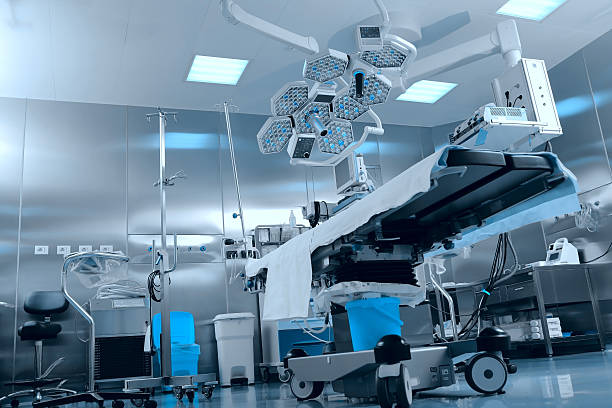
The medical industry’s reliance on CNC machining stems from its unparalleled ability to produce components with micron-level accuracy, complex geometries, and validated biocompatibility. From life-sustaining implants to diagnostic instruments, CNC machined parts form the foundation of modern healthcare technology. Here’s how precision manufacturing enables innovation across key sectors:
Surgical Instruments – Where Precision Meets Performance
Beyond scalpels and forceps, CNC machining delivers instruments for minimally invasive robotics, microsurgery, and advanced laparoscopy:
- Non-Negotiables: Mirror finishes (Ra < 0.4 μm) to prevent bacterial adhesion, burr-free edges to avoid tissue trauma, and stress-relieved geometries for tactile feedback.
- High-Impact Examples: Robotic end-effectors, harmonic scalpels, laparoscopic staplers, biopsy needle housings.
- Material Criticality: ASTM F899 surgical stainless steel (17-4PH/316L), titanium alloys (Ti-6Al-4V), and cobalt-chrome for corrosion resistance during autoclaving.
Orthopedic Implants – Engineering the Human Frame
CNC-machined implants demand biomechanical precision and osseointegration compatibility:
- Key Components: Porous titanium spinal cages, patient-specific knee femoral components, trauma plates, and interference screws.
- Material Science: ASTM F136 ELI titanium (low ion release), PEEK polymer (radiolucency), and tantalum (bone-mimicking modulus).
- Technical Imperatives: Controlled surface roughness (3-5 μm Ra) for bone adhesion, topological optimization for load distribution, and stress-relieving heat treatments.
Diagnostic & Imaging Equipment – The Infrastructure of Detection
From MRI to portable ultrasound, CNC machining ensures vibration stability and EMI shielding:
- Core Applications: RF coil enclosures, CT scanner gantry components, X-ray collimators, and spectrometer mounts.
- Material Solutions: Non-magnetic alloys (aluminum 6061-T6, titanium), copper-beryllium (EMI shielding), and Ultem® (high-dielectric housings).
- Precision Demands: Flatness within 0.01mm/m for calibration surfaces, ISO 2768-mK tolerances for assembly interoperability.
Dental Solutions – Micro-Precision for Macro-Impact
Beyond crowns and bridges, CNC enables digital dentistry at scale:
- Expanding Frontiers: CAD/CAM abutments, zirconia implant bars, surgical guides, and orthodontic bracket systems.
- Biocompatibility Focus: Grade 5 titanium, zirconia, and Ceramic Injection Molding (CIM) composites.
- Accuracy Benchmarks: Sub-20μm fit tolerances for cementless implants, Ra < 0.2 μm surfaces to deter plaque.
Patient Monitoring & Life Support – Reliability in Critical Moments
Components where failure is not an option:
- Mission-Critical Parts: Ventilator flow sensors, infusion pump lead screws, dialysis machine valve bodies, defibrillator heat sinks.
- Material Resilience: USP Class VI plastics (PPSU, PEEK), anodized aluminum (thermal management), and antimicrobial copper alloys.
- Validation Requirements: Leak-test certifications (ISO 594-2), cleanroom assembly (ISO Class 7), and IEC 60601 electrical safety compliance.
Meeting Medical Standards: Quality, Compliance, and Material Control
For CNC machined parts in medical equipment manufacturing, precision is merely the starting point. True medical-grade production demands rigorous process control, exhaustive documentation, and full validation – where failure carries human consequences. Below, we dissect the non-negotiable pillars of compliance.
Key manufacturing considerations include:
- ISO 13485 compliance: CNC operations must align with medical QMS frameworks.
- FDA 21 CFR Part 820: Traceability and documentation of manufacturing practices.
- Surface finishing: Electropolishing, passivation, and anodizing to ensure biocompatibility.
- Material traceability: Lot control and certification of medical-grade metals and polymers.
- Micron-level tolerances: Often down to ±0.001 mm, especially for implantable or microfluidic parts.
In medical CNC machining, quality = patient safety. A single undocumented tool change or untraced material lot can trigger recalls costing millions – or lives. Only partners with robust QA protocols and experience in medical validation cycles can consistently meet these requirements. Partners like Ancastings transform compliance from a cost center into a competitive edge, ensuring your devices survive regulatory scrutiny and real-world use.
From Prototype to Production: Agility Matters
In the race to bring life-saving devices to market, time-to-market agility is inseparable from regulatory compliance. Medtech manufacturers face a dual mandate: accelerate development cycles while navigating FDA/EU MDR gateways. Advanced medical CNC machining bridges this gap, enabling seamless transitions from concept to scaled production – without compromising precision or documentation integrity.
The Four Pillars of Agile Medical CNC Machining
- Design Validation & Preclinical Testing
- Critical Need: Functional prototypes matching final material specs (e.g., Ti-6Al-4V ELI implants) for biomechanical fatigue testing.
- Ancastings Advantage: 3-5 day lead times with full material certifications (ASTM F1472/F136), enabling rapid design freeze.
- Functional Prototyping
- Beyond Aesthetics: Electrosurgical handpieces or microfluidic chips requiring ±0.005mm tolerances and sterilizability validation.
- Technical Edge: In-process CMM reports to prove feasibility for ISO 10993 biocompatibility testing.
- Bridge Production
- Solving the “Valley of Death”: 50-500 unit runs for clinical trials while awaiting FDA 510(k) clearance.
- Compliance Safeguard: Identical processes/tooling as mass production to avoid revalidation (per FDA QSR 820.70).
- High-Volume Production
- Scalability Without Sacrifice: Automated pallet systems for 50,000+ implant components/month with CpK >1.67.
- Zero-Excuse Traceability: ERP-integrated DHRs (Device History Records) per 21 CFR Part 11.
Why Agility Demands Specialized Infrastructure
| Capability | Generic Machine Shop | MedTech-Optimized Partner |
|---|---|---|
| Regulatory Documentation | Retroactive paperwork | Live QMS-integrated travelers (eDQMS) |
| Material Transition | Requalification needed | Validated “like-for-like” swaps (e.g., PEEK to PEI) |
| Volume Scaling | Tooling redesigns | Validated process corridors (e.g., ±15% feed/speed) |
| Contamination Control | Basic coolant management | ISO Class 7 cleanroom CNC cells |
Integrating Sheet Metal into Medical Equipment: The Value of Ancastings
While CNC machining produces the critical inner components, custom sheet metal fabrication plays a supporting yet essential role in medical assemblies—particularly for:
- Device enclosures
- Protective panels
- Mounting frames for diagnostic machinery
- Carts, stands, and instrument housings
This is where Ancastings provides a distinct advantage. With dual expertise in precision CNC machining and sheet metal fabrication, Ancastings delivers complete mechanical solutions for the medical sector—from internal parts to external enclosures.
Conclusion
Medical CNC machining is more than a manufacturing process—it’s a critical enabler of clinical performance, patient safety, and regulatory success. As medical devices become smarter, smaller, and more complex, manufacturers must align with partners who offer not only cutting-edge machining capabilities but also deep expertise in compliance and quality control.
With integrated services that combine CNC precision and custom sheet metal fabrication, Ancastings is positioned to support forward-thinking medical manufacturers in bringing innovative, life-saving technologies to market faster and safer.