
Metals offer unparalleled versatility through their unique properties. From mechanical strength and thermal conductivity to corrosion resistance and magnetic behavior, metals are tailored to meet the rigorous demands of industries such as aerospace, automotive, healthcare, and electronics. Understanding these properties, from mechanical to environmental adaptability, is critical for selecting the right material for your project.
Therefore, this guide dives into the essential characteristics of metals, explores common types like steel, aluminum, and titanium, and highlights their applications across industries. Hope this resource equips you with the knowledge to make informed decisions for precision manufacturing.
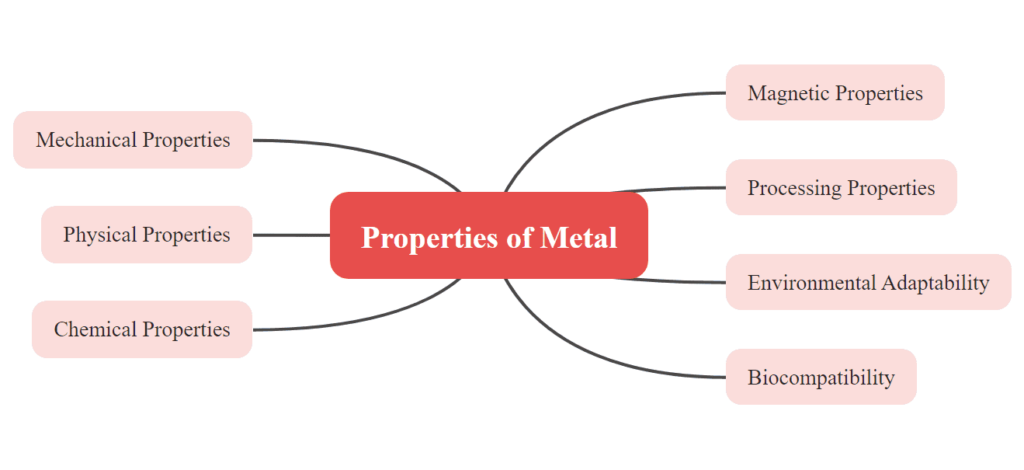
What Are Metal Properties?
Metal properties refer to the inherent characteristics that define how metals behave under specific conditions, such as mechanical stress, temperature changes, or chemical exposure. These properties determine a metal’s suitability for various applications across industries. Generally, metal properties can be categorized into several types, which we will explore in detail below.
Mechanical Properties
Mechanical properties involve how metals respond to external forces, such as tension, compression, or impact. The properties are critical for determining their performance in structural and load-bearing applications. Key mechanical properties include:
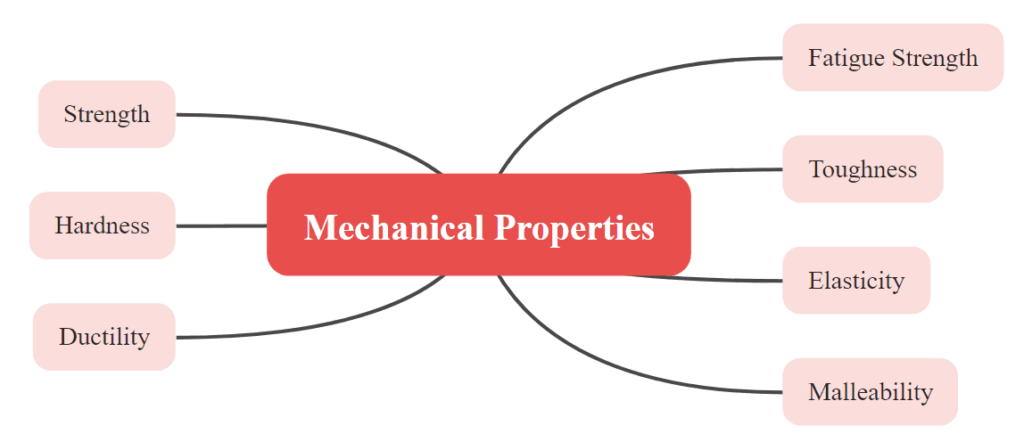
- Strength: Metals exhibit strength through properties like tensile strength, yield strength, and compressive strength, which determine their resistance to breaking or deforming under various forces.
- Hardness: Hardness refers to a metal’s ability to resist surface indentation or scratching, making it crucial for applications requiring durability against wear.
- Ductility: Ductility is the ability of a metal to deform plastically without fracturing, allowing it to be shaped into various forms like wires or sheets.
- Toughness: It measures a metal’s capacity to absorb energy before fracturing.
- Fatigue Strength: Fatigue strength indicates a metal’s resistance to failure under repeated loading and unloading cycles, ensuring reliability in components subjected to cyclic stress.
- Elasticity: Elasticity is the property that allows metals to return to their original shape after deformation. Thus it allows them suitable for applications like springs and elastic components.
- Malleability: This is the ability of a metal to be hammered, pressed, or rolled into thin sheets without breaking, which is essential for manufacturing items like foil.
Physical Properties
Physical properties describe the inherent, non-reactive traits of metals that can be observed or measured without altering their chemical composition. These properties determine how metals interact with energy, environments, and other materials in practical applications. Key physical properties involve:
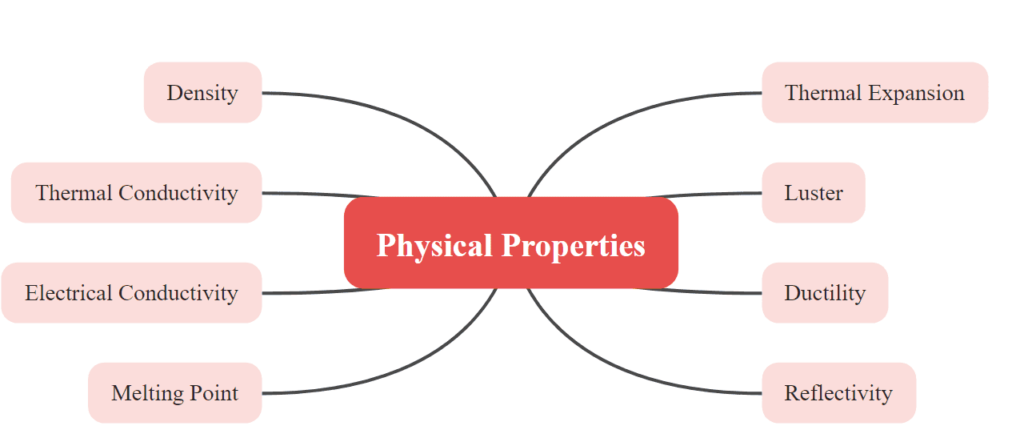
- Density: The mass per unit volume of metals influences their suitability for applications where weight is critical. Consequently, these metals are ideal for aerospace components.
- Thermal Conductivity: Moreover, materials with high thermal conductivity efficiently transfer heat, making them essential for applications like heat exchangers and cookware. For instance, engineers often choose these materials for these purposes.
- Electrical Conductivity: Metals with high electrical conductivity conduct electricity well, which is crucial for electrical wiring and circuits.
- Melting Point: High melting points are well-suited for high-temperature applications like incandescent light bulbs because they change from solid to liquid at a specific temperature.
- Thermal Expansion: Engineers must account for thermal expansion when designing structures like bridges because it describes the degree to which a metal’s dimensions change with temperature fluctuations. Therefore, they design these structures with expansion joints to accommodate this property.
- Luster: Metals with a high luster reflect light well, contributing to their aesthetic appeal and making them suitable for decorative items like jewelry.
- Ductility: Ductile metals can be easily drawn into wires or other shapes without fracturing, making them ideal for applications such as electrical cables. In addition, manufacturers can shape these metals into various forms for different uses.
- Reflectivity: It is the ability to reflect a significant portion of incident light. Thus they are fit for applications like mirrors, reflectors, and solar collectors.
Chemical Properties
Chemical properties involve how metals interact with chemical substances in their environment, including reactions with oxygen, water, acids, alkalis, or other compounds. These properties are responsible for a metal’s stability, durability, and usability in corrosive or reactive settings. Key chemical properties include:
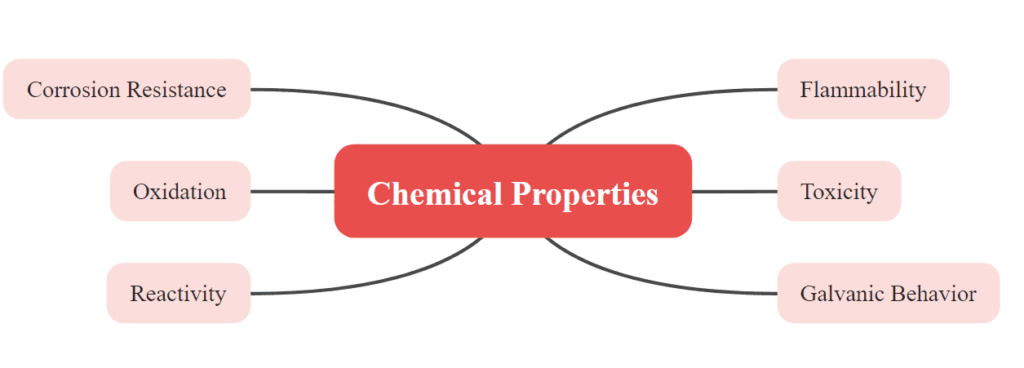
- Corrosion Resistance: Metals like stainless steel exhibit high corrosion resistance due to protective layers, such as chromium oxide. This property prevents degradation from oxidation or chemical exposure. Consequently, these metals are ideal for applications where durability is crucial.
- Oxidation: Oxidation occurs when metals react with oxygen to form oxides, as seen in iron rusting in moist air. For instance, this process can be slowed by applying protective coatings.
- Reactivity: Metals vary in their reactivity, with some, like aluminum, forming passive oxide layers that protect against acidic corrosion, while others, such as titanium, remain stable in alkaline environments.
- Flammability: The susceptibility of metals to burning, as seen in magnesium igniting brightly in air, is a critical factor in determining their safety for use in various environments.
- Toxicity: The harmful effects of metals like lead on health and ecosystems limit their use in certain applications, such as plumbing.
- Galvanic Behavior: When dissimilar metals are paired, galvanic behavior can occur, leading to accelerated corrosion of the more reactive metal, as seen in zinc sacrificially corroding to protect steel. Consequently, engineers must carefully select metals to avoid such interactions.
Magnetic Properties
Magnetic properties involve how metals interact with magnetic fields, including their ability to attract, repel, or retain magnetism. These properties are crucial for applications in electronics, energy, and advanced technologies. Key magnetic properties include:
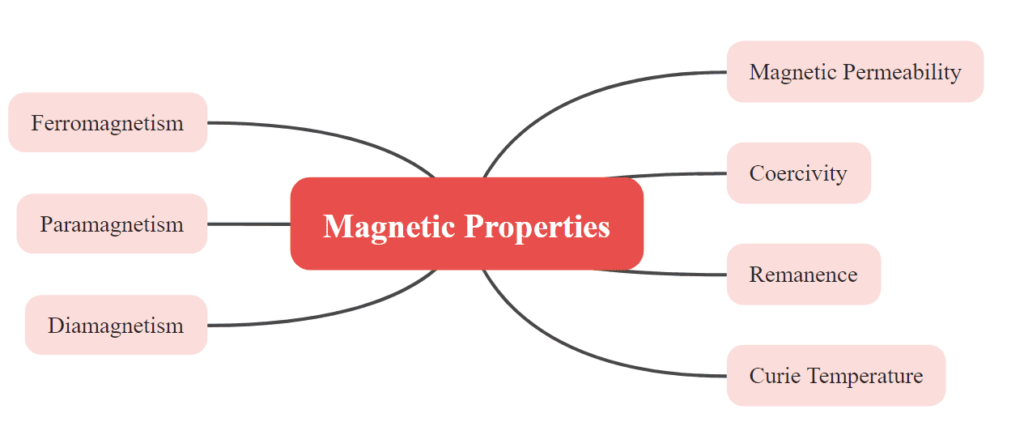
- Ferromagnetism: Ferromagnetic metals like iron, nickel, and cobalt exhibit a strong attraction to magnetic fields and retain magnetization. Consequently, these metals are crucial for applications requiring strong magnetic fields.
- Paramagnetism: Paramagnetic materials, such as aluminum and platinum, show a weak attraction to magnetic fields that disappears when the field is removed. Thus, it makes them suitable for sensors or medical imaging devices.
- Diamagnetism: Diamagnetic materials, including copper and silver, exhibit a weak repulsion from magnetic fields. Hence, it is useful in applications like MRI machines or levitation systems.
- Magnetic Permeability: The magnetic permeability of a material indicates how easily it can be magnetized. For example, soft iron cores in transformers are materials with high permeability that help create efficient magnetic flux. Therefore, selecting materials with appropriate permeability is essential for optimizing magnetic systems.
- Coercivity: High-coercivity alloys, such as neodymium magnets, resist demagnetization effectively. They are perfect for demanding applications like wind turbines and hard drives.
- Remanence: After exposure to a magnetic field, materials like steel retain residual magnetism, known as remanence, which is important in magnetic storage media.
- Curie Temperature: The Curie temperature marks the point at which ferromagnetic materials lose their magnetism, with iron losing its magnetic properties at 770°C.
Processing Properties
After exploring the various physical and chemical properties of metals, we will now focus on their processing properties. These properties determine how metals are processed and shaped to meet specific application requirements. Here are the key aspects of metal processing properties:
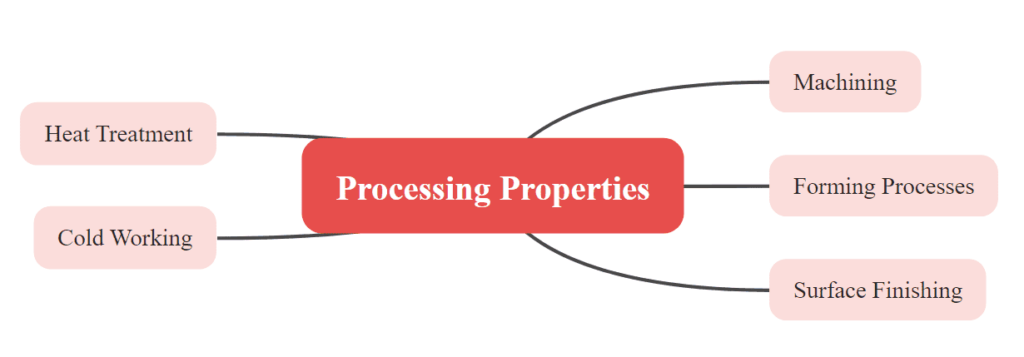
- Heat Treatment: Heat treatment processes, such as annealing and quenching, alter metal properties by changing their microstructure. Consequently, these processes are crucial for optimizing metal performance in various applications.
- Cold Working: Cold working involves deforming metals at room temperature, which generates dislocations that strengthen the material by preventing further deformation. For instance, this process is often used to harden metals like copper and aluminum.
- Machining: Machining processes, including turning, milling, and drilling, shape metals by removing unwanted material, allowing for precise control over the final product’s dimensions and surface finish. As a rule, CNC machining enhances precision and efficiency in these operations.
- Forming Processes: Forming processes like rolling, extrusion, and forging shape metals into desired forms by applying mechanical forces, with each method offering unique advantages in terms of cost, efficiency, and product quality. Therefore, the choice of forming process depends on the intended application and desired properties.
- Surface Finishing: Surface finishing techniques, such as electroplating and powder coating, enhance metal surfaces by improving corrosion resistance, aesthetics, and durability.
Environmental Adaptability
Environmental adaptability refers to a metal’s ability to perform reliably under specific environmental conditions. This property is critical for ensuring longevity and functionality in demanding applications. Key aspects include:
- Temperature Resistance: Temperature resistance refers to a metal’s ability to maintain its structural integrity at high or low temperatures. Such property makes high-temperature alloys like nickel-based superalloys crucial for jet engines, and cryogenic metals like aluminum vital for liquid nitrogen tanks.
- Radiation Resistance: Radiation resistance is the ability of a material to withstand radiation without degrading. It is critical for nuclear reactors where zirconium alloys are used in fuel rods, and for space applications where materials are used for radiation shielding in satellites.
- Humidity Resistance: Humidity resistance involves a metal’s ability to resist moisture-induced damage, such as rust or swelling, which is important for outdoor structures like galvanized steel bridges and electronics. Therefore, selecting materials with high humidity resistance is essential for maintaining the integrity of these systems.
- UV Resistance: UV resistance is the ability of a material to withstand ultraviolet light exposure without degradation. Generally, it is used in outdoor applications such as aluminum in solar panels or architectural cladding.
Biocompatibility
Biocompatibility refers to a metal’s ability to interact safely with biological systems without causing adverse reactions, such as toxicity, inflammation, or immune responses. This property is critical for medical and healthcare applications. Key aspects involve:
- Non-Toxicity: It refers to the absence of harmful effects on living tissues or organs, which is essential for implants like pacemakers.
- Corrosion Resistance in Biological Environments: Corrosion resistance in biological environments means that materials can resist damage from body fluids like blood or saliva. This ability prevents harmful ions from being released. For example, stainless steel and cobalt-chromium alloys are used in joint replacements. Therefore, this property is very important for maintaining the structural integrity of implants.
- Osseointegration: Osseointegration is the ability of a material to bond with bone tissue without causing rejection. Thus, it is critical for orthopedic implants, such as titanium used in hip replacements or dental implants.
- Allergic Response Minimization: Minimizing allergic responses involves reducing the potential to trigger allergic reactions or immune responses. Thus, it is important for skin-contact devices, such as nickel-free stainless steel used in surgical tools or jewelry.
Influencing Factors for Metal Properties
However, the properties of metals are not fixed. They depend on internal and external factors that alter their structure, composition, or environment. Understanding these factors is essential for tailoring metals to meet specific application requirements.
Alloying Elements:
Alloying elements are added to base metals. Examples of these elements include chromium, carbon, and nickel. They are used to improve specific properties. For instance, chromium enhances corrosion resistance in stainless steel. Carbon increases hardness in carbon steel. Nickel adds toughness to superalloys. Consequently, these additions are very important for customizing metals for different applications.
Manufacturing Processes:
Manufacturing processes shape and refine metals. These processes include casting, forging, rolling, and machining. Cold working increases strength but reduces ductility. Hot working, on the other hand, improves grain structure for more balanced properties. For instance, additive manufacturing allows for creating complex shapes, but it may also introduce porosity.
Heat Treatment:
Heat treatment involves heating and cooling metals in a controlled way. This process changes the metal’s microstructure. For example, annealing softens metals to make them easier to machine. Quenching increases hardness. Tempering helps reduce brittleness. Notably, these treatments are important for optimizing how metals perform.
Temperature Exposure:
Temperature exposure has a big impact on metals. High temperatures can cause creep in materials such as aluminum. However, very low temperatures can make carbon steel brittle. Therefore, it is important to understand these effects when choosing materials for specific temperature environments.
Microstructure:
The microstructure of a metal, including grain size and phase composition, influences its strength, toughness, and corrosion behavior, with fine grains enhancing strength and coarse grains improving ductility. Indeed, microstructural control is critical for achieving desired properties.
Environmental Conditions:
Environmental conditions have a significant impact on metal properties. One instance is that exposure to corrosive chemicals, moisture, or radiation can cause problems. Saltwater speeds up corrosion in unprotected steel. Additionally, radiation can weaken structural metals in nuclear reactors. As a result, it is important to carefully consider these environmental factors when selecting materials.
Impurities and Defects:
Impurities and defects can weaken metals. These include unintended inclusions, voids, or dislocations. They reduce weldability, load-bearing capacity, and fatigue life. Therefore, quality control is essential in metal production. For instance, sulfur impurities in steel reduce its weldability. This highlights the importance of maintaining metal purity.
Various Types of Metal
Metals are categorized according to their composition, properties, and applications. Understanding these types helps engineers and manufacturers select the optimal material for specific needs. Below are the most widely used metals and their key characteristics:
Ferrous Metals:
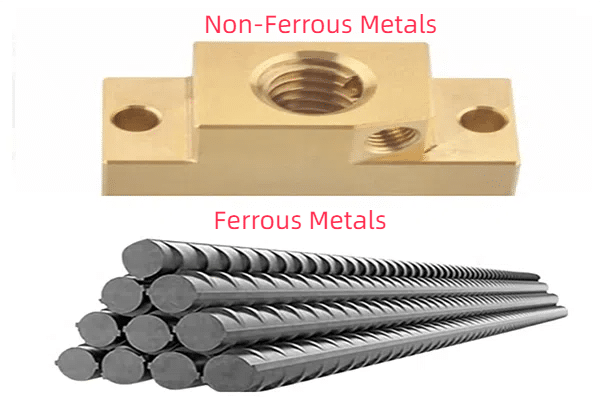
Ferrous metals, primarily composed of iron, offer high strength and magnetic properties, making them cost-effective for applications like construction and automotive parts. Key examples include:
- Carbon Steel: High strength and affordability.
- Stainless Steel: Enhanced corrosion resistance.
- Cast Iron: Excellent wear resistance.
Non-Ferrous Metals:
Non-ferrous metals are lighter and more corrosion-resistant, with examples like:
- Aluminum: Lightweight and conductive.
- Copper: Superior electrical conductivity.
- Titanium: High strength-to-weight ratio and biocompatibility.
Alloys:
Alloys combine metals to enhance specific properties, such as:
- Brass: Machinable and corrosion-resistant.
- Bronze: Wear-resistant and durable.
- Nickel-Based Superalloys: Heat and corrosion-resistant.
Precious Metals:
Precious metals are highly valued for their conductivity and corrosion resistance, including:
- Gold: Excellent conductivity and aesthetic appeal.
- Silver: Highest electrical conductivity.
- Platinum: Extreme durability and catalytic properties.
Refractory Metals:
Refractory metals are known for their high-temperature resistance, with examples like:
- Tungsten: Highest melting point.
- Molybdenum: Thermal and electrical conductivity.
Light Metals:
Light metals are prized for their low density, including:
- Magnesium: Lightest structural metal.
- Aluminum Alloys: Balance strength and weight.
Metal Applications in Industries
Metals are universally applied across various industries due to their diverse properties and applications. Here’s an overview of how metals are used in different sectors:
Medical Industry
The medical industry extensively uses metals to manufacture medical devices and implants. For example, titanium is used in prosthetics and surgical instruments due to its biocompatibility and high strength-to-weight ratio. Aluminum is also used in certain implants because it offers a favorable balance of strength and weight.
Automotive and Machinery Industry
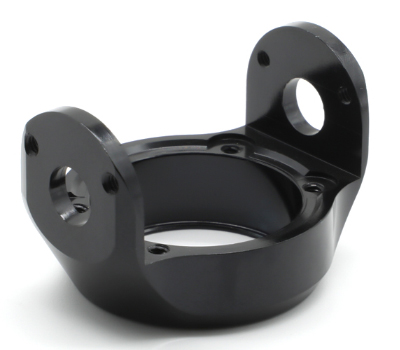
The automotive and machinery industries heavily rely on metals to build vehicle bodies and machinery components. Iron, aluminum, and steel are the most commonly used metals, with steel providing strength and durability, and aluminum contributing to weight reduction. These metals enable vehicles and machinery to withstand high temperatures and pressures.
Construction Industry
The construction industry relies on metals to build structures and houses. Iron and steel serve as primary structural materials, while copper, zinc, and aluminum are used in roofing and piping systems due to their corrosion resistance and durability.
Aerospace Industry
The aerospace industry selects metals with high strength-to-weight ratios and corrosion resistance, such as aluminum and titanium. These metals are used in aircraft frames and engine parts because they can withstand extreme temperatures and stresses.
Electronic Industry
The electronic industry utilizes metals with excellent conductivity, such as gold, silver, and platinum. These metals are used in high-reliability applications like connectors and switches because they provide stable current transmission.
Choose Ancastings for Machining your Metal Parts
Ancastings Precision delivers precision metal machining solutions tailored to your needs. With advanced CNC technology, we handle materials like sheet metal, stainless steel, and titanium for industries such as aerospace, automotive, and healthcare. Additionally, our ISO-certified processes ensure top-quality, dimensionally accurate parts, while our efficient workflows guarantee fast turnaround and competitive pricing. From prototyping to large-scale production, we combine innovation, reliability, and sustainability to meet your project goals.
Conclusion
Metals remain indispensable in engineering and manufacturing due to their adaptability and performance-driven properties. By leveraging mechanical traits like tensile strength and physical attributes, industries achieve groundbreaking innovation. Thus, choosing the right metal type and processing method not only enhances product quality but also drives cost-efficiency and sustainability.
FAQs
Mechanical properties include strength, hardness, ductility, and toughness, which determine how metals respond to forces like tension, compression, or impact
Corrosion resistance ensures longevity and durability, especially in harsh environments like marine or chemical industries.
Refractory metals like tungsten and nickel-based superalloys excel in high-temperature environments, such as jet engines or nuclear reactors.
Biocompatible metals, like titanium and stainless steel, are non-toxic, corrosion-resistant, and compatible with biological tissues, making them ideal for medical implants.
Alloying enhances properties like strength, corrosion resistance, and heat tolerance by combining a base metal with other elements (e.g., chromium in stainless steel).
Factors include alloy composition, manufacturing processes, heat treatment, microstructure, and environmental exposure.
Copper and silver are top choices due to their excellent electrical conductivity, widely used in wiring and electronics.
Ferrous metals contain iron and are magnetic, while non-ferrous metals are lightweight and corrosion-resistant.