
Titanium alloys have become increasingly popular in various industries due to their exceptional strength, corrosion resistance, and lightweight properties. These alloys, created by adding specific elements to pure titanium, offer a wide range of mechanical characteristics that make them perfect for demanding applications.
Therefore, this guide will explore the different types of titanium alloys, their unique properties, challenges in machining, and more. Whether you are looking to understand titanium alloy grades or seeking effective machining tips, this comprehensive resource will provide valuable insights.
What are Titanium Alloys?
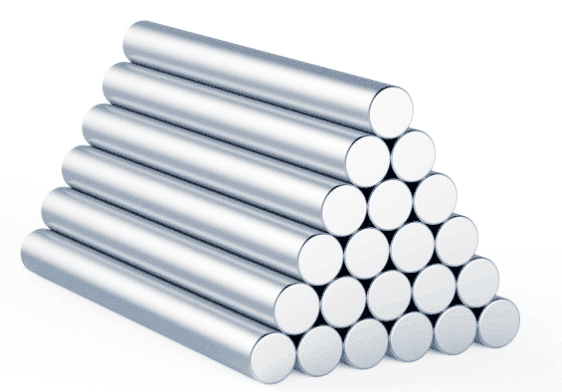
Titanium is a strong and lightweight metal that is famous for its impressive strength-to-weight ratio and resistance to corrosion. With an atomic number of 22 and the chemical symbol “Ti,” it possesses a silvery-gray appearance that can be altered through anodizing to exhibit a range of colors.
Furthermore, to enhance its inherent properties, titanium alloys are created by combining pure titanium with other metals. By alloying titanium with elements, containing aluminum, vanadium, and molybdenum, manufacturers can significantly improve specific characteristics. As a result, these alloys maintain the key advantages of titanium while simultaneously delivering enhanced performance.
However, despite its many advantages, titanium is more expensive than metals like steel and aluminum. For instance, pure titanium typically costs around $18 to $20 per kilogram, while titanium alloys range from $70 to $80 per kilogram.
Types of Titanium Alloys: Structure and Strength
Titanium alloys can be classified in various ways, but the most common methods are according to their structure and strength. These categories help determine the alloys’ mechanical properties. Here is the specific classification:
Classification by Structure
Alpha Alloys
Alpha alloys primarily combine with oxygen, along with small amounts of other elements like carbon and iron as impurities. While the high oxygen content enhances the alloy’s strength, it also reduces its ductility. Forthermore, known for their excellent corrosion resistance and deformability, alpha alloys are well-suited for applications in the chemical and engineering industries. Typically, manufacturers use these alloys where corrosion resistance and formability are more important than high strength.
Near-Alpha Alloys
Near-alpha alloys merge the advantages of alpha alloys with the strength characteristics of alpha + beta alloys. Specifically engineered for high-temperature applications, these alloys provide excellent creep resistance while retaining good strength at temperatures reaching 500–550°C. Thus, they find widespread use in aerospace and other high-performance industries.
Beta and Near-Beta Alloys
Beta alloys result from adding beta-stabilizing elements, significantly enhancing the cold workability and heat treatability of titanium. Manufacturers can strengthen these alloys through heat treatment, and some even provide better corrosion resistance than commercially pure titanium grades. Consequently, beta alloys are well-suited for applications requiring high strength and ease of processing, such as aerospace and automotive.
Alpha-Beta Alloys
Alpha-beta alloys blend the properties of both alpha and beta phases, providing an excellent balance of strength, ductility, and heat resistance. These medium to high-strength materials have tensile strengths from 620 to 1250 MPa and resist creep at 350°C to 400°C. Additionally, they can undergo heat treatment to achieve a wide range of mechanical properties. One of the most well-known alpha-beta alloys, Ti-6Al-4V, enjoys widespread use in aerospace, medical implants, and marine environments with its outstanding strength-to-weight ratio.
Classification by Strength
Titanium alloys can also be divided by their strength, which is important when selecting materials for specific applications.
Low Strength
These alloys exhibit a yield strength of less than 500 MPa (73 KSI). They are commonly utilized in applications requiring moderate strength, including specific grades of commercial titanium, such as:
- ASTM grades 1, 2, 3, 7, and 11.
Moderate Strength
Alloys with a yield strength between 500 and 900 MPa (73-131 KSI) are employed for applications requiring higher strength and good corrosion resistance. Examples include:
- ASTM grades 4, 5, and 9
- Specific alloys like Ti-2.5%Cu and Ti-8%Al-1%Mo
Medium Strength
These alloys, with a yield strength between 900 and 1000 MPa (131-145 KSI), are ideal for critical applications that demand high strength, good corrosion resistance, and toughness at elevated temperatures. Examples involve:
- Ti-6%Al-4%V
- Ti-6%Al-2%Sn-4%Zr-2%Mo
High Strength
Alloys with yield strengths ranging from 1000 to 1200 MPa (145-174 KSI) are suitable for demanding applications, such as aircraft parts and medical implants. These alloys offer resistance to fatigue, creep, and corrosion. Examples include:
- Ti-6%Al-2%Sn-4%Zr-6%V
- Ti-5%Al-2.5%Sn
Very High Strength
With tensile strengths exceeding 1200 MPa (174 KSI), very high-strength titanium alloys are expensive but deliver exceptional performance in extreme environments. Applications include jet engines, rocket motors, spacecraft, and nuclear reactors. Examples include:
- Ti-13%V-11%Cr-3%Al
- Ti-10%V-2%Fe-3%Al
- Ti-4%Al-4%Mo-4%Sn-0.5%Si
Titanium Alloys Grades: Properties and Applications
After discussing the types of titanium alloys based on their structure and strength, it is crucial to examine the specific grades of titanium alloys. Below is a breakdown of some of the key titanium alloy grades:
Grade 1 Titanium Alloy (Commercially Pure Titanium)
Grade 1 boasts high ductility and excellent corrosion resistance, especially in marine environments. Although it ranks as the softest and lowest in strength among titanium grades, its formability and ease of welding make it ideal for applications where strength is not the primary concern. People commonly use it in chemical processing equipment, medical implants, and marine or offshore applications.
Grade 2 Titanium Alloy (Commercially Pure Titanium)
Grade 2 presents a balance between strength and corrosion resistance. While it offers slightly higher strength than Grade 1, it also retains excellent corrosion resistance. Moreover, due to its combination of good strength, ductility, and weldability, Grade 2 finds wide application in various areas, such as aircraft components, heat exchangers, and marine structures.
Grade 3 Titanium Alloy (Commercially Pure Titanium)
Grade 3 provides higher strength than Grade 2 but with a slight reduction in ductility. It is still highly resistant to corrosion, especially in mild environments. Moreover, grade 3 is often employed in applications requiring higher strength without sacrificing too much corrosion resistance, such as in aerospace components.
Grade 5 Titanium Alloy (Ti-6Al-4V)
Grade 5 ranks as the most common titanium alloy, celebrated for its high strength and excellent corrosion resistance. Comprising 90% titanium, 6% aluminum, and 4% vanadium, Grade 5 delivers a strong strength-to-weight ratio. As a result, it becomes ideal for demanding applications in aerospace, automotive industries, medical implants, and offshore engineering.
Grade 6 Titanium Alloy (Titanium Alloy)
Grade 6 contains aluminum and tin, which enhance its strength and stability. It is often applied in applications exposed to high temperatures due to its excellent thermal stability. Common applications include aerospace and jet engines.
Grade 7 Titanium Alloy (Titanium Alloy)
Grade 7 is known for its exceptional corrosion resistance, particularly in environments with low temperatures and extreme pH conditions. The presence of palladium improves its corrosion resistance, ideal for chemical processing equipment and reactors in corrosive environments.
Grade 9 Titanium Alloy (Ti-3Al-2.5V)
Composed of 90% titanium, 3% aluminum, and 2.5% vanadium, Grade 9 offers a balance of strength, corrosion resistance, and workability. It is more formable than Grade 5 while providing higher strength than Grade 2. Grade 9 is commonly employed in aerospace, sporting equipment, and automotive parts.
Grade 11 Titanium Alloy (Titanium Alloy)
It is a high-temperature alloy with excellent corrosion resistance, particularly in reducing environments. It is utilized in high-strength applications that require resistance to corrosion at elevated temperatures.
Grade 12 Titanium Alloy (Titanium Alloy)
This type of titanium provides excellent corrosion resistance in harsh environments and is suitable for applications requiring both high strength and resistance to elevated temperatures.
Grade 23 Titanium Alloy (Ti-6Al-4V ELI)
Grade 23 is a variant of Grade 5 with extra low interstitial (ELI) content, which enhances its fracture toughness and ductility. This makes it especially fit for medical implants and critical aerospace components.
| Grade | Composition | Strength | Ductility | Corrosion Resistance | Applications |
| Grade 1 | Commercially Pure Titanium | Lowest | High | Excellent | Chemical, medical, marine |
| Grade 2 | Commercially Pure Titanium | Lower | High | Excellent | Aircraft, heat exchangers |
| Grade 3 | Commercially Pure Titanium | Medium-high | Slightly reduced | High | Aerospace, pressure vessels |
| Grade 5 | Ti-6Al-4V | High | Moderate | Excellent | Aerospace, automotive, medical |
| Grade 6 | Titanium Alloy | High | Moderate | High | Aerospace, jet engines |
| Grade 7 | Titanium Alloy | Medium-high | High | Excellent | Chemical processing |
| Grade 9 | Ti-3Al-2.5V | Medium | High | Good | Aerospace, sports equipment |
| Grade 11 | Titanium Alloy | High | Moderate | Excellent | Chemical, petroleum |
| Grade 12 | Titanium Alloy | High | Moderate | Excellent | Aerospace, cryogenic |
| Grade 23 | Ti-6Al-4V ELI | High | High | High | Medical, aerospace |
How to Choose the Right Titanium Alloy?
Choosing the right titanium alloy depends on factors like strength, corrosion resistance, machinability, and cost. For high-strength applications, Grade 5 is widely used, particularly in the aerospace and medical industries. If corrosion resistance is a priority, alloys like Grade 7 or Grade 23 are ideal. Softer alloys like Grade 1 and Grade 2 are easier to machine, while higher-strength options such as Grade 5 offer better performance but are harder to process. While titanium alloys tend to be more expensive, their durability and performance in specialized industries like aerospace and medical implants often justify the higher cost. The choice should balance these factors in accordance with the specific application needs.
Pros and Cons of Titanium Alloy
Titanium alloys have become essential in various high-performance industries due to their unique properties. However, like any material, they come with both advantages and limitations that should be considered for specific applications.
Pros of Titanium Alloy:
- High Strength-to-Weight Ratio: Titanium alloys are lightweight yet strong, making them ideal for aerospace, automotive, and medical applications.
- Corrosion Resistance: They are highly resistant to corrosion, even in harsh environments like seawater and acidic conditions.
- Biocompatibility: Titanium alloys are non-toxic and employed in medical implants and prosthetics.
- Heat Resistance: These alloys can withstand extreme temperatures, making them suitable for high-performance applications.
- Durability: They offer long-lasting strength and resistance to wear and tear, ensuring longevity in products.
- Malleability: They are relatively easy to machine and form into complex shapes compared to other high-strength materials.
Cons of Titanium Alloy:
- Cost: Titanium alloys are expensive due to complex extraction and processing methods.
- Difficult to Weld: Welding titanium alloys requires specialized equipment and techniques, making it challenging for some applications.
- Brittleness at Low Temperatures: Some titanium alloys can become brittle when exposed to extremely low temperatures.
- Lower Fatigue Resistance: Compared to some other materials, titanium alloys may have lower resistance to cyclic loading, limiting their use in some dynamic applications.
- Sensitive to Contamination: Titanium alloys can be sensitive to contamination, especially when exposed to oxygen or nitrogen during processing, which can affect their strength.
Applications of Titanium Alloys
As we mentioned before, titanium alloys are widely used in various industries due to their exceptional strength-to-weight ratio, corrosion resistance, and biocompatibility. Here are some common applications:
- Aerospace: Lightweight and high-strength titanium alloys play a crucial role in aircraft components such as engines, airframes, landing gear, and turbine blades.
- Medical: The biocompatibility of titanium makes it a top choice for surgical implants, including joint replacements, dental implants, and prosthetics.
- Automotive: High-performance vehicles utilize titanium for engine components, exhaust systems, and suspension parts, which helps to reduce weight while enhancing strength.
- Marine: In marine applications, manufacturers rely on titanium alloys for boat hulls, propellers, and various underwater components, capitalizing on their resistance to seawater corrosion.
- Chemical Processing: The corrosion resistance inherent in titanium allows its use in heat exchangers, reactors, and storage tanks within the chemical industry.
- Sports Equipment: Manufacturers of high-end bicycles, golf clubs, and tennis rackets prefer titanium for its lightweight and durable characteristics.
- Consumer Electronics: Premium electronics such as smartphone frames and laptop bodies incorporate titanium to combine strength with a sleek design. For instance, Apple’s high-end models like the iPhone 16 Pro feature titanium alloys in their frames.
- Energy: In nuclear power plants, operators choose titanium alloys for heat exchangers and reactor components due to their resilience against radiation and corrosion.
Effective Tips for Machining Titanium Alloys
By following these tips, you can improve efficiency, prolong tool life, and achieve high-quality results when machining titanium alloys.
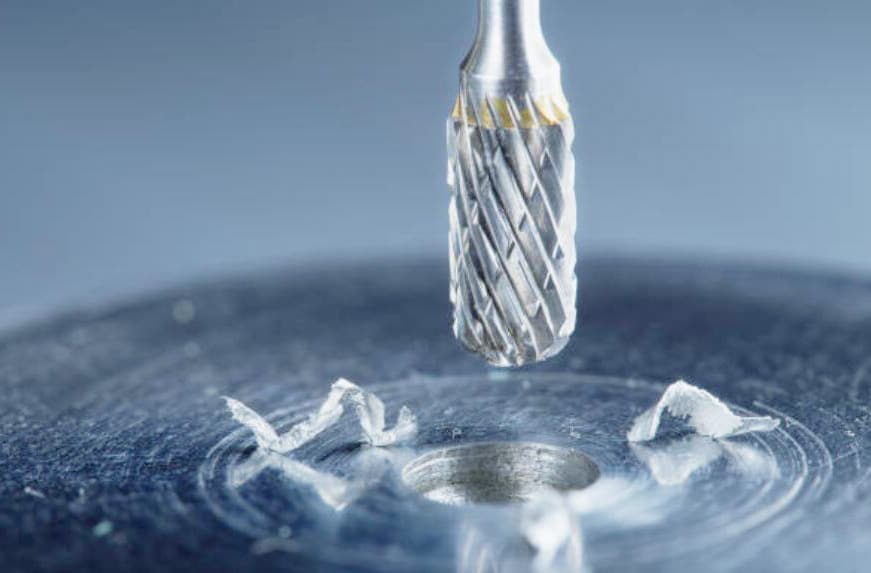
- Choose the Right Cutting Tools: Use carbide tools for better durability. Coated tools improve performance by reducing wear and heat buildup.
- Optimize Cutting Speeds: Machining titanium requires slower cutting speeds than steel to prevent overheating. Start with recommended parameters and adjust based on results.
- Maintain Coolant Flow: Use high-pressure coolant systems to dissipate heat. Titanium is prone to heat buildup, so consistent cooling is critical for tool longevity and workpiece quality.
- Use Low Feed Rates: Reduce feed rates to avoid tool wear and material deformation. Titanium’s strength makes it more challenging to cut, so low feed rates prevent unnecessary strain.
- Avoid Excessive Heat: Excessive heat can lead to material distortion and tool failure. Ensure good chip removal to keep temperatures down.
- Control Cutting Depth: Shallow cuts are preferable to reduce heat generation. Take multiple passes instead of one deep cut to manage tool wear and heat more effectively.
- Pre-Drill Holes: When drilling, pre-drill pilot holes to minimize the risk of work hardening. This helps reduce cutting forces during the main drilling operation.
- Maintain Rigidity in Setup: Ensure your machine setup is stable. Titanium alloys are prone to vibration, which can affect surface finish and tool life.
Titanium Vs. Aluminum Vs. Steel
When comparing Titanium, Aluminum, and Steel, the key differences lie in their strength-to-weight ratio, corrosion resistance, cost, machinability, and thermal conductivity.
Strength-to-Weight Ratio
- Titanium: Titanium alloys have an exceptional strength-to-weight ratio, which is appropriate for aerospace, medical, and high-performance applications where both strength and low weight are critical.
- Aluminum: Lighter than both titanium and steel, aluminum is less strong but suitable for applications where minimizing weight is essential, such as in the automotive and aerospace industries.
- Steel: Steel is stronger than aluminum but heavier. It offers excellent strength at a lower cost and is widely used in construction, automotive, and heavy machinery, where weight is less of a concern.
Corrosion Resistance
- Titanium: Titanium alloys excel in corrosion resistance, especially in harsh environments like seawater, making them perfect for marine, chemical, and aerospace applications.
- Aluminum: Aluminum naturally resists corrosion due to its oxide layer, but it can still corrode in certain environments, such as saltwater.
- Steel: Steel is prone to corrosion unless treated or coated, like with stainless steel, which offers better resistance in corrosive environments.
Cost
- Titanium: Titanium alloys are the most expensive due to the complex extraction process and their relative rarity. They are used in specialized applications where performance justifies the higher cost.
- Aluminum: Aluminum is relatively affordable and abundant, making it ideal for consumer products, lightweight structures, and packaging.
- Steel: Steel is the least expensive of the three materials, making it suitable for a wide range of applications, particularly in construction, machinery, and infrastructure.
Machinability
- Titanium: Titanium is difficult to machine due to its hardness and tendency to generate excessive heat during processing. Specialized tools and slower machining speeds are required.
- Aluminum: Aluminum is easy to machine with standard tools, fit for mass production and the creation of complex shapes.
- Steel: Steel’s machinability varies depending on the grade. Softer grades are easier to machine than titanium, but harder grades may require specialized equipment.
Thermal Conductivity
- Titanium: Titanium has low thermal conductivity, which can be a disadvantage in applications that require efficient heat dissipation.
- Aluminum: Aluminum has excellent thermal conductivity, ideal for heat exchangers, cooling applications, and electronics.
- Steel: Steel offers moderate thermal conductivity, suitable for heat-treated applications where strength is prioritized over heat dissipation.
Applications
- Titanium: Titanium commonly finds uses in aerospace, medical implants, marine, high-performance automotive, and military applications where high strength, low weight, and corrosion resistance are essential.
- Aluminum: Aluminum is widely appied in aerospace, automotive, packaging, construction, consumer electronics, and transportation due to its light weight and cost-effectiveness.
- Steel: Steel is most commonly found in construction, automotive, machinery, tools, and infrastructure, where durability and strength are more critical than weight.
Machining Titanium Alloy at Ancastings Precision
By understanding the various types, properties, and machining techniques, manufacturers can make informed decisions about the right alloy for their projects. With effective strategies in machining and selecting the appropriate alloy, titanium can deliver superior performance in even the most challenging applications.
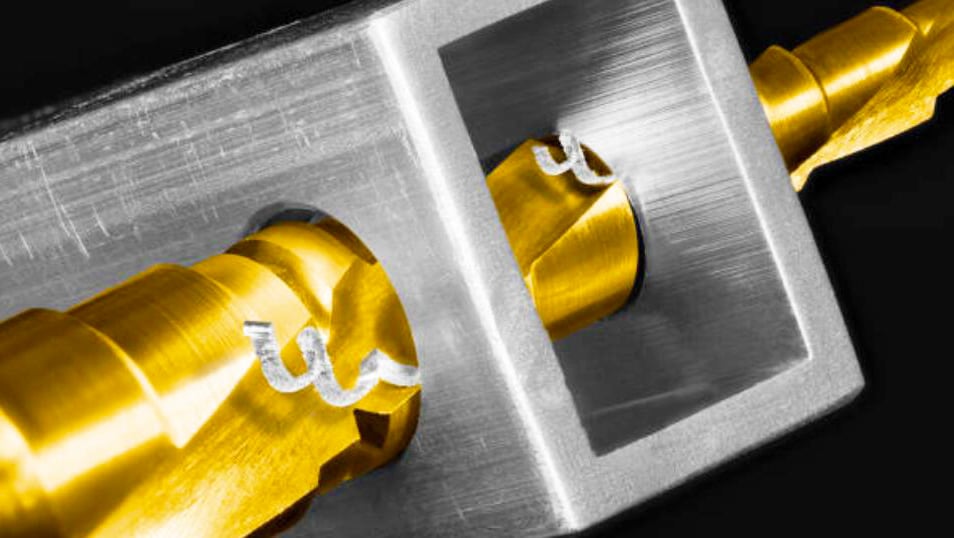
At Ancastings Precision, we specialize in high-precision titanium alloy machining, offering high-quality, custom parts through advanced cnc machining technology and an experienced engineering team. Whether for the aerospace, medical, or high-performance automotive industry, we provide precise machining and surface finish services according to the client’s requirements.
FAQs
Titanium alloys include Grade 1, Grade 2, Grade 5 (Ti-6Al-4V), Grade 9, Grade 12, Grade 23 (Ti-6Al-4V ELI), and others, each with varying compositions of aluminum, vanadium, molybdenum, and other elements.
The best titanium alloy depends on the application. Grade 5 (Ti-6Al-4V) is commonly considered the best for high-strength applications like aerospace and medical implants due to its excellent strength-to-weight ratio and corrosion resistance.
The main disadvantages of titanium alloys are their high cost and difficulty in machining due to their hardness and tendency to generate heat during processing.
Titanium alloys have a higher strength-to-weight ratio than steel but are generally not as strong in absolute terms. Steel is stronger but also heavier, while titanium alloys offer similar strength at a much lower weight.