
Mechanical fasteners play a crucial role in manufacturing and assembly, ensuring structural stability and reliability across various industries. Understanding their types, materials, and applications can help you make informed choices for your projects.
As such, in this article, we’ll cover the common types of fasteners, the materials applied to their production, their wide-ranging applications, and key factors to consider when choosing the right fastener. Plus, we’ll explore custom fastener options to meet specific project needs.
What is Fastener?
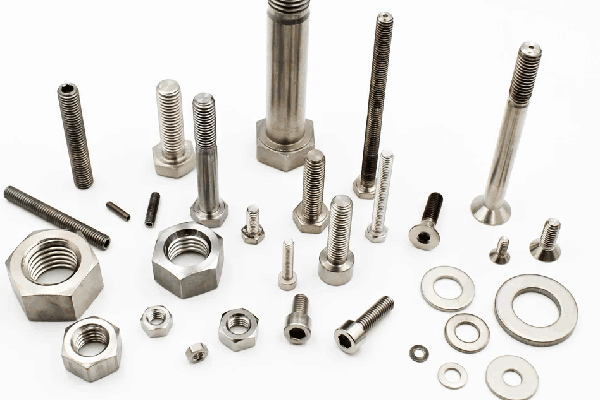
Fasteners are essential components that mechanically join or secure two or more objects. They provide a practical and reliable connection method for various applications. In contrast to adhesives, which rely on chemical bonding, fasteners typically allow easy disassembly. This process does not damage the connected parts, ensuring flexibility and reusability.
Furthermore, they come in various forms, including screws, bolts, nuts, washers, and rivets. Each type is engineered to meet specific material and application requirements. Their strength and adaptability render them indispensable across industries. For instance, construction, automotive, electronics, and aerospace rely on them extensively.
Common Types of fasteners
There are two forms of fasteners: permanent and non-permanent. Permanent fasteners create a firm and lasting joint, while non-permanent fasteners allow for temporary connections. Below are some common types of fasteners.
- Nails: Straight fasteners for quickly joining wood or soft materials, often utilized in temporary fixes.
- Screws: Threaded fasteners that offer strong holding power and resist loosening during use.
- Bolts: Thick, threaded shafts combined with nuts to create strong structural connections.
- Nuts: Threaded components that lock bolts in place, with options for added vibration resistance.
- Washers: Flat discs that distribute force evenly and protect surfaces from damage.
- Rivets: Form permanent joints by deforming their ends, widely employed in metalwork and aviation.
- Pins: Cylindrical components used for alignment, pivoting, or securing mechanical parts.
1. Nails
- Common Nails: Thick and sturdy, suitable for heavy-duty tasks like framing, decking, or structural work where strength is crucial.
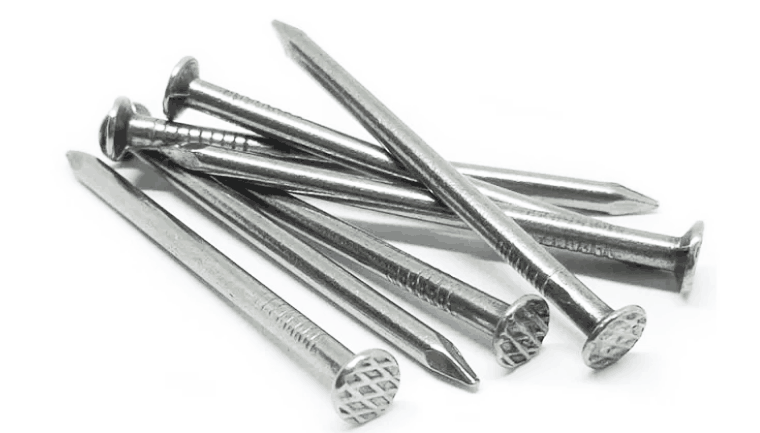
- Box Nails: Slimmer than common nails, designed to minimize wood splitting, making them perfect for light construction and softwoods.

- Finish Nails: Small heads and smooth shanks create a clean, seamless look, ideal for delicate tasks like attaching trim, molding, or cabinetry.

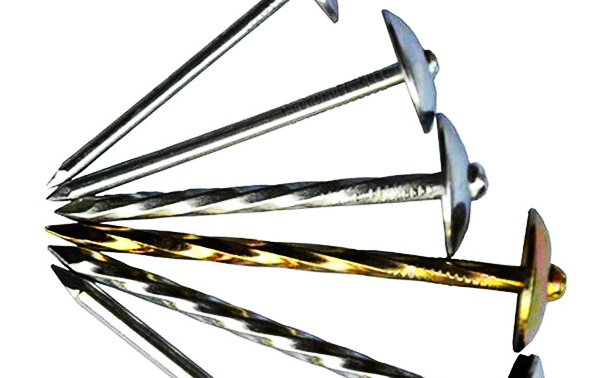
- Roofing Nails: Feature wide, flat heads and short shanks, providing firm attachment for roofing materials like shingles or sheet metal.
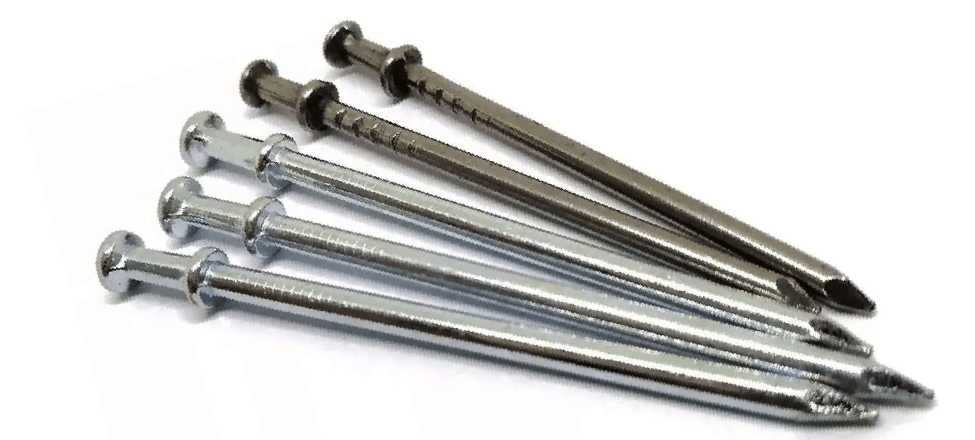
- Duplex Nails: Two-headed design allows easy removal, making them a go-to choice for temporary constructions like scaffolding or formwork.
2. Screws
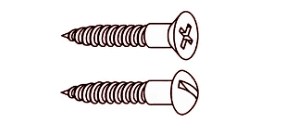
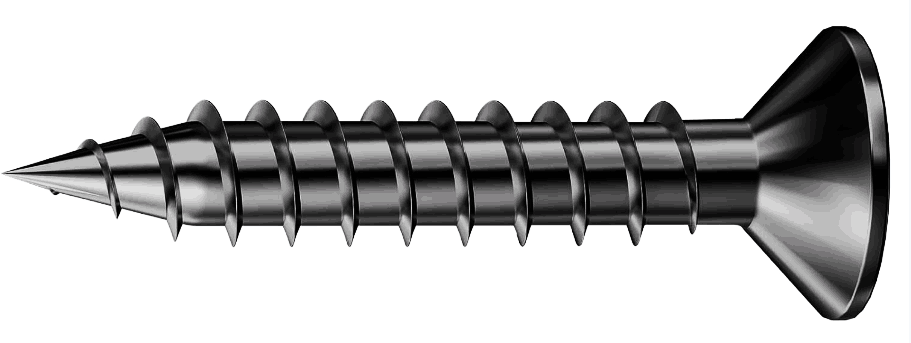
- Wood Screws: Feature sharp tips and coarse threads for easy penetration into wood. The partially threaded shank allows for strong clamping of wooden parts without splitting.
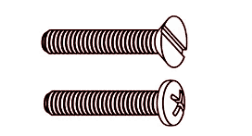
- Machine Screws: Uniform, finer threads are designed to pair with nuts or threaded holes, making them ideal for metal and machinery assembly. In addition, they come in various head types for different tools and aesthetics.
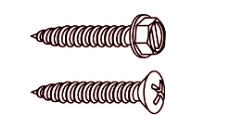
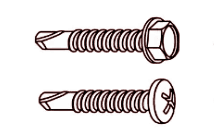
- Sheet Metal Screws: Sharp, self-tapping threads securely fasten thin metal sheets or plastics. They often include a pointed tip to pierce materials without pre-drilling.
- Drywall Screws: Designed with either coarse threads for wood studs or fine threads for metal studs. The bugle-shaped head ensures a flush finish without damaging drywall surfaces.
- Self-Drilling Screws: Combine a drill bit tip with screw threads to eliminate pre-drilling. Commonly applied in construction or manufacturing for fast and efficient assembly on metal or wood.
3. Bolts
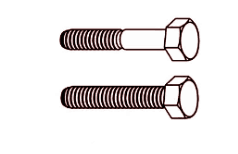
- Hex Bolts: Feature a six-sided head; commonly employed for general construction and machinery assembly.
- Carriage Bolts: Rounded head with a square neck under the head to prevent spinning, ideal for wood-to-wood or wood-to-metal connections.
- Anchor Bolts: Secure structures to concrete, generally, with a bent or threaded end for added stability.
- Flange Bolts: Include a built-in washer-like flange under the head, spreading the load evenly without needing a separate washer.
- Eye Bolts: Have a looped head for attaching cables, chains, or ropes in lifting or securing tasks.
4. Nuts
- Hex Nuts: The most widely used type, featuring a six-sided shape that provides multiple grip points for wrenches. They work with bolts or threaded rods in general fastening applications and are available in various sizes and materials.
- Lock Nuts: Designed to resist loosening due to vibration or torque. Some involve a nylon insert to grip the threads, while others have a deformed or serrated thread pattern for added friction.
- Wing Nuts: Feature two wing-like extensions for easy manual tightening or loosening without tools. They are ideal for applications requiring frequent adjustments, such as fixtures or assembly projects.
- Flange Nuts: Incorporate a wide, washer-like flange at the base to evenly distribute pressure and reduce the need for a separate washer. The flange also helps prevent loosening by increasing surface friction.
5. Washers
- Flat Washers: Simple, round discs that distribute the load of a bolt or screw, preventing damage to surfaces and ensuring even pressure.
- Lock Washers: Designed to prevent fasteners from loosening due to vibration or torque. Common types include split lock washers and star washers, which create friction or biting action.
- Fender Washers: Feature a larger diameter than standard flat washers, providing a greater surface area to distribute load and prevent pull-through in soft materials.
- Spring Washers: Slightly curved or conical to maintain tension and absorb shock, ensuring the fastener stays tight under dynamic loads.
- Shoulder Washers: Include an extended sleeve or shoulder to insulate fasteners from electrical components or provide spacing in assemblies.
6. Rivets
- Solid Rivets: Feature a simple, solid design that creates permanent and strong joints, extensively employed in structural applications like aircraft or bridges.
- Blind Rivets: Allow installation from one side, making them fit for situations with limited access, such as assembling hollow or enclosed structures.
- Tubular Rivets: Include a hollow shaft that simplifies installation and reduces material weight, commonly found in leatherwork or electrical components.
- Split Rivets: Split into two legs that bend outward when hammered, securing softer materials like fabric, leather, or wood.
- Drive Rivets: Combine a solid head with a drive pin that expands the rivet body, suitable for quick and tool-free assembly tasks.
7. Pins
- Cotter Pins: U-shaped and bendable, used to lock nuts or bolts in place.
- Dowel Pins: Precisely machined cylindrical pins for aligning or joining parts.
- Clevis Pins: Feature a hole for a cotter pin, commonly applied in mechanical linkages.
- Spring Pins: Hollow and slotted, they compress for secure assembly in machinery.
Materials Available for Fasteners
The material determines how well the fasteners perform under various conditions, such as exposure to moisture, temperature, or mechanical stress. Here are some common materials used for fasteners.
- Steel: Steel fasteners are strong, durable, and cost-effective, with zinc or galvanization coatings providing corrosion resistance. They come in four grades: Grade 2 for general use, Grade 5 for moderate-strength needs, Grade 8 for heavy loads, and alloy steel for high-performance applications like aerospace. This versatility makes them ideal for various industries.
- Aluminum: Lightweight and corrosion-resistant, aluminum fasteners are perfect for applications where weight reduction is important, such as in the aerospace and automotive industries.
- Brass: Valued for its corrosion resistance and aesthetic appeal, brass is often used in plumbing, electrical components, and decorative applications.
- Titanium: Extremely strong, lightweight, and resistant to corrosion, titanium fasteners excel in high-performance environments, especially in aerospace and electrical fields.
Applications and Industries
Here are several common applications and industries that rely on fasteners, each with specific needs that influence the choice of materials:
- Construction
Fasteners like bolts, screws, nails, and anchors are essential in building frameworks, securing roofs, and attaching fixtures. Steel and stainless steel are widely used due to their strength and ability to withstand heavy loads. For example, concrete anchors are used to secure structures to foundations, while wood screws hold framing together.
- Automotive
In the automotive industry, fasteners secure components such as engines, exhaust systems, and body panels. Bolts, nuts, and rivets made from steel, aluminum, and titanium are commonly used. For instance, exhaust system bolts withstand high temperatures, while aluminum fasteners reduce vehicle weight.
- Aerospace
Fasteners in aerospace applications must be lightweight, strong, and corrosion-resistant. Materials like titanium, high-strength steel, and aluminum alloys are preferred. Aircraft wing panels and engine parts often require specialized fasteners such as rivets and bolts to ensure safety and performance.
- Electronics
Small screws, clips, and nuts are used to secure components in electronic devices. Stainless steel, brass, and plastic fasteners are often chosen for their corrosion resistance and electrical properties. Examples include screws used in securing circuit boards or mounting electronic housings.
- Marine
The marine industry requires fasteners that can withstand harsh conditions, including saltwater exposure. Stainless steel, brass, and titanium fasteners are commonly used in boats, ships, and offshore structures. For example, marine-grade bolts secure boat engines, while corrosion-resistant screws are used in decking and hull assemblies.
How to Choose the Right Fastener?
Choosing the right fastener involves considering several key factors to ensure optimal performance and reliability in your application. Here’s a guide to help you make the right choice:
- Material: Ensure the fastener material suits the application’s environment. For example, stainless steel works well for outdoor or marine applications due to its corrosion resistance, while steel is often used for heavy-duty mechanical applications.
- Load: Determine the amount of weight or pressure the fastener will need to support. Heavy-duty applications, like construction or machinery, require stronger fasteners such as bolts and anchor bolts, while lighter applications may use screws or nails.
- Environment: Consider environmental factors such as temperature, moisture, and exposure to chemicals. For instance, titanium and stainless steel perform well in high-temperature or corrosive environments, while plastic fasteners may be suitable for electronics where electrical conductivity must be avoided.
- Size: Match the fastener size and thread type to the components you’re joining. For instance, fine threads offer greater holding power, while coarse threads are better for softer materials.
- Corrosion Resistance: If the fastener is exposed to moisture or harsh chemicals, opt for materials with built-in corrosion resistance like stainless steel and brass, or coatings such as zinc plating.\
Conclusion
This article offers a thorough overview of fasteners, starting with a clear explanation of what they are. It then covers common types, materials, and applications across various industries. Additionally, we provide helpful tips on choosing the right fastener for your needs and highlight our custom fastener solutions at Ancastings Precision. With this guide, you’ll gain the insights needed to make informed decisions for your projects.
Custom Fasteners at Ancastings Precision
At Ancastings Precision, we offer custom fasteners tailored to your specific needs, using high-quality materials like steel, stainless steel, and titanium. Our precision manufacturing ensures tight tolerances and reliable performance, while customizable sizes, thread types, and finishes ensure compatibility with your projects. With a focus on corrosion resistance, fast turnaround times, and strict quality control, we deliver fasteners that meet your exact requirements, no matter the industry.