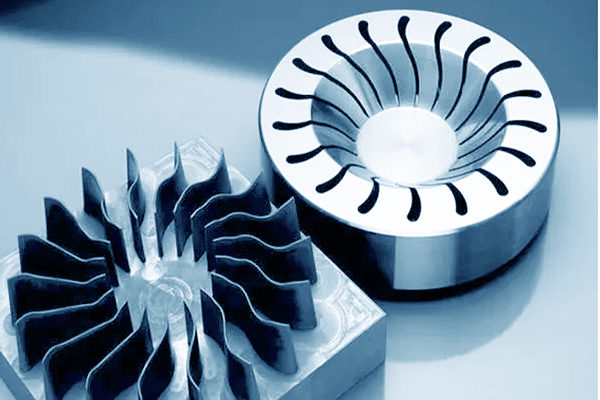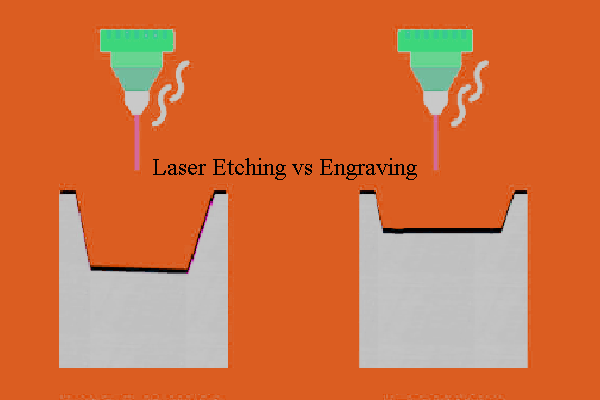
Laser machining plays a crucial role in a wide range of applications due to its high quality and precision. Moreover, laser etching and laser engraving are the two common types of laser surface treatment, each with unique characteristics that make them suitable for different applications.
However, what are the differences between these two technologies? How do they work? This article will explore laser etching and laser engraving in-depth, highlighting their contrasting features.
What is Laser Etching and Engraving?
Laser etching and laser engraving are two different laser processing technologies. Both of them involve using a high-energy laser beam to treat the surface of a material, thereby creating a permanent mark or pattern.
Laser Etching
Laser etching refers to a technology that uses a laser beam to remove material on a microscopic scale. More specifically, it works on the surface of a material so as to create images or text on it. During this process, the energy absorbed by the material is converted into heat. The energy will lead the surface of the material to melt and expand slightly, finally forming a permanent mark. Laser etching commonly acts on metal materials such as aluminum, stainless steel, and zinc.
Laser Engraving
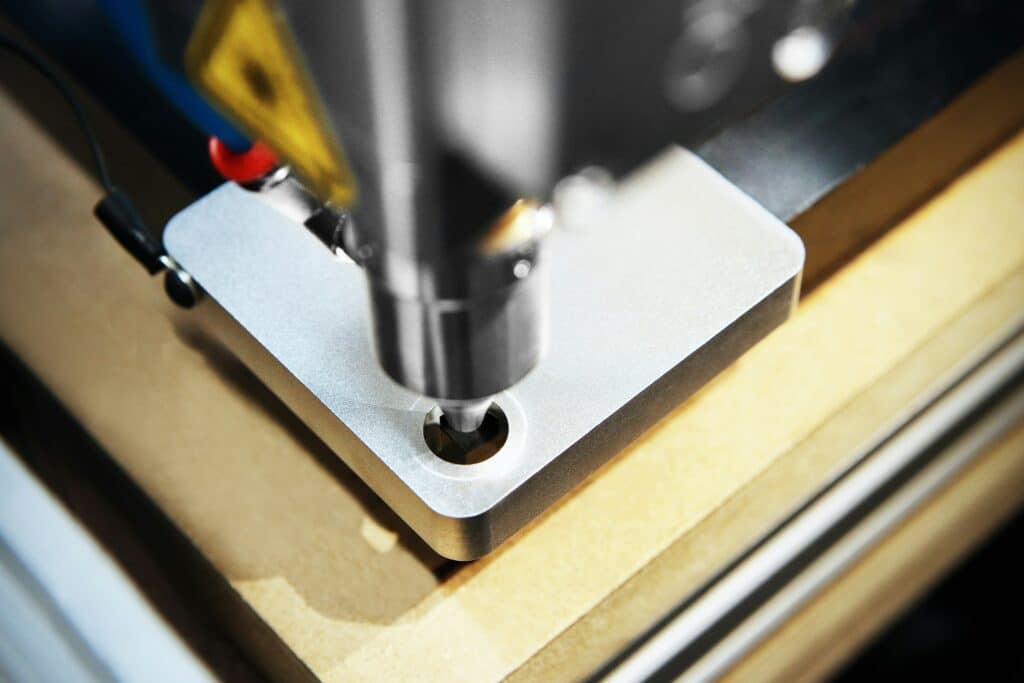
On the other hand, laser engraving applies a laser beam to vaporize the surface of the workpiece and cut deeper cavities as the design. This process can create complex patterns or text on the exterior of the material. In addition, it also can remove a certain thickness of material to create a recessed effect. Therefore, laser engraving is suitable for a variety of materials, including metals, plastics, wood, glass, and more.
How Do Laser Etching or Engraving Work?
Laser etching and laser engraving have the advantages of strong flexibility and contactless processing. The main steps are as follows:
- Energy Concentration: The laser produces a high-energy beam precisely focusing on the surface of the workpiece.
- Energy Absorption: The material absorbs most of the laser energy when the beam is irradiated on the surface.
- Surface Change: The absorbed laser energy prompts the material to melt, evaporate, or undergo chemical reactions, resulting in dents or patterns.
- Material Selection: Different materials absorb and react to lasers differently. As a result, it is necessary to select the appropriate laser type and parameters to machine different materials.
- Computer Control: By taking advantage of computer control, the processing of complex patterns can be automated.
What’s the Difference Between Laser Etching and Engraving?
While laser etching and laser engraving share similar underlying principles, there are also some key differences between them.
Depth of Material Removal:
Laser etching only removes a shallow layer of the material surface, creating a relatively shallow indentation. However, laser engraving removes a deeper layer of the material, resulting in a more pronounced, three-dimensional engraved effect.
Visual Appearance:
Laser etching produces a more subtle, surface-level marking, while engraving creates a more prominent, sculptural effect on the material.
Applications:
Laser etching is often used for marking, serialization, and creating simple surface patterns. Laser engraving, nevertheless, is commonly employed for creating detailed and intricate designs or logos.
Material Compatibility:
Laser etching can act on a wide range of materials, including metals, plastics, ceramics, and more.
In addition, engraving is particularly suitable for materials that can withstand deeper removal.
Precision and Control:
Laser engraving generally calls for more precise control over laser parameters to achieve the desired depth and features.
Durability
Laser-etched markings tend to be less durable and are more easily worn over time. In contrast, engraved features are more susceptible to being longer-lasting due to the deeper removal.
Cost:
Therefore, laser etching is more cost-effective than graving as it requires less laser power and time to create the markings or texts.
Pros and Cons of Laser Etching and Engraving
Both laser etching and laser engraving provide several conveniences and benefits in practical applications. Yet, it also has some limitations. This section will introduce their respective pros and cons.
| Laser Etching: | Laser Engraving | |
| Benefits | ·Lower cost ·Applicability to diverse materials ·Flexible design options ·Faster processing speed |
·Richer details in patterns ·More durable and long-lasting ·Suitable for high-end, intricate products |
| Limitations | ·Relatively coarse pattern details ·Lower durability, prone to wear ·Not suitable for high-end products |
·Higher cost ·Slower processing speed ·Limited material selection |
In summary, laser etching suits high-volume, low-cost products, while engraving is more appropriate for manufacturing high-end, intricate products.
Materials Available for Laser Cutter
There are several materials available for laser etching and laser engraving and metals are widely applied in this process. Below are some common materials.
- Wood: Wood boards, wood blocks, and wood products
- Plastics: Acrylic, PVC, polycarbonate
- Metals: Such as stainless steel, aluminum, brass
- Leather: Genuine leather and synthetic leather
- Ceramics: Ceramic tiles and ceramic cups
- Glass: Glass cups and glass plates
Applications of Laser Etching and Engraving
These two technologies are available to satisfy the stringent requirements of different industries for precision manufacturing.
- Automotive Parts: VIN codes or serial numbers
- Plastic Parts: Markings on plastic parts
- Wood Crafts: Furniture, decorations with complex patterns and text
- Metal Products: Jewelry and knives
- Electronic Components: To mark component locations on circuit boards or to engrave tiny text and symbols on chips.
- Stone and Glass
Laser Marking vs. Laser Engraving vs. Laser Etching
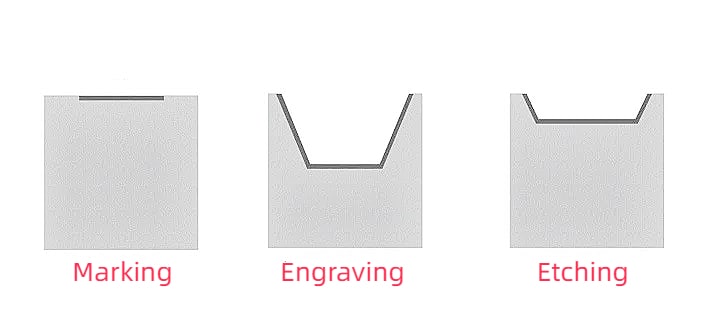
| Characteristic | Laser Marking | Laser Engraving | Laser Etching |
| Depth of Processing | Shallow surface marking | Deep processing (0.001” – 0.005”) | Moderate depth (0.001”) |
| Processing Speed | Fast | Slow | Moderate |
| Detail Precision | High | Moderate | Moderate |
| Cost | Low | High | Moderate |
| Application | Product identification, barcodes, patterns | Logos, serial numbers, wood carvings | Surface decoration of metal products |
| Material Removal | No | Yes | Yes/No |
Conclusion
This article helps readers understand the basic concepts of laser etching and engraving, working principles, as well as feature comparisons. It also offers information on their uses in different materials and various application scenarios.
Additionally, Ancastings Precision has rich experience and advanced technology in the field of laser etching and engraving. We can provide customers with high-quality and efficient professional services like 3D laser etching, CNC machining or injection molding. If you require custom-machined parts with designed markings or texts, please feel free to contact us for an instant quote.
Other articles you may be interested in:
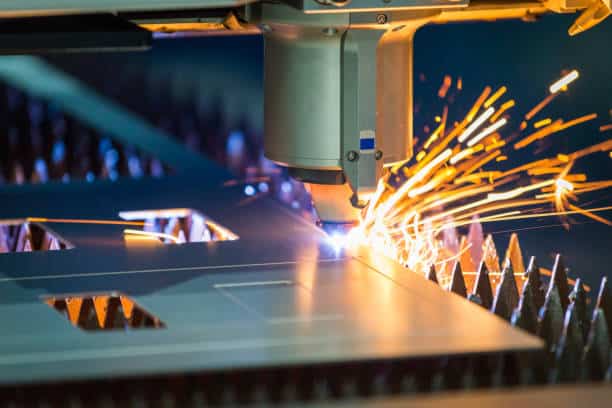
CNC Laser Cutter: What You Need to Know
The laser CNC cutting machine, aka laser CNC engraving machine, being a high-precision CNC machine, is sure to soar with the advancements in technology. Increases in production capacity and workshop automation have resulted from the advent of laser CNC automation. … Read more
Guide to Sheet Metal Laser Cutting