
Welding joints are critical connections in sheet metal fabrication that determine the strength and durability of a structure. This article will delve into the various types of weld joints, exploring their unique applications and symbols. Additionally, we’ll discuss the pros and cons of welded joints and the significance of selecting the right type for your project. We will also provide practical tips to enhance your welding results. Whether you’re a novice or an experienced welder, understanding these aspects will ensure high-quality results. Let’s get started!
What are Welding Joints?
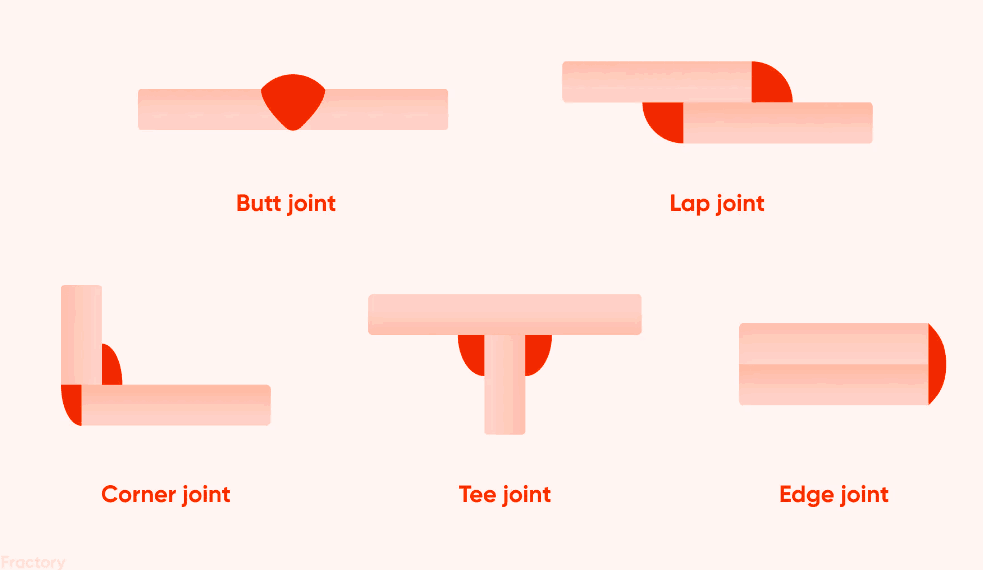
Welded joints are the connections formed between two or more pieces of metal during the welding process. They are crucial for ensuring the strength and stability of the final structure. Different types of joints, like butt, lap, and corner joints, are used based on the application and the materials being joined. Each joint type has unique characteristics, strengths, and weaknesses, influencing the overall performance of the welded assembly.
Types of Weld Joints and Symbols
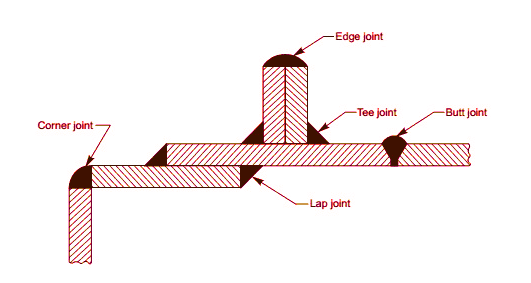
Different types of weld joints are suitable for various applications, each represented by specific symbols on drawings. In the following sections, we will delve into 5 types of weld joints and their symbols.
1. Butt Joint Welding
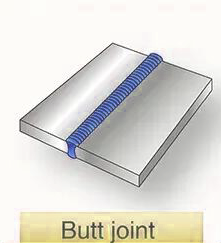
A butt joint is one of the most common welding joints, formed by placing two flat pieces of metal parallel to each other with their edges touching, or at an angle ranging from 135° to 180°. This simple yet effective design finds widespread use in construction, automotive manufacturing, and shipbuilding. Its simplicity, however, belies the variety of techniques used to achieve a strong and reliable weld.
Symbols: On technical drawings, butt joints are usually shown as a simple straight line representing the joined edges. Additional symbols often indicate the weld type and any edge preparation.
Specifically, butt joints include several groove weld types:
- Square
- Single J
- Double J
- Single V
- Double V
- Single U
- Single bevel
- Double bevel
- Double U grooves
2. Lap Joint Welding
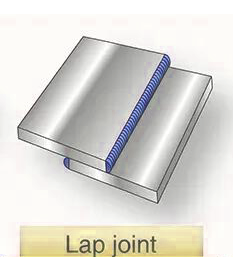
A lap joint consists of two metal pieces overlapping, usually at an angle of 0° to 5°. This design finds widespread use in sheet metal work, automotive manufacturing, and piping because of its simple assembly and strong performance.
Symbols: Technical drawings represent lap joints with two overlapping lines illustrating the length and extent of the overlap. The overlapping portion indicates the area of the joint.
Welding Styles for Lap Joints:
- Slot weld
- Spot weld
- Bevel-groove weld
- Flare-bevel-groove weld
- J-groove weld
3. Corner Joint Welding
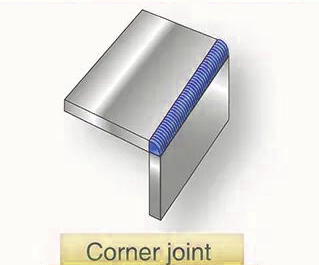
A corner joint in welding refers to a joint where two pieces of metal meet at a 90-degree angle. Corner joints fundamentally consist of two types:
- Open Corner Joints: In an open corner joint, the two pieces of metal meet at their edges, forming a V-shaped gap. This requires a larger weld deposit to fill the gap. Due to the increased heat input needed, thin materials are particularly susceptible to burn-through, demanding higher travel speeds and careful control of the welding parameters.
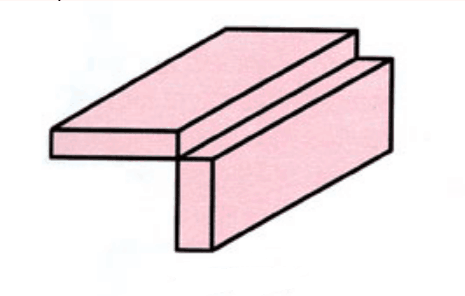
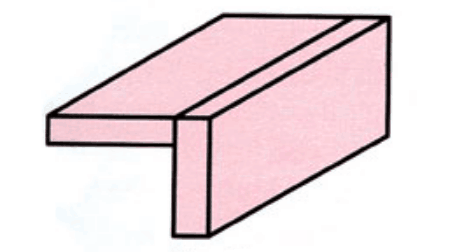
- Closed Corner Joints: A closed corner joint has one edge flush against the other, leaving a smaller gap to be filled. This configuration generally offers greater mechanical strength compared to an open corner joint because of the increased surface area of contact. However, achieving a quality weld in a closed corner joint often requires more precise preparation and execution.
Common welded methods include:
- V-Butt Welds
- U-Butt Welds
- J-Butt Welds
- Bevel-groove weld
- Square Butt Welds
- Convex Fillet Weld
- Concave Fillet Weld
- Flare-V-groove weld
4. Tee Joint Welding
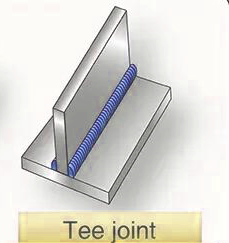
In welding, a tee joint is formed where two pieces of metal meet at a 90-degree angle, much like the letter “T.” This differs from a corner joint; whereas corner joints use similarly sized and oriented members, a tee joint consists of a stem intersecting a run. The stem can be either perpendicular or angled relative to the run. Therefore, achieving a strong and high-quality tee joint hinges on meticulous preparation and precise welding technique.
Several welding methods are suitable for creating a tee joint:
- Slot weld
- Plug weld
- Fillet weld
- groove weld
- Melt-through weld
- Bevel groove weld
- Flare-bevel-groove weld
5. Edge Joint Welding
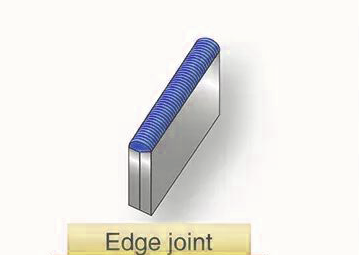
An edge joint forms when two pieces of metal align edge to edge, typically running parallel to each other. Welders commonly use this joint in situations requiring a larger surface area, such as in fabricating thin sheets or plates.
Types of Edge Joints
- Flat Edge Joint: The edges of the two pieces remain flat and closely aligned, often welded with a fillet weld.
- Bevel Edge Joint: Welders bevel the edges to allow for deeper penetration and a stronger weld, which is especially useful for thicker materials.
Also, edge joints utilize a variety of weld types:
- Butt weld
- J-groove weld
- V-groove weld
- U-groove weld
- Bevel-groove weld
- Edge-flange weld
- Corner-flange weld
Pros and Cons of Welded Joints
Welding joints offer several advantages but also come with potential drawbacks. Here’s a breakdown of the pros and cons:
Benefits of Welded Joints:
- High strength
- Cost-effective (often)
- Versatile (many materials)
- Leak-tight seals
- Can be aesthetically pleasing
- Amenable to automation
Limitations of Welded Joints:
- Requires skilled welders
- Prone to defects
- The heat-affected zone (HAZ) can weaken the material
- Can cause distortion
Applications of Welding Joints
Welding joints find incredibly broad applications across numerous industries and sectors. Here are some key examples, categorized for clarity:
- Automotive: Welding is crucial in car body assembly, joining various sheet metal components. Robots are commonly used for automated welding in automotive manufacturing.
- Aerospace: Welding lightweight, high-strength alloys for aircraft and spacecraft structures. Precise and high-quality welds are essential for safety and performance.
- Shipbuilding: Joining large steel plates to construct ship hulls and other components.
- Pressure Vessels: Creating pressure-resistant containers for storing and transporting gases and liquids. Leak-tight welds are paramount in these applications.
The Importance of Choosing the Right Types of Joints
Proper weld joint selection is crucial for ensuring the structural integrity, safety, and longevity of any welded structure or component. Choosing the wrong joint can have serious consequences, including catastrophic failure, especially in critical applications. This risk is amplified by reduced strength and durability, leading to premature wear and tear, and compromised safety. Even the final product’s appearance can be affected. Therefore, engineers must carefully consider multiple factors when selecting a weld joint: material properties, thickness, stress levels, accessibility, cost, and specific application requirements.
Tips for Improving Welded Joints
1. Proper Fit-Up: Ensure tight alignment of pieces to minimize gaps for better welding.
2. Welding Technique: Choose the right welding process and adjust the parameters for the material’s thickness.
3. Cleanliness: Remove all contaminants from the welding area to promote strong bonds.
4. Preheating: Preheat materials as needed to prevent cracking, especially in thick sections.
5. Filler Material: Select filler materials that match the base metals for compatibility and strength.
6. Post-Weld Treatment: Grind or polish welds for a cleaner look, and consider heat treatment to relieve stresses.
Tips for Welding Thicker and Thinner Materials
The following table summarizes the key differences in welding techniques for thicker versus thinner materials.
| Aspect | Thicker Materials | Thinner Materials |
| Edge Preparation | Bevel for deep penetration | Minimal; clean edges |
| Welding Passes | Multiple for full penetration | Fewer; avoid burn-through |
| Preheating | Often required | Usually not required |
| Heat Input | Controlled; prevent warping | Minimal; prevent distortion |
| Welding Speed | Moderate to slow | Faster |
| Welding Technique | Multi-pass, beveling | Intermittent, spot welding |
| Backing/Chill Bars | Usually unnecessary | Often used; heat dissipation/support |
| Fit-up & Preparation | Precise; proper edge preparation | Precise; use fixtures |
| Distortion Prevention | Manage heat; preheat if necessary | Expect distortion; use fixtures |
Conclusion
This article provides a comprehensive guide to welding joints. It covers everything from understanding joint types and symbols to the pros and cons of welded joints and their various applications. It also explores the importance of selecting the right joint for the job and offers tips for improving welding results. In addition, we delve into the specific techniques required for welding thicker and thinner materials. For all your welding needs, consider Ancastings Precision’s welding services. We offer high-quality workmanship and tailored solutions. Contact us today for a free, no-obligation quote!