
Urethane Injection Molding Guide
Urethane is a type of polymer used in prototyping, automobiles, sturdy wheels, and conveyor belt components, making urethane injection molding highly valuable.
Urethane injection molding differs from urethane casting, which uses an inexpensive silicon mold instead of a durable metal mold.
This guide delves into the urethane injection molding process, and its benefits, and at the end, there’s a small tip to help you decide when you can use urethane injection molding.
What Is Urethane Material?
Polyurethane is a class of polymers that can be flexible like foam or rigid like tough plastic. Urethane properties can be altered by adding catalysts, making it widely used in many industries.
Urethane is durable and can resist wear and chemical exposure better than standard plastics and rubber. Depending on the urethane type, it can flex and bend without cracking.
Urethane is made from a chemical reaction between diisocyanates and polyols (sugar alcohol) under heat or UV light for some particular PU coatings.
There are two different types of urethane: thermoplastic polyurethane and thermoset polyurethane.
Injection molding machines require heating of urethane, and for this purpose, thermoplastic urethane (TPU) is used.
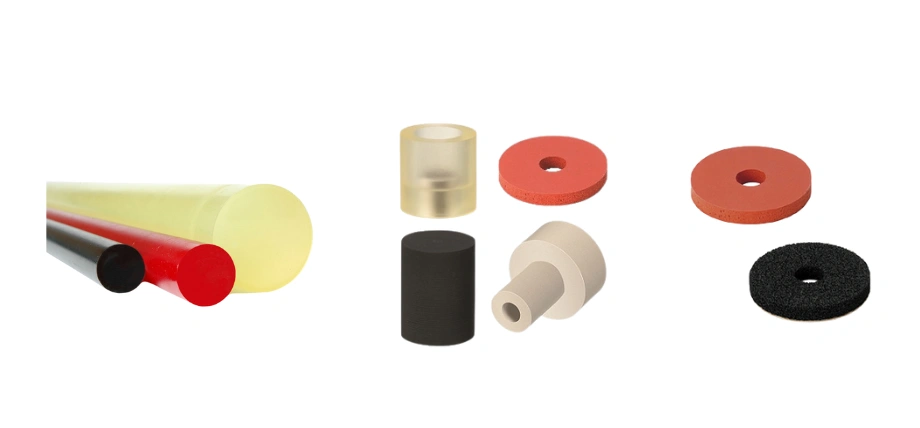
Title: Urethane material parts
What Is Urethane Injection Molding?
Urethane injection moulding is a high-volume manufacturing process that uses TPU or Polyurethane injected into a mold under pressure and allowed to cool and solidify into component shape.
Polyurethane Injection Molding (Reaction Injection Molding)
Polyurethane injection molding uses polyol and isocyanate in liquid forms before mixing them to create polyurethane (PU) and injecting them into a mold.
TPU Injection Molding
TPU injection molding uses a traditional injection molding barrel and screw to inject the TPU into the mold and create part geometry.
Try Ancastings Now!
Polyurethane Injection Molding Process: Step-by-Step Guide
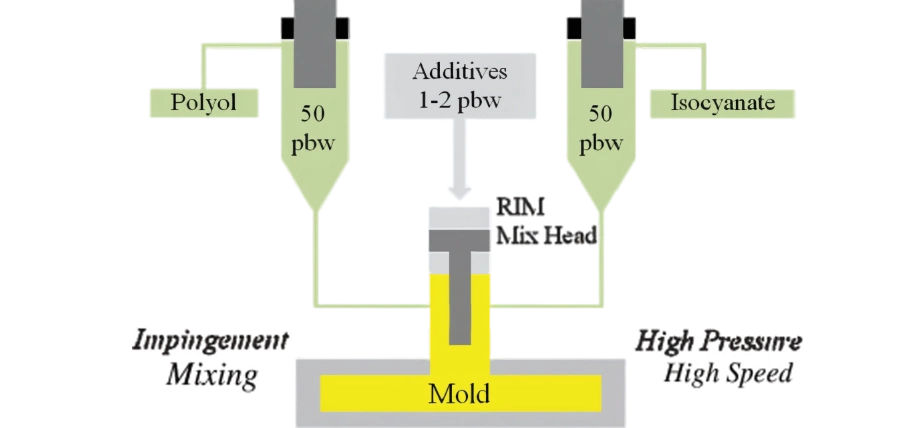
Reaction molding process of PU. Source: Science Direct
Polyurethane injection molding uses pistons, pumps, and storage tanks, making the process slightly complex and time-consuming compared to injection molding and pressure forming.
Step 1: Storing the Resin
The first step of the process involves storing the polyol in a storage tank, and the isocyanate in a separate tank. Pipes from the tank feed the polymer into the mold and circulate it back to the storage tank in separate lines.
Step 2: Injection
Before injection of the polyurethane, the two-part resin is mixed in a mix-head and a small plunger retracts to allow the flow of the mixed resin (PU) into the mold. Polyurethane injection molding requires high pressure to ensure the resin is mixed correctly.
Step 3: Curing
PU injection molding does not require special tool steel or high-strength steel for the mold cavity. The process usually uses aluminum molds because the polymers need not be heated to high temperatures before injection.
Curing time depends on the fill density and size of the part. Polyurethane production is an exothermic process (heat producing) that is mixed and injected into the mold. It also aids in curing the part by raising the mold temperature.
Wall thickness is a major factor in temperature rise; thin-walled parts raise the temperature by 25°C, and larger parts and large-volume molding can increase the temperature above 100 °C.
Before the curing, a lubricant is also applied to prevent PU from attaching to the mold base.
Step 4: Ejection
After curing, the mold cools, and the produced part is released from the mold using ejector pins.
Step 5: Coating
Most molded parts undergo a post-processing process. A simple paint coat is often enough to improve aesthetics and provide some luster.
Polyurethane vs. Thermoplastic Polyurethane (TPU) Injection Molding
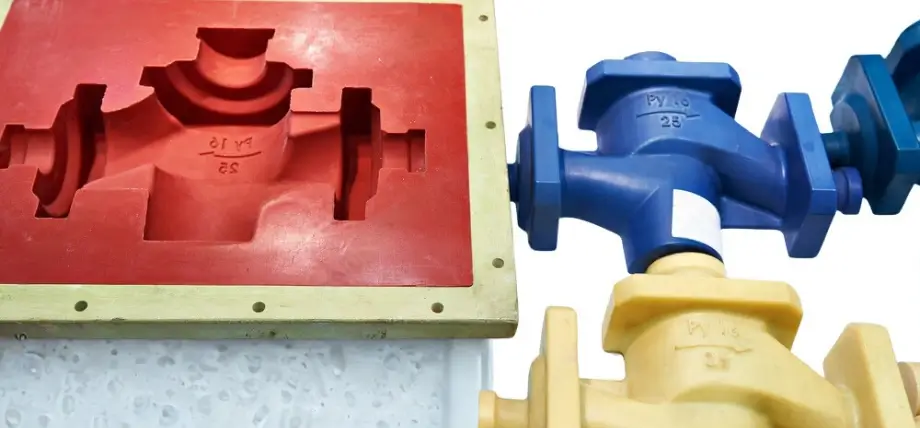
TPU injection molding
TPU injection molding uses TPU pellets loaded into a heated barrel. It uses traditional screw and barrel to move the pellets forward near the mold, melting the pellets in a uniform consistency.
You can also add any colors and dies during this mixing and heating. TPU injection molding requires precision machined molds made from aluminum or hardened steel.
The mold tooling is expensive, and all intricate details, designs, and cores must be incorporated at this stage. The screw doubles as an injector, building pressure and injecting the molten TPU at 1500 bar and dwelling in position to build pressure and avoid any shrinkage.
After solidification, the TPU part is ejected, and any spruce or flash is trimmed from the outer surface.
Polyurethane injection molding uses a RIM machine with two tanks and a mold press, which differs from the TPU injection molding pellet and heated barrel setup.
Key Differences
- Polyurethane moulding uses liquid PU that forms just before injection molding, whereas TPU injection molding uses thermoplastic pellets.
- Polyurethane injection molding uses a lower pressure, around 20-150 bars, compared to TPU injection molding, which can require up to 1500 bars.
- PU resin is a thermoset plastic that cannot be remelted and reused, but TPU is a thermoplastic material that can be reheated and recycled.
- Polyurethane requires an entirely different liquid polymer storage tank setup, but TPU plastic injection molding uses a barrel and screw.
Key Applications of Urethane Injection Molding
Polyurethane Injection Molding Applications
PU injection molding produces thermoset parts with simpler molds and often lower tooling costs. Urethane injection molding applications include:
- Automotive exterior parts like front bumpers and dashboards. The urethane used in these applications requires a catalyst and special curing to give it a soft foam impact and allows for cushioned plastic trims in automobiles cost-effectively.
- Medical applications of urethane injection molding include rigid, lightweight enclosures for MRI machines to reduce sound.
- Insulation
- Many safety helmets, bike helmets, and sports helmets use flexible urethane molded padding that can be easily molded into custom shapes.
TPU Injection Molding Applications
TPU injection molding is faster and more precise and produces solid thermoplastic. TPU injection molding applications include:
- TPU has elasticity, and flexibility and is durable. It is also waterproof, and these mechanical properties make it ideal for shoe outsoles.
- Many phone covers are made from TPU.
- TPU has a very specific role in engine assemblies. Gaskets are often made from TPU and provide a good fixed seal.
- Wheels are made from injection-molded TPU. Specifically, conveyor belt rollers
Try Ancastings Now!
Common Challenges in Urethane Injection Molding and How to Overcome Them
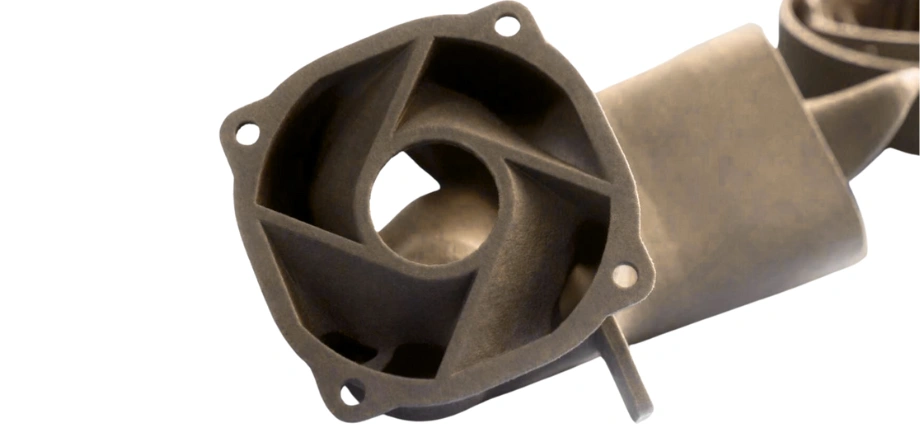
TPU Part
Urethane injection molding poses the same defects and challenges as any other injection molding raw material.
Reactivity during mixing
The polyol and isocyanate mixing ratio requires careful release in the after-mixer. An inconsistent ratio can lead to poor curing or polymer suspension in the solid. The mold also has to be pre-heated to support the curing.
Fill Density
It is relatively difficult to control the density of the foam once the resin is injected into the mold. Parameter change in the pressure, blowing agent and temperature can shift the density, changing strength of the part.
Controlling Moisture During Injection Molding
Moisture during solidification can lead to pores and trapped gases, compromising part integrity. TPU pellets are pre-heated to remove moisture and dried.
Shrinkage
It is important to apply pressure after injecting TPU because it has a tendency to shrink or warp in transitioning features. This can be achieved by ‘dwelling’.
Viscosity
Viscosity of any material change with temperature. If the TPU does not have a uniform viscosity and temperature, it can lead to layered flow, where some part of it i too runny and other flows smoothly.
This can cause flash and incomplete filling. You can fix this by maintaining a single temperature near the mold entrance in the barrel and using the same-sized pellets. Many defects can be avoided by selecting the right material. You can learn more about the best material for injection molding here.
High-Quality Injection Molding Service
At Pro-lean Tech, we have served hundreds of clients with thousands of high-quality injection-molded parts. Our Injection molding materials include:
- ABS injection molding
- PEEK
- PET
- HDPE
- TPU
- Nylon
- Polyethylene
FAQ
Can you injection mold urethane?
Polyurethane can be injection molded to produce durable, high-volume components that are lightweight and rigid. Polyurethane components are widely used in the automobile industry.
What is the process of injection urethane?
Polyurethane injection molding can use reaction injection molding that uses liquid polyol and isocyanate to inject into a precision machined mold.
Are TPU and polyurethane the same in injection molding?
TPU is a thermoplastic that can be remelted and used again in injection molding, but polyurethane (PU), specifically resin is a thermoset that cannot be reshaped after production.
What are the advantages of thermoplastic polyurethane (TPU) injection molding?
TPU injection molding has tight tolerances for geometries, the cycle speed is faster, it has versatility in applications, and is cost-effective in high-volume production.
What industries commonly use urethane injection molding?
Urethane injection molding is mainly used in the automobile industry and making molds for shoes. Urethane is also used as an insulator, but this is usually sprayed, not molded.
What factors should I consider when selecting a material for injection molding?
When choosing an injection molding material, you should look at mold costs and material reactivity with mold material, pre-processing like pre-heating to remove moisture and the mechanical properties of the material.
What are the common defects in urethane injection molding?
Some of the most common urethane injection molding defects include sink marks, bubbles, flash, warping, shrinkage, and uneven curing.