

Various CNC equipment and processes are involved in CNC machining, lathes machines are one of them. The CNC lathe is designed to perform various operations, such as cutting, drilling, and turning, and handle materials like metal, wood, and plastic.
The primary function of a CNC lathe is to produce cylindrical parts through a process called CNC turning. This process involves spinning the workpiece around a rotating tool that shapes the material into the desired form. As a result, CNC-turned parts are known for their high precision, excellent surface finish, and intricate geometries.
This article will discuss various CNC lathe techniques lathe machining tips and tricks, machining tools, etc.
What is a CNC Lathe Machine?
This is a subtractive manufacturing equipment that can perform various machining operations, including cutting, turning, threading, tapping, drilling, boring, etc. The CNC lathe machine typically involves 3, 4, and 5-axis machining capabilities, capable of material removal from multiple directions. Meanwhile, some of the machines also include a sub-spindle for complex tasks.
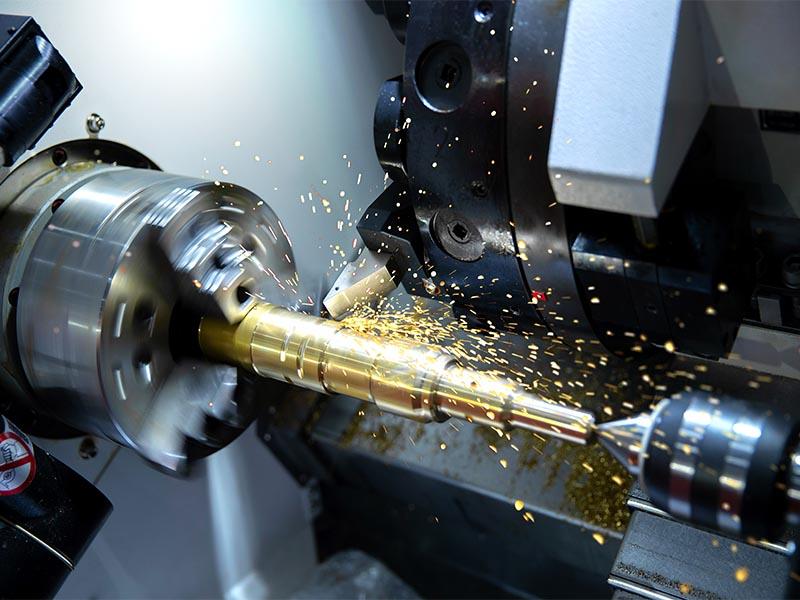
CNC lathe removing the material
The integration of Computer Numerical Control(CNC) technology on the machines completely automates the movement of cutting tools and the material removal process. As a result, lathe operations achieve the accuracy as low as
The CNC G and M codes automate all of the tool movement and other auxiliary functions like coolant applications. Here, CAD/CAM Software makes the 3D models and converts them into CNC readable instructions, called G codes.
Components of a CNC Lathe Machine
A lathe includes various components, each responsible for some specific functions, and collectively they execute the cnc lathe machining operations. The machine includes these components to hold the workpiece and cutter, execute the work rotation and tool movement, and load the CNC programs.
The following are the lathe machine components;
- Lathe Bed: It is a robust base structure that is typically made with cast iron supports the machine’s components and allows the carriage to move along it.
- The Main Spindle: This is the center of the machine that rotates the workpiece at a fixed RPM, facilitating the material removal while feeding by the tool.
- Chuck & Collet: They both essentially serve the same functionality. Chuck is attached to the spindle and holds the larger diameter work bars. On the other hand, collet hols the small diameter works.
- Tool Turret: Turret holds the multiple tools, so sequential cnc lather machining can be performed to achieve the final shape in a single setup.
- Tool Carriage: It is a movable assembly that holds the cutting tool travel across the axes based on the machine’s capability. Basically, tool carriage guides the tools for precise material removals.
- Headstock: It is the housing for the spindle that includes the required gear and servomotor mechanism to control the spindle (torque, speed, etc.).
- Tailstock: The longitudinal turning and other similar CNC lathe operations need support for the workpiece to avoid deflection.
- CNC Controller: An interface panel that is used to input G-code and manage the machining variables, cutting depth, speed, etc.
Comparison of CNC Lathe and CNC Turning Center
| Feature | CNC Lathe | CNC Turning Center |
|---|---|---|
| Axes | Typically 2-axis (X, Z) | 3-axis, 4-axis, or 5-axis with C-axis |
| Operations | Turning, facing, threading, tapering, knurling | CNC turning, CNC milling, drilling, tapping, reaming |
| Tooling | Fixed cutting tools | Live tooling for powered operations |
| Automation | Basic automation via CNC | Advanced automation with real-time monitoring |
| Versatility | Limited to cylindrical parts | Far more versatile, handles complex geometries |
| Setup Time | Requires multiple manual tool changes | Turret allows quick tool switching, reducing less time |
| Applications | Simple cylindrical parts | Complex parts for aerospace, automotive |
What is the Main Function of a CNC Lathe?
At its core, a CNC lathe is designed to rotate a workpiece on its axis while various tools, operating under computer-controlled directives, sculpt, and shape the material. This principle function stands in contrast to milling machines, where the material remains stationary and the tools revolve. In lathes, the workpiece’s rotation combined with the linear movement of tools facilitates operations like cutting, sanding, drilling, and turning.
How Does it Work? CNC Lathe Machining Process
The lathe machining process is an intricate and highly precise method for creating parts. It involves turning material while it is being cut by a rotating tool controlled by computer instructions. The process is highly efficient and can produce complex shapes with ease. Here is a step-by-step guide to help you understand how it works:
- CAD Design/3D Modelling
Every CNC lathe project commences with a visualization of the final product. This conceptual stage is crucial as it sets the foundation for the subsequent steps. Engineers or product designers translate the ideas into a detailed engineering design using CAD software like AutoCAD and SolidWorks. The design incorporates every minute detail, curve, depth, and dimension of the desired end product.
- Translating Designs into Machine Language
This stage is known as Computer-Aided Manufacturing (CAM). It involves translating the design into a G-code file, a specialized language that CNC machines understand. The G-code serves as guidance for the CNC lathe machine on how to maneuver, where to cut, and how deep to penetrate.
- Testing and Verification
Before launching the full-scale machining process, it’s common practice to run simulations. This step is essential to identify and rectify any potential errors or inefficiencies in the G-code. Simulations mimic the actual lathing process in a virtual environment. So, engineers get a clear picture of how the machine will interpret the instructions.
- Machining Stage
Next, the CNC lathe follows the G-code instructions to perform the turning operations. As the workpiece rotates, the cutting tool moves along the desired path, removing material and shaping the part.
- Post-Processing & Surface Finish
The lathe machined parts often include burrs, tool marks, and other minor surface irregularities. So, if their application requires specific surface properties and appearance, further processing can be done. For instance, deburring, polishing, powder coating, plating, etc.
Furthermore, you can read a CNC Lathe Instruction Manual here to know details about the working and how you can perform various operations to shape our parts and products,
What are the Advantages of Automation in CNC Lathe Machining?
The tool carriage starts to move linearly & vertically following the CNC G code instructions, so firstly it ensures a high level of precision due to zero human intervention in movement.
The advantages of CNC lathe automation include:
- Real-time Feedback: Modern CNC lathes constantly monitor their actions and compare them against the inputted commands. This vigilant oversight means any minor deviations are quickly spotted and corrected, ensuring a flawless final product.
- Consistent Replication: The precision of CNC lathes means they can reproduce the same design over and over with almost no variations. This repeatability is invaluable for large-scale production, ensuring consistency across multiple batches.
- Safety First: With most of the process being automated, human interaction is limited, greatly reducing potential safety hazards associated with manual operations.
- Efficient and Economical: Automated CNC lathes operate on strict instructions, ensuring minimal wastage. Their efficient design ensures swift operations, resulting in faster production times.
What Are the CNC Lathe Machining Operations?
A CNC lathe performs various operations by using the sequential tools attached to the collet. Here are the common CNC lathe machining techniques or operations.
1. Facing
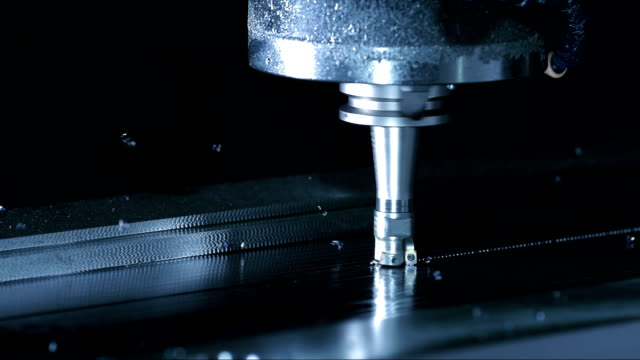
CNC lathe facing
Facing is one of the foundational CNC lathe operations. It’s primarily used to produce a flat surface at the end of a workpiece. The main aim of facing is to ensure the workpiece is cut to the desired length. By using a facing tool, material is removed from the end of the workpiece, achieving a smooth finish and precise length.
2. Turning
Turning is the quintessential lathe operation. It involves rotating the workpiece while the cutting tool moves parallel to the axis of rotation. This technique is used for reducing the diameter of a workpiece to the desired measurement.
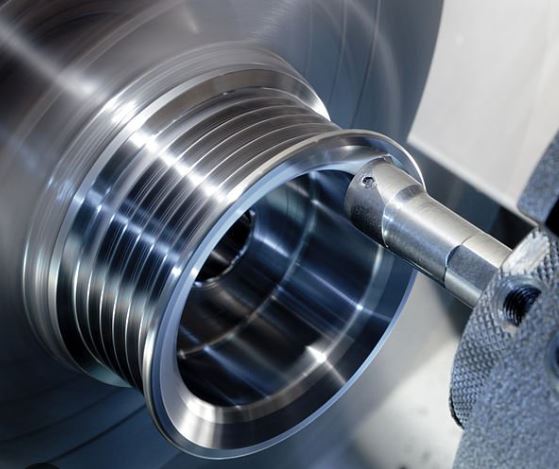
CNC lathe turning
Depending on the direction of the cutting tool’s movement, types of turning can be classified as straight and tapered turning. The tool moves from one end of the workpiece to the other, ensuring a consistent diameter throughout the straight turning. On the other hand, the tool moves at an angle to the workpiece axis during taper turning.
3. Drilling
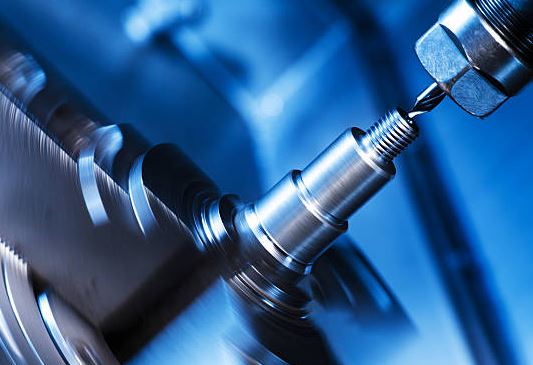
CNC lathe drilling
While traditionally associated with drill presses, drilling on a CNC lathe offers higher precision. The workpiece rotates while the stationary drill bit bores holes into it. This technique allows for the creation of precise and accurately placed holes, which are essential for many engineering applications.
4. Boring
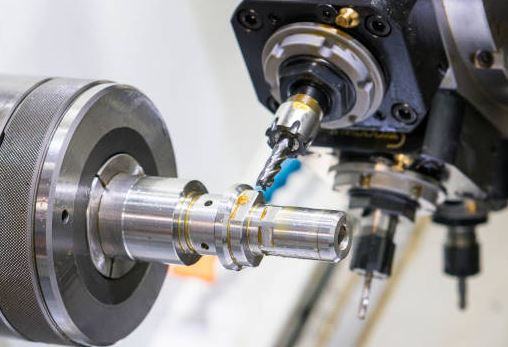
CNC lathe boring
A successor to drilling, boring is employed to enlarge an already existing hole. This technique ensures greater accuracy in terms of diameter and surface finish. A single-point cutting tool is used, and the operation fine-tunes the size of the hole, ensuring the highest level of precision.
5. Grooving
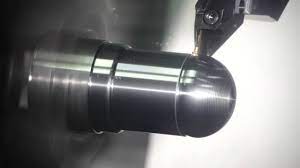
CNC lathe grooving
Grooving, as the name suggests, involves cutting grooves into a workpiece. These grooves can be cut either radially, producing O-ring seats, or axially, creating recesses. The precision of CNC lathing ensures that these grooves are consistent and meet the specific design requirements.
6. Threading
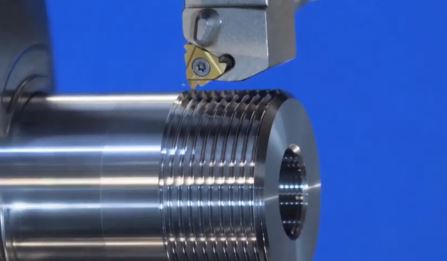
CNC lathe threading
This lathe technique creates helical grooves (threads) on a workpiece. This technique is vital for producing screws, bolts, and other fasteners. CNC lathe machines can produce both internal and external threads with impeccable accuracy.
Often referred to as “cut-off”, parting involves cutting a piece off a workpiece. A narrow cutting tool moves perpendicular to the workpiece’s rotation, slicing off a section. This technique ensures that the cut-off section has a smooth surface, minimizing the need for further finishing.
7. Knurling
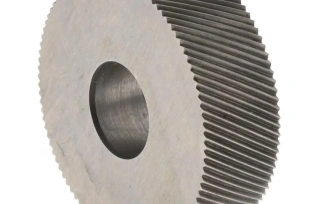
CNC Knurling Part
Knurling CNC lather techniques are used to create a pattern of small diamond-shaped protrusions on the surface of the workpiece. The purpose of improve grip and appearance. It is suitable for handles and knobs.
8.Taper Turning
The taper-turning process involves adjusting the lathe’s feed angle or using a taper attachment to make the cutting tool move at an angle, creating a tapered profile. This process is used to produce components like cones, decorative pieces, and certain types of shafts.
9.Reaming
Reaming refers to refining drilled holes for a superior finish and tight tolerances. A reamer tool with a diameter slightly larger than the hole rotates at a slow speed to perfect the hole’s dimensions and finish through minor material removal.
Try Ancastings Now!
Which Materials are suitable for CNC Lathe Machining?
CNC lathe machines can work with various material types, metal, plastics, wood, etc. The use of appropriate tool material geometry can turn hard materials like tool steel and titanium alloys.
Some common materials used in CNC turning include:
Metals
CNC metal lathe is well-suited for machining various metals and alloys, including aluminum, steel, stainless steel, brass, copper, and titanium. Each metal has unique properties and machinability characteristics, affecting factors such as cutting speed, feed rate, and tool selection.
Plastics
Many plastic materials can also be machined using a CNC lathe, including ABS, nylon, PEEK, polycarbonate, and acrylic. Plastics typically require slower cutting speeds and specialized tooling to prevent melting or deformation during the turning process.
Wood
While not as common as metal or plastic, wood can also be turned on a CNC lathe. This process is often used for creating custom components, such as furniture legs or decorative pieces.
Composites
Composite materials, such as carbon fiber and fiberglass, can also be machined using CNC turning. These materials often require specialized tooling and techniques to prevent delamination or other damage during the machining process.
How to Choose the Right Material?
There is no exact answer regarding which material is best for lather machining. It depends on the specifications of the CAD design you want to machine. Here are some considerations on how to choose the right material;
- Research Before Choosing: Every material, be it aluminum, steel, or a polymer, has distinct properties like hardness, machinability, and thermal conductivity. An in-depth understanding ensures that you select a material suited for the desired application.
- Temperature Sensitivity: Many materials undergo dimensional changes with temperature fluctuations. If precision is critical, consider pre-heating the material or allowing it to stabilize in the workshop environment before machining.
- Stock Material Considerations: While CNC lathes are powerful, it’s often more efficient to start with a stock material that’s closer in size and shape to the final product. This reduces the amount of machining required, saving time and material.
CNC Lathe Turning Shapes and Features
The Lathes are specialized for the cylindrical & conical shapes and liner features on their surfaces. The work bar rotates at high speed and the tool carriage or tool post carries diverse tools shapes various shapes and features.
- Cylindrical Items : The CNC lathe can produce both solid and hollow cylindrical items, such as shafts, pistons, rollers, sleeves, spacers, etc.
- Conical Items: The Lathe can make conical shapes by adjusting the tool angle and path during the machining process. Examples are; tapered plugs, conical bearings, tapered ends and caps, countersink tools, etc.
- Tapers: Tapered parts are created by gradually adjusting the position of the cutting tool relative to the axis of rotation.
- Threads: Lathe threading can make both internal and external threads.
- Combinations/Complex Features: By combining various turning operations, CNC lathes can create intricate profiles and geometries that would be difficult or impossible with manual machining techniques
Importance of CNC Programming in Lathe Operations
The main reason for high precision in CNC lathe operations is automatic tool movement, which is dictated by the CNC programming. So, you can understand how critical the accurate G and M codes are. A minor error in programming can lead to the misalignment and compel failure of the machining process.
Here are some tips on how you can optimize your CNC programming for lathe machining;
- Use CAD/CAM Software
Modern Computer-Aided Design and Manufacturing software not only allows for detailed design but also generates optimized machine code. This ensures efficient tool paths, reduces machining time, and minimizes human errors.
- Simulate Before Executing
Before feeding the program to the lathe, run a simulation. This visual preview can help identify potential collisions, inefficient tool paths, or areas that need refinement. Better to catch mistakes in a simulation than on the actual machine!
- Modular Programming
If you’re producing multiple components or variations of a piece, consider writing modular programs. These allow you to reuse sections of code for common operations, streamlining the programming process and ensuring consistency.
A Case Study: Crankshafts using CNC Turning
Crankshafts are critical components in internal combustion engines, responsible for converting linear piston movement into rotational motion. These components require precise machining to ensure smooth operation, high performance, and long-lasting durability. CNC turning is a popular method for producing crankshafts due to its ability to create complex shapes and geometries with high accuracy.
The CNC turning process begins with a solid metal workpiece, which is secured to the CNC metal lathe’s chuck or collet. The CNC lathe then follows the programmed G-code instructions, performing various turning operations to shape the crankshaft’s main and rod journals, webs, and counterweights.
Once the turning process is complete, the crankshaft may undergo additional machining processes, such as grinding or polishing, to achieve the desired surface finish and dimensional accuracy. CNC turning’s efficiency, precision, and versatility make it an ideal method for producing high-quality crankshafts for use in automotive, marine, and industrial applications.
Summing Up
The CNC lathe operations significantly improve manufacturing capabilities and produce high-quality, complex parts with exceptional precision and efficiency. You can make informed decisions and optimize your CNC lathe projects by understanding the CNC turning process, types of turning operations, suitable materials, and various shapes that can be created.
If you’re looking for a reliable and experienced partner for your CNC turning needs, Ancastings offers turning services with 100+ material options. Our team of experts is ready to help you achieve your manufacturing goals and deliver high-quality, precision CNC-turned parts.
FAQs
What is CNC lathe machining?
CNC lathe machining is a process where a computer controls a lathe machine to perform various operations, ensuring precision and consistency.
How does a CNC lathe differ from a traditional lathe?
While both machines perform similar operations, a CNC lathe is automated and driven by computerized instructions, ensuring higher precision and repeatability.
What materials can be used in a CNC lathe?
CNC lathes can handle a plethora of materials, from metals like aluminum and steel to plastics and ceramics.
Why is Ancastings a top choice for CNC lathe services?
Ancastings offers a unique blend of advanced machinery, skilled expertise, and commitment to quality, making it a go-to choice for CNC lathe needs.
How do I optimize my CNC lathe operations?
Regular maintenance, choosing the right tools, understanding material properties, and efficient programming are key.
Can CNC lathes handle complex designs?
Yes, with advanced software and tooling capabilities, CNC lathes can craft intricate and complex designs with precision.
What is the difference between a CNC lathe and a CNC turning center?
While both machines perform CNC turning operations, a CNC turning center typically includes additional features and capabilities, such as live tooling, multiple spindles, or secondary operations like milling or drilling.
What types of materials can be used in CNC turning?
CNC turning can accommodate a wide range of materials, including metals, plastics, composites, and even wood.