
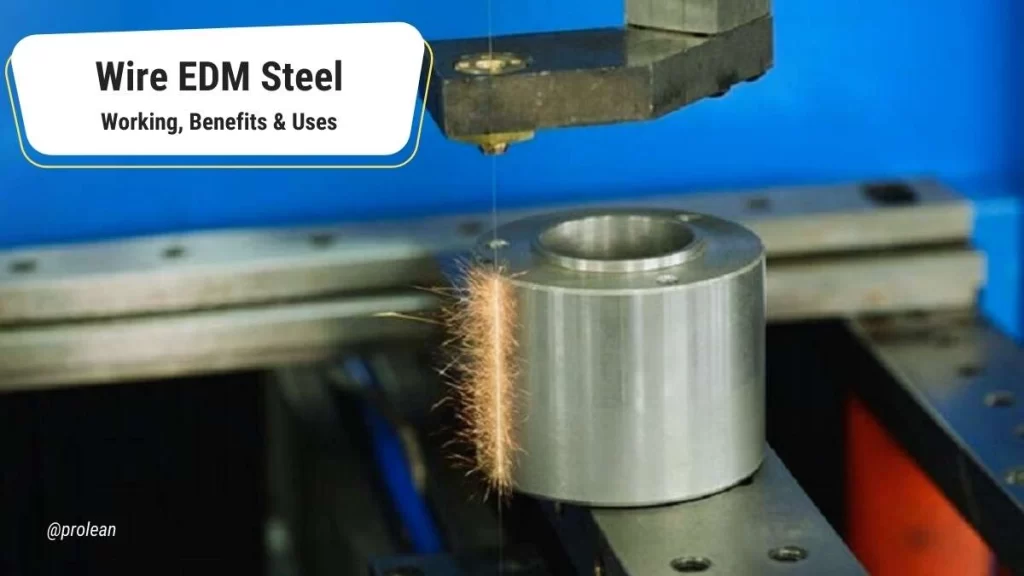
 Wire EDM machining,one of the types of EDM machining,is a precise electrothermal material-cutting process that uses electrical sparks to cut through complex shapes. Wire EDM can process pre-hardened steel without requiring heat treatments in many cases, but specific applications may still need post-machining annealing or tempering.
This article examines the operation of wire EDM steel, its benefits, and its application, alongside distinguishing features.
Wire EDM for Stainless Steel: Achieving High-Precision Cuts
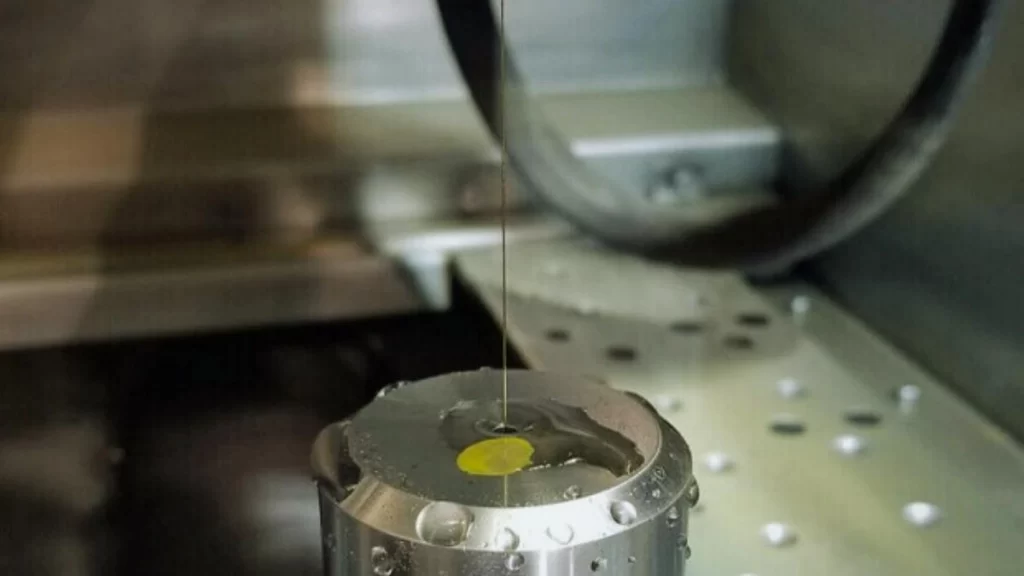
Wire Cutting Steel
The state-of-the-art wire EDM (Electrical Discharge Machining) represents a modern manufacturing process. In its assembly, a thin wire serves as the precise instrument for erosion material. The cutting of stainless steel through EDM results in intricate parts with high dimensional accuracy.
In general, it operates without contact and prevents tool deterioration, so you can achieve precise and clean cuts that work well in intricate shapes.
Minimal Heat-Affected Zone
While wire EDM generates minimal heat compared to traditional methods, localized thermal effects may slightly alter surface properties in ultra-thin or hardened materials.
Precision and Detail
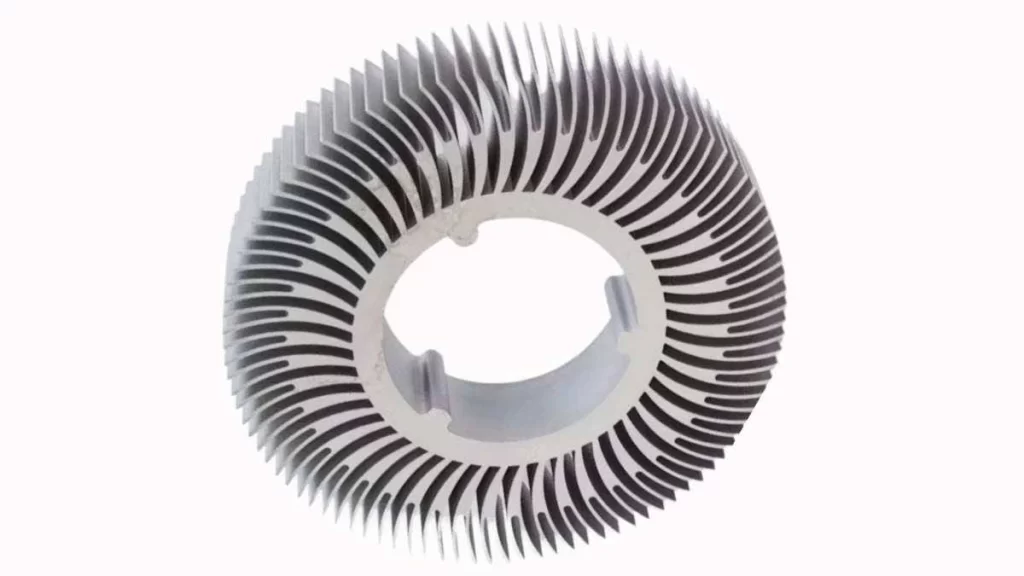
Highly Detailed Wire Cut Stainless Steel Part
Under optimal conditions with multiple passes, wire EDM can achieve tolerances as tight as ±0.002 mm, though typical accuracy ranges between ±0.005 mm. Trimmed internal features and detailed threads together with complex geometric patterns become achievable. It delivers machining precision that outperforms all traditional cutting procedures. Wire EDM produces highly precise results regardless of the workpiece’s size.
Ideal for Hardened Stainless Steel
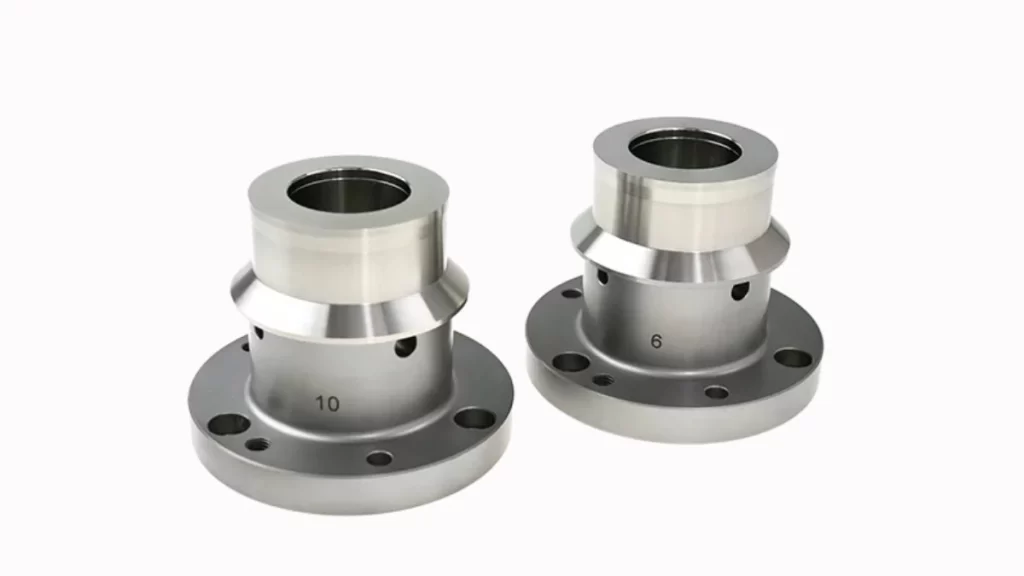
Wire EDM Stainless Steel Parts
When working with hardened stainless steel materials, wire cutting steel dictates optimal effectiveness. Usually, it operates differently from standard cutting approaches because it bypasses physical force mechanisms. Stainless steel types 440C and 17-4 PH can cut through the EDM process. The procedure demonstrates competence in processing hard-to-machine alloys.
No Tool Wear or Deformation
Wire EDM metal cutting operates without traditional cutting tools. So, tool wear is minimal or impossible to appear. The production stays stable and often results in uniform cuts throughout the process.
Minimise Material Waste
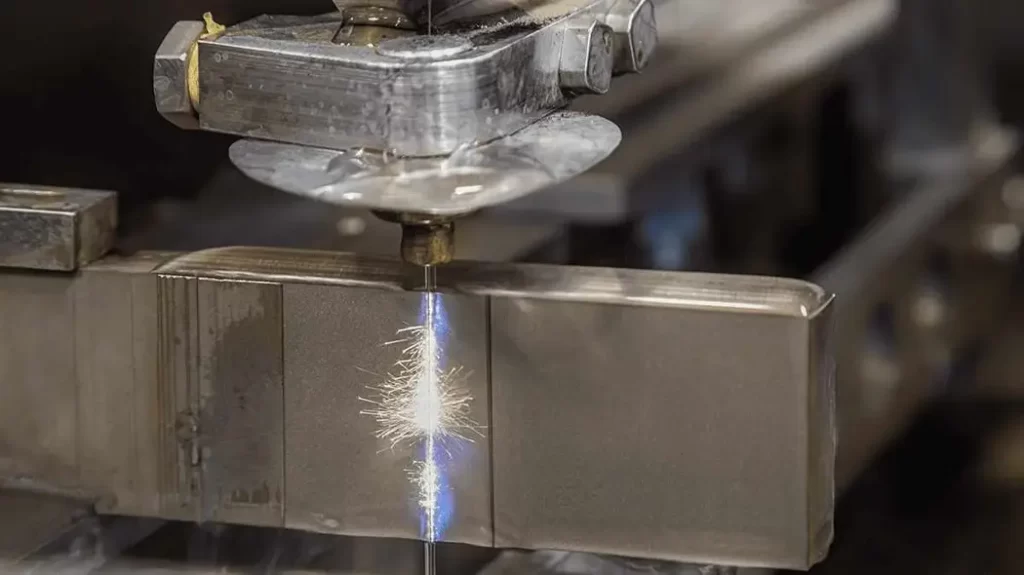
Clean Cut Wire EDM
Only the projected material gets removed through the wire EDM process. The exact material removal capability of Wire EDM reduces overall waste while decreasing production expenses.
Complex Cut Shapes
Wire EDM machines can successfully make detailed internal cuts and sharp cornered shapes. The technology also allows the production of holes together with slots as well as delicate profiles. Besides, it produces shapes that conventional tools cannot handle.
Adaptable For Various Stainless Steel Grades
Wire EDM is compatible with cutting multiple stainless steel grades, including 304, 316, and 440C and their derivatives. Specifically, it operates effectively on 17-4 PH and 2205 duplex stainless steel materials in addition to conventional alloys.
Contact Ancastings for advanced wire EDM services for your upcoming job. We deliver custom stainless steel machining solutions that deliver accurate outcomes for your requirements.
Try Ancastings Now!
How Wire EDM Works for Metal Cutting: A Complete Guide?
The wire cut process utilizes electrically charged wires. An electrically charged wire functions as a tool for material erosion. The wire traverses through specific programmed paths that eliminate precise material sections. Let’s break the process into steps:
Step 1. Setup of the Workpiece and Electrode Wire
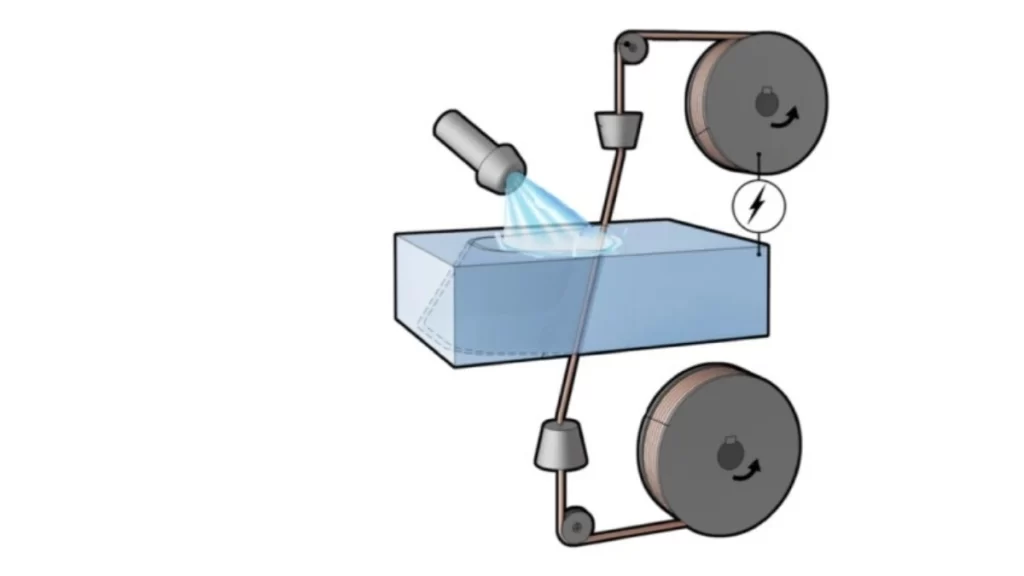
Wire EDM Workpiece Placement
The machine first requires the workpiece to be positioned safely. The part stability depends on the conductive holder. The material goes through submersion in dielectric fluid. The dielectric fluid contributes to material cooling while also clearing away debris from the operation. The technician carefully places the thin electrode wire while maintaining its tension.
Selection of Electrode Wires
There are primarily three types of electrode wires in EDM operations:
- Tungsten Wire: High strength, ideal for fine cuts, with diameters of 0.03 to 0.1 mm.
- Brass Wire: The diameter of brass wire ranges from 0.1 to 0.3 mm because it performs well during slow processing and delivers a smooth surface.
- Molybdenum Wire: High-speed capability and strength operate at dimensions between 0.08 to 0.2 mm.
Step 2. Electrical Discharge Initiation
During the operation, the machine delivers electrical pulse bursts. A high-voltage electric charge travels through the wire. The material leads to sparking when the wire nears it. It releases small energetic sparks that produce thermal energy. A concentrated heat source performs specific melting of the infrastructure. The process starts to erode small portions of the workpiece.
Step 3. Material Erosion and Removal
The dielectric fluid extracts the melted material from the machine. Besides, it saves the part from overheating while also protecting it from damage. Moreover, it sweeps all waste materials out of the work zone. The continuous movement of the wire causes material to be eliminated in its path.
Step 4. Continuous Wire Feed and Path Adjustment
The machine continuously feeds the wire throughout its operation. It maintains wire tension to keep the tool in a static position and regulates the wire movement. The system executes several predefined sequences. Complex designs and accurate cuts are since the cutting wire maintains a physical separation from all material being worked.
Step 5. Finishing the Cut and Achieving Desired Tolerances
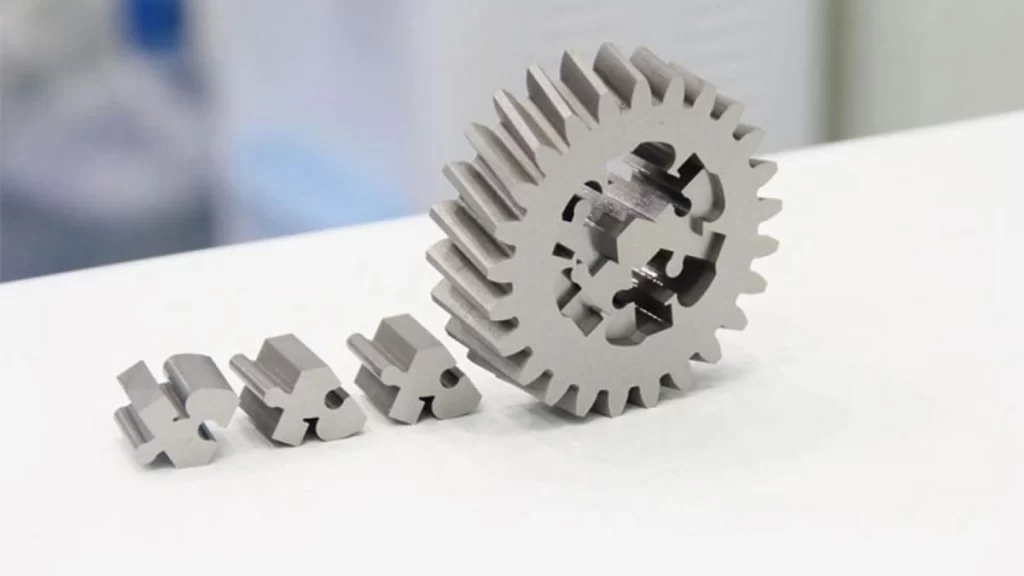
Precision Wire Cut EDM
Wire EDM equipment results in precise cuts that produce surfaces with acute and even edges. It can reach minimum tolerances at ±0.002 millimeters. The process produces extremely smooth surfaces, so further finishing operations become unnecessary.
Step 6. Post-Processing and Cleaning
After completing the cutting process, the part is taken from the machine. The equipment removes the remaining dielectric fluid to finish the cleaning process. The removal of final debris will need extra cleaning steps. The subsequent process includes deburring operations and surface polishing for the required parts. Since EDM produces neat and exact cuts, the process results in clean products.
Step 7. Inspection and Quality Control
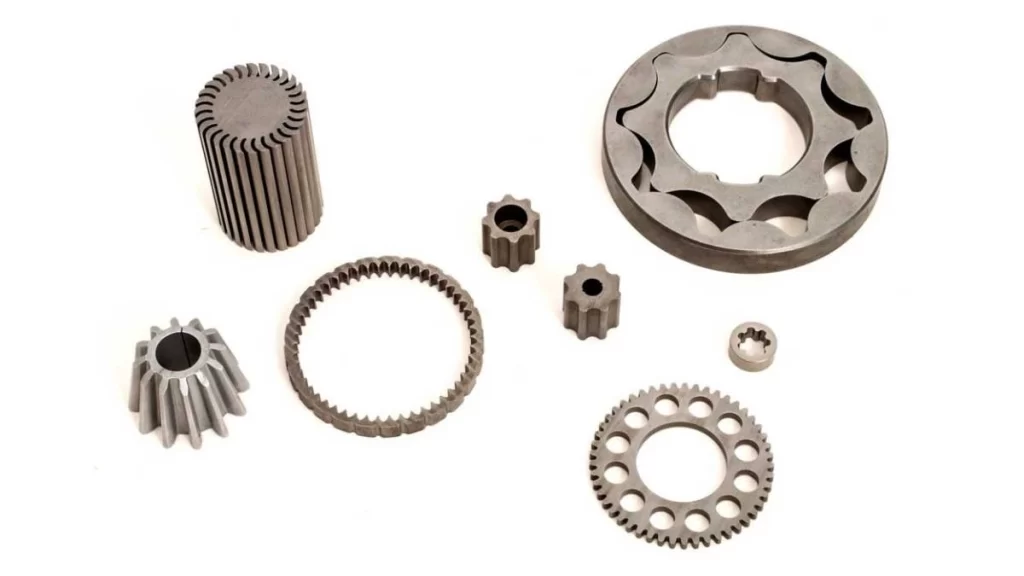
End User Wire Cut Steel Parts
The part moves to a strict examination phase following its completion from the cutting process. The process needs verification on precise measuring tools. Manufacturers commonly use Coordinate Measuring Machines (CMM) for quality inspections. The inspection procedure validates that every tolerance requirement is met.
Why Choose Wire EDM for Precision Steel Cutting?
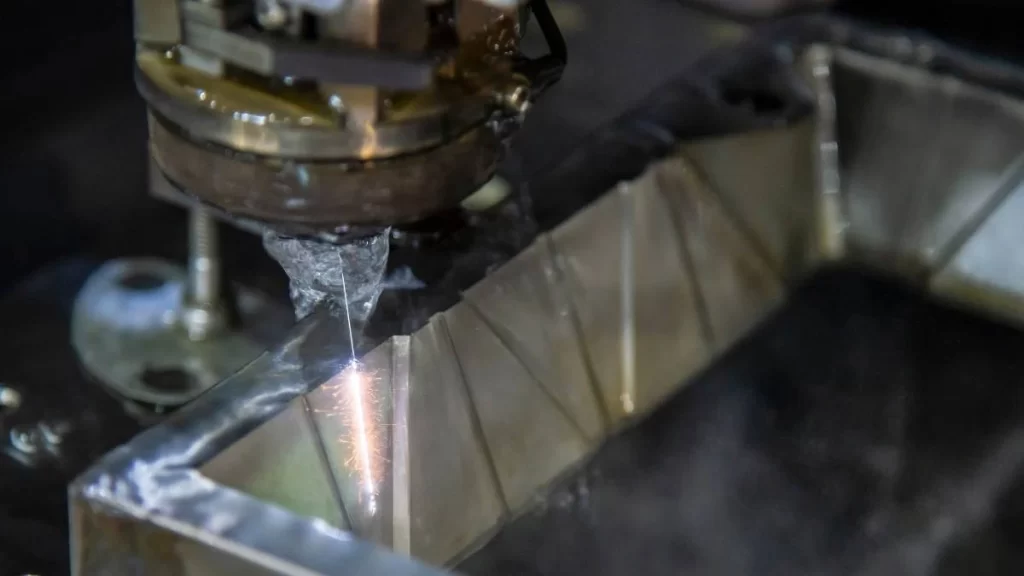
Precision Steel EDM Wire Cutting
- If your steel projects need precise dimensions and extreme accuracy, choose EDM cutting technology.
- Wire EDM proves perfect for producing precise steel components with a tolerance accuracy down to ±0.002m.
- Steel projects that demand complex shapes and delicate features benefit best from Wire erosion compared to conventional machining processes.
- The process enables easy cutting of tough and hardened steel materials, including 440C and 17-4 PH.
- EDM cutting requires no mechanical force, which keeps tool wear and deformation away while maintaining result stability.
- It achieves precise results on every part regardless of the steel hardness level.
- The electrical discharge system replaces traditional heat methods, so it protects steel properties while avoiding any material warping.
- EDM metal cutting is the most suitable technique for working with heat-sensitive steels because it protects material strength while preserving its original structure.
- It generates perfectly smooth and blemish-free finishes when cutting steel parts.
- The post-finishing workload is reduced because it cuts steel components to produce outstanding surface finish quality that eliminates secondary finishing requirements.
- EDM cutting only cuts away required material quantities.
- It produces rapid manufacturing of intricate steel parts through its accurate systematic approach.
- Replicate projects benefit from it because it generates uniform cut performance, which makes it ideal for mass-scale production runs.
- The PC-controlled system produces identical precision for a single steel piece as it does for multiple steel pieces.
- The systems can easily produce delicate internal features that include small holes together with tight corners.
- The capability of EDM machines to cut internal details allows them to become the best tool for aerospace and medical industries where detailed cut steel parts are desired.
Try Ancastings Now!
Comparing Wire EDM vs. Other Steel Cutting Methods
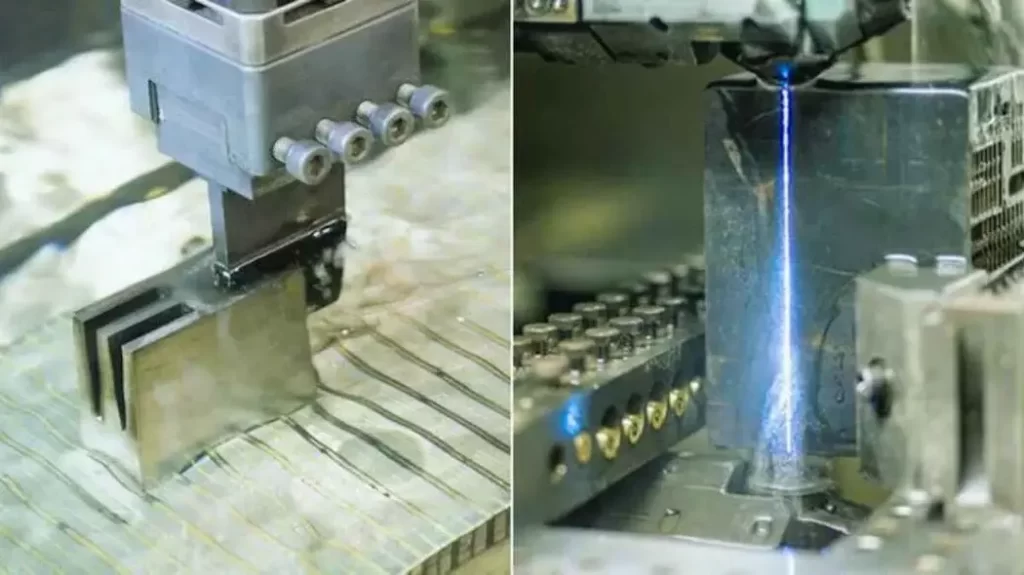
Sinker edm vs. Wire EDM
Table: Comparison of Wire EDM Vs. Other Cutting Methods.
| Factors | Wire EDM | CNC Milling |
| Cutting Accuracy | High accuracy, tolerances up to ±0.002 mm. | Moderate accuracy, tolerances around ±0.05 mm. |
| Cutting Complexity | Handle intricate shapes and small details. | Limited to simple and 2D cuts. |
| Thermal Impact | Minimal heat generation, no material distortion. | With high heat generation, material may distort. |
| Tool Wear | No tool wear, the wire doesn’t touch the material. | High tool wear requires regular maintenance. |
| Material | Cut very hard materials, including hardened steel. | Limited with tough materials, requires specific tooling. |
| Edge Quality and Finish | Smooth, burr-free cuts, minimal finishing needed. | Rougher edges, requires post-processing. |
Related To: EDM vs wire cut
Best Metals for Wire EDM Cutting: Is Stainless Steel Ideal?
Wire EDM works best for machining both tough and hard metal materials. The most suitable metals include:
- Wire EDM machines can process stainless steel grades 304, 316, and 440C to produce cold cuts without heat effects.
- The hard tool steels D2, A2, and O1 are compatible with EDM processing due to minimal tool deterioration.
- Wire EDM can also handle Titanium with precision and no thermal distortion.
- Inconel shows excellent compatibility with Wire EDM because the process maintains both precision and low heat effects at high temperatures.
- The processing of electrical components involves clean, precise cuts with copper and brass because they are soft metals.
Is Stainless Steel Ideal for Wire EDM?
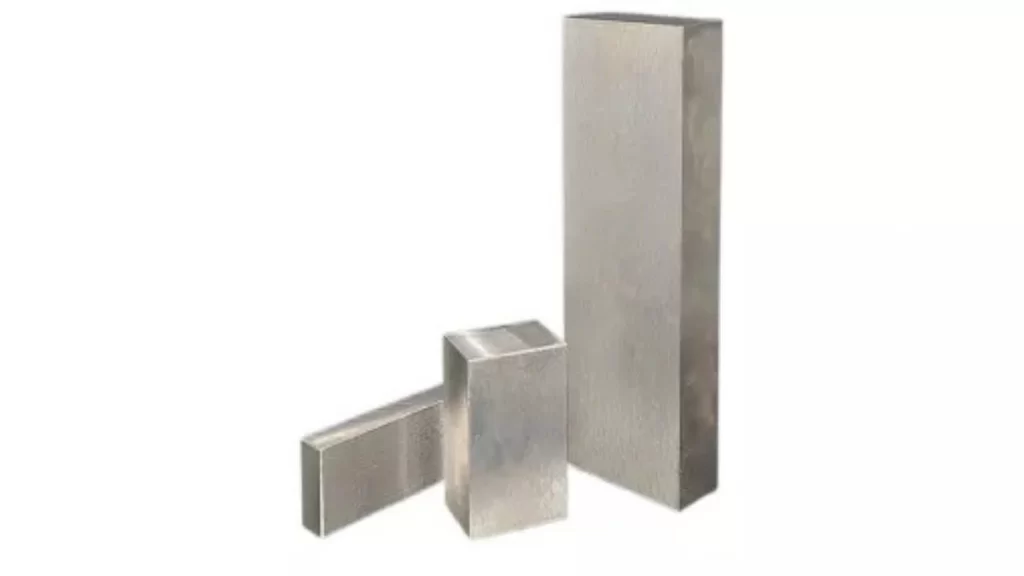
Stainless Steel Wire-cut Parts
Yes, stainless steel, particularly grades 440C and 316, can be precisely cut without compromising their integrity. The minimal heat generated during the process prevents distortion. So, it is considered vital for heat-sensitive applications. Additionally, Wire EDM preserves stainless steel’s corrosion resistance by avoiding heat-affected zones. So, overall, it is ideal for wire EDM cutting.
Different Grades of Steel and Stainless Steel Compatible For Wire EDM
Wire cutting steel works well with many steel grades:
- 304 stainless steel is ideal for precision engineering tasks, where protecting parts from corrosion matters.
- 316 stainless steel is famous for marine and chemical environments due to its superior resistance.
- 440C stainless steel maintains elevated hardness properties, making it optimal for bearing applications.
- 17-4 PH SS grade presents ideal characteristics for aerospace applications. Because it offers high precision in elaborate shapes.
- The tool steel grades, like D2 and AO1, are designed to work optimally under tough,wear-resistant conditions without any decay.
- The 4140 and 4340 alloys provide essential properties to reduce distortion during the EDM machining process.
Industries Using Wire EDM for Precision Steel Parts
Wire EDM is used to make steel parts/products for many industries. Each part has a special purpose and use. Let’s look at how these parts perform unique tasks in different industries.
Aerospace Industry
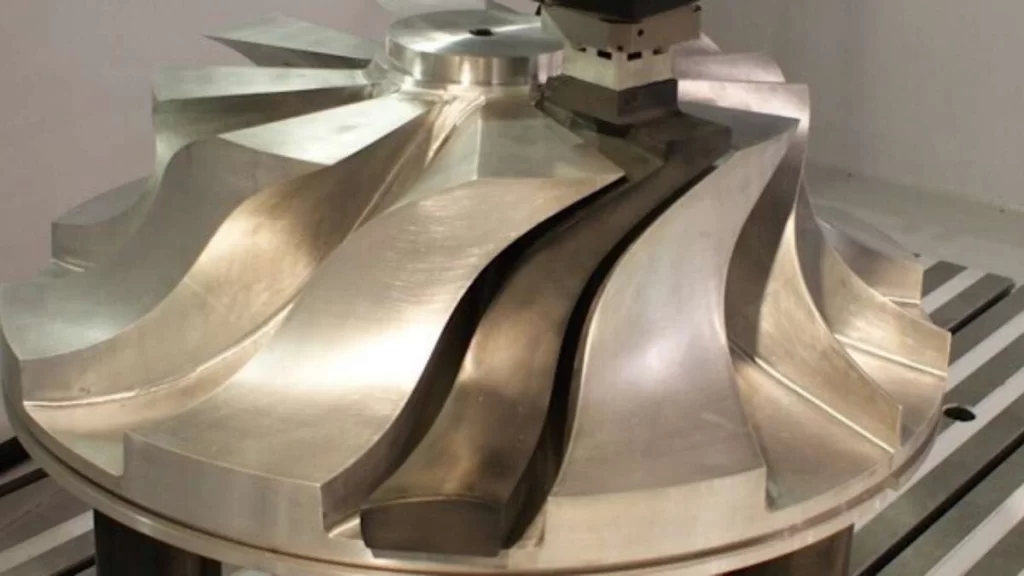
Turbine Blade EDM Machining
- Turbine Blades: Designed for Jet engines.
- Gear Components: Used in landing gear systems.
- Fuel Nozzles: These nozzles regulate fuel spray patterns in aircraft engines.
- Engine Brackets: For structural and mounting engine parts together.
- Combustion Chambers: Designed for jet propulsion systems.
Automotive Industry
Automotive EDM Part Cutting
- Valve Seats: These are designed for sealing in combustion engines.
- Cylinder Heads: House the combustion chamber, intake, and exhaust valves in internal combustion engines.
- Pistons: Move up and down inside the cylinder to convert fuel combustion.
- Gear Shafts: Transmit rotational power between different gears in a vehicle’s transmission systems.
Medical Industry
- Surgical Instruments: These are designed for cutting, clamping, and suturing tissue.
- Dental Implants: Integrate with the jawbone to provide a natural-looking tooth replacement.
- Bone Saw Blades: Used in orthopedic surgeries.
- Precision Medical Tools: These are small surgical components, such as micro-scissors for eye surgeries.
Tool and Die Industry
EDM die Designing
- Injection Molding Inserts: Designed to shape plastic parts for consumer products.
- Progressive Dies: Stamping dies for mass-scale production of automotive and aerospace metal components.
- Stamping Tools: Used to cut and form sheet metal into complex shapes.
- Die-Punch Tools: These create precision-cut metal blanks for electrical and mechanical sectors.
Electronics Industry
EDM For Electronic Enclosure
- Electrical Connectors: Used in circuit boards and data transmission
- Switch Housings: Design for protecting electrical relays.
- Custom Heat Sinks: These are used in CPUs and power electronics.
- Semiconductor Parts: These are designed for microchip production.
Defense Industry
Wire Erosion For Defence
- Gun Parts: Custom gun slides and barrels for the military.
- Firing Pins: These are machined for ignition in firearms.
- Shell Casings: Used in metal casings for ammunition.
- Precision Firing Mechanisms: Trigger parts and sears for weapons.
Energy Sector
- Turbine Blades: Designed to convert steam, gas, or wind energy into mechanical power.
- Generator Parts: Used to facilitate the conversion of mechanical energy into electrical power.
- Valve Components: Designed to control the flow of gases and liquids in pipelines.
- Pressure Regulators: Used to maintain stable pressure levels in gas and fluid systems.
Tooling and Manufacturing
Wire Cut EDM Tool Making
- End Mills: Designed for cutting and shaping metal, wood, and plastic.
- Drill Bits: Used to shape precise holes in a variety of materials.
- Inserts: Designed as replaceable cutting edges used in CNC machining applications.
- Jigs and Clamps: Used to hold workpieces securely in place.
- Workholding Tools: Designed to maintain stability while machining activity.
Summary
Wire Cut Services of Ancastings
In summary, the article presents fundamental aspects of Wire EDM’s significance for steel applications. In-depth information about Wire EDM steel cuts, pricing, and evaluation procedures can be obtained by reaching out to Ancastings. For further clarification about your concerns, please reach out to our team!
FAQ’s
Q1. What is Wire EDM, and how does it work for metal cutting?
Wire EDM operates with a fine electrically charged wire that vaporizes metal with electrical sparks. The material surface develops cuts from a wire moving along it that produce detailed shapes without physical interference.
Q2. What is wire cut steel? Can you wire EDM stainless steel?
Wire EDM machines utilize wire cut steel as a material that receives its shape from EDM processing. It operates efficiently on stainless steel due to its optimal cutting capabilities and strong resistance to tough and heat-resistant materials.
Q3. How thick of metal can a wire EDM cut through
Wire EDM machines comprise the power needed to cut through metals up to 12 inches (300 mm) in thickness in specific applications.
Q4. Why is Wire EDM ideal for cutting stainless steel?
Wire EDM proves best for stainless steel applications because it produces low heat, which minimizes part distortion. Moreover, it ensures the accurate cutting of complicated shapes. The process efficiently works through stainless steel in any condition of hardness.
Q5. What are the benefits of using Wire EDM services for steel cutting?
Wire EDM delivers exacting intricate cuts that minimize material waste and create zero heat-affected zones. So, it allows the processing of complex steel parts. Moreover, the technology enables manufacturers to achieve small dimensional requirements and smooth material surfaces.
Q6. What grades of steel and stainless steel can be processed with Wire EDM?
Wire EDM implements effective steel processing of carbon steel together with tool steel and high-speed steel along with stainless steel types 304, 316, and 440C and hardened materials.