
18/8 stainless vs 304 stainless steel
Selecting the right grade of stainless steel may have a big influence on your project’s performance, durability, and cost. The strength, resistance to corrosion, and extensive industrial applications of 18/8 stainless steel and 304 stainless steel make them stand out the most frequently compared choices.
From food-safe processing machinery and cookware to high-precision fabrication and medical instruments, these materials are reliable in a variety of sectors. Notwithstanding these similarities, the grade that is most appropriate for your application may differ slightly in terms of standardization, chemical composition, ductility, and machining performance.
Making a wise decision requires knowing these differences, whether you’re contemplating stainless steel machining or purchasing custom stainless steel parts. To help you pick the most suitable material with certainty, this article compares the chemical composition, mechanical properties, advantages, limitations, and practical applications of 18/8 stainless steel vs 304.
What is 18/8 Stainless Steel?
In the industry of consumer goods, “18/8 stainless steel” is a commonly used informal term, notably for kitchenware and cutlery. It is composed of the percentages of its two main alloys, i.e., 18% of chromium (Cr) and 8% of nickel (Ni). The key component of stainless steel’s resistance to corrosion is chromium.
It forms an inert coating of chromium oxide (Cr₂O₃) on its exterior surface when it reacts with oxygen in the surrounding environment. The layer is extremely thin but surprisingly durable and repairable. This protective layer serves as a strong barrier that resists stains and prevents rust.
The inclusion of nickel improves the material’s hardness, formability, and ductility. It also improves its corrosion resistance, especially within alkaline and acidic environments. These properties are essential for numerous industrial procedures. The processes include complex and precision-based operations involved in machining stainless steel, bending, and the process of metal deep drawing. The performance of steel is significantly influenced by the inclusion of these constituents in various settings.
18/8 stainless steel is primarily known as austenitic stainless steel, which is characterized by its exceptional resistance to corrosion and nonmagnetic properties. Because of its austenitic structure, it retains a face-centered cubic (FCC) crystal structure, resulting in high toughness and durability at both room and higher temperatures.
18/8 Stainless Steel: How Is It Made?
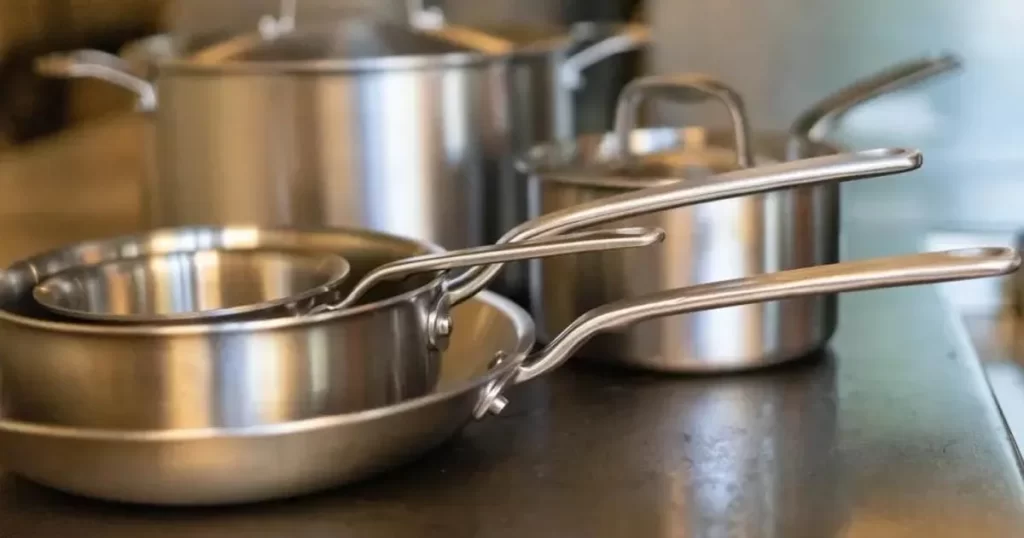
Utensils made of 18-8 stainless steel
Iron, nickel, chromium, and a small amount of carbon must all be mixed and melted together to make 18/8 stainless steel. When it melts, the material can be poured into a casting mold, which solidifies into billets, metal ingots, and any additional shape required. It is then processed through forging, rolling, and annealing to achieve a durable and high-quality finished product.
Advantages of 18/8 Stainless Steel
18/8 stainless steel has many advantages for various kinds of applications, especially in stainless steel machining.
- Because of its remarkable corrosion resistance, 18-8 stainless steel can be used in many kinds of settings. It creates an inert layer of chromium oxide that provides strong resistance to stains, rust, and deterioration in normal atmospheric and moderate chemical conditions. Because of this, 18/8 custom stainless steel parts are durable in many environments.
- This material is easily bendable, tightly drawn, and molded without breaking. It lessens fabrication issues for stainless steel machining and is extremely useful for manufacturing intricate CNC custom stainless steel parts.
- It is perfect for medical applications and applications involving food-grade contact use, such as kitchen tools, sinks, and food manufacturing machinery, because it is easy to clean and nonreactive.
- The weldability of 18/8 stainless steel is exceptional. It easily accepts standard techniques of welding, such as MIG and TIG, without requiring prolonged pre- and post-weld processes. It will make assembly easier and ensure durable and strong welds.
- It is appropriate for prominent components in consumer goods and architecture because of its smooth, shiny surface and high-quality surface finish.
- In terms of cost, it is cheaper than other types of stainless steel, like 316 and 304.
Disadvantages of 18/8 stainless steel
- Despite its strength, there are a few limitations to 18/8 stainless steel that must be considered, especially when specialized CNC stainless steel machining is involved:
- A lack of molybdenum may result in crevice corrosion and pitting in environments containing high concentrations of chlorides, e.g., saltwater and chlorine-based treatments. It is not appropriate for usage in marine environments.
- Cold working can significantly increase its hardness and strength; heat treatments like tempering and quenching cannot harden it, which limits its use for applications requiring high hardness.
- Work hardening occurs during stainless steel machining, increasing tool wear and posing challenges in attaining smooth surface finishing and accurate tolerances. Factories expert in CNC stainless steel machining deploy particular approaches to lessen this. Because of its non-magnetic nature, it is ineffective in circumstances requiring magnetic characteristics.
- Corrosion from stresses can cause cracking in certain environments, such as areas with high levels of chloride or situations in which it will be subjected to extreme tensile stresses.
What is 304 Stainless Steel?
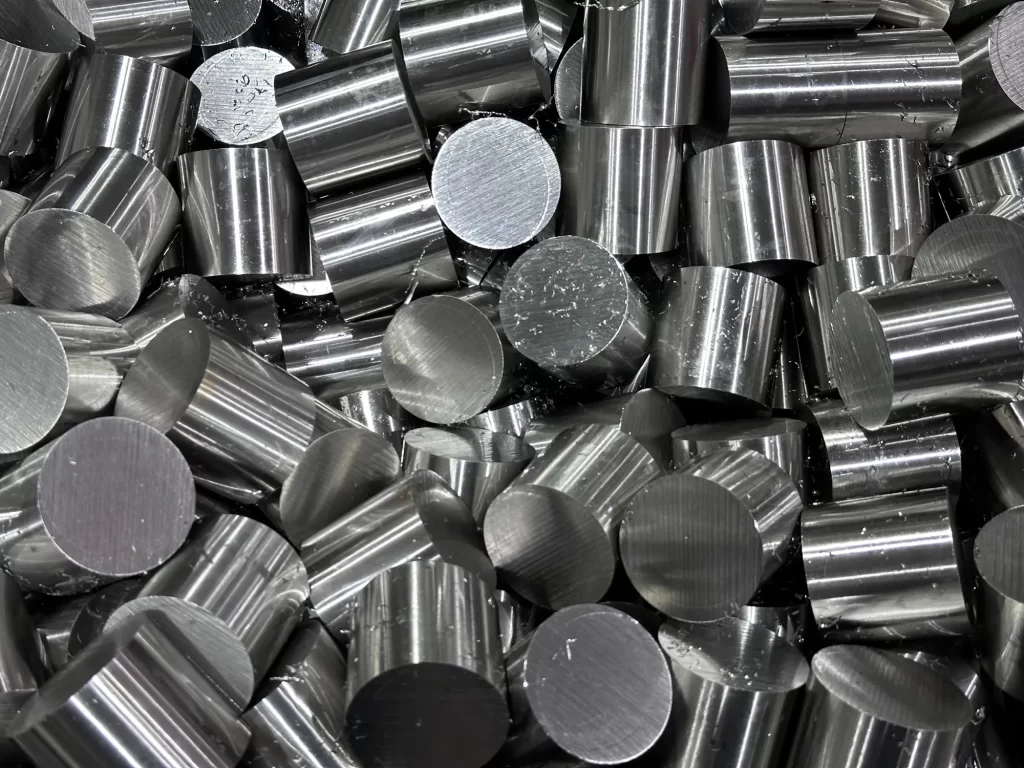
304 Stainless Steel Parts
Among the family of austenitic stainless steel, 304 stainless steel is one of the most adaptive and popular stainless steel grades worldwide. 304 is an officially recognized standard stainless steel grade, particularly classified as UNS S30400 according to the ASTM (American Society for Testing and Materials) standards, contrary to the informal “18-8” term.
Due to its well-balanced characteristics, which include high resistance to corrosion, enhanced formability, and excellent welding capabilities, it is one of the most commonly utilized stainless steel grades. Because its composition is more strictly regulated under standards like ASTM A240, 304 is often selected over 18/8 stainless steel for use.
It has 18-20% chromium, 8-10.5% nickel, up to 2% manganese, and a maximum of 0.08% low carbon as well. It also shares similar properties related to 18/8, including corrosion resistance, high welding ability, and tensile strength. It renders it perfect for applications that require it to be durable in difficult conditions. Even 304 stainless steel comes with its own subclass of stainless steel grades, such as low-carbon 304L and high-carbon 304H steels, etc.
304L Stainless Steel Grade
It is the low-carbon variant of 304 stainless steel. 304L is used in heavier gauge components to enhance welding ability. Pipes and plates come under the category of dual-certified materials that satisfy the requirements of both 304 and 304L stainless steel grades.
304H stainless steel Grade
Another kind of steel variant that may be used at elevated temperatures is 304H. It contains a high carbon content.
304 Stainless Steel: How Is It Made?
Similar to 18/8, 304 stainless steel is produced by heating nickel, iron, chromium, and trace alloys into a molten state in a furnace. After that, it turns into billets, sheets, or other shapes to solidify. After that, the forms undergo hot rolling, thermal treatments, and polishing, and are trimmed to fit.
Advantages of 304 Stainless Steel
- Because of its exceptional corrosion resistance, it is extremely efficient in a variety of natural freshwater, challenging chemical, and atmospheric conditions. This is because of the formation of a robust passive layer of chromium oxide.
- High formability makes it simple to deep-draw, bend, and stretch 304 stainless steel into intricate forms. This is a key benefit for producing complex custom stainless steel parts
- It is perfect for applications requiring low temperature, such as the storage of liquefied natural gas (LNG), because of its toughness and high tensile strength. This allows it to retain its physical properties even when exposed to cold temperatures.
- The 18/8 stainless steel vs 304 comparison indicates that the 304 stainless steel grade is more easily shaped and formed, offering high versatility across many industries, including food, brewing, and dairy sectors.
- In the annealed condition, the nonmagnetic properties of the material broaden its use in precision electrical and medical instruments.
Disadvantages of 304 Stainless Steel
- It is more resistant to corrosion than certain other grades of stainless steel, although, like 18-8, it is still susceptible to corrosion from exposure to seawater. It still suffers in marine environments with high chloride levels.
- Although it can withstand heat quite effectively, it is prone to corrosion at a temperature of 425°C. This makes the alloy more prone to stress-induced, corrosion-driven crack formation and carbide precipitation, which will lead to chromium depletion at grain edges.
- Its utility for applications demanding exceptionally high hardness or resistance to wear is limited since it is solely strengthened by cold treatment and will not be toughened by thermal processes.
- Although it is less expensive compared to other stainless steels, the starting cost of materials exceeds that of plain steel made from carbon. This makes it less suitable for projects with strict budget constraints.
Try Ancastings Now!
18/8 Stainless Steel vs 304 Stainless Steel: Key Comparison Explained
Differences between 18/8 stainless steel and 304 stainless steel
Both 18/8 and 304 stainless steel grades are composed of chromium and nickel, imparting hardness and resistance to corrosion. A comparison between 18/8 vs 304 stainless steel showed that there are significant distinctions between the two despite their similarities.
18/8 stainless steel vs 304: Standardization and Composition Control
Standardization is the main difference between the two, even if they are almost identical in nature. 18/8 stainless steel is a general term that includes a wide range of grades, such as 301, 302, and 304. It can’t always ensure strict conformance to the American Society for Testing and Materials (ASTM) standard, but it can explain basic chemistry.
304 stainless steel, or UNS S30400, is a particular, regulated grade. According to international standards (ASTM), the alloy regulation of 304 stainless steel is more precise. This led to promising higher efficiency in fabrication, welding operations, and custom metal machining.
18/8 Stainless Steel vs 304: Corrosion Resistance
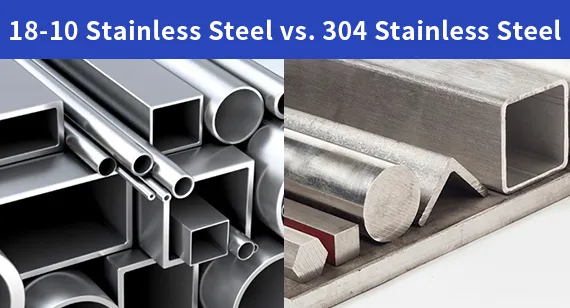
18-8 stainless steel vs 304 stainless steel
Although both provide high resistance to corrosion in general, 304 stainless steel usually works well in extreme circumstances, including those involving exposure to salt or chloride. Both 18/8 stainless steel and 304 contain 18% chromium and 8% nickel, while the chloride resistance of 304 is inferior to 316, making it more ideal to use in food and chemical processing applications, and best for mild environments
Important factors that make 304 stainless steel a corrosion-resistant metal include
- Reduced levels of carbon, which lowers the likelihood of intergranular corrosion
- Enhanced resistance to sulfur and chloride, more common in industrial and marine environments.
Both corrosion-resistant metals offer high resistance, particularly in salt-exposed environments. 304 is a star player used mostly in industrial settings.
18/8 Stainless Steel vs 304: Durability and Strength
The durability and strength of 18/8 and 304 stainless steel differ on the basis of their mechanical properties. 18/8 stainless steel offers hardness and deformation resistance, which makes it ideal for extremely stressful applications. 304 shows better ductility because of its higher content of nickel, which makes it simpler to form and mold into different shapes and sizes.
Choose 18-8 stainless steel for high-load, high-stress applications, and 304 for applications requiring greater weldability and flexibility.
18/8 stainless steel vs 304: Fabrication and weldability
Both grades weld well, but 304 stainless steel, especially its low-carbon variant (304L), resists intergranular corrosion, making it perfect for extensive fabrication and heat-treated projects.
18/8 Stainless Steel vs 304: Cost Differences
18/8 stainless steel is cheaper and extensively utilized in consumer goods. 304 stainless steel may be more expensive, but it provides excellent performance in more demanding environments like commercial and manufacturing applications. For the majority of applications, the cost difference is frequently minimal. 18-8 stainless steel costs between $2.5 and $3.5 per kilogram for applications on a massive scale, whereas 304 stainless steel is somewhat more expensive at between $3 and $4 per kilogram.
.
Key Comparison of Properties
Table 1: 18-8 Vs 304 Stainless Steel Properties
| Properties | 18/8 Stainless steel (General range) | 304 stainless steel (General range) |
| Melting Point (°C) | 1400 to 1450 | 1400 to 1450 |
| Density (g/cm³) | ≈ 8.0 g/cm³ | ≈ 8.0 g/cm³ |
| Tensile Strength (MPa) | 520 to 720 | 515-700 |
| Resistivity (Ω·m) | 7.2 * 10⁻⁷ | 7.2*10⁻⁷ to 7.5*10⁻⁷ |
| Modulus of Elasticity (GPa) | 193 to 200 | 193 to 200 |
| Thermal Expansion (1/K) | 17.3 * 10⁻⁶ | 16.9*10⁻⁶ to 17.3*10⁻⁶ |
| Elongation at Break (%) | 40 to 60 | 40 to 60 |
| Thermal Conductivity | 16.2 | 16.2 to 17.0 |
| Hardness (Rockwell B) | 70 to 90 | 70 to 92 |
| Magnetic Properties | Non-magnetic (in annealed state) | Non-magnetic (in annealed state) |
| Corrosion resistance | Excellent (general) | Excellent (general) |
| Machinability (annealed state) | Good (likely to work hard) | Good (likely to work harden) |
| Formability | Excellent | Excellent |
Stainless Steel Machining: 18/8 Stainless Steel vs. 304
Stainless steel machining is notably more difficult than carbon steel or aluminum. Both 18/8 and 304 stainless steel machining pose identical issues.
- Hardening of work
- generation of heat
- Wear of tools
The 304 in particular is vulnerable to “work hardening.” It also implies that when you cut the material, it gets tougher, which might cause end mills to break or tools to wear down quickly.
Expert Tips on Machining 304 Stainless Steel
For the successful execution of 304 stainless steel machining projects, manufacturers should employ these tips and techniques.
Sharp Carbide Tools
Instead of rubbing against the material, cut through it using precise, high-performance carbide cutting tools
Milling Stainless Steel Speeds and Feeds
Machining tools and rigidness are key factors in optimal milling of stainless steel speeds and feeds. A general standard for machining 18/8 and 304 stainless steel is shown below.
Table 2: Feed & Speed Against Mill Tool Types
| Type of Tool | Feed per Tooth (IPT) | Speed of Cutting (SFM) |
| Carbide Roughing End Mill | 0.002 to 0.005 | 200 to 350 |
| Carbide Finishing End Mill | 0.001 to 0.003 | 300 to 450 |
| Drill HSS | 0.002 to 0.006 | 30 to 50 |
Heat Management
HPC lubricant should be employed to avoid the accumulation of heat at the edge of the cutting.
Try Ancastings Now!
Alloy Steel vs Stainless Steel: Why Select 304?
The environment is typically the deciding factor when comparing alloy steel vs stainless steel. Although alloy steels provide superior hardness and strength, they do not have the 300 series’ built-in corrosion resistance. 304 stainless steel is ideal for chemical- and moisture-exposed applications because of its unique combination of durability and toughness.
18/8 stainless steel vs 304: Common Applications
Both 18/8 stainless steel and 304 are utilized in numerous different industries due to their unique properties. Here are a few major industries where these corrosion-resistant metals are highly effective.
Household Appliances and Kitchenware
18/8 stainless steel is mostly used for cutlery, pans, pots, and other kitchen appliances because of its ease of cleaning and non-reactiveness.
Food and Beverage Industry
18/8 stainless steel and 304 stainless steel are both used in the processing and preparation of food. They can be found in appliances like culinary utensils, belts for conveyance, and food preservation containers for their resistance to corrosion and hygiene.The pharmaceutical and medical industry
For sterilizing instruments, hospital trays, and tools for surgery, 304 stainless steel is frequently chosen in healthcare facilities. Because of its exceptional resistance to corrosion and non-toxic characteristics, it is perfect for preserving sterilization. Although 18-8 stainless steel works effectively too, 304 offers more durability for critical operations.
Petroleum and Chemical Industries
304 stainless steel is the preferred material for exchangers for heat, pipes, and tanks in chemical manufacturing facilities. Its resilience to extreme temperatures and hazardous chemicals guarantees reliability over time. Despite its effectiveness, 18-8 stainless steel seems frequently utilized in less challenging situations.
Architecture and Construction
Both materials are frequently utilized in architectural projects. They can be found in countertops, railings, structural parts, and panels for decoration. 18/8 stainless steel is used in paneling and construction projects due to its sturdiness and aesthetic value. For common construction-related uses, 18-8 stainless steel provides inexpensive alternatives. However, because of its increased resilience to external influences, 304 stainless steel is more appropriate for coastal and outdoor constructions.
Aerospace and Automotive Industry
Both are employed in the aerospace and automobile sectors for parts subjected to harsh settings. The durability and resistance to corrosion of 304 stainless steel render it perfect for aviation assemblies, fuel storage containers, and engine exhaust systems. When pricing is a top concern, 18-8 stainless steel is frequently utilized in fewer crucial parts.
Conclusion
Both 18/8 stainless steel and 304 stainless steel are trusted options for a variety of industries due to their exceptional resistance to corrosion, strength, and versatility. For consumer products and common applications, 18/8 stainless steel is an economical choice; however, 304 stainless steel is better suited for harsh conditions requiring higher durability against corrosion, weldability, and formability.
The best option primarily relies on the manufacturing, mechanical, and environmental requirements of your application. Ancastings offers high-quality stainless steel machining solutions that are customized to your exact specifications, whether you’re searching for expert custom metal machining or high-precision manufactured custom stainless steel parts. Contact Ancastings right now to turn your designs into robust, precision-engineered components.
FAQs
Is 304 the same as 18/8?
In most cases, yes. “18/8” is a stainless steel that contains approximately 18% chrome and 8% Nickel, which is the nominal composition of 304. While 18/8 is only a commercial designation, it does not guarantee traceability. 304, on the other hand, is an ASTM/UNS grade that has been verified for its chemical and mechanical properties.
Can 18/8 be specified in engineering drawings?
This is not recommended for engineering applications. Use “304L” when drawing requirements require material certification, qualification of weld procedures, or regulatory compliance. Use “18/8” only for commercial products when generic stainless steel is acceptable.
When should I use 304L instead?
When welding thick sections, or if the fabrication requires prolonged heating within the 800-1500degF range of sensitization, specify 304L (low-carbon =0.03%). The reduced carbon content helps to prevent chromium-carbide precipitation and maintain the corrosion resistance of welded assemblies.
Do I need 304H when?
For high temperature service, choose 304H (higher Carbon 0.04-0.10%), for furnace parts, heat-exchangers, or boiler components. The higher carbon content improves creep resistance and prevents stress fracture under sustained thermal loads.
Should I upgrade to 316 when?
If your application is exposed to chlorides (seawater or road salt), in acidic environments, or for coastal/marine applications, you should switch to 316. The molybdenum content of 316 is 2-3% higher than that of 304, which makes it more resistant to pitting and crevices.
Does stainless steel 18/8 rust?
In high chloride or low oxygen environments, 18/8 will develop surface rusting (tea staining), but not structural rusting under normal atmospheric conditions. Periodic cleaning of the passive oxide layer can extend service life when used in corrosive environments