
 The manufacturing industry has experienced significant transformations over time, largely driven by technological advancements. Among these innovations, the rise of computer-aided design (CAD) software has been pivotal in changing the dynamics of how engineers and designers create plans for parts and products. The introduction of CAD programs has increased the accuracy, efficiency, and complexity of designs, proving to be a game-changer. However, an ongoing debate persists regarding the use of 2D and 3D drawings in manufacturing and their respective impacts on production processes.
This article will delve deep into this topic, comparing these two design methodologies in the context of manufacturing.
The Basics: 2D Drawings in Manufacturing
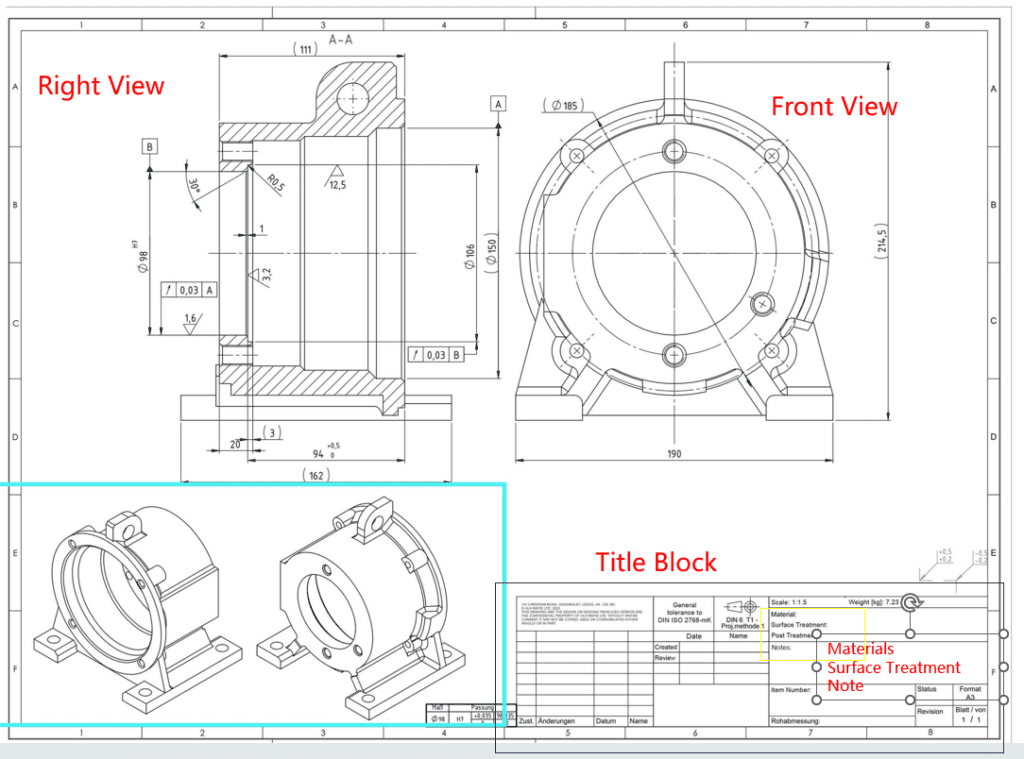
Before 3D CAD software became commonplace, 2D drawings were the norm in the manufacturing industry. These drawings provide a simplified view of a product or part from two dimensions: height and width, neglecting the depth or thickness. 2D drawings, often represented as blueprints or schematics, contain crucial information such as dimensions, tolerances, and assembly instructions. They are typically created using software like AutoCAD.
These flat illustrations are instrumental in various manufacturing fields, such as sheet metal fabrication, CNC machining, and others. While they may lack the visual appeal and depth of detail that 3D models can offer, they carry their own unique set of advantages.
Table 1: Components of a typical 2D drawing
| Component | Description |
|---|---|
| Dimensions | It includes the length, width, and, if necessary, the depth of the part. |
| Tolerances | These define the permissible limit of variation in a physical dimension. |
| Material specifications | Information about the type of material to be used in manufacturing the part. |
| Assembly instructions | Directions on how the part fits into the larger product, if applicable. |
| Notes | Any additional pertinent information required for manufacturing. |
Despite the rapid progress in 3D modeling technology, 2D drawings continue to be widely used in the manufacturing industry, primarily due to their ease of use, simplicity, and wide acceptance.
The manufacturing industry has experienced significant transformations over time, largely driven by technological advancements. Among these innovations, the rise of computer-aided design (CAD) software has been pivotal in changing the dynamics of how engineers and designers create plans for parts and products. The introduction of CAD programs has increased the accuracy, efficiency, and complexity of designs, proving to be a game-changer. However, an ongoing debate persists regarding the use of 2D and 3D drawings in manufacturing and their respective impacts on production processes.
This article will delve deep into this topic, comparing these two design methodologies in the context of manufacturing.
The Basics: 2D Drawings in Manufacturing
Before 3D CAD software became commonplace, 2D drawings were the norm in the manufacturing industry. These drawings provide a simplified view of a product or part from two dimensions: height and width, neglecting the depth or thickness. 2D drawings, often represented as blueprints or schematics, contain crucial information such as dimensions, tolerances, and assembly instructions. They are typically created using software like AutoCAD.
These flat illustrations are instrumental in various manufacturing fields, such as sheet metal fabrication, CNC machining, and others. While they may lack the visual appeal and depth of detail that 3D models can offer, they carry their own unique set of advantages.
Table 1: Components of a typical 2D drawing
| Component | Description |
|---|---|
| Dimensions | It includes the length, width, and, if necessary, the depth of the part. |
| Tolerances | These define the permissible limit of variation in a physical dimension. |
| Material specifications | Information about the type of material to be used in manufacturing the part. |
| Assembly instructions | Directions on how the part fits into the larger product, if applicable. |
| Notes | Any additional pertinent information required for manufacturing. |
Despite the rapid progress in 3D modeling technology, 2D drawings continue to be widely used in the manufacturing industry, primarily due to their ease of use, simplicity, and wide acceptance.
Try Ancastings Now!
Advantages and Limitations of 3D Drawings in Manufacturing
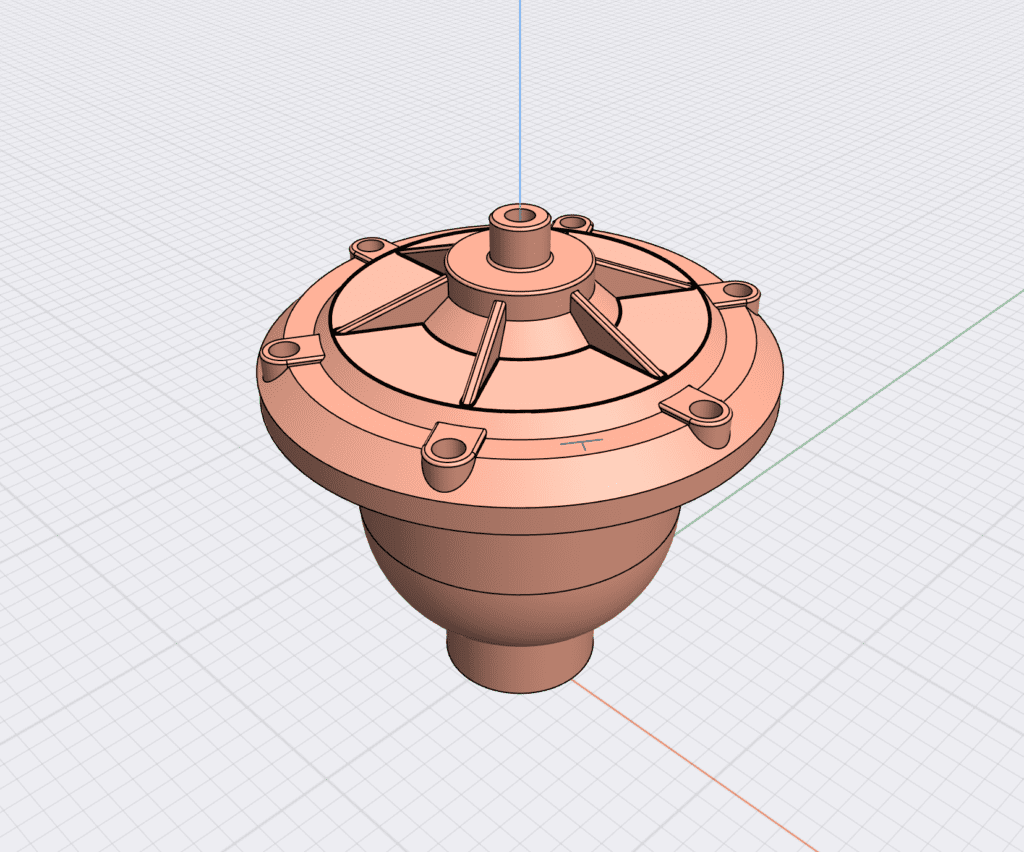
As technology advances, more and more manufacturers are adopting 3D drawings because of their numerous benefits. However, it’s also important to recognize their limitations.
Advantages of 3D Drawings
- Comprehensive Visualization: 3D drawings allow you to visualize the complete product in a way that is impossible with 2D drawings. You can rotate, zoom in and out, and examine the product from any angle.
- Accurate and Detailed: 3D drawings can represent complex geometries accurately and in detail. They can include intricate features and even depict internal structures.
- Easy Updates: Updating a 3D model is generally simpler than updating a 2D drawing. Any change made in one view is automatically reflected in all other views.
Despite these benefits, 3D drawings also have some drawbacks:
Limitations of 3D Drawings
- Learning Curve: The software used to create and modify 3D models can be complex and require significant training to use effectively.
- Software Compatibility: Not all CAD software programs are compatible, and converting models between different formats can sometimes lead to data loss or distortion.
- Computing Power: 3D models require significant computing power to create and view, especially for large or complex designs.
Table 3: Comparing the advantages and limitations of 3D drawings
| Advantages of 3D Drawings | Limitations of 3D Drawings |
|---|---|
| Comprehensive Visualization | Learning Curve |
| Accurate and Detailed | Software Compatibility |
| Easy Updates | Computing Power |
Choosing Between 2D and 3D Drawings in Manufacturing
Now that we’ve discussed the ins and outs of both 2D and 3D drawings, the next logical question is: which should you choose? The answer isn’t as straightforward as you might think. It largely depends on the specific needs and constraints of your project.
Key Factors to Consider While Choosing between 2D and 3D
Several factors can influence the decision between using 2D or 3D drawings. Here are some key considerations:
- The complexity of the design: If the design is intricate and has a complex geometry, 3D drawings will be more beneficial. They allow for better visualization and avoid any potential confusion that could arise from interpreting multiple 2D views.
- Collaboration needs: If multiple stakeholders are involved in the design and manufacturing process, 3D drawings can enhance communication and collaboration. The interactive and realistic representation provided by 3D models allows everyone to have a better understanding of the design.
- Budget and time: 3D drawings require more advanced software and hardware, and can be more time-consuming to create and modify. On the other hand, while 2D drawings may be faster and cheaper to produce, they might require more time in the manufacturing stage due to possible interpretation errors.
The Future of 2D and 3D Drawings in Manufacturing
The constant evolution of technology is shaping the future of drawing for manufacturing. While 2D drawings have served the industry well for many decades, the trend is moving towards 3D modeling due to the added value it brings.
- The Rise of 3D Modeling
With advancements in CAD software and the increased computational power of computers, 3D modeling is becoming more accessible and efficient. It offers a comprehensive understanding of the design, improves communication between stakeholders, and reduces errors in the manufacturing process.
3D modeling also plays a crucial role in digital manufacturing technologies, such as 3D printing and CNC machining. With a 3D model, these technologies can produce parts directly from the digital file, reducing the need for manual interpretation of drawings.
- The Continued Relevance of 2D Drawings
Despite the rise of 3D modeling, 2D drawings will continue to have a place in the manufacturing industry. They are simpler, easier to read, and don’t require as much computing power or technical expertise to use.
2D drawings also serve as a universal language in the manufacturing industry. They can be easily shared, understood, and used by manufacturers worldwide, irrespective of the technology or machinery they use.
Conclusion
Choosing between 2D and 3D drawings in manufacturing depends on various factors like the complexity of the design, collaboration needs, budget, and time constraints. While 3D drawings offer a more interactive and comprehensive understanding of the design, 2D drawings remain an efficient and universally understood medium.
At Ancastings, we offer On-Demand Manufacturing Services that can work with both 2D and 3D drawings. We ensure quality and precision in the manufacturing of your parts, taking your designs from concept to reality.
FAQs
What are the advantages of 3D drawings over 2D drawings?
3D drawings offer better visualization, more accurate representation of complex designs, better communication among stakeholders, and compatibility with digital manufacturing technologies.
Are 2D drawings still used in manufacturing?
Yes, 2D drawings continue to be widely used in the manufacturing industry due to their simplicity, ease of use, and universality.
Which is faster: creating a 2D drawing or a 3D model?
Creating a 2D drawing can be faster than creating a 3D model. However, the complexity of the design and the level of detail required can influence the time taken.
How does the choice between 2D and 3D drawings impact the manufacturing process?
The choice between 2D and 3D drawings can impact the ease of interpretation, the probability of errors, and the compatibility with manufacturing technology. While 2D drawings can sometimes lead to interpretation errors, they are universally understood. On the other hand, 3D models reduce interpretation errors and are directly compatible with digital manufacturing technologies.
Can I switch from 2D drawings to 3D modeling for my manufacturing process?
Yes, transitioning from 2D drawings to 3D modeling can be done. It may require some time and resources for training and acquiring the necessary software and hardware. Ancastings can assist you in this transition process, ensuring a smooth shift.