
Introduction
Aluminum is one of the most common metals used in machining, and the reason for this is not far-fetched. Apart from being the most abundant metal on Earth, its lightweight and ductile properties make it such an easy choice to work with. However, its wide range of applications also means various types of metal would be required in various cases.
3003 Aluminum vs. 6061 Aluminum sheets
This variety in demand led to the development of several aluminum alloy types. These alloys bestow aluminum with various properties that make it compatible with its different use cases. In this article, we’ll compare two of the more popular aluminum alloys: 3003 aluminum vs. 6061 aluminum alloy. This article will highlight the individual properties of both alloys and compare and contrast both using machining characteristics. At the end of this article, you should be able to make more informed decisions about choosing suitable aluminum grades for your machining project.
Importance of Choosing the Right Aluminum Alloy (3003 aluminum vs. 6061)
Many aluminum alloys have similar properties, and swapping one for the other might not make much difference to the ordinary eye. However, these alloys have uses they’re suited for, and using them for other applications might turn out disastrous. This particularly applies to the aluminum 3003 and 6061 grades.
Both alloys have similar properties, such as their weldability and corrosion resistance. However, they also differ in some significant applications. For example, the 6061 aluminum alloy is much stronger and can be used for building frames. On the other hand, the 3003 aluminum type is suitable for food applications due to its easy malleability and corrosion resistance.
Hence, understanding the properties of the different types of aluminum alloys is vital in choosing the right one for a machining project. It could cause undesirable results for the designer or machinist if poorly evaluated.
Properties of 3003 Aluminum
This section will highlight the properties of the 3003 aluminum alloy based on its physical, chemical, and mechanical applications.
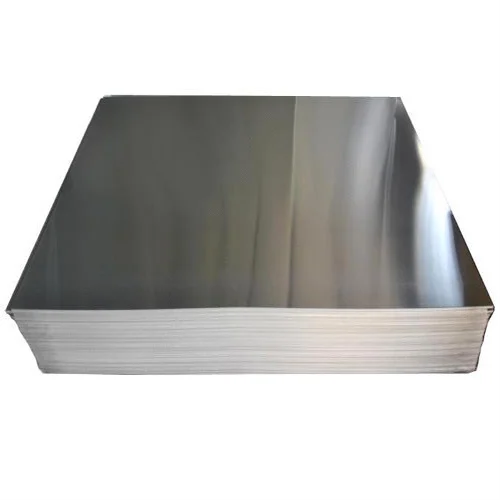
3003 aluminum sheet
Physical Characteristics
- Wrought Alloy: There are two types of alloys: wrought and cast alloys. Aluminum 3003 belongs to the former group. This means that it only contains 4% of alloying elements.
- Formation Process: The formation process of wrought alloys is usually either through a heat treatment or a cold-worked/work-hardened process. Aluminum alloys in the 3xxx series are typically formed using the latter. This process uses mechanical force (e.g., hammering, rolling) instead of heat to produce the desired alloy. The process usually strengthens the metal while reducing its ductility. However, various types of the work-hardening process are still used to differentiate the various grades of the 3003 aluminum alloy available. For clarity’s sake, we’ll use the H18-hardened 3003 aluminum (3003-H18) throughout this article.
- Density: The deity of 3003 aluminum is 2.73 g/cm³ or 0.0986 lb/in³.
Chemical Characteristics
The chemical components of the 3003 aluminum alloy usually consist of 1.2% Manganese, 0.12% Copper, and 98.6% Aluminum. While this is the most common composition, it is possible to have other elements present as trace impurities.
Mechanical Properties
Mechanical properties of any metal are usually expressed using parameters like its yield strength, shear strength, and shear modulus. We’ve highlighted how the 3003 aluminum alloy measures in these parameters below:
Related:
Capabilities of Non-shear Cutting Techniques
- Yield Strength: This refers to the amount of stress a material can handle before permanent deformation. The 3003 aluminum alloy’s tensile strength is 185 MPa (or 27,000 Psi).
- Shear Strength: This refers to the resistance level of a material to shear stresses (e.g., from cutting machinery). The shear strength for 3003 aluminum alloy is 110 Mpa (or 16,000 Psi).
- Shear Modulus: This is another measure of a material’s resistance to deformation. For 3003 aluminum, it is rated 25 GPa (3630 ksi).
Properties of 6061 Aluminum
This section will highlight the individual properties of the 6061 aluminum alloy using its physical, chemical, and mechanical characteristics.
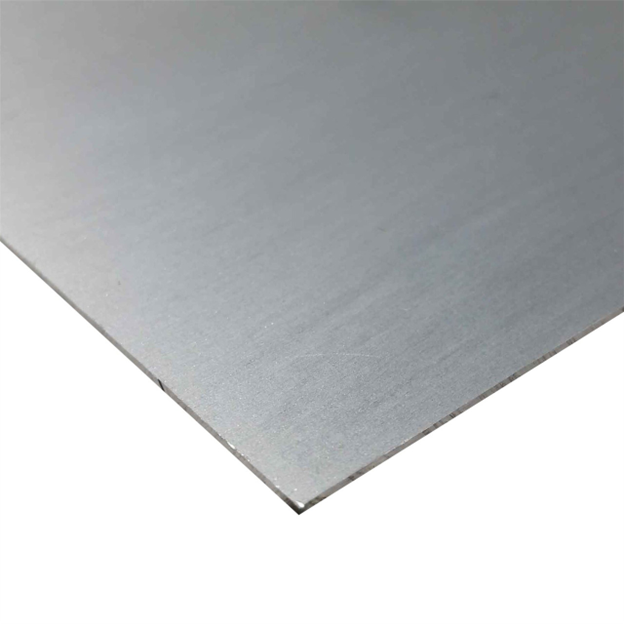
6061 Aluminum Sheet
Physical Characteristics
- Wrought Alloy: The most common version of the 6061 aluminum also contains about 2% of foreign elements, making it a wrought alloy.
- Formation Process: Unlike the 3003 alloys, the 6061 aluminum is heat treated during its formation. This makes it a more malleable metal compared to the 3003 alloys. Since there are also different heat treatment methods, there are different types of 6061 aluminum alloy. For this article, we’ll use the T6 tempered aluminum alloy (6061-T6).
- Density: The density of the 6061 aluminum is 2.7 g/cm³ (or 0.0975 lb/in³).
Chemical Characteristics
The 6061 aluminum alloy belongs to the 6xxx series, which contains silicon and magnesium as its alloying elements. The chemical components of the 6061 aluminum alloy usually include 0.2% Chromium, 0.28% Copper, 0.6% Silicon, 1% Magnesium, and 97.9% Aluminum. It is also worth mentioning that this composition could vary depending on the formation process.
Mechanical Characteristics
We’ve evaluated the 6061 aluminum alloy below using the same mechanical parameters as the 3003 aluminum.
- Yield Strength: The yield tensile strength of the 6061 aluminum alloy is 276 MPa (or 40,000 psi).
- Shear Strength: The shear strength of the 601 aluminum is 207 MPa (or 30,000 psi).
- Shear Modulus: The shear modulus of the 6061 aluminum alloy is 26 GPa (or 3770 ksi).
Let’s Start A New Project Today
Comparison of 3003 vs. 6061 Aluminum
Choosing between the 3003 and 6061 aluminum types could be difficult due to their interchangeable characteristics. However, there are distinguishing features that help to differentiate both. This section of the article will compare the 3003 aluminum vs. 6061 aluminum alloys using various characteristics and their application as a result of these characteristics.
Strength and Toughness
When it comes to sheer strength, the 6061 alloy is the better choice. Due to the presence of silicon and magnesium in its alloy composition, the 6061 aluminum alloy has much more strength. Having a higher yield strength of 276 MPa (compared to 3003’s 185 MPa), 6061 would function better in heavy-duty applications such as machined structural parts.
Also, the 6061 aluminum is a tougher option when used in joints than the 3003 alloys. Its higher yield-bearing also comes into play here. Due to its ability to bear heavier loads even when joined by screws, it is a better choice for use in applications such as scaffoldings.
Machinability
In terms of machinability, the 6061 aluminum alloy also comes out on top. Although it’s the harder material, its accompanying characteristics, such as its resistance to surface damage (e.g., scratching), make it a better machining choice. However, its hardness also means it is a poorer choice for finishing. Hence, if you need a part that would require an aesthetic look after machining, the 3003 alloys might be a better choice. If you want to use an anodizing finish, you might want to stay away from the 3003 alloys as it doesn’t work well with the anodizing process.
Corrosion Resistance
Both metals have a similar level of resistance to corrosion. As they both contain copper, they’re both slightly susceptible to corrosion, especially when in contact with alkaline surfaces. However, in the absence of this condition, both metals prevent corrosion by forming a non-reactive oxide layer on the metal surface, which protects the alloys. However, it is also worth mentioning that the level of protection might also be affected by atmospheric/aqueous conditions.
Formation Characteristics
Formation refers to the production of finished machined products from raw stock materials. The formation characteristics of any metal would involve its tendency to undergo various machining processes such as extrusion, rolling, forging, etc. In processes like this, it is better when the metal is softer, so the machinist can easily manipulate it. For this category, the 3003 alloy is the better choice. Due to its lower yield and shear strength, it is more suitable for forming applications than the 6061 alloy.
Cost
In terms of price, the 3003 alloy is usually the cheaper one. However, you should know that the price may vary depending on the variant of alloy and the supplier you’re buying from.
Related:
An Overview of CNC Machining Price
Applications
From the various characteristics above, we can easily deduce that the 6061 alloys are suited to more heavy-duty applications such as building frames, scaffoldings, welded assemblies, etc. On the other hand, the 3003 alloy is better suited to general uses such as machining, aesthetic parts, food trucks, etc.
Importance of Consulting with Experts in Selecting the Right Aluminum Alloy
With all the information highlighted above, it’s easy to think finding a suitable alloy material for a machining project is not difficult. However, it is always advisable to seek an expert’s opinion before choosing a particular alloy.
This is because:
- They can tell you more about the pros and cons of using a particular alloy.
- They can get you an affordable supplier for alloy sheets or bars.
- They can also help perfect the process for your machining project.
This and many more reasons are why you should consult experts like Ancastings. At Ancastings, you can get access to experts on various machining materials such as Aluminum alloys and various other machining materials.
Also, we can help you with various machining procedures such as CNC machining, sheet metal fabrication, welding services, and other manufacturing needs. Our professionals in these machining techniques can answer any question you have.
Once you upload your CAD files, we will provide an instant quotation. So, do not hesitate to contact us when looking to anodize, polish, or need any other manufacturing solution.
Conclusion
Comparing two alloys of similar use cases and properties could take much work. However, using a set of characteristics, as we have done above, could help you set each alloy apart. If you want to know more about each alloy, consult our experts at Ancastings.
FAQs
What are the Differences between 3003 aluminum and 6061 aluminum?
While both alloys are similar, they differ in parameters like strength, machinability, cost, and applications. To know more about their differences, you could consult an expert.
What are the advantages and disadvantages of the 3003 aluminum?
The 3003 aluminum is advantageous for its easier machinability and lower cost. However, its reduced strength means it is not a great choice for heavy-duty applications.
What are the advantages and disadvantages of 6001 aluminum?
6001 aluminum is advantageous for its strength and toughness. However, it doesn’t do well with finishes and might not be suitable for formation processes.