If you are comparing 6061, 5052, 5083 and 6082 aluminum for a machined part, you are probably stuck on one of three questions: which alloy is strong enough, which one machines cleanly, and which one will not cause problems after anodizing or plating. The four alloys look similar on a datasheet — they are all wrought aluminum, all weldable, all corrosion resistant to some degree — but they behave very differently on a CNC machine, and choosing the wrong one usually shows up as cost, deformation, or surface finish problems rather than outright failure.
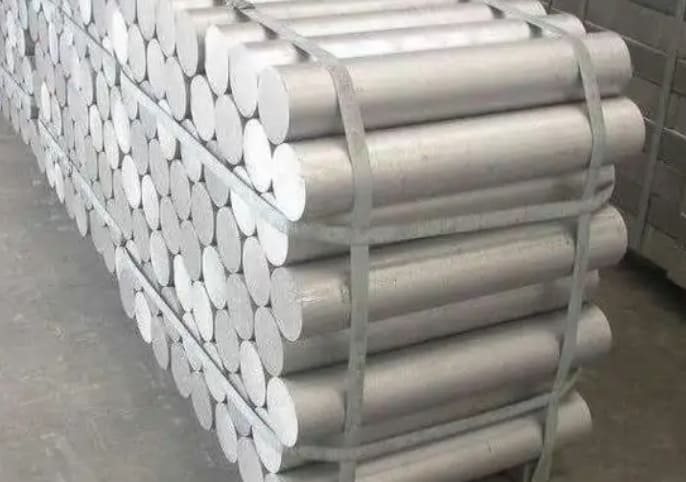
At Ancastings, we machine all four of these alloys in regular production — thin-wall 6061-T6 aerospace housings, 5052 strips with 0.05 mm flatness requirements, chrome-plated 5083 housings, and 6082 gear discs for automation equipment. This guide is based on that shop-floor experience, not just published datasheets. By the end, you should be able to match each alloy to your part’s actual requirements — and know which specification details to put on your drawing.
The Short Answer
If you only need a quick recommendation, here it is:
- Choose 6061 for general-purpose machined parts — housings, brackets, fixtures, panels. It is the default CNC aluminum for a reason: heat-treatable strength, excellent machinability, and clean anodizing.
- Choose 6082 when you would normally choose 6061 but your project is based on European standards (EN AW-6082), or you need slightly higher strength in a structural plate or bar.
- Choose 5052 for formed sheet metal parts and parts exposed to moisture or mild marine environments — but expect it to machine “gummier” than the 6xxx alloys.
- Choose 5083 for marine, cryogenic, or welded structural applications where corrosion resistance and welded strength matter more than machinability.
The rest of this article explains why — because the reasoning is what lets you defend the choice when your supplier, or your own quality team, pushes back.
Quick Comparison Table
| Property | 6061 (T6) | 6082 (T6) | 5052 (H32) | 5083 (H116) |
|---|---|---|---|---|
| Alloy family | Al-Mg-Si, heat-treatable | Al-Mg-Si-Mn, heat-treatable | Al-Mg, strain-hardened | Al-Mg, strain-hardened |
| Typical tensile strength | ~310 MPa | ~310–340 MPa | ~230 MPa | ~305–320 MPa |
| Typical yield strength | ~275 MPa | ~250–280 MPa | ~195 MPa | ~215–230 MPa |
| Machinability | Excellent | Very good | Fair — gummy | Fair to good |
| Corrosion resistance | Good | Good–very good | Excellent | Excellent (marine grade) |
| Anodizing response | Excellent, consistent color | Very good | Good, slight color variation | Acceptable, can streak |
| Weldability | Good (loses strength at weld) | Good (loses strength at weld) | Excellent | Excellent (retains most strength) |
| Formability | Moderate | Moderate | Excellent | Good |
| Typical supply form | Bar, plate, extrusion | Bar, plate (EU standard) | Sheet, coil | Plate, sheet |
| Relative cost | Baseline | Similar to 6061 | Slightly lower | Slightly higher |
Values are typical for the listed tempers and vary by supplier and thickness. Always confirm the temper on your drawing — “6061” without a temper callout is an incomplete specification.
6061 Aluminum: The Default Choice for CNC Machining
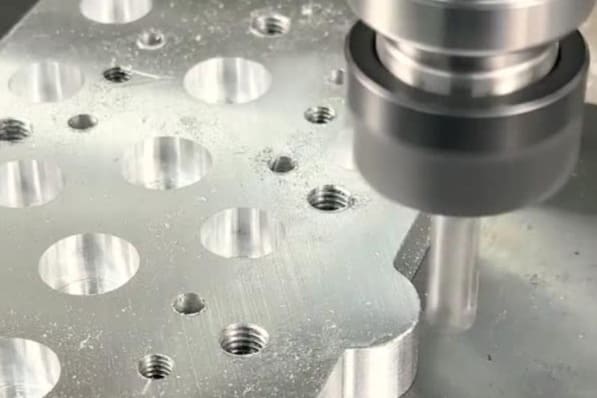
6061 is the alloy most machine shops reach for when the drawing simply says “aluminum.” It is heat-treatable — the T6 temper is achieved through solution treatment and artificial aging — which gives it a strength level that non-heat-treatable alloys like 5052 cannot match, combined with chip formation that is close to ideal for CNC milling and turning.
Where 6061 performs well:
- General machined parts — housings, panels, brackets, base plates, jigs and fixtures. Its balance of strength, cost and availability makes it hard to beat.
- Anodized cosmetic parts — 6061 anodizes cleanly with consistent color, both clear and dyed.
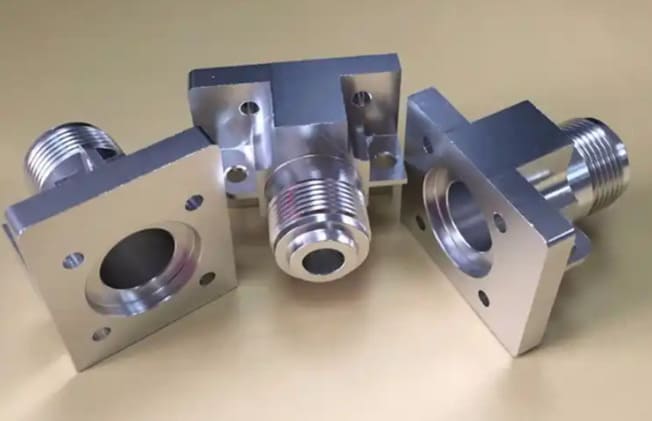
- Tight-tolerance work — its predictable chip formation supports fine surface finishes. We regularly hold Ra 1.6 μm on machined 6061 faces; you can see one example in our 6061 aluminum panel case study.
Where 6061 needs caution:
The main risk with 6061-T6 is not strength — it is internal stress. Because the T6 temper is produced by quenching and aging, the material carries residual stress that releases as you remove material. On thick, rigid parts this rarely matters. On thin-wall parts, it matters a great deal.
We machined a 6061-T6 aerospace bottom housing with roughly 1 mm wall thickness and 0.05 mm flatness and parallelism requirements — and the process only became stable after we added stress-relief annealing before machining, staged roughing with a 0.5 mm finishing allowance, and a custom vacuum fixture. The full process is documented in our thin-wall 6061 aluminum housing case study. The lesson: if your 6061 part is thin-walled or has tight geometric tolerances, discuss stress relief with your supplier before production starts, not after the first article warps.
6082 Aluminum: The European Counterpart to 6061
6082 sits in the same Al-Mg-Si family as 6061, with added manganese for grain refinement. In practice, it is the structural aluminum of choice in Europe — most EN-standard designs specify EN AW-6082 where a North American drawing would specify 6061.
How 6082 differs from 6061 in real machining:
- Slightly higher strength.
In T6 temper, 6082 typically edges out 6061 in tensile strength, particularly in thicker plate. If your part is a load-bearing plate or machined structural component, that margin can be useful. - Comparable machinability, slightly different finish behavior.
6082 machines nearly as well as 6061, though on some geometries it can produce a slightly less bright as-machined surface. For most functional parts this is irrelevant; for cosmetic faces, plan a finishing pass or surface treatment. - Availability follows geography.
In China and Europe, 6082 bar and plate are readily stocked. If your supply chain is North American, 6061 is usually easier to source — which is often the deciding factor.
We use 6082 regularly for automation components where the customer’s drawing follows EN standards. A typical example is a turn-mill machined 6082 gear disc — turning, milling and gear features completed in a coordinated setup — documented in our 6082 aluminum gear disc case study.
The practical rule: 6061 and 6082 are functionally interchangeable for most machined parts. Choose based on which standard your drawing follows and which alloy your supplier can source reliably — and if you accept a substitution, note it formally on the drawing or purchase order.
5052 Aluminum: Corrosion Resistance and Formability First
5052 belongs to the 5xxx series — aluminum-magnesium alloys that are not heat-treatable. Their strength comes from magnesium content and strain hardening (the H tempers), not from heat treatment. That single fact drives almost everything about how 5052 behaves.
Where 5052 is the right choice:
- Formed sheet metal parts.
5052 is one of the most formable aluminum alloys available — it bends to tight radii without cracking, which is why it dominates sheet metal fabrication. - Moisture and mild marine exposure.
Its corrosion resistance is noticeably better than 6061, especially against salt spray. - Parts that combine forming and machining.
Enclosures that are bent first and then machined for critical features are a natural fit.
Where 5052 will frustrate you:
- Machinability
5052 is soft and “gummy” on the machine. Chips tend to smear rather than shear, built-up edge forms on the tool, and achieving a fine surface finish requires sharp tooling, higher cutting speeds and good coolant strategy. It is machinable — we do it routinely — but cycle times and tool wear are worse than 6061. - Strength ceiling
Even in harder tempers, 5052 cannot reach 6061-T6 strength. If your part sees significant structural load, 5052 is usually the wrong answer. - Flatness on thin sections.
Thin 5052 parts hold and release stress differently from 6xxx alloys. We machined a 5052 magnetic strip with a 0.05 mm flatness requirement, and controlling that tolerance required deliberate fixturing and process sequencing — the details are in our 5052 aluminum magnetic strip case study.
A specification note: 5052 anodizes acceptably for protective purposes, but if you need precise cosmetic color matching across parts — especially against 6061 parts in the same assembly — run samples first. The alloy chemistry produces a slightly different tone.
5083 Aluminum: The Marine and Welded-Structure Specialist
5083 is the high-magnesium member of this comparison — around 4.0–4.9% Mg — which makes it the strongest of the common non-heat-treatable aluminum alloys. It exists for one core mission: structures that must be welded and must survive corrosive environments.
Where 5083 earns its cost:
- Marine environments.
5083 is the default hull and deck alloy for aluminum boats. If your machined part lives near seawater, 5083 should be on your shortlist. - Welded assemblies.
Unlike 6061 and 6082 — which lose a large portion of their T6 strength in the heat-affected zone — 5083 retains most of its strength after welding. For weldments that are machined afterward, this is the decisive advantage. - Cryogenic and pressure applications.
5083 keeps its toughness at low temperatures, which is why it appears in LNG and pressure vessel work.
Where 5083 needs engineering attention:
- Sustained elevated temperature.
High-magnesium 5xxx alloys can become sensitized to intergranular corrosion with long-term exposure above roughly 65 °C. If your part runs hot continuously, discuss this with your material supplier — it is the one genuine failure mode that separates 5083 from the other three alloys here. - Machinability and finish.
5083 machines somewhat better than 5052 — the higher magnesium content makes it less gummy — but it still does not produce the effortless finish of 6061. Plan tooling and parameters accordingly. - Surface treatment interactions.
Plating and anodizing on 5083 require dimensional planning. We machined a 5083 universal housing where a precision hole diameter had to be controlled after chrome plating — meaning the machining allowance had to anticipate the plating thickness. That project is documented in our 5083 aluminum universal housing case study.
One more point worth knowing: 5083 plate machines economically enough that it can replace tooling-based processes for low volumes. We produced a 5083 automotive emblem entirely by 5-axis machining — no mold cost at all — as shown in our 5083 automotive emblem case study. If you are weighing casting or stamping tooling against machining for a small batch, that trade-off deserves a serious look.
How to Choose: A Decision Framework
Rather than memorizing datasheets, walk through these four questions in order.
1. What environment does the part live in?
- Seawater, salt spray, or continuous moisture → 5083 (structural) or 5052 (sheet/light duty)
- Indoor, general industrial, or protected by anodizing → 6061 or 6082
2. How is the part manufactured?
- Primarily formed from sheet, then machined → 5052
- Welded assembly, machined after welding → 5083
- Fully CNC machined from bar or plate → 6061 or 6082
3. What does the drawing standard say?
- ASTM / North American standards → 6061
- EN / European standards → 6082
- If your supplier proposes substituting one for the other, it is usually acceptable — but document it.
4. What are the tolerance and finish requirements?
- Tight geometric tolerances on thin walls → any alloy works, but the process matters more than the alloy: stress relief, staged machining, and proper fixturing are what actually hold 0.05 mm flatness.
- Cosmetic anodizing with color consistency → 6061 first, 6082 second.
- Fine as-machined surface finish (Ra 1.6 or better) → 6061 and 6082 get there fastest; 5xxx alloys need more careful tooling.
Common Selection Mistakes We See from Buyers
These are the recurring issues we encounter when reviewing customer drawings — each one is avoidable at the specification stage.
Specifying the alloy without the temper.
“6061” can mean annealed O-temper material with roughly a third of the strength of T6. Always write the full designation: 6061-T6, 5052-H32, 5083-H116, 6082-T6.
Choosing 6061 for a welded part and expecting T6 strength at the joint.
Welding locally anneals 6xxx alloys. If the weld zone is load-bearing, either redesign around 5083 or account for the reduced strength.
Ignoring residual stress on thin-wall parts.
This is the single most common cause of flatness failures in machined aluminum — regardless of alloy. If your part has walls near 1 mm or flatness callouts under 0.1 mm, ask your supplier how they plan to manage stress. A shop that answers “stress relief, staged roughing, and dedicated fixturing” has done this before; a shop that answers “our machine is very accurate” has not.
Assuming anodized colors will match across different alloys.
They will not — not perfectly. Keep cosmetic surfaces within one alloy family, or approve samples.
Over-specifying 5083 for indoor parts.
5083 costs more and machines slower than 6061. If the part never sees a corrosive environment and is not welded, you are paying for capability you will not use.
What This Looks Like in Production
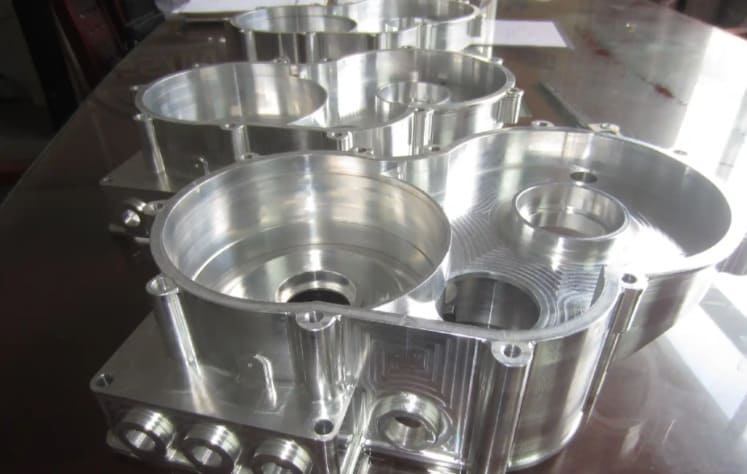
Alloy selection is only half of the outcome — the machining process determines whether the material’s properties actually survive to the finished part. Across the four alloys in this guide, our production experience covers:
- 6061-T6: thin-wall aerospace housings held to 0.05 mm flatness and parallelism with 99% in-process yield, and machined panels finished to Ra 1.6 μm.
- 6082-T6: turn-mill machined gear discs for automation equipment, combining turned and milled features in coordinated setups.
- 5052: thin magnetic strips held to 0.05 mm flatness despite the alloy’s tendency to move.
- 5083: chrome-plated housings with post-plating hole diameter control, and mold-free 5-axis machined automotive emblems.
If your part falls into any of these categories — or somewhere between them — our engineering team can review your drawing and recommend both the alloy and the process route. Send us your drawings, tolerance requirements, quantities and surface treatment needs through our contact page, and we will respond with a manufacturability review and quotation.
Frequently Asked Questions
Slightly, in most product forms. In T6 temper, 6082 typically shows marginally higher tensile strength than 6061, especially in plate. For the majority of machined parts, the two alloys are functionally interchangeable — the choice usually comes down to whether your drawing follows ASTM or EN standards and which alloy your supplier stocks.
6061 is the easiest, with 6082 very close behind. Both 6xxx alloys form clean chips and produce fine surface finishes with standard tooling. 5052 is the most difficult of the four — it is soft and gummy, prone to built-up edge — while 5083 sits in between.
In most cases, yes. Both are Al-Mg-Si heat-treatable alloys with similar strength, corrosion resistance and machinability in T6 temper. However, substitution should always be confirmed with the design owner and documented, because certified applications (aerospace, medical) may require the exact specified alloy and material certification.
6061-T6 carries residual internal stress from its quench-and-age heat treatment. As machining removes material, that stress releases and the part moves. On thin-wall parts, the standard countermeasures are stress-relief treatment before machining, staged roughing with a finishing allowance, and fixturing that supports the part evenly — such as vacuum fixtures instead of localized clamps.
Only if you need what 5083 uniquely offers: substantially higher strength in a non-heat-treatable alloy, strength retention after welding, or marine-grade corrosion performance in structural thicknesses. For formed sheet parts in mild environments, 5052 delivers similar corrosion resistance at lower cost with better formability.
6061 gives the most consistent anodizing results, both clear and dyed, followed closely by 6082. 5052 anodizes well for protective purposes but with slight color differences versus 6xxx alloys. 5083 can be anodized, but cosmetic-grade color uniformity is harder to guarantee — approve samples before committing to a cosmetic anodized finish on 5083.