
CNC machining is a process of using computerized tools to shape and form materials into desired parts and components. It requires precision and accuracy, which is why it’s important to use the right fixtures or clamps for CNC machining. CNC fixtures and clamps are essential components of any CNC machining job. They are used to secure workpieces in place and hold them steady while they are being machined. With the right fixtures or clamps, you can ensure that your parts and components are properly secured and machined accurately.
In this article, we’ll provide an overview of the different types of CNC fixtures or clamps and how to select the right ones for your CNC machining project, as well as discuss the different considerations that should be taken into account when selecting the right clamp for a particular application.
What Is A CNC Fixture?
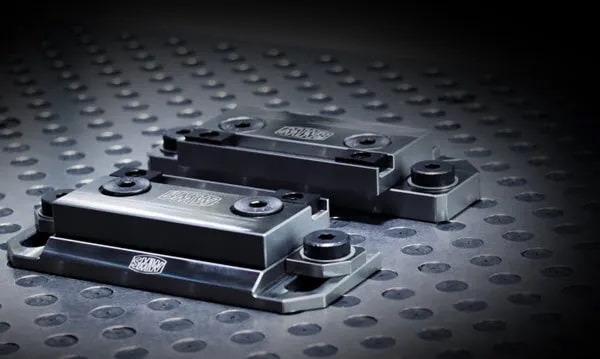
A CNC fixture, also known as a CNC workholding fixture, is a tool used to hold workpieces in place while they are being machined by a CNC machine. It is generally composed of a base plate, a clamping element, and a locking element. The base plate is typically secured to the work surface and the clamping element is attached to the base plate by screws or bolts. The locking element is then used to secure the workpiece in place while it is being machined. The clamping element can be adjusted to securely hold the workpiece in place, or it can be released to allow for easy repositioning or removal of the workpiece.
Learn more about: Design and Development of Fixtures and Jigs for Adaptive CNC Machining
Types of CNC Fixtures:
CNC workholding fixtures are not always easy to classify. This can be especially confusing for those who are new to the tool. However, this part provides an introduction to the different types of CNC fixtures, classified according to operations, uses, and power source.
On Their Uses
- Modular Fixtures
Modular CNC fixtures are easy to rebuild and reconfigure to fit any workpiece. They are formed from interchangeable components and can be used for a variety of workpieces. The fixture can be dismantled when the process is complete. Modular fixtures facilitate a flexible manufacturing process. - Combination Fixtures
Combination CNC fixtures come in different sizes and shapes and are ideal for handling multiple workpieces of varying sizes and shapes based on the machine tools. - Universal Fixtures
Universal CNC fixtures can be used on any workpiece with ease. Every part of the fixture can be adjusted and replaced to suit any workpiece. These fixtures are extremely versatile and have a wide range of applications. - Special Fixtures
Special CNC fixtures are specifically designed to work with a single workpiece. They provide superior stability, quicker operation, and convenience when used with that particular workpiece. - Assembled Fixtures
Assembled CNC fixtures are custom-made to fit a particular workpiece. They are designed and created based on the requirements of the workpiece. The fixtures can be removed or reused as needed.
On Applicable CNC Machining Operations
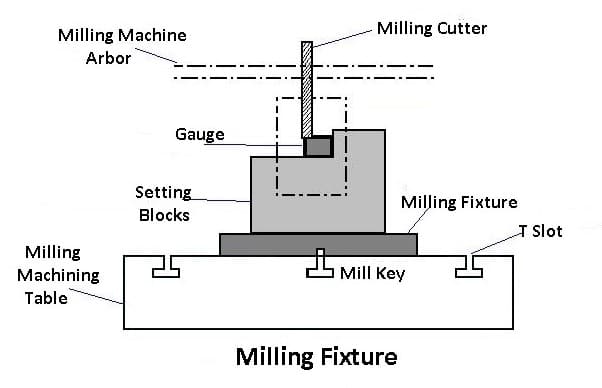
CNC milling needs a milling fixture. This is a cutting process where the computer directs a cutter to remove parts of the workpiece.
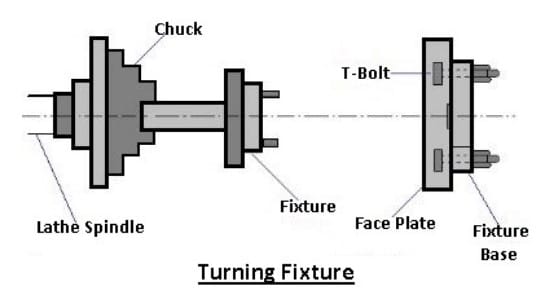
CNC turning requires a turning fixture. This process involves rotating a workpiece on a single axis and cutting away portions of it.
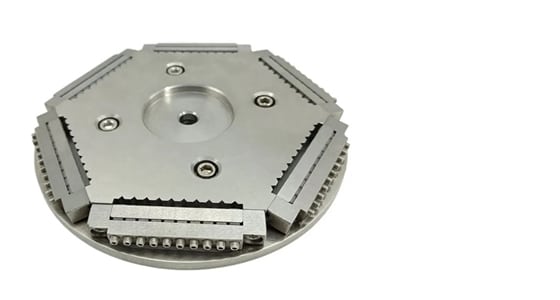
CNC drilling also requires a specific CNC fixture. This is a popular machining process that involves making a hole in a workpiece.
CNC grinding requires a grinding fixture. This is a machining technique that uses a grinder to remove parts of the workpiece.
CNC boring requires a boring fixture. This is a machining process that uses a tool to enlarge holes already drilled with a CNC drill.
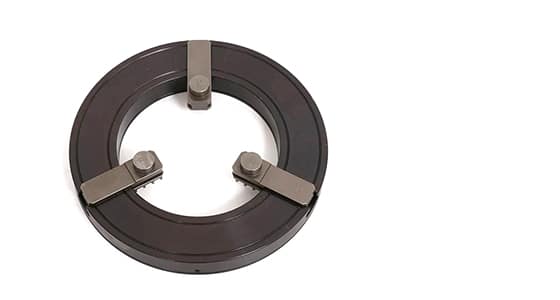
So, based on the type of CNC machining operation, the required CNC fixture can be determined. There are also other types of CNC fixtures, such as CNC honing and CNC lapping fixtures.
On the Source of Power
- Manual Fixture
Manual fixtures are operated with a hand lever and are used for basic holding of materials and components. They usually require no power source, but some manual fixtures are powered by a compressed air system. - Pneumatic Fixture
Pneumatic fixtures use air pressure to generate clamping force. They are usually lighter and smaller than hydraulic fixtures and are suitable for high-speed applications. - Hydraulic Fixture
Hydraulic fixtures use a pressurized fluid, usually oil, to generate clamping force. They are ideal for large and complex parts due to the high levels of force and accuracy they can achieve. - Servo-Driven Fixture
Servo-driven fixtures use a servo motor to generate clamping force. They are typically used in high-precision applications, as they can provide repeatable and accurate clamp operations. - Magnetic Fixture
Magnetic fixture ares the last type of CNC clamp used for machining. These fixtures use a powerful magnet to securely hold the material in place. Magnetic chucks are ideal for holding ferrous materials, such as iron or steel. - Vacuum Fixture
Vacuum fixtures use vacuum suction to hold parts in place. Pros: Very secure, great for delicate parts. Cons: Can be difficult to use, require additional mounting hardware and can be expensive.
Best 10 Types of CNC Fixtures or Clamps for CNC Machine
1. CNC Vise
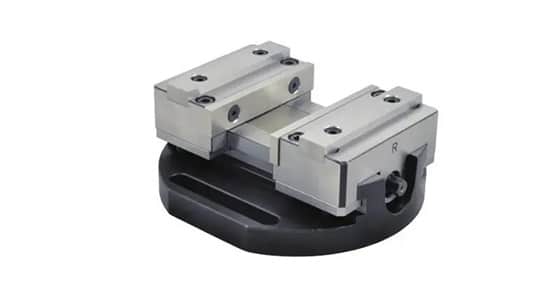
CNC vises are a type of vice that many people use for woodworking or other home renovation projects. Unlike traditional vices, CNC vises use precision flat edges instead of serrations or teeth to dig into the clamped object. This design provides a far greater clamping force than traditional vices. The screw tightening action pushes the top triangle of the vise against the lower triangle on the movable jaw, generating a strong forward and downward clamping force.
2. Fixture Plate, Mod Vises
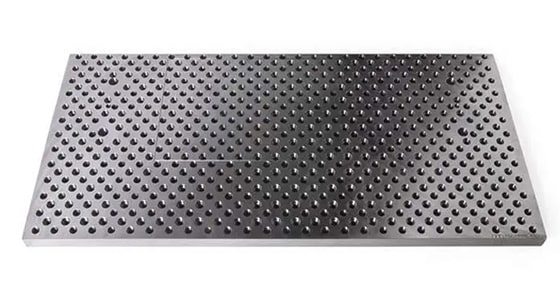
For large parts, they cannot fit into a six-inch vise, so they can be placed directly onto the CNC machine and secured using a fixture plate, mod vises, and other fixtures.
3. 5C Collets, Mandrels, Chucks
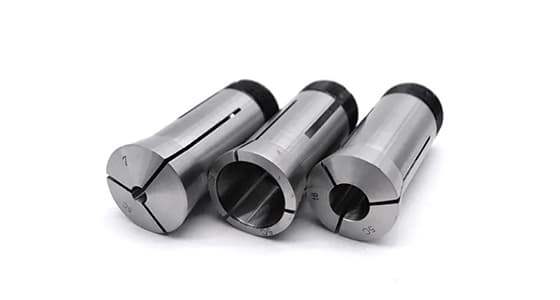
For round objects, 5C collets, expanding mandrels, and chucks can all be used on a CNC vise, fixture plate, or fourth axis. These can hold round materials from a size of 1/16 of an inch to one inch.
4. Soft Jaws
Soft jaws are used to hold complex shapes and objects when machining. 3D printing and milling can be used to tailor soft jaws to a specific project. However, two screws must be inserted to attach them to the vise, and even pressure must be applied while machining to avoid possible failures.
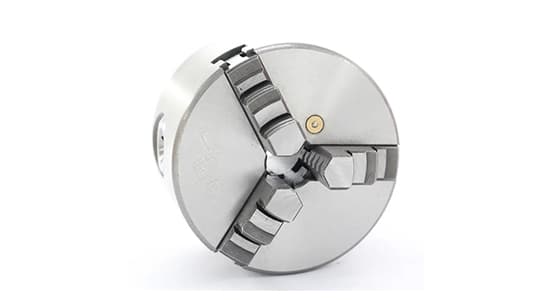
5. Multi-Part Workholding
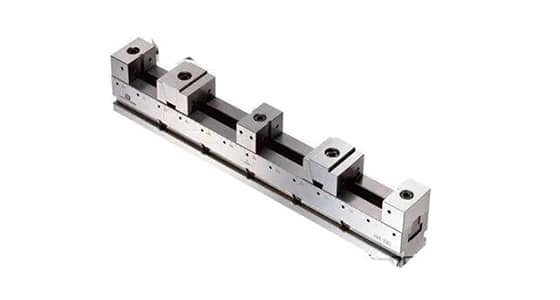
Multi-part machining allows CAD and CAM to be programmed around multiple parts. This means that multiple parts can be made simultaneously using a dual-station vise.
6. Vacuum Workholding
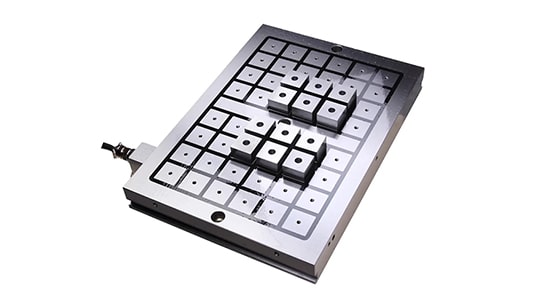
Vacuum workholding is an effective way to hold thin parts without damaging them, since it has 14 pounds per square inch of holding power.
7. Superglue Workholding
For superglue workholding, a layer of tape is put between the fixture and the product to keep the glue off of the CNC machine and product, which can then be used with vacuum workholding if necessary.
8. 4-, 5-axis Workholding
In 4-axis or 5-axis machining, the material is shifted inside the CNC machine. Generally, during 4-axis machining, a collet or chuck is used. For smaller objects, a trunnion can be utilized to access various rotational angles. An alternative solution is to use the product itself as a fixture. Additionally, custom fixtures can be constructed from the same material used for the product and attached directly to the part to secure it in the machine.
9. Tabbing and Window Machining
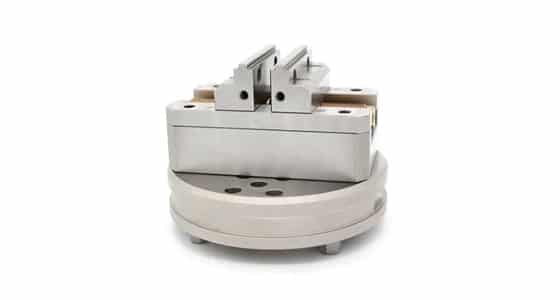
Milling with a window operation simplifies the setup process for the second or third operation, as the product or material itself serves as the fixture. This is achieved through the use of tabs, which are the last component used to maintain a self-fixtured part.
10. Custom Fixtures
Custom fixtures, created using Fusion 360, can hold products that other vises cannot. Customize your special fixtures at Ancastings Precision.
Learn more about: 5 Axis Workholding
What Should You Consider When Selecting A CNC Machine Fixture
When selecting the right clamp for a CNC machining application, there are several factors to consider. The material that the part will be machined from is an important factor to consider. Different materials will require different clamping solutions, such as vise-grips for softer materials or hydraulic fixtures for harder materials. The size of the part is also an important factor to consider when selecting a clamp as smaller parts may require smaller fixtures to ensure accuracy. What’s more, the type of machining that will be performed will also impact the selection of the clamp. Some clamp types are better suited for certain types of machining than others, such as toggle fixtures for drilling and vise-grip fixtures for milling.
Finally, it’s important to consider the safety of the fixtures or clamps. Fixtures or clamps should be inspected regularly and replaced if they become worn or damaged. Additionally, they should be inspected for proper installation and alignment.
Conclusion
Clamping is a critical step in any CNC milling project. The practice of engineering is founded on accuracy and creativity, and fixture is yet another essential element of the milling process. As such, any material can be held in place to create the most sophisticated designs. By understanding the different types of fixtures or clamps, you can select the right ones for your machining needs. With the right workholding fixture, you can ensure the accuracy and precision of your CNC machining projects.
Get Started with Your Custom Precision CNC Fixtures at Ancastings
Ancastings offers the best in custom CNC fixtures and machining operations. We are dedicated to providing our customers with quality items at an affordable prices. Our team of certified engineers has the educational background and experience to make sure you get the best results. With our ISO 9001:2015 certification, you can be sure that you are getting the best in CNC fixture design and CNC machining. Request an instant quote right now!
Other Articles You May be Interested in: