
“Acrylonitrile Butadiene Styrene (ABS) is a thermoplastic recognized for its strength, flexibility, and excellent machinability. It caters to many industries, whether for prototyping or end-use production. “
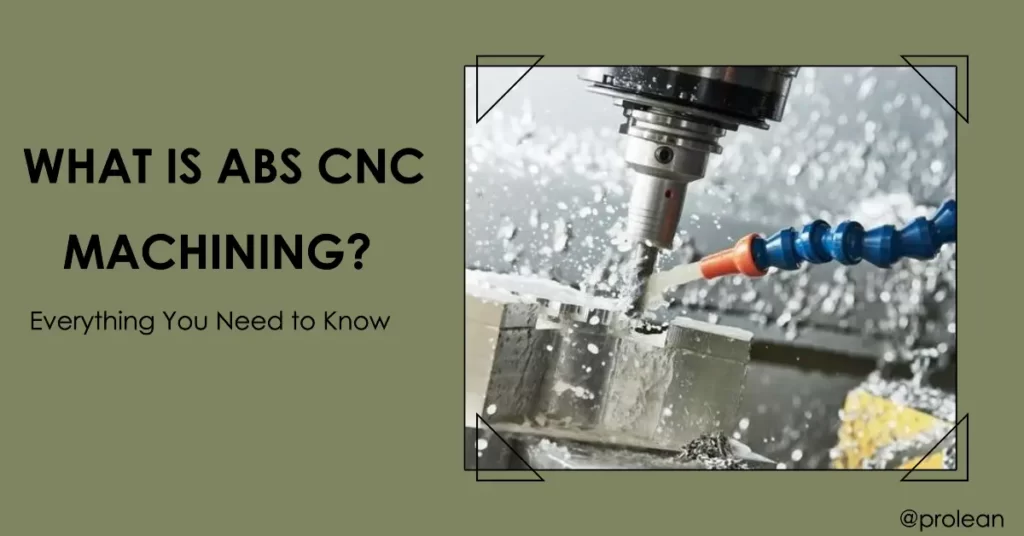
ABS plastic machining service encompasses the precise crafting of Acrylonitrile Butadiene Styrene, a versatile thermoplastic, into custom parts. Expertise is required to preserve the material’s strengths in the final product.
ABS CNC machining provides a versatile solution for creating durable, high-quality parts and products. CNC-machined ABS parts are used in almost everything from protective headgear to musical instruments because they can be shaped into complex designs with tight tolerances. Furthermore, they are compatible with CNC machining operations like milling, turning, drilling, and routing. This article will discuss the nuances of machining ABS plastic, various techniques, processes, benefits, costs, and more.
What is ABS Plastic?
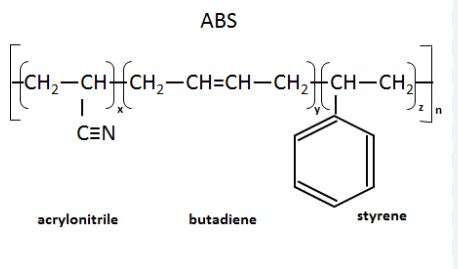
Chemical structure of ABS plastic. Source
ABS Plastic is a thermoplastic polymer that combines acrylonitrile, butadiene, and styrene. It is known for its outstanding toughness and versatility across various applications.
- Acrylonitrile: It offers chemical and thermal stability.
- Butadiene: This component contributes toughness and impact resistance.
- Styrene: It provides rigidity and processability.
What Are the ABS Plastic Properties?
ABS has many valuable properties, making it suitable for various industries. It offers high mechanical strength, impact strength, fatigue life, corrosion resistance, flame retardant, thermal stability, and more. Let’s discuss significant properties in more depth.
- Mechanical strength
ABS is a strong thermoplastic with 29.6 – 48 MPa of tensile strength. It can withstand high loads without warping or cracking. The compact fullness of monomers in the internal structure provides high mechanical strength and load-bearing capacity.
- Impact strength
It is capable of withstanding shocks or high-impact energy without losing its properties and any material form of material failure. ABS has an average impact strength of 20 kJ/m² for the notched sheet and 58 kJ/m² for the unnotched sheet (ABS PLASTIC MATERIAL PROPERTIES LIST, 2020), which makes it an appropriate material choice for applications where parts need to withstand regular shocks, such as boarding stairs of aircraft.
- Chemical resistance
ABS plastic is resistant to most chemical compounds, such as acids, alkalis, mineral oils, and vegetative oils. However, it can react with concentrated glacial acetic acid, aromatic esters, and carbon tetrachloride.
- Hardness
ABS plastic is known for its hardness (200 – 215 J/m). Its rigidity and hardness make it resistant to scratches and abrasion, allowing it to be used in structural components for different applications.
- Electrical Insulation
ABS parts are not a problem for high-voltage shocks. They function flawlessly as electrical insulation and block current flow, an essential quality for insulating applications.
- Surface brightness
Surface brightness is an aesthetic property that gives the ABS parts an appealing look. The ABS surface’s brilliance and gloss make it helpful when aesthetic appeal is essential.
- Fire retardant
ABS can work in the temperature range of -50°C to 70°C without degrading any physical, mechanical, or chemical properties. It exhibits superior functionality in this temperature range. ABS is also known as excellent fire retardant plastic, which can slow down a fire and even stop it by preventing flames from spreading.
Table: Key Mechanical Properties of ABS. Source
| Property | Value |
| Density | 1.04 – 1.07 g/cm³ |
| Tensile Strength | 40 – 50 MPa |
| Flexural Modulus | 2.0 – 2.5 GPa |
| Impact Strength | 15 – 30 KJ/m² |
| Melting Point | 190 – 220 °C |
| Thermal Conductivity | 0.13 – 0.16 W/mK |
| Surface Hardness | 100 – 103 Rockwell M |
Click here to download: Properties Sheet of ABS Plastic
Try Ancastings Now!
Machining of ABS Plastic
ABS machines well with CNC processes such as milling, turning, routing, and drilling. With the right tooling, it is easy to maintain good dimensional accuracy and surface quality. High-speed steel tools are commonly used, while carbide tools are preferred for higher production volumes or demanding applications. Cutting parameters should be selected carefully. Very low feeds and speeds can generate excess heat, while excessively high spindle speeds may cause tearing or poor edge quality.
When selecting a plastic, it is also useful to compare ABS vs HDPEand ABS vs Nylon. ABS offers better dimensional stability and a smoother surface finish than HDPE, while nylon provides higher wear resistance and mechanical strength for load-bearing parts. The right material depends on the operating environment and the function of the component.
CNC milling is the most common operation for ABS to transfer the workpiece into the desired shape. Depending on the particular requirement, it can be milled with different tool sizes, from 1/8″ flat-end mill to 1/64″ flat-end mill (Emily A., 2019). Other operating parameters of CNC machines, such as feed rate, spindle speed, and cutting depth, need to be adjusted according to the tool size.
For example (Source)
- Tool size (1/8″ flat end mill): feed rate of 1500 mm/min, 16, 400 RPM, 1.27 mm of maximum pass length.
- Tool size (1/64″ flat end mill): feed rate of 762 mm/min, 16, 400 RPM, 0.254 mm of maximum pass length.
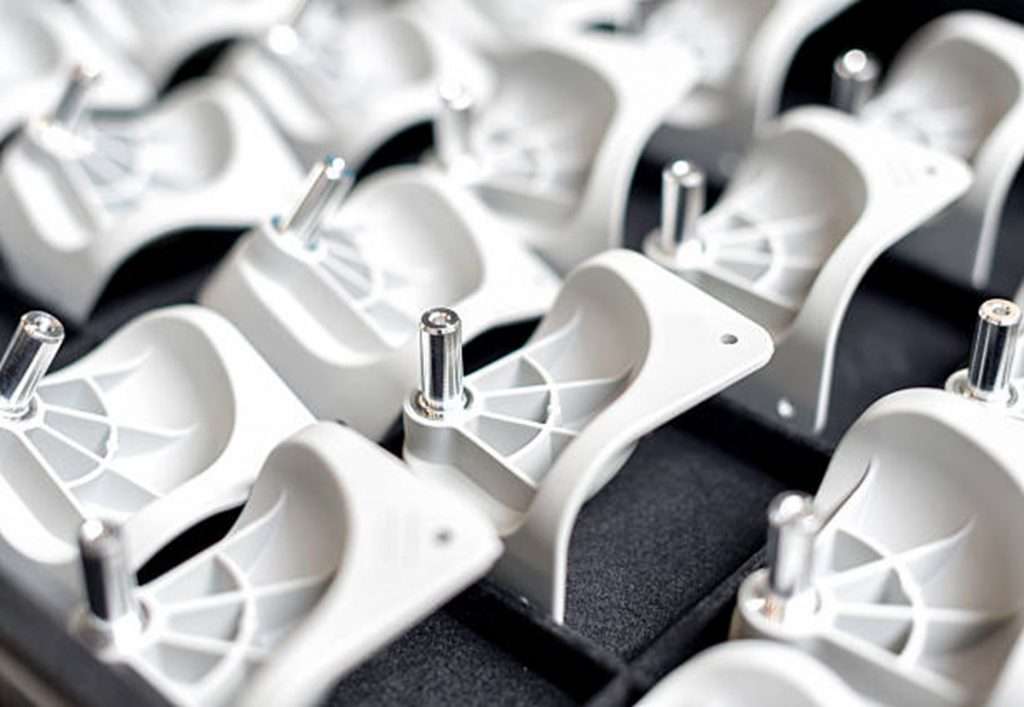
CNC-machined ABS
While using the enormous tool, RPM must be adjusted at a lower level, and it limits the maximum pass length. Comparing the CNC machining of ABS with metallic material is quite similar to the machining of aluminum 6061. The tight holding of the ABS workpiece is mandatory, and the optimum tool bat can be configured with the help of CAM simulation. Furthermore, carbide tools are the best replacement for high-carbon steel. It removes the chance that the workpiece will have fuzz on the top or bottom.
The following table discusses the step-by-step process for ABS CNC machining with a brief description of each.
Table: ABS CNC Machining Process
| Step Number | Operation | Description |
| 1 | Designing | Create a detailed CAD model of the part to be machined. |
| 2 | Converting Design to CNC Code | Convert the CAD model to a CNC program, which guides the machinery. |
| 3 | Setting up the CNC Machine | Prepare the CNC machine, ensuring it’s calibrated and equipped with the necessary tools. |
| 4 | Material Selection | Choose the ABS material based on the required specifications and load it into the machine. |
| 5 | CNC Machining | Operate the CNC machine to begin the cutting, milling, and shaping. |
| 6 | Monitoring | Continuously monitor the machine for any discrepancies or errors. |
| 7 | Post-Processing | Remove any excess material and perform finishing processes like sanding or painting. |
| 8 | Inspection and Quality Control | Inspect the finished part for accuracy, ensuring it meets design specifications. |
| 9 | Packaging and Shipping | Prepare the completed ABS part for delivery to the customer or the next production stage. |
Techniques for Machining Acrylonitrile Butadiene Styrene (ABS)
Machining Acrylonitrile Butadiene Styrene (ABS) is a meticulous process that requires a strategic approach. Specific techniques are utilized to harness the full potential of ABS plastic, each tailored to meet the unique requirements of different projects. These methods ensure that CNC-machined ABS parts are precise and meet exact specifications and design intents.
Milling ABS Plastic
Milling stands out as a versatile technique for machining ABS plastic. This process is instrumental in carving out complex shapes and intricate details from the ABS material. Milling allows for high precision, enabling manufacturers to achieve the exact geometries required for the part. During milling, a rotating tool removes material from the workpiece.
The following are the crucial considerations in CNC Milling ABS;
- Tool selection: Choosing the suitable end mills or face mills is vital. ( Carbide tools are recommended)
- Speed and feed rates: Properly optimized for efficient and accurate milling.
- Cooling: Since ABS has a low melting point, ensuring the material doesn’t overheat is essential.
Turning ABS on a Lathe
Turning ABS on a lathe is particularly well-suited for producing cylindrical parts. In this technique, the ABS workpiece rotates, and a single-point cutting tool removes the material, enhancing the precision and surface finish of the part.
Table: Key Factors in Lathe Turning ABS
| Factors | Recommendations |
| Tool Material | Ensure tools are sharp and appropriate for ABS to prevent material damage and ensure smooth finishes. |
| Speed | Optimize speed settings to maintain accuracy and tool integrity during the turning process. |
| Tool Angles | Set tool angles correctly to facilitate precise cuts and reduce unnecessary tool wear. |
| Clamping | Use appropriate clamping methods to prevent workpiece movement, ensuring accuracy and safety. |
Drilling and Tapping
Drilling and tapping are other essential techniques in ABS CNC machining. They are instrumental in adding functional features like holes and threads. These processes are vital for components that require assembly or the incorporation of additional parts.
Table: Key Factors in Drilling and Tapping ABS
| Factor | Description | Recommendations |
| Tool Material | Suitable tools should be chosen for smooth cutting. | Use sharp, well-maintained drilling and tapping tools to prevent material damage and ensure clean holes and threads. |
| Speed | Adjusted based on the part’s diameter and the desired finish. | Opt for a moderate speed to maintain accuracy and prevent overheating, which could affect the ABS material. |
| Tool Angles | Appropriately set the tool angle for efficient cutting and minimized wear. | Ensure that the tool angles are optimized for the ABS material’s specific drilling and tapping requirements. |
Engraving and Etching
Engraving and etching are techniques used to add texts, logos, or intricate designs onto the surface of ABS parts. These methods enhance the aesthetic appeal and functionality of the components, making them suitable for various applications, including signage, branding, or decorative purposes.
The following are the critical considerations for Engraving and Etching ABS:
- Depth of Cut: The engraving or etching depth should be carefully controlled to maintain the part’s integrity.
- Tool Precision: High-precision tools are essential for achieving detailed and accurate designs.
- Speed and Feed Rates: These should be optimized to prevent any material burns or deformations, ensuring clean and crisp engravings or etchings.
Important Consideration in ABS CNC Machining
There is almost zero risk of wear on the tool and machining defects while working with ABS plastic if you consider the few precautions while machining.
- Consider the minimum wall thickness of 0.5 mm to prevent the warpage.
- The cutting depth can be ten times the tool bit diameter.
- The tool’s temperature needs to be monitored because friction between the tool and the ABS workpiece can quickly heat the tool.
- Coolants are necessary during drilling operations to reduce the tool wear as hot chips wear the tool surface and might melt the material. In addition, the material can stick while exiting the hole.
- Using the carbide tool limits the frequent change of tool setup because it lasts longer.
- Working with ABS material might cause skin irritation. Make sure to clean your hands thoroughly after each session.
ABS CNC Machining Cost
The financial aspects of ABS CNC machining involve various factors influencing the overall cost. These components range from the design’s intricacies to the machinery selection, each playing a pivotal role in determining the economic efficiency of the machining process. Let’s discuss the various ABS CNC machining cost factors that can guide budgetary planning and decision-making.
- Design Complexity: More intricate designs require additional machining time and possibly special tooling, increasing costs. Furthermore, complex designs require more expert professionals, which also increases the cost.
- Material Costs: The price of ABS plastic can fluctuate based on market conditions and supplier pricing.
- Machining Time: The duration needed to complete each part impacts the total machining cost.
- Tool Wear: Harder materials or complex designs might increase tool wear, adding to the cost.
- Volume: Producing parts in high volume can reduce the unit cost due to economies of scale.
If you’re comparing engineering plastics before production, read our guide on ABS vs Polypropylene to understand how their machining characteristics, strength, and applications differ.
Real-life Example of ABS CNC Machining Cost
Consider a scenario where a company wants to machine ABS plastic parts. They require 100 units of a component measuring 50mm x 30mm x 10mm. The material cost for ABS plastic is approximately $2 per kg, and the company has negotiated an hourly rate of $50 for the CNC machine operation.
Material Cost
- The volume of one component:50mm×30mm×10mm=15,000mm= 15cm³
- Density of ABS plastic: Approx. 1.04 g/cm³
- Weight of one component: 15cm³ x 1.04 g/cm³ = =15.6grams
- The material cost= 100 components x 15.6(gram) x $2/kg /1000 gram = $ 3. 12
Machining Cost
- Assume it takes 10 minutes to machine each component;
- Total machining time:100components×10minutes=1000minutes=16.66 hour
- Cost for machining: 16.66 x $50/hour = $833.33
Total Cost: $3.12 (material) + $833.33 (machining) = $836.45
How Can I Minimize the ABS Machining Cost?
Maximizing the cost-effectiveness of ABS CNC machining projects while maintaining a steadfast commitment to quality and precision is possible. Let’s explore some strategies for achieving this delicate balance.
- Optimizing Design: Simplifying designs without compromising functionality can reduce machining time and costs.
- Material Selection: Choose ABS grades that offer the necessary properties for the application but are cost-effective.
- Efficient Machining Practices: Adopt practices that maximize efficiency, such as appropriate cutting speeds and tool paths.
- Preventive Maintenance: Regular maintenance of CNC machines ensures they operate efficiently, preventing costly breakdowns and downtime.
Furthermore, Collaborating with experienced CNC machining service providers like Ancastings can significantly reduce the overall ABS CNC machining cost without sacrificing precision and quality. Their expertise in ABS CNC machining can be valuable in balancing cost and quality in your manufacturing projects.
What Are the Surface Finishing Options for CNC-machined ABS Parts?
Surface finishing is a crucial, yet often underestimated, phase in the production cycle that enhances the material’s aesthetic and functional attributes. ABS is renowned for its machinability and versatility and presents various surface finishing options, each capable of imparting distinct characteristics to the final product. The as-machine finish of ABS parts involves a matte finish, which can be processed further to obtain the intended finish. Some common finishing approaches for CNC-machined ABS parts include bead blasting, electroplating, and painting.
Sanding and Polishing
Sanding and polishing are fundamental steps in the surface finishing of ABS parts. These processes aim to smooth the surface, remove machining marks, and prepare the part for other finishing operations or final use.
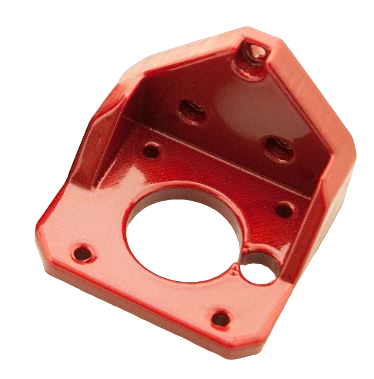
Polished ABS part with custom design
The following are the key aspects of Sanding and Polishing;
- Removes tool marks and surface irregularities
- Prepares the surface for subsequent finishing processes
- This can be done manually or using automated machinery
Painting Finish
Painting is a popular finishing option that enhances the aesthetic appeal of ABS parts. It allows for customization of the part’s appearance while providing an additional layer of protection against environmental factors.
- A wide variety of colors and styles are available
- Provides a protective layer against environmental factors
- Can enhance the part’s resistance to wear and tear
Electroplating
Electroplating is a process where a metal coating is deposited onto the surface of the ABS part. This process is used to improve appearance, and corrosion resistance, and enhance the part’s overall durability.
The following are the factors influencing electroplating quality
- Type of metal used for the coating
- The desired thickness of the plated layer
- Preparation and cleaning of the ABS surface before electroplating
Anodizing
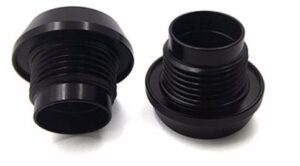
CNC machined ABS parts with anodize finish
Anodizing is typically used for metal parts but can also be applied to ABS when metallization has been performed. It’s a finishing process that enhances resistance to corrosion and wear.
- Primarily used after a metallization process
- Improves wear and corrosion resistance
- Alters the surface structure to absorb dyes or adhesives
What Are the Advantages of ABS CNC Machining?
The properties of ABS resonate with the demands of modern manufacturing, facilitating ease of machining and a spectrum of applications ranging from prototypes to finished products. Let’s discuss the advantages that make ABS CNC machining a preferred choice among professionals.
- Machinability
The high machinability of ABS allows for working with any CNC plastic operation. It does not harm the tool, and there is zero risk of physical damage to the workpiece. Machinability also contributes to tight tolerances and smooth surface finishing.
- Precision and complexity
A high level of precision can be maintained with any complex design. The correct tool setup, cutting parameters, and optimized tool path contribute to the exceptional dimension accuracy of CNC machined ABS parts. The CNC machines can create ABS parts with a tolerance of as low as ± 0.005mm.
- Low cost
ABS is a low-cost engineering thermoplastic that can be machined with CNC technology and high production speed. Less production time means lowering the overall cost. In addition, the minimum risk of creating defective parts also helps to minimize the production cost.
- Suitable for prototyping
Rapid Prototyping is a crucial step in every product development cycle. ABS can be employed in prototype production for any indented product across relevant industries. ABS is a feasible option for prototyping metallic and plastic products due to its low cost, machinability, accuracy, and high strength-to-weight ratio
- Recyclability
Like every other thermoplastic, ABS is fully recyclable after the life cycle of the part or product. It can be converted into new sheets or bars by melting and molding. It is beneficial in terms of cost and environmental effects.
What Are the Applications of ABS CNC Machining?
As previously mentioned, ABS can be converted into desirable parts of different industries, including automotive, electronics & electrical, aerospace, home appliances, defense, toys, and more.
| Industry | Applications | Why ABS? |
| Automotive | Protective bumpers, steering & suspension parts, driveline spare, interiors for decoration, wheel covers, and more. | High strength-to-weight ratio, shiny finish, scratch resistance, durability, and weather resistance |
| Fitting & plumbing | Plastic tubing, fittings, pumps, sockets, pipe tees, wyes, cleanouts, and more | Moisture resistance, durability, mechanical strength, corrosion resistance |
| Electronics & Electrical | Enclosures, insulators, computer keyboard, power plugs, power-tool housing, and more. | Thermal stability, fire retardant, moisture resistance, electrical insulation, high impact strength. |
| Medical | Nebulizers, compressors, pharmaceutical packaging, Ultrasound equipment, drug delivery, systems, housing for lab equipment, etc. | Strength, rigidity, processability, low weight, bio-compatibility |
| Home appliances | Refrigerator liners, vacuum cleaner parts, kitchen utensils, gardening tools, toys, etc. | Impact strength, durability, electrical insulation |
| Food processing | Refrigerator liner, juice presses, packaging, food processors, ovens, and food dryers. | Resistance to strain and abrasion, thermal stability chemical compatibility. |
| Defense | Protective headgear, hard hats, defense pads, etc. | Lightweight, high-impact strength, and toughness |
| Other | Parts for musical instruments, furniture components, decorative items, and many more. | Strength, hardness, durability, and customizability. |
CNC Machining Services at Ancastings for ABS
Ancastings’ plastic CNC machining include CNC machining of ABS parts is designed to cater to both small-scale prototyping and large-scale production without compromising on accuracy or surface finish. We leverage advanced CNC machines that can easily handle complex shapes and intricate details. Our services are not just limited to machining but also include assistance in design, material selection, and post-processing, ensuring that the final product meets the specific requirements of their clients.
Key features of Ancastings’ CNC Machining Services for ABS include:
- Precision Engineering: High accuracy and repeatability for parts with tight tolerances.
- Customization: Ability to produce parts tailored to clients’ unique needs.
- Scalability: Services suited for one-off prototypes as well as high-volume production runs.
- Finishing Options: Various post-processing services like painting, polishing, and sandblasting to enhance the appearance and performance of the parts.
- Quality Assurance: Rigorous quality control measures to ensure that each part meets stringent standards.
- Expert Consultation: Access to Ancastings’ team of experts for design optimization and material advice.
- Rapid Turnaround: Efficient processes that shorten the time from design to delivery.
- Cost-Effectiveness: Competitive pricing models that provide value for investment.
Summing up
ABS CNC Machining merges the capabilities of modern manufacturing with the exceptional qualities of ABS plastic. This fusion results in parts that meet the highest standards of durability, functionality, and aesthetics. Whether you’re looking to prototype or produce high-volume batches, understanding the techniques, costs, and benefits of ABS CNC machining is paramount. With the right service provider, such as Ancastings’ Metal CNC Milling Services, you can harness the full potential of ABS and achieve outstanding results in your manufacturing project.
Ancastings provides ABS Machining Service for both prototype and production parts. Our engineers and advanced CNC machines can machine ABS, other engineering plastics, and metals to tight tolerances for a wide range of applications.
If you are looking for an on-demand manufacturing service for your CNC machining project, you are just a few steps behind in getting your parts. Send us your design to get a quote and finalize it by consulting our engineers then we will proceed immediately to convert it into reality.
FAQ’s
What is ABS plastic?
ABS is the versatile engineering thermoplastics used in CNC machining projects, suitable for prototype development and mass production.
What makes ABS suitable for CNC machining?
ABS is durable, stable, and easy to machine, making it ideal for various CNC applications.
How does the ABS CNC machining process work?
It involves designing in CAD, setting up CNC machinery, machining the part, and post-processing.
Can you CNC machine ABS for any application?
Yes, ABS can be machined for a wide range of applications due to its versatility.
What are the typical applications of ABS CNC machining?
ABS CNC machining is significant in the automotive, medical, electronic, electrical, aerospace, food processing, and many other industries. Additionally, it is widely adopted in prototype development.
Why should I choose ABS CNC machining over Injection molding?
It is quick and cost-effective to use CNC machining. CNC machining can create correct ABS parts. It is wise to create a CNC milling prototype of ABS parts to analyze the technical & economic feasibility of injection molding.
Are there any crucial considerations of ABS CNC machining?
Yes, you should pay attention to tool temperature, tool material, cutting speed, feed rate, and intended use of the ABS part.