
Whether in aerospace, automotive manufacturing, or the electronics industry, alodine finish has become an indispensable surface treatment technology due to its superior performance and flexibility. Also, it is an extensively used surface treatment method for metals, particularly suitable for aluminum and magnesium alloys. This surface treatment method comes in various types, allowing it to adapt to different application needs and environmental conditions.
Therefore, this article will introduce the basic process of alodine treatment, its common types, as well as applications, and more. Hope it can help readers gain a comprehensive understanding of this technology.
What is Alodine?
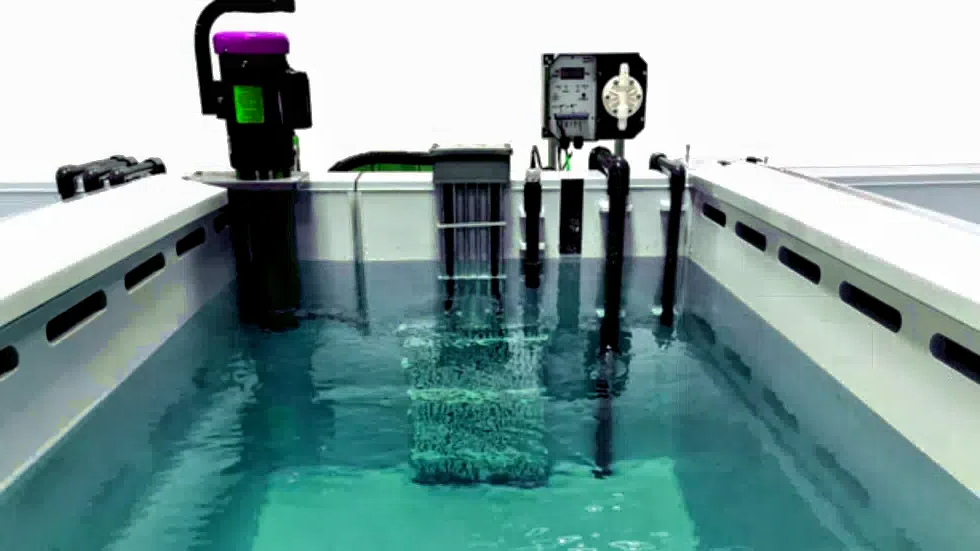
Alodine finish, also known as chromate conversion coating, acts to provide corrosion resistance and improve the adhesion of paints and coatings. It is a chemical process that involves applying a solution containing chromates to the metal surface. This creates a protective layer that guards against corrosion and enhances the metal’s ability to accept paints or adhesives.
Main Characteristics of Alodine Finish
So, what are the unique features of this coating? Let’s take a closer look together.
- Corrosion Resistance: It is a chemical conversion coating that provides excellent corrosion protection for aluminum and its alloys. In addition, it forms a thin, tightly adhering layer that inhibits the electrochemical reactions that lead to corrosion.
- Appearance: Alodine coatings typically have a golden or iridescent appearance, depending on the specific chem film formulation used. This can provide an aesthetic appeal for certain applications.
- Electrical Conductivity: The coatings are electrically conductive, which makes them suitable for applications where electrical grounding or bonding is required.
- Adhesion: It offers a durable and long-lasting protective layer as the coating adheres strongly to the underlying aluminum surface.
- Thickness: The coatings are typically very thin, ranging from 0.1 to 1.0 mm in thickness. This allows for excellent coverage without significantly altering the dimensions of the coated part.
- Environmental Friendliness: Newer alodine formulations are designed to be more environmentally friendly, with reduced or eliminated the use of hexavalent chromium, which was previously a common component.
How Does Chromate Conversion Coating Work?
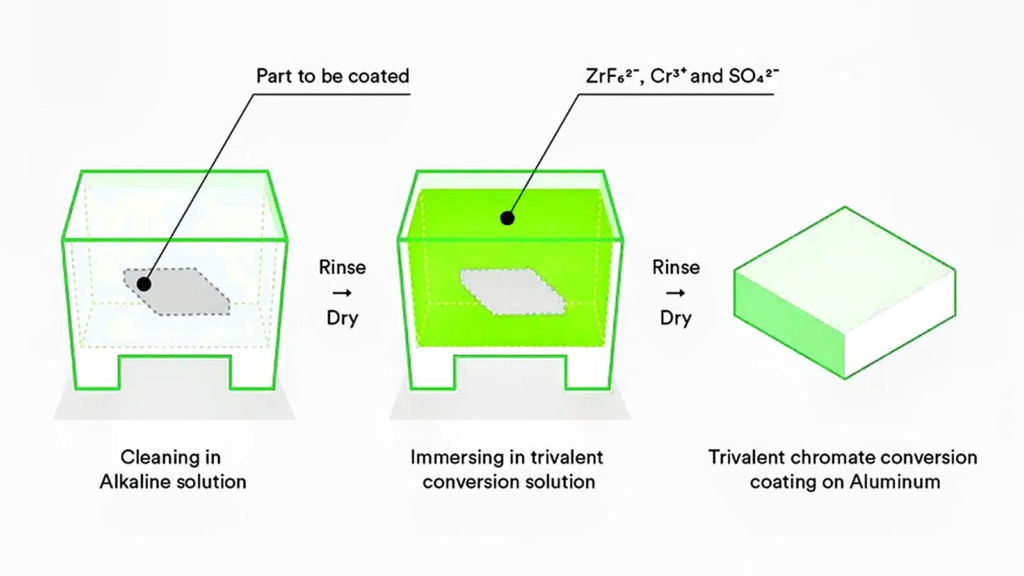
The chem film finishing process involves several key steps to create a protective and durable coating on metal surfaces. Below are some primary steps:
- Surface Pretreatment:
First, it needs to thoroughly clean and remove any oil, oxides, or other contaminants of the metal surface. This is typically achieved through acid or alkaline cleaning methods.
- Chemical Reaction:
Immerse the cleaned metal in an alodine solution containing hexavalent chromium or other compounds. During this process, a series of chemical reactions occur, forming a dense conversion coating on the metal surface.
- Coating Formation:
The conversion coating consists of metal oxides and metal salts, which adhere firmly to the metal surface. It provides a protective barrier, enhancing the corrosion and wear resistance of the metal.
- Passivation Effect:
The formed conversion coating also improves the adhesion of paints or adhesives to the metal surface, thereby enhancing the overall durability.
- Post-treatment:
Finally, the coated parts undergo further processing, such as rinsing and drying, to ensure the integrity and performance stability of the conversion coating.
Types of Alodine Finish
There are various types of alodine with unique applications across industries. The common ones involve Type 1 and Type 2 of the MIL-DTL-5541 standard, which will be introduced in detail below.
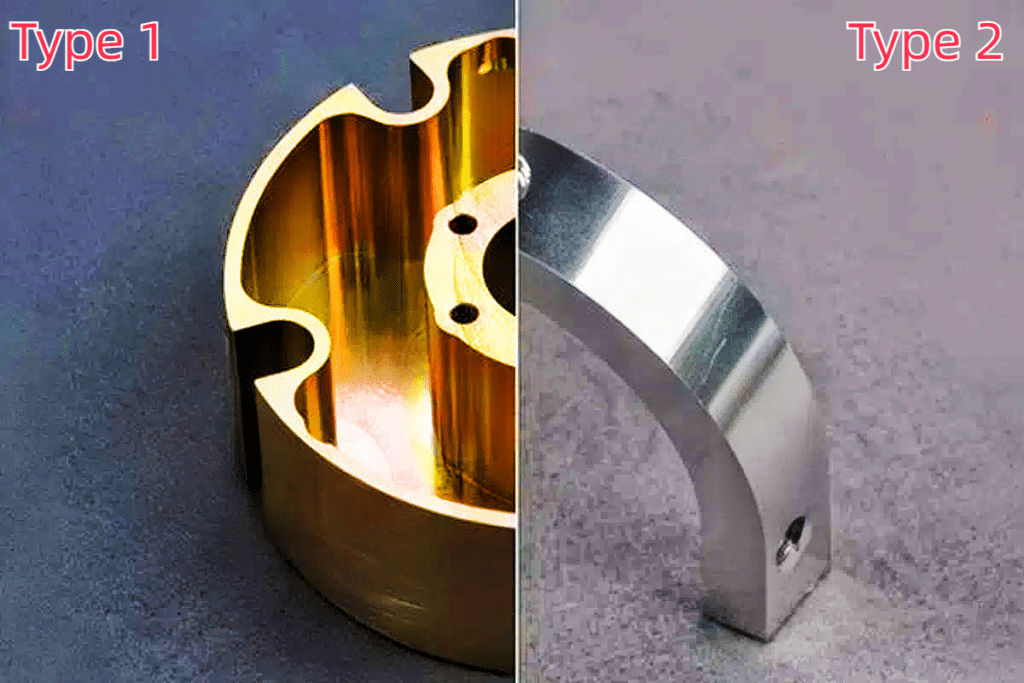
| Characteristic | MIL-DTL-5541 Type 1 | MIL-DTL-5541 Type 2 |
| Composition | Hexavalent chromium | Trivalent chromium |
| Coating Color | Green or yellow | Gray or black |
| Substrate | Aluminum alloys | Galvanized steel |
| Corrosion Protection | Excellent | Good |
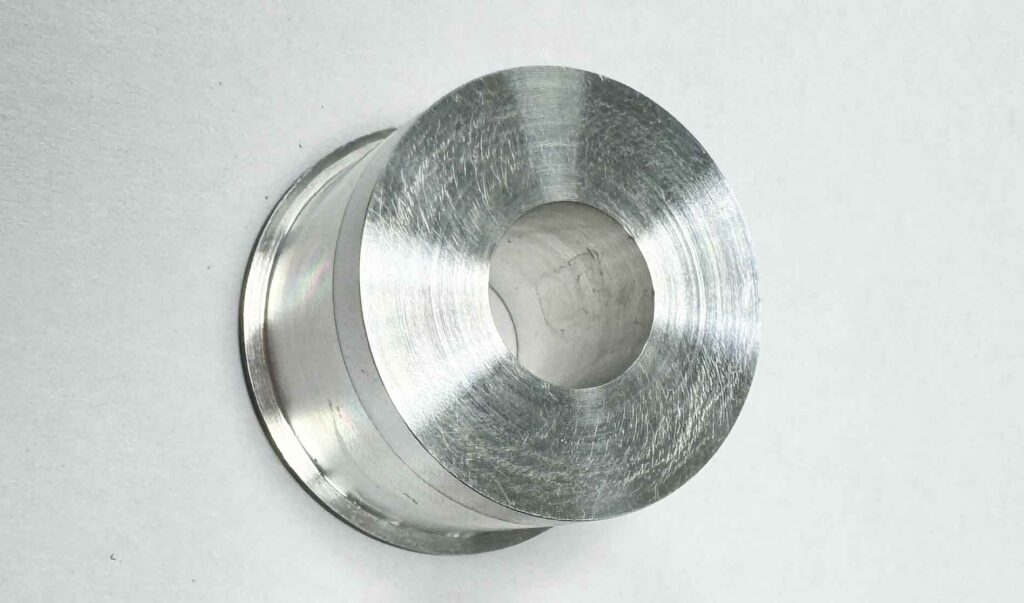
Additionally, the Type 1 chromating process uses hexavalent chromium compounds, while the Type 2 chromating process uses trivalent chromium compounds. As such, the specific operating steps and performance characteristics of the two processes are slightly different
Applications of Chem Film
Specific industry and application examples:
- Aerospace: Aircraft fuselage, wings, tail surfaces, spacecraft outer shells, and fuel tanks
- Automotive: Automotive body panels, engine hoods, wheels, exhaust systems, and suspension components
- Electronics and electrical appliances: Metal parts in mobile phones, computers, metal housings, and heatsinks in electronic devices
- Architecture and decoration: Aluminum panels on building exteriors, metal rain gutters and downspouts
- Industrial equipment: Chemical processing equipment, oil and gas pipelines, food processing, pharmaceutical equipment
- Other applications: Military equipment like tanks, armored vehicles, marine structures like ships, offshore platforms
Alodine vs. Anodizing
Alodine coating and anodizing are two common metal surface treatment technologies, and there are some differences between them:
- Working Principle:
Cforms a protective film on the metal surface through chemical reactions, in contrast to anodizing’s electrochemical oxidation process to form an oxide protective layer.
- Applicable Metals:
Alodine is mainly used for aluminum alloys, magnesium alloys, and steel, whereas anodizing is primarily employed for aluminum and its alloys.
- Coating Thickness:
Alodine coatings are relatively thin, typically 0.5-5 mm, in comparison to the thicker anodized layers, usually 5-25 mm.
- Performance Characteristics:
Chromate conversion coating provides basic corrosion protection, with relatively poor wear resistance, as opposed to anodized layers which have better wear resistance, corrosion resistance, and decorative properties.
- Application Areas:
Alodine is widely used in the aerospace, automotive, electronics, and other industries, on the other hand, anodizing is mainly applied in the fields of architectural decoration and home appliances.
Ancastings Precision Surface Finish Services
Ancastings Precision is a company that specializes in metal surface treatment, and it also provides excellent CNC machining services. We use advanced processes and equipment to provide customized surface treatment solutions for our clients. Ancastings Precision’s anodized layer not only has excellent corrosion resistance but can also give metals a unique decorative effect, greatly enhancing the aesthetic appeal of products. If you need any anodizing surface treatment, please feel free to contact us at any time.