
Grooving operation is a fundamental machining operation that involves the creation of a channel or recess in a workpiece. The process has several variations, with axial, radial, and angular grooving being among the most commonly used. These methods differ mainly based on the grooving tool’s orientation relative to the workpiece.
This article provides an in-depth exploration of these three types of grooving, their unique characteristics, and when to use each.
Understanding the Basics of Grooving
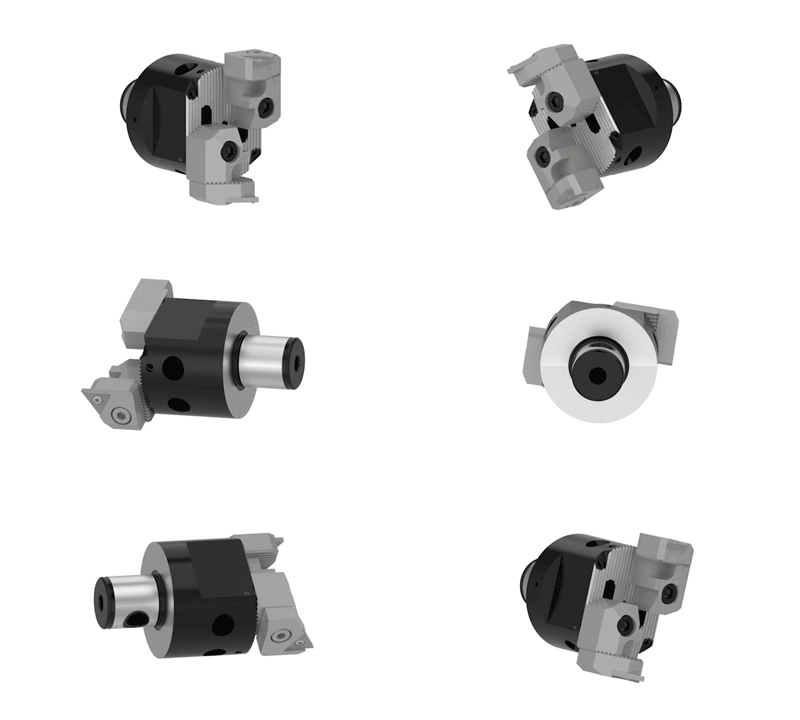
Axial grooving tool
Before delving into the specifics of axial, radial, and angular grooving, it is important to understand the fundamentals of grooving. Grooving involves removing material from a workpiece to create a groove – a long, narrow cut. This operation is crucial in various manufacturing processes, including the creation of O-ring seats, oil paths, retaining ring grooves, and more.
The selection of the appropriate grooving method—be it axial, radial, or angular—depends on several factors, including:
- The desired groove characteristics (width, depth, shape)
- The type of workpiece material
- The capabilities of the CNC machine and tooling
- Production requirements and constraints
Axial Grooving: A Closer Look
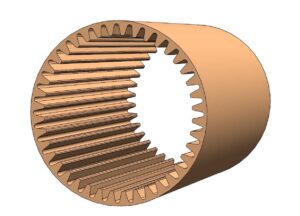
Axial grooving is a machining operation where the tool moves parallel to the axis of the workpiece. This method is often used to create grooves along the length of cylindrical workpieces.
1. Key Features of Axial Grooving
- Tool Movement: In axial grooving, the tool moves in a direction parallel to the workpiece axis.
- Groove Orientation: The grooves created are usually parallel to the workpiece axis.
- Applications: Common applications include grooving along the length of shafts and pipes.
2. Advantages of Axial Grooving
- Efficiency: Axial grooving can be quite efficient as it allows for continuous, uninterrupted cuts along the length of a workpiece.
- Surface Finish: This method often results in a good surface finish due to the smooth, continuous cutting action.
Table 1: Key Aspects of Axial Grooving
| Aspect | Description |
|---|---|
| Tool Movement | Parallel to the workpiece axis |
| Groove Orientation | Parallel to the workpiece axis |
| Common Applications | Grooving along the length of shafts and pipes |
Radial Grooving
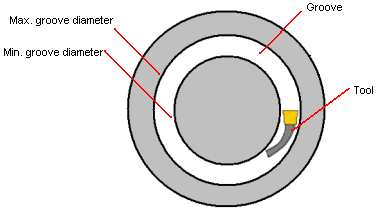
In radial grooving, the cutting tool moves in a direction perpendicular to the workpiece’s axis. This method is commonly used to create grooves around the circumference of cylindrical workpieces.
1. Key Features of Radial Grooving
- Tool Movement: In radial grooving, the tool moves in a direction perpendicular to the workpiece axis.
- Groove Orientation: The grooves created are usually around the circumference of the workpiece.
- Applications: Radial grooving is often used for creating O-ring seats, oil paths, and other circular grooves.
2. Advantages of Radial Grooving
- Versatility: Radial grooving is versatile and can create a wide range of circular groove profiles.
- Precision: This method often results in high-precision grooves due to the controlled, perpendicular movement of the tool.
Table 2: Key Aspects of Radial Grooving
| Aspect | Description |
|---|---|
| Tool Movement | Perpendicular to the workpiece axis |
| Groove Orientation | Around the circumference of the workpiece |
| Common Applications | O-ring seats, oil paths, and other circular grooves |
Angular Grooving
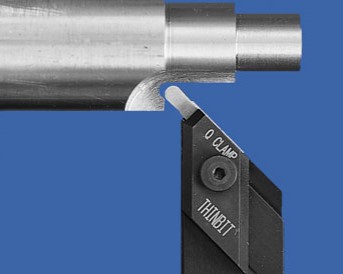
Angular grooving involves cutting grooves at an angle to the workpiece’s axis. This method is often used when a specific angle or chamfer is required on the workpiece.
1. Key Features of Angular Grooving
- Tool Movement: In angular grooving, the tool moves at an angle to the workpiece axis.
- Groove Orientation: The grooves created are usually angled or chamfered.
- Applications: Angular grooving is often used for creating angled features, chamfers, or specific geometrical shapes on a workpiece.
2. Advantages of Angular Grooving
- Flexibility: Angular grooving allows for a high degree of flexibility, enabling the creation of complex, angled grooves.
- Precision: This method can produce highly accurate, angled grooves due to the precise control of the tool’s angular movement.
Table 3: Key Aspects of Angular Grooving
| Aspect | Description |
|---|---|
| Tool Movement | At an angle to the workpiece axis |
| Groove Orientation | Angled or chamfered |
| Common Applications | Angled features, chamfers, specific geometrical shapes |
Let’s Start A New Project Today
Choosing the Right Grooving Method
The choice between axial, radial, and angular grooving depends on several factors, including:
- Groove Specifications: The required groove shape, size, and orientation will dictate the appropriate grooving method.
- Workpiece Material: Different materials may respond better to different grooving methods.
- Machining Capabilities: The capabilities of the CNC machine and tooling will also influence the choice of grooving method.
Remember, the right grooving method can greatly influence the success of your machining operations. Always consider these factors carefully and consult with tooling experts or manufacturers if needed.
Related blog:
Grooving Operations and Efficiency The Path to Optimized Machining Process
Comparison Summary: Axial, Radial, and Angular Grooving
| Criteria | Axial Grooving | Radial Grooving | Angular Grooving |
|---|---|---|---|
| Tool Movement | Parallel to workpiece axis | Perpendicular to workpiece axis | At an angle to the workpiece axis |
| Groove Orientation | Parallel to workpiece axis | Around the circumference of the workpiece | Angled or chamfered |
| Common Applications | Grooving along the length of shafts and pipes | O-ring seats, oil paths, and other circular grooves | Angled features, chamfers, specific geometrical shapes |
| Advantages | Efficient, good surface finish | Versatile, high precision | Flexibility, high precision |
| Best Suited for | Long, continuous grooves | Circular grooves | Angled or chamfered grooves |
Ancastings’ Grooving Machining Service
Ancastings offers a comprehensive grooving machining service that leverages state-of-the-art CNC turning technology and expert machinists to deliver high-quality, precision grooves. Whether you require axial, radial, or angular grooving, Ancastings can meet your needs with exceptional accuracy and efficiency. Contact us today to learn more about our grooving services and how we can help enhance your manufacturing operations.
Conclusion
Axial, radial, and angular grooving each offers unique advantages and are suited to different applications. By understanding these methods and their specificities, manufacturers can select the most appropriate grooving operation for their needs, optimizing efficiency, precision, and quality.
FAQ
What is axial grooving?
Axial grooving involves the cutting tool moving parallel to the axis of the workpiece. It’s often used to create grooves along the length of cylindrical workpieces.
What is radial grooving?
In radial grooving, the cutting tool moves in a direction perpendicular to the workpiece’s axis, often used to create grooves around the circumference of cylindrical workpieces.
What is angular grooving?
Angular grooving involves cutting grooves at an angle to the workpiece’s axis. This method is typically used when a specific angle or chamfer is required on the workpiece.
Which grooving method should I choose?
The choice between axial, radial, and angular grooving depends on several factors, including the required groove shape, size, and orientation, the workpiece material, and the capabilities of the CNC machine and tool
Let’s Start A New Project Today