
Bead blasted is one of the many different processes currently used to provide the desired surface finish on a metal part.
Metal manufacturing has evolved a lot since the first industrial revolution, and across this evolution many technologies have been developed to improve different properties of the materials and the parts made with them. Obviously, surface finish is one of them.
Among the most common surface finishing methods there is the category known as blasting, where sandblasting could be considered the most popular. However, there are other types of blasting processes including:
- Wet abrasive blasting
- Vapor blasting
- Wheel blasting
- Hydro blasting
- Bead blasting
In this case, we will be focusing on bead blasting, so let’s get into the details of how metal parts are bead blasted.
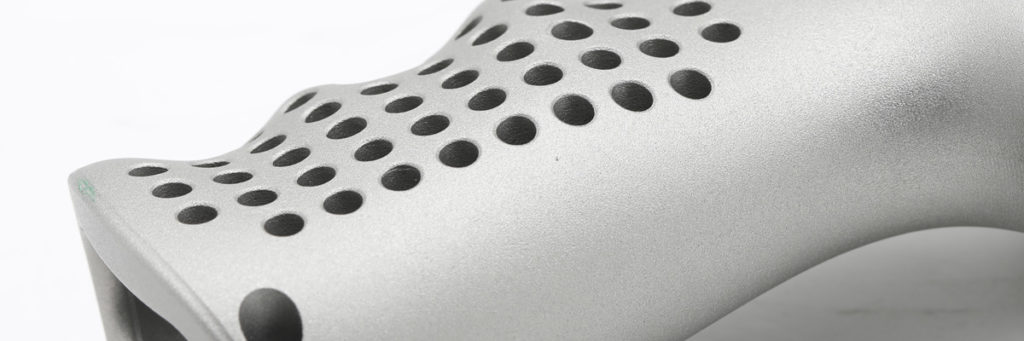
What is a bead-blasted part?
The first thing is understanding what bead blasting is in the context of surface finishing. Bead blasting is a type of abrasive blasting used to clean or finish a surface by shooting glass beads on that surface at high pressure.
When a part is bead blasted, a fine layer of material is removed, thus giving the surface a smooth matte or satin finish. The glass beads are shot by using a pressurized tool, usually by means of compressed air. This is why some bead blasting tools are called air guns for bead blasting.
How are metal parts bead blasted?
The process to get metal parts bead blasted is very similar to other abrasive blasting methods like sandblasting. However, there is a significant difference. This is the blasting media.
In this case, metal parts are blasted with spherical or bead shaped glass, normally a jagged media as described by ancastings blog.
This kind of media provides a surface finish which is rather coarse, but consistent across the entire geometry of the bead blasted part.
Moreover, the hard impact of the media can result in a non-directional but uniform matte surface with a smooth satin but low reflectivity, especially when applied on metals such as stainless steels.
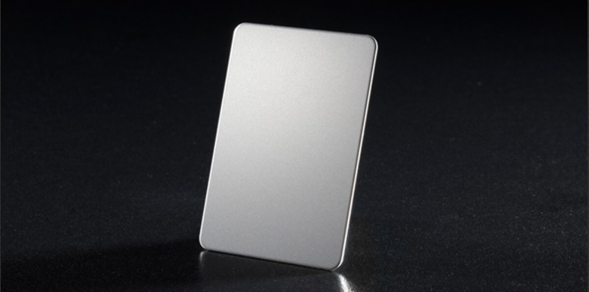
Another important aspect to consider is that a bead blasted part can be tensile conditioned as a result of the process. However, it is important to take care of critical geometries or features such as holes where undesired dimensional and surface roughness alterations may happen.
The result will mainly depend on how fine or coarse the glass beads are, but also the skills of the operator and the amount of pressure used are parameters that may affect the surface finish of the bead blasted part.
Therefore, different grades and different roughness values are usually offered. Here are some examples of the bead blasted stainless steel sheets offered.
| Finsh | Grade | Type | Thickness | 750 | 914 | 1000 | 1219 | 1250 | 1500 | 1524 |
| Bead Blast | 304/304L | Sheet | 0.5-3.0 |  |
 |
|
|
|
|
|
| Bead Blast | 316L | Sheet | 0.5-3.0 | |
|
|
||||
| Bead Blast | 430 | Sheet | 0.5-3.0 |
What are the tools used to get a bead blasted finish?
As it happens with any other process, the best results are generally achieved while using the right tools and materials. So, let’s take a look to the tools and materials you will need in order to be both effective and efficient when producing a bead blasted surface finish.
Media Blasting Cabinet
These are sometimes called with the specific name of the media, in this case, bead blasting cabinet. As the name suggests, bead blasting cabinet is piece of equipment used to enclose the process to guarantee cleanliness and safety.
To make sure you are getting the best possible cabinet for your shop, take a look at the following considerations when making your choice:
- Strong and durable materials used in the construction of the cabinet.
- Sturdy and well joint legs. Legs are usually welded, so you want to take a look to the integrity of the welding. This is especially important since the legs are the structures supporting all the weight of the cabinet plus the weight of the bead blasted parts and the media used for bead blasting them. Wobbling legs could be problematic and even dangerous.
- The sealing should be hermetic to ensure no dust or any debris will come out and create a dangerous and unhealthy working environment.
- Good visibility but better protection. While a big window allows for a great view to guarantee a high-quality process, this window needs to be strong enough to ensure you or your operator are protected while generating a bead blasted surface finish. Of course, the material of the window will wear down with the time due to the impact of the glass beads and the debris, so it is important to verify the cabinet comes with replacement windows and that the window is quick and easy to replace.
- Good hand protection. Normally, media blasting cabinets come with strong and durable gloves directly attached to the cabinet wall where the view window is located. Apart from being strong enough to protect your hands or the hands of any operator, these gloves should provide enough touch sensitivity and comfort to manipulate the part and the bead blasting gun properly.
- Speaking of the bead blasting gun, it is obvious that having a high-quality gun is vital. Without it, there would be no bead blasting at all. However, this is a more personal choice since it depends on the skills of the operators. In general, foot pedal blasting guns are preferred for generating bead blasted finish on big parts since they take longer and using the trigger type can be exhausting in those cases.
As you can see, the media blasting cabinet already provides all the equipment you need. Keep in mind the considerations above, and you should not have any problem.
Now, let’s talk about the media.
Glass beads
Of course, you cannot generate a bead blasted surface finish without the glass beads. These so-called glass beads are actually made of a lead-free, soda-lime glass that is shaped into beads or spheres.
A relevant aspect of the glass beads is that you can recycle and reuse them up to 30 times. This makes the bead blasted surface finish a very environmentally friendly process.
You will find glass beads in different sizes and grades, from very fine to very coarse, similar to sanding paper. The main difference is the visible aspect of the surface after it is bead blasted. Coarser glass beads will result in a duller matte finish, while finer glass beads will give you a satin brighter look.
What are the advantages and disadvantages of the bead blasted surface finish?
As it happens with all manufacturing processes, the bead blasted surface finish will have advantages and disadvantages that you will need to consider before choosing it as the surface finish solution for your specific application.
Here are the main advantages and disadvantages of the bead blasted surface finish.
Advantages of the bead blasted surface finish
- Consistent average surface roughness across the entire geometry.
- Uniform matte or satin finish, depending on the material and the size and grade of the glass beads used.
- A very safe process when compared to other abrasive blasting processes.
- Perhaps the best alternative to sandblasting.
- An environmentally friendly process.
- Material can be recycled which reduces costs.
- Possible to do in either pressure or suction blasting cabinets.
- Best choice for delicate parts.
- Low-cost process in general.
Disadvantages of the bead blasted surface finish
Critical geometries, dimensions and surface roughness may be affected.
Very hard materials may take longer to be bead blasted so it is not cost-effective in these cases.
Reduced durability compared to steel blast media.
No profile for coating adherence is achieved with the glass beads.
What are the main applications of the bead blasted surface finish?
Most of the time, the bead blasted surface finish is applied to improve the aesthetics of the part manufactured. Although it may happen sometimes, it usually does not have a significant impact on the dimensions of the part, which makes it suitable for many different applications in different industries.
Moreover, some manufacturers consider bead blasted surface finish as a durability enhancer which increases its relevance in some industries. This said, the most common applications of the bead blasted surface finish are:
- Peening fire weapons to prevent cracks and make them fatigue resistant.
- Deburring.
- Surface maintenance like removing calcium and other deposits from piping systems.
- Cleaning automotive components for new painting.
- Aerospace components that require coating.
- Medical instruments and components made of aluminum.
Final thoughts
Now you know that bead blasted surface finish is a good option for you to get your metal part with a uniform matte or satin surface which will be consistent across the entire geometry. Keep all the considerations we have presented to you here and you will have no problem. However, whenever in doubt, it is always better to contact with an expert.
If you need your metal part bead blasted, or you want to know how we can help you get the surface finish you need, do not hesitate to contact us. Our experienced technical team will be ready and more than happy to help you.