
“Zinc, Chrome, and Nickel are the three popular metal options for plating finish. Their effectiveness depends on several conditions and requirements related to the specific application.”
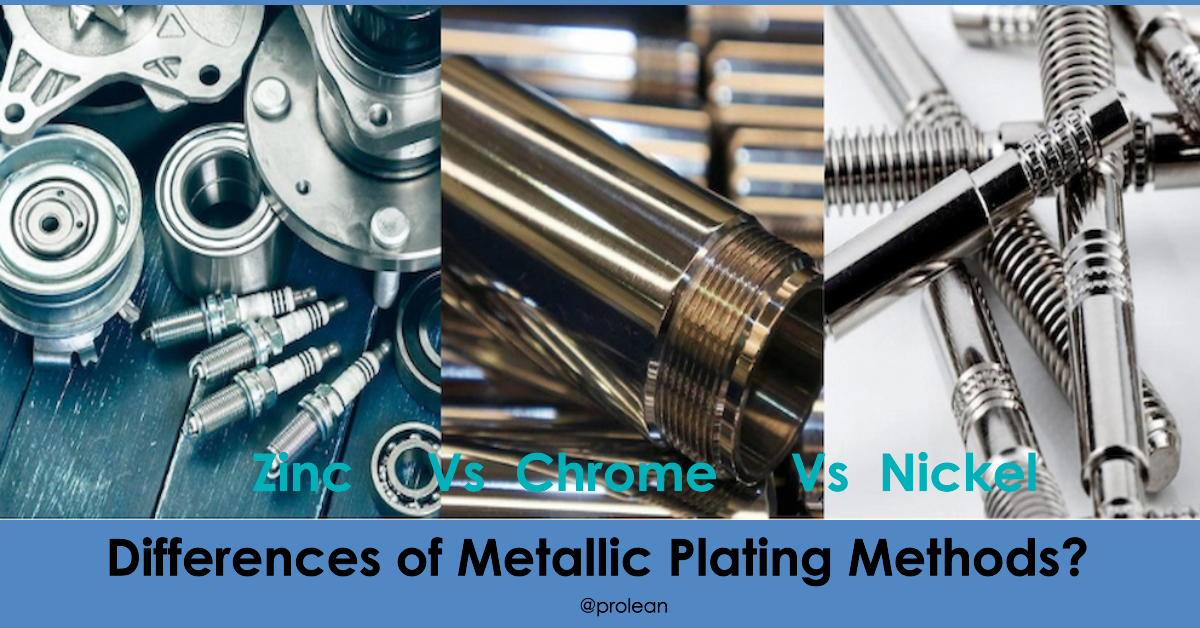
Plating metallic coatings into manufactured items is an effective surface finishing strategy to enhance the smoothness and aesthetic. Often, manufacturers apply Chrome, Zinc, or Nickel for this purpose. Each of these metals provides corrosion resistance, wear resistance, and an appealing appearance. However, there are many differences between Chrome Plating, Zinc Plating, and Nickel Plating. These metal platings are specifically ideal for different finishing requirements.
This article will differentiate three plating techniques: Chrome plating vs Zinc plating vs Nickel Plating.
What is Zinc Plating?
The thin layer of zinc on an iron or steel surface improves aesthetic appeal and durability. The process of zinc plating involves dipping the parts in an electrolyte solution containing zinc ions. Then, the electrolysis process deposits the zinc on the parts (substrate) surface while passing the current in the circuit.
- At the Anode (Zinc Anode): Zn2+(aq)+2e−→Zn(s)
- At cathode: Zn(s)→Zn2+(aq)+2e−
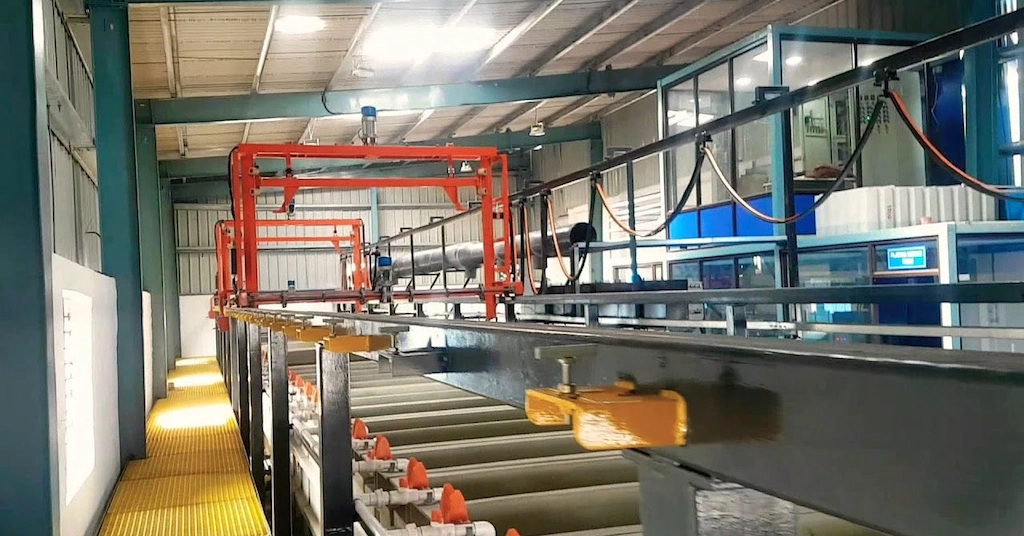
Zinc plating setup
However, there are several other steps in the Zinc Plating, not only the electrolysis. It ranges from surface preparation to post-finishing activities. Let’s look at the following table to understand the detailed process.
Table: Zinc Plating Process
| Step | Process Phase | Description |
| 1 | Surface Cleaning | Degreasing by alkaline solutions and pickling in acid. |
| 2 | Water Rinsing | The rinsing with water removes the remaining chemicals and residues. |
| 3 | Electrolyte Bath | Preparation of electrolyte and dipping the workpiece into it: Cathode(workpiece) and Anode(Zinc). |
| 4 | Electroplating of Zinc | Once current flows through the circuit, zinc ions are deposited as a solid metal layer on the workpiece surface. |
| 5 | Post- Finishing | Further processes like additional coating or painting. |
Advantages of Zinc Plating
- The zinc layer on the iron or steel surface protects the parts against corrosion by acting as a sacrificial layer that corrodes before the base material.
- It strongly bonds with the base material. So, no risk of peeling.
- Zinc metal is relatively cheaper than Chromium and Nickel. As a result, zinc plating is more cost-effective than other platings.
- Thermal stability is another Zinc plating advantage.
- The complexity of substrate geometry does not influence the zinc deposition process.
- Protecting metallic parts with ZInc Coating improves the original conductivity of substrate parts, mainly for ferrous materials.
Disadvantages of Zinc Plating
- The thick plating layer(typically> 25 µm) can lead to brittleness and cracking in the zinc layer.
- The hydrogen might be introduced into the steel during electrolysis, and it can cause embrittlement and risk of failure.
- The visual appearance could be degraded over time.
- It is limited to chloride-prone environments, especially comparing Chrome plating vs zinc plating.
Try Ancastings Now!
What is Chrome Plating?
Chromate or chrome plating process steps involve a similar mechanism as zinc does except the zinc solutions are used as the electrolyte like SKU 1041. These solutions facilitate the oxidation of chrome and deposit it into the substrate electrode. Consequently, chrome plating is flexible with the substrate material, steel, aluminum, other metals, and some plastics.
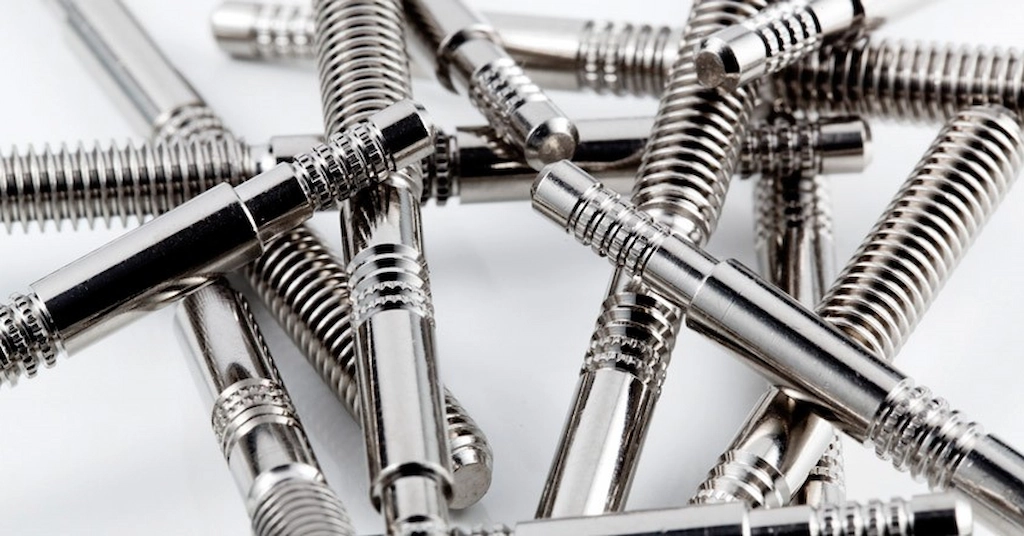
Decorative chrome-plated parts
Next, this plating finish makes the substrate surface white with a minor bluish appearance and highly corrosion-resistant, even when operational conditions are at low temperatures. The mechanism of chrome plating is;
Cr6+ + 6e−→Cr (Cathode)
2H2O→O2(g)+4H+ +4e− (Anode)
Furthermore, the chrome plating has two variations, hard plating and Decorative Chrome Plating. First, hard chrome plating refers to the coating of a thick chrome layer on industrial applications mainly to improve performance by increasing surface hardness, smoothness, and other functional properties. On the other hand, decorative plating involves the deposition of a thin chrome layer for decorative or aesthetic purposes.
Advantages of Chrome Plating
- It provides wear, corrosion, scratch resistance, hardness, and low friction to the plated parts or components.
- The aesthetically pleasing shiny & reflective finish of chromium makes it suitable for performance and appearance enhancement.
- The chemical inertness of chromium towards some chemicals, solvents, and oils protects the underneath parts from these external factors.
- This plating can also rectify minor surface irregularities and defects.
- It is easy to clean chromium-plated surfaces.
Disadvantages of Chrome Plating
- Raw chromium is more expensive than other plating metals, so this finish is costlier than others.
- Using hexavalent chromium can pose health risks. So, it requires strict control systems during the process.
- It is difficult to repair once the coating is damaged or fleek off.
- Achieving uniform chrome coating on complex shapes could be challenging.
What is Nickel Plating?
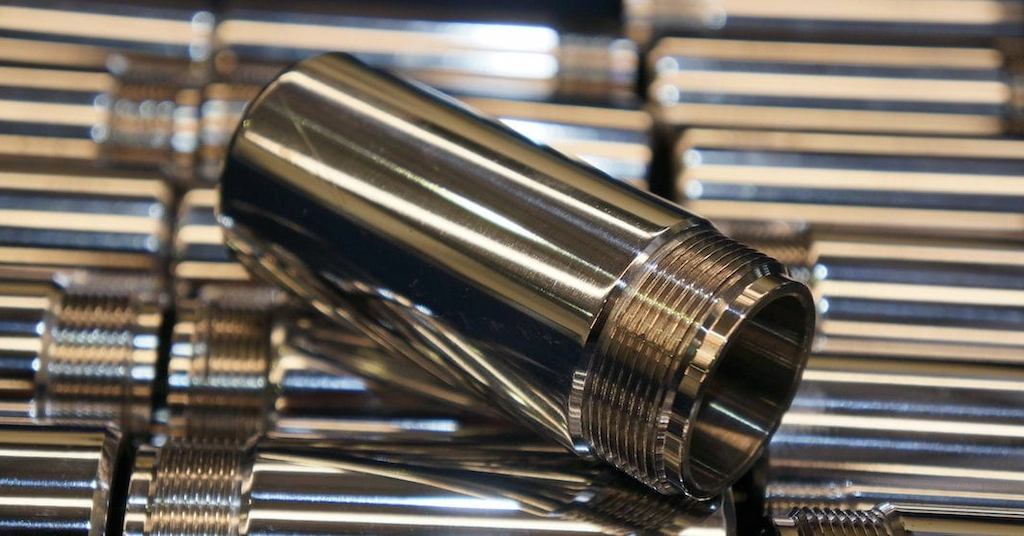
Electroless nickel plating
It is another popular metal for plating manufacturing items with a shimmering yellow and white appeal. Although nickel plating is not as wear and corrosion-resistant as zinc and chromium, it enhances the surface properties and beauty of the part. For example, nickel is often plated on copper to enhance hardness and outer looks. However, it is compatible with many other meta and alloy substrates like aluminum, brass, and steel. Following that, nickel can be plated with both electro or electro-less plating approaches;
- Electrolysis : Ni2+ + 2e−→Ni + Ni2++2e−→Ni (at the cathode)
- Electroless: Ni2+ + H2PO2− + H2O →Ni+H2PO32−+2H+
In the electroless nickel plating, the reducing agent ( H2PO2 in the above case) deposits the nickel ions on the cathode to form a uniform finish layer.
Advantages of Nickel Plating
- The Nickel plating properties make the primary surface wear, abrasion, and corrosion-resistant.
- It can improve the electrical conductivity of work materials.
- Electroless nickel plating ensures a uniform layer even for complex geometries like inside holes and recesses.
- The Nickel plating provides a bright and shiny silver appearance.
- Nickel-plated parts can withstand high temperatures because of the nickel’s thermal properties.
- It shows inertness towards some chemicals like alkalies, petroleum, salt water, and some soft acids.
Disadvantages of Nickel Plating
- This plating metal costs more, making the plating process expensive.
- The porosity of nickel results in relatively low corrosion and wear resistance than zinc and chrome plating.
- The Nickel-plated surfaces require regular cleaning and polishing to maintain the finish for a long period.
Difference Between Chrome Plating, Zinc Plating, and Nickel Plating
These three metal finishing techniques serve distinct purposes across various applications. Let’s look at six aspects that set them apart from each other.
1. Corrosion Resistance
Zinc provides superior corrosion resistance as compared to other twos. The reason is the zinc coating acts as a sacrificial layer. It corrodes first to protect the substrate metal. Therefore, it is suited for outdoor or extreme environments.
Next, chrome is also an excellent corrosion-resistant metal. However, its superiority lies in its ability to resist tarnishing and oxidation to maintain aesthetics over time. In contrast, Nickel plating is effective in environments where temperature and atmospheric conditions vary significantly.
2. Wear Resistance
The hardness of chrome makes the plated parts highly abrasion and wear-resistant once they form a layer on the surface of the other metals. So, it is widely adopted by manufacturers to lower the coefficient of friction in high-performing parts. Meanwhile, the nickel is less resistant, and the zinc is even less.
3. Aesthetic Appeal
Chrome plating is best for aesthetic appeal since it gives a bright, mirror-like finish on part’s surfaces. It is beneficial to the automotive and decorative industries. In contrast, zinc plating presents a more subdued appearance because it lacks the lustrous sheen of chrome. Finally, Nickel balances with its silvery, reflective finish for a decorative appeal.
4. Plating Process
The plating processes for chrome, zinc, and nickel plating differ notably.
- Chrome Plating: Several layers of chromes for optimum finish and protection.
- Zinc Plating: It is a simple finishing process & cost-effective for large-volume applications.
- Nickel Plating: It requires thorough surface preparation but offers flexibility for plating techniques.
Therefore, the selections depend on the intended finish quality ( like Ra value and appearance), your budget, and lead time.
5. Environmental Impacts
Chrome plating is more prone to environmental impacts if the plating is done with hexavalent chromium. Next, zinc is comparatively less harmful. Meanwhile, Nickel plating carries little risk only if nickel slats are involved in the process.
6. Cost Implications
Chrome plating is generally the most expensive because it needs multiple-layer depositions, while zinc is the most economical among the three. Next, the Nickel plating costs lie in the middle of chrome and zinc.
Furthermore, the following table shows the head-to-head comparison of the above aspects in Chrome vs Zinc vs Nickel Plating.
| Aspect | Chrome Plating | Zinc Plating | Nickel Plating |
| Corrosion Resistance | Moderate | Superior | Relatively low |
| Wear Resistance | Superior | Moderate | Relatively low |
| Aesthetic Appeal | Superior | Relatively less pleasing. | Moderate |
| Plating Process | A complex procedure | Relatively straightforward | Moderate complexity |
| Environmental Impact | More risks than others | Relatively less impacts | Carries risks with nickel salts but can be mitigated. |
| Cost Implications | High Cost | Most economical option | Costs lie in the middle |
Related: Nickel vs Chrome complete introduction: What is the difference?
Try Ancastings Now!
Thickness Differences in Chrome Plating Vs Zinc Plating Vs Nickel Plating
The deposition thickness is an essential parameter for any metal plating method as it influences the properties of resulted finish layers. Consequently, the thickness capabilities also help you decide whether the particular plating method can fulfill your plating thickness requirement or not.
Table: Thickness capabilities of zinc, chromium, and nickel plating.
| Plating Type | Typical Thickness Range | Application Examples |
| Chrome Plating Thickness | 0.5 to 20 µm (decorative) and 5 to 200 µm (hard plating). | Automotive trim, fixtures, industrial equipment, hydraulic rods, boat fixtures, and kitchen appliances. |
| Zinc Plating Thickness | 5 to 25 µm | Fasteners, and steel framing components. Zinc acts as a sacrificial layer, protecting the base metal. |
| Nickel Plating Thickness | 2. 5 to 150 µm | Vehicle brakes and fuel injectors, medical components, and food processing equipment. |
(“Note: The thickness range is the general recommendation. It might vary based on the specific plating project”)
Material Compatibility of Chrome Plating, Zinc Plating, and Nickel Plating
Now, let’s discuss the Difference Between Chrome plating, Zinc Plating, and Nickel Plating in terms of their material capabilities. What substrates can they plate?
Table: Substrates for Different Material Platings
| Material/Substrate | Chrome Plating | Zinc Plating | Nickel Plating |
| Steel | ✓ | ✓ | ✓ |
| Stainless Steel | ✓ | ✓ | ✓ |
| Aluminum | ✓ | ✓ | ✓ |
| Copper | ✓ | ✓ | ✓ |
| Brass | ✓ | ✓ | ✓ |
| Bronze | ✓ | ✓ | ✓ |
| Iron | ✓ | ✓ | ✓ |
| Plastic* | ✓ | ✓ | |
| Lead | ✓ | ||
| Titanium | ✓ | ✓ | |
| Zinc | ✓ | ||
| Magnesium | ✓ | ✓ | ✓ |
Choose Ancastings for Metal Electro-plating Finishes
Ancastings’ metal plating factory is equipped with advanced equipment and control systems to meet diverse surface finishing requirements. We also deliver reliable zinc plating service, and our expert team of engineers customizes the Electroplating project handling from start to finish. Whether you require durability or an eye-catching aesthetic, we have options for Chrome, Zinc, and Nickel.
Request a quote today and leverage our experience and surface finishing expertise to fulfill your finishing needs!
Try Ancastings Now!
Summing Up
The Metal Plating finish has several advantages, whether in durability, performance, or the looks of the parts or products. However, the objective Difference Between Chrome Plating, Zinc Plating, and Nickel Plating makes them preferred for different scenarios. Each one excels in different surface finishing requirements. The Zinc Plating provides superior corrosion resistance and chrome is prolonged aesthetic. Meanwhile, nickel is ideal for medical applications.
FAQs
What is the difference between chrome and zinc plating?
Chrome plating provides excellent wear and corrosion resistance. In contrast, zinc plating is known for superior corrosion protection at low cost.
What makes metal plating an effective finishing method?
It enhances the surface properties of plated parts or components, including corrosion & resistance, electrical conductivity, and aesthetics.
What kind of substrate can be plated with the metals?
Metals such as steel, stainless steel, aluminum, copper, brass, and even some plastics can be plated with metals.
How can I choose the best finish among Zinc vs Chrome vs Nickel Plating?
Choosing the best finish depends on your requirements. For example, choose zinc plating for low-cost corrosion resistance, chrome plating for a bright aesthetic, and nickel as the balance of both.