
Both CNC and manual machining play a crucial role in the manufacturing industry. But do you know the differences between these two methods in their actual applications? Well, this article will discuss the contrasts between them, exploring their respective pros and cons. Furthermore, it will also provide practical tips to help you choose the appropriate methods suitable for your specific project requirements.
The Difference Between CNC and Manual Machining
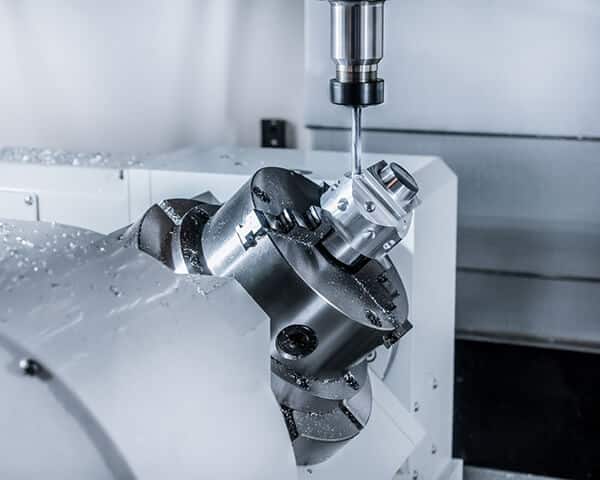
CNC (Computer Numerical Control) machining is an automated manufacturing process that uses computer-controlled machine tools to produce parts and components. However, as its name suggests, manual machining is a hands-on process that depends on skilled experts to operate and control the entire machining system. Below are some main contrasts between them.
- Automation and Control:
CNC machines are automated systems that can precisely execute complex manufacturing operations without direct human intervention. However, manual machining relies on the operator’s skill to control the machine tools, from lathes to mills to grinders. - Precision and Repeatability:
With digitally managed movements and advanced feedback systems, CNC machines can achieve higher levels of precision and repeatability. Conversely, traditional machining can lead to greater variations in part dimensions and surface finishes, as it is heavily dependent on the operator’s skill and experience. - Flexibility and Adaptability:
Computer-driven machine tools offer high flexibility in accommodating diverse part designs or production requirements. In contrast, manual processes offer great adaptability for small-scale, custom, or one-off production. - Efficiency and Speed:
CNC machines can operate continuously and don’t need constant human supervision. Thus, it often yields higher production rates and reduced lead times. However, non-automated machining is generally slower and more labor-intensive.
In summary, CNC machining offers higher precision, repeatability, and the ability to produce complex parts, while manual machining is better suited for simpler parts, prototyping, and small-batch production.
Pros and Cons of CNC and Manual Machining
There are respective benefits and limitations in each machining process. CNC and manual machining both yield several advantages through their specialized machining approaches. However, there are also some inherent limitations to each process.
- Advantages of CNC Machining
To begin with, compared to manual machining, CNC machines offer significantly faster production speeds and higher output capabilities. Moreover, due to their repeatability, this process also ensures consistent and precise results across multiple cycles, thereby eliminating human error. Additionally, it requires less operator expertise, enabling a single worker to manage multiple machines simultaneously, which translates to lower labor costs. Most impressively, the integrated CAD or CAM software empowers manufacturers to produce highly complex designs, including intricate multi-axis contours and curves. - Limitations of manual machining
Look at the other side, though, this process also involves some limitations. The primary drawback is the higher initial cost of purchasing and installing CNC machines. In this context, it can be a barrier for smaller businesses or those with limited budgets. Moreover, developing the necessary CNC programs and setting up the equipment is more complex and time-consuming compared to manual machining. However, it also demands specialized technical expertise. Furthermore, CNC machines require more frequent maintenance, calibration, and troubleshooting to maintain their precision and accuracy over time. - Advantages of Manual Machining
While CNC machines offer superior speed and precision, manual machining has its own advantages. The lower initial investment cost makes non-automated machines more accessible for small businesses with limited budgets. Additionally, manual machines do not require complex programming, making them easier to maintain and repair in case of breakdowns. Correspondingly, manual milling machines provide greater flexibility and customization capabilities, particularly for one-off projects. - Limitations of Manual Machining
The manufacturing process is relatively slow compared to CNC machines, which can produce parts in a fraction of the time. Therefore, this will result in lower final output. Furthermore, the higher dependency on human operators will also lead to reduced precision and a greater risk of errors. More importantly, it can translate to higher labor costs.
The Cost Difference Between CNC and Manual Machining
Here are the major cost differences between CNC machining vs manual machining:
| Cost Factor | CNC Machining | Manual Machining |
| Labor Costs | Lower | Higher |
| Waste Products | lower | Higher |
| Maintenance Issues | Higher | Lower |
| Industry Demand | Higher | Lower |
| Production Speed and Throughput | Higher | Lower |
| Setup and Changeover Costs | Lower | Higher |
| Equipment Cost | Starts at $5000 | Starts at $3000 |
| Lathe Cost | $5,000 | $1,000 |
Applications of CNC and Manual Machining
CNC and manual machining are both utilized in various applications, each offering unique characteristics and capabilities.
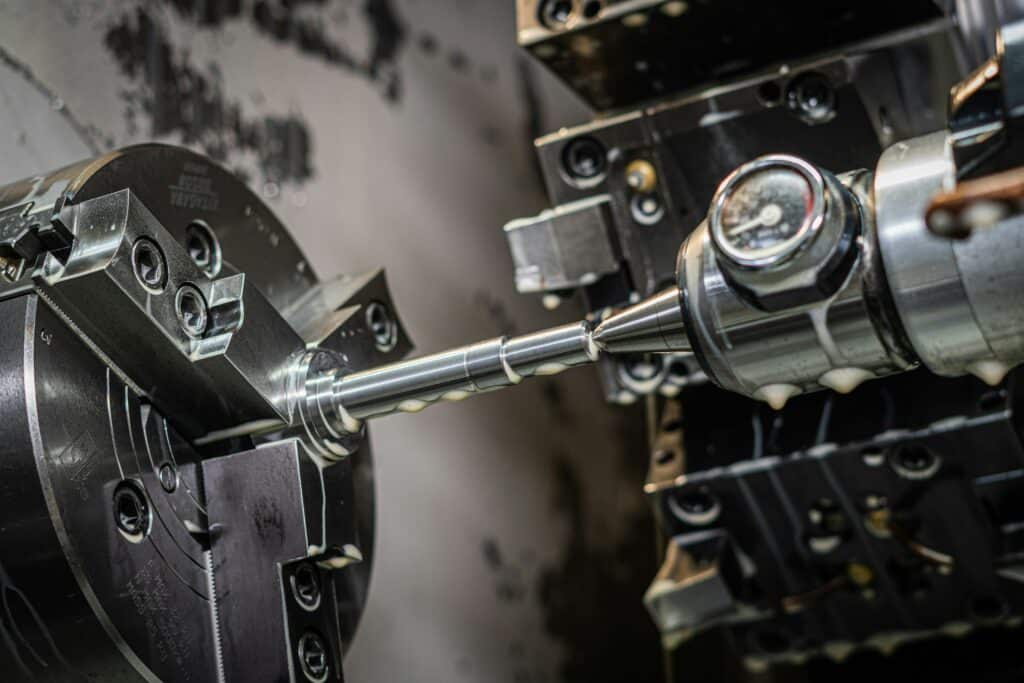
CNC Machines
- Aerospace Industry: Such as engine components, landing gear, and airframe structures.
- Automotive Industry: Like engine parts, transmission components, and chassis elements.
- Medical Equipment: From prosthetic limbs to surgical instruments to implants.
- Electronics and Telecommunications: Like electronic enclosures, housings, and precision components.
- Machinery and Equipment: Such as gears, bearings, and valve components.
Manual Machines
- Prototyping and Small-Scale Production: Fabrication of custom or one-off parts for various industries.
- Maintenance and Repair: Machining of replacement parts for industrial equipment, machinery, and vehicles.
- Tool Making: Custom cutting tools, dies, and molds.
Materials Available for CNC and Manual Machining
Here are the common materials used for CNC machining and manual machining:
Metals:
- Aluminum
- Stainless steel
- Brass
- Copper
Plastics:
- Acrylic (PMMA)
- Polycarbonate (PC)
- Nylon (PA)
- Delrin (POM)
Composites:
- Fiber-reinforced polymers
Well, the key differences between the materials in these two processes lie in: CNC machining generally allows for harder and more complex alloys, as well as advanced composites. However, manual machining is often better suited for softer metals, such as mild steel and aluminum.
Further, the choice of material ultimately depends on the application, performance requirements, production volume, and available machining capabilities.
Other Types of Machining Techniques
In addition to CNC and manual machining, several other types of machining techniques are widely used in various industries. Here’s an overview of some of the other common machining techniques:
- Turning
- Milling
- Drilling
- Grinding
- Broaching
- Laser Machining
- Water Jet Cutting
- Electrical Discharge Machining (EDM)
Conclusion
By fully understanding the characteristics of both machining processes, you will be able to make an informed choice based on the needs of your specific project to achieve the best machining results. No matter which path you choose, it is essential to have the necessary knowledge.
Ancastings provides custom CNC machining services to meet your specific requirements. Leveraging our advanced CNC machines and the expertise of our skilled experts, we can handle a wide range