
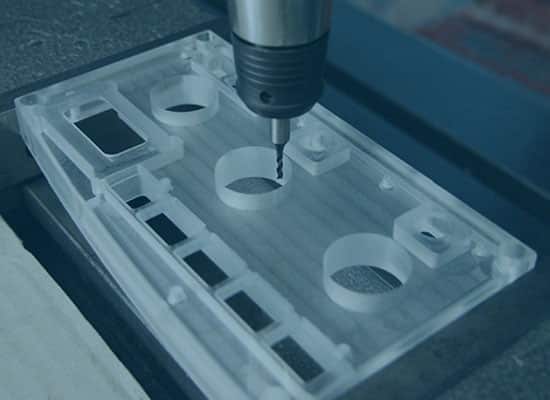
Within modern precision manufacturing, CNC plastic machining is indispensable for producing intricate, high-performance components across sectors including medical, aerospace, and electronics. Offering exceptional accuracy, repeatability, and versatility compared to traditional fabrication, CNC plastic machine is the preferred solution for prototyping and production runs.
Success in manufacturing a single prototype or scaling to low-volume production hinges on understanding the diverse machining techniques and material options, impacting both part quality and cost-efficiency. This article will examine major CNC plastic machining processes, appropriate materials, and guide selection for specific applications.
What Is CNC Plastic Machining?
CNC plastic machining constitutes a subtractive manufacturing methodology employing computer-numerically-controlled (CNC) systems to precisely remove material from solid plastic stock. This process transforms CAD-defined geometries into dimensionally exact components, achieving micron-level tolerances and intricate configurations unattainable through conventional fabrication.
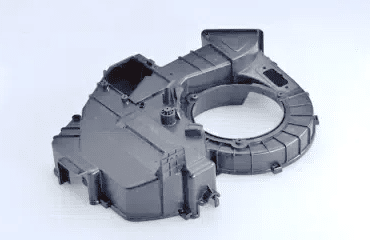
A critical distinction from injection molding lies in its elimination of tooling investments, rendering CNC machining economically and operationally superior for low-volume production, functional prototyping, and highly customized applications. This flexibility accelerates time-to-market while mitigating upfront capital expenditure risks.
Types of CNC Plastic Machining
1. CNC Plastic Milling
A multi-axis material removal process employing rotary cutting tools to achieve complex geometries.
- Technical Scope: 3- to 5-axis capabilities enabling undercuts, contoured surfaces, and high-aspect-ratio cavities
- Industrial Applications: Medical device housings (ISO 13485 compliant), aerospace actuator assemblies, optical alignment components
- Strategic Advantage: Eliminates expensive injection molds for low-volume complex parts; achieves ±0.025mm positional tolerances
- Material Consideration: Optimized for engineering thermoplastics (PEEK, PEI) and composites requiring anisotropic machining
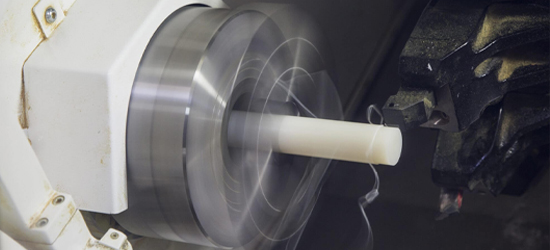
2. CNC Plastic Turning
A precision lathe-based process for axi-symmetric part fabrication.
- Technical Scope: Live-tooling integration for combined turning/milling operations; surface finishes to Ra 0.8μm
- Industrial Applications: Hermetic seals for semiconductor equipment, rotary valve components, FDA-compliant fluidic connectors
- Strategic Advantage: 30-50% cost reduction vs. milling for radial features; single-setup complete machining
- Material Consideration: Superior chip control with acetal (POM-C) and fluoropolymers; avoids deformation in hygroscopic nylons
3. CNC Plastic Routing
*A high-efficiency 2.5D profiling solution for sheet-based fabrication.*
- Technical Scope: High-RPM spindles (24,000+ RPM) with vacuum bedding; nested production optimization
- Industrial Applications: EMI/RF-shielded enclosures (MIL-STD-461), architectural signage (outdoor UV stability), cleanroom partitions
- Strategic Advantage: 60% faster material removal vs. milling in ≤25mm sheet stock; near-net-shape efficiency
- Material Consideration: Specialized tool geometries for acrylic (PMMA) stress-free cutting; dust extraction critical for PVC
4. CNC Plastic Drilling
A dedicated hole-making process requiring thermal management protocols.
Technical Implementation Framework
| Process | Dimensional Accuracy | Max Part Size | Economic Batch Size |
|---|---|---|---|
| Milling | ±0.025 mm | 2000 × 800 × 600 mm | 1 – 500 |
| Turning | ±0.015 mm | Ø500 × 1000 mm | 50 – 5,000 |
| Routing | ±0.1 mm | 3000 × 1500 mm | 10 – 1,000 |
| Drilling | IT7 Grade | Tool-dependent | Any volume |
For mission-critical components, hybrid approaches (e.g., turned substrates with milled fluidic channels) mitigate cumulative tolerances. Post-machining stabilization – including thermal stress relief (70°C below Tg) and humidity conditioning – ensures dimensional stability in regulated environments.
Types of Plastic for CNC Machining
The choice of plastic material can significantly affect machining speed, part durability, and overall performance. Each plastic type has unique mechanical and thermal properties, and not all are equally suited for CNC machining.
POM (Delrin)
Offers excellent wear resistance, low friction, and dimensional stability. Ideal for gears, bushings, and structural components.
PTFE (Teflon)
Highly resistant to chemicals and high temperatures. Common in seals, medical parts, and insulation applications.
Nylon (PA)
Strong, lightweight, and wear-resistant. Used in automotive, machinery, and industrial components.
PEEK
A high-performance thermoplastic with outstanding strength and heat resistance. Suitable for aerospace and medical-grade applications.
Acrylic (PMMA)
Lightweight and transparent, used in displays, light diffusers, and optical parts. Machines well but can crack if improperly handled.
Polycarbonate (PC)
Durable, impact-resistant, and transparent. Ideal for enclosures, panels, and protective equipment.
Not sure which material suits your needs? Ancastings’ material experts offer consultation and sample evaluation services to help select the right plastic based on your technical and performance requirements.
Choosing the Right CNC Plastic Machine
Not all CNC machines are built the same, especially when it comes to handling plastics. Machines need to account for lower melting points, softer material behavior, and heat sensitivity.
3-axis CNC plastic machines are sufficient for flat, simple parts, while 5-axis machines can produce highly complex plastic geometries in a single setup. Multi-axis capability reduces handling, improves precision, and ensures consistency.
Ancastings’ advanced CNC plastic machining centers feature 3-, 4-, and 5-axis systems, enabling them to deliver exceptional quality even for demanding custom parts.
As an established leader in precision manufacturing, Ancastings Precision delivers end-to-end CNC plastic machining solutions engineered for mission-critical industries. Our capabilities include:
- Advanced Material Expertise: Processing >50 engineering-grade thermoplastics, fluoropolymers, and composites (e.g., PEEK, Ultem®, PTFE) with validated material traceability
- Deterministic Precision: Multi-axis machining centers maintaining tolerances to ±0.005 mm for medical implants and aerospace components
- Complex Geometry Mastery: 5-axis simultaneous machining of undercuts, thin walls, and micro-features
- Scalable Production: Seamless transition from prototype validation to certified low-volume manufacturing
Conclusion: Your Trusted CNC Plastic Machining Partner
CNC plastic machining offers unmatched flexibility, precision, and adaptability across a wide range of applications and industries. By choosing the right plastic type and machining method, manufacturers can ensure optimal performance, cost-efficiency, and fast turnaround.
For reliable, high-quality CNC plastic machining, look no further than Ancastings. With deep expertise, advanced equipment, and responsive service, Ancastings is your strategic partner for turning plastic concepts into functional, precision-engineered parts.