
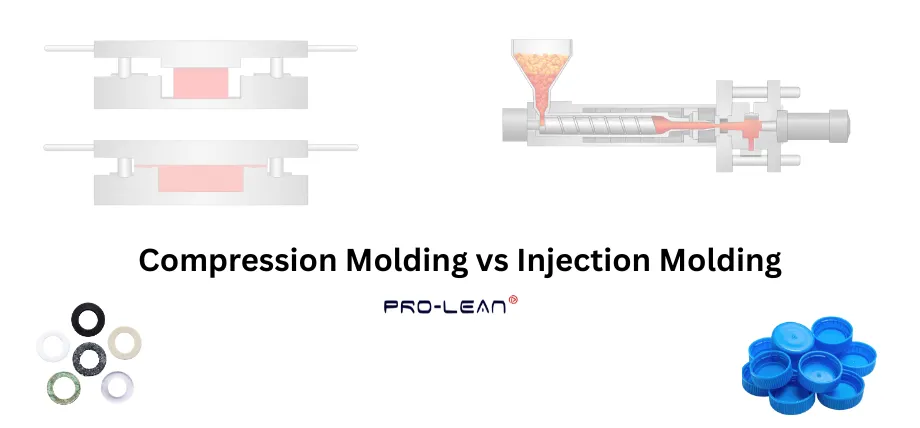
 Molding process comparison diagram
Injection molding and compression molding are two common ways to make plastic and composite parts, but they work differently. Injection molding melts plastic and injects it into a closed mold under pressure. It is usually used for detailed parts and large production runs. Compression molding puts material into a heated mold and presses it into shape. It is more suitable for simple, thicker parts and certain composite materials.
The choice between the two depends on the part design, material, quantity, and cost. Knowing the difference helps in picking the right process for manufacturing.
Compression Molding vs Injection Molding: Key Differences
Production Volume and Scalability
Injection molding is designed for the large-scale production of complex parts. It suits very high production volumes and is among the most affordable injection molding solutions. Injection mold operations can scale up to thousands, or even millions, of parts at once in some cases. In addition, the cost per piece decreases as the volume increases.
Compression molding is a great choice for more moderate production runs. It suits low to medium production of parts and is one of the practical injection molding alternatives. It is mainly used when the material or part design is impractical for injection molding. Both injection and compression molding are designed for larger-scale production runs.
Cycle Times and Manufacturing Speed
Injection molding has a significantly shorter cycle time compared to compression-molded components. This is due to automated feeding systems, rapid cooling, and continuous computer-controlled operation. Its cycle time makes it great for high-volume production.
Compression molding is relatively slower, mainly due to material placement and longer curing times. The whole operation follows a sequential step system, first placing material in the mold, then compressing, and finally heating, which slows down the process.
Part Complexity and Design Freedom
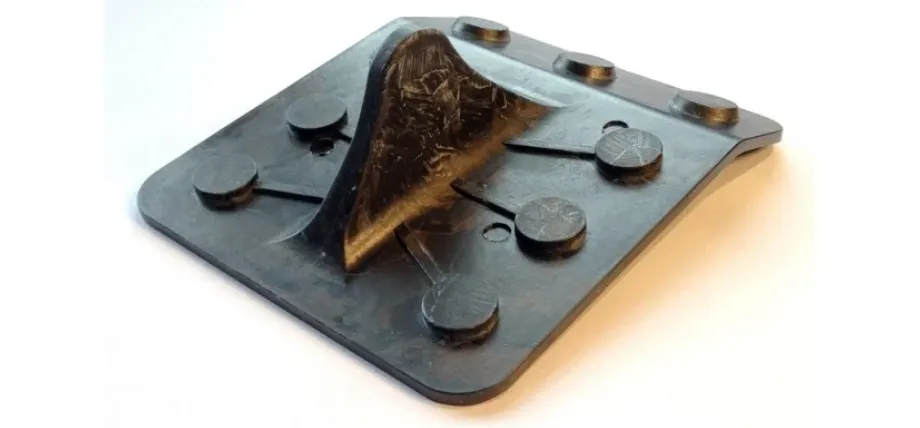
Reinforced compression-molded plate
Compression molding is mainly used for flat parts, thin walls, and relatively smooth contours and simple shapes. The method isn’t designed for part design that has sharp edges, strong corners, and intricate details. Injection molding is a great choice for complex parts that have contours and features. The high heat allows the material to flow into crevices very easily. It is used for precision manufacturing for large production runs.
When it comes to design, it is recommended that for both procedures, you should avoid thick walls, unnecessarily sharp cuts and corners, along with sudden changes in wall thickness. Injection molding supports more detailed designs. Its design rules are both more numerous and complex.
Dimensional Tolerances and Precision
Injection molding is far more precise than compression molding. Injection mold components and parts don’t require post-processing due to the extremely tight tolerance and precision of the dimensions. The molds and dies used for injection molding are made from high-grade steel, which can be machined to extremely tight tolerances that are reflected in the final part’s dimensional accuracy. Compression molding typically produces parts with slightly looser tolerances, though this is acceptable for many structural applications. Compression-molded components include thicker parts and structural supports.
Try Ancastings Now!
Cost Analysis: Tooling vs. Unit Price
Initial Tooling and Lead Cost Comparison
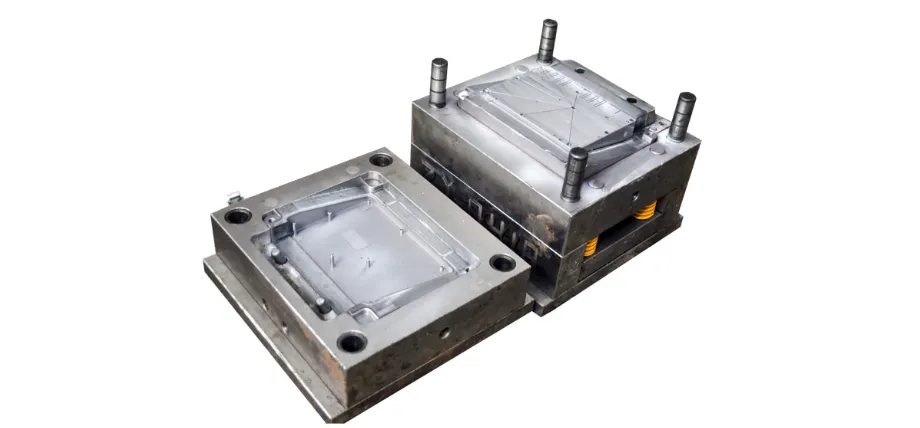 Precision injection molding tool
Injection molding dies are made of high-grade materials and processed through CNC milling and other advanced techniques to ensure dimensional accuracy and tolerance. Injection molds can cost tens or hundreds of thousands, depending on complexity and other requirements. Affordable injection molding becomes viable only at higher volumes because the tooling costs are amortized.
Comparatively, compression molds are simpler and cheaper. Compression molds are less expensive because they’re simpler and require less machining. Plus, they may not require release mechanisms since compression-molded parts can be removed from the tool by hand.
Labor and Material Waste Considerations
Injection molding is an automated process that reduces the cost of manual labor. It creates a waste of runners and startup purging to clean the system. Injection molding defects like shots and flash occur when the parameters are not optimized. Though the waste is recyclable, it still adds up to labour and energy costs.
Compression molding has minimal waste. This is because it uses exact and precisely measured material that is placed directly in the mold. This results in minimal scrap and material loss. Both injection and compression molding are material-efficient procedures. Rubber compression molding is a great example of efficiency by using material that involves using a measured amount of rubber.
Total Cost of Ownership for Low vs. High Volumes
Compression molding has a lower cost of ownership for small production and prototyping because of simple tooling, minimal setup requirements, and small capital investment. For large volume production, an injection mold is ideal because it becomes more economical despite the higher initial tooling costs. This is because it has lower labor costs and faster cycle times. Additionally, the cost per part lowers as the volume increases.
Material Selection and Compatibility
Thermosets vs. Thermoplastics
Injection molding primarily uses thermoplastics because they are easy to mold and manipulate, although certain thermosetting plastics are also used in injection molding. They soften when heated and harden when cooled. Thermoplastics are recyclable and can be reheated and reshaped multiple times. These characteristics are well-suited to automation and high-speed production systems.
Thermosets are plastic polymers that undergo an irreversible chemical reaction during curing. Their molecular structure is permanent, which means once they cure, they can be melted and remelted. They have excellent thermal protection and rigidity.
Material Performance and Part Strength
Injection-molded thermoplastics offer excellent dimensional accuracy, surface finish, and impact resistance. Thermal plastics are better suited to lightweight, low-load-bearing applications because they have lower mechanical strength at higher temperatures. This is one of the disadvantages of injection molding
Compression-molded thermosets are more rigid and robust, with better wear resistance. Glass or carbon fibre reinforced thermosets are extremely durable and have great tensile strength and thermal stability. These properties make it the best for car body panels, insulation systems, and heavy-duty industrial systems.
Common Materials Used in Each Process
Materials used in injection molding include polymers that are recyclable and have great flow. Such as:
- ABS (Acrylonitrile Butadiene Styrene)
- Polypropylene (PP)
- Polyethylene (PE)
- Nylon (PA)
- Polycarbonate (PC)
- PVC
Compression molding mainly uses plastics that are stronger and more durable since their applications include high-load-bearing and high-temperature environments. Materis used to make compression-molded components include:
- Epoxy resins
- Phenolic resins
- Polyester resins
- Silicone rubber
- Sheet Molding Compound (SMC)
- Bulk Molding Compound (BMC)
Try Ancastings Now!
Advantages and Limitations of Each Method
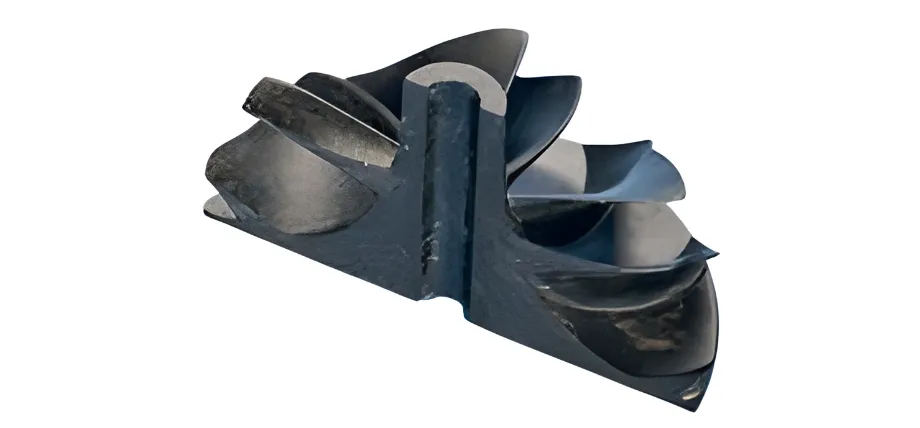
Compression molded impeller section
Pros and Cons of Injection Molding
Advantage
- Fast-cycle times: Injection molding supports are highly efficient and fast. Tooling is the most time-consuming part of the process. Once done, it is relatively easy and highly repeatable with short cycle times.
- Dimensional accuracy: The process achieves excellent dimensional accuracy through controlled injection, enabling tight tolerances in a single molded operation.
- Complex design capability: intricate shapes, thin walls, and counters are all features that can be easily produced using injection molding.
- Automation: The injection molding process is mainly automated now, and advanced systems are integrated with the process to ensure smooth automation, which minimizes labor and ensures high efficiency.
- Surface finish: Most injection mold parts have minimal need for post-processing due to excellent surface finishes right from the molds.
Disadvantages
- Expensive tooling: the process of making an injection mold is highly complex and requires high expertise. A few millimeters off makes the mold unusable for injection molding.
- Costly design modifications: any major design change requires the whole mold to be redone, which is expensive.
- Large parts: Injection molding is suitable for small and medium-sized parts. Very thick and fiber-heavy components are harder to produce.
Pros and Cons of Compression Molding
Advantages
- Low tooling cost: molds made for compression molding are less expensive, which makes compression molding attractive for small productions. This also makes compression molding products cheaper.
- Material performances: compression molding products are more durable and wear-resistant because the materials used are thermosetting and reinforced composites.
- Great for structural application: the process is great for making larger load-bearing structural parts for automotive and industrial uses.
Limitation
- Long cycle time: compression molding products lengthen the cycle times since the part has to cure in the mold and cool.
- Tolerances: Making thin walls and parts with complex features is difficult and is less precise than injection molding
- Post processing: compression-molded components require trimming and flash removal to ensure neat and precise parts.
Surface Finish and Post-Processing Requirements
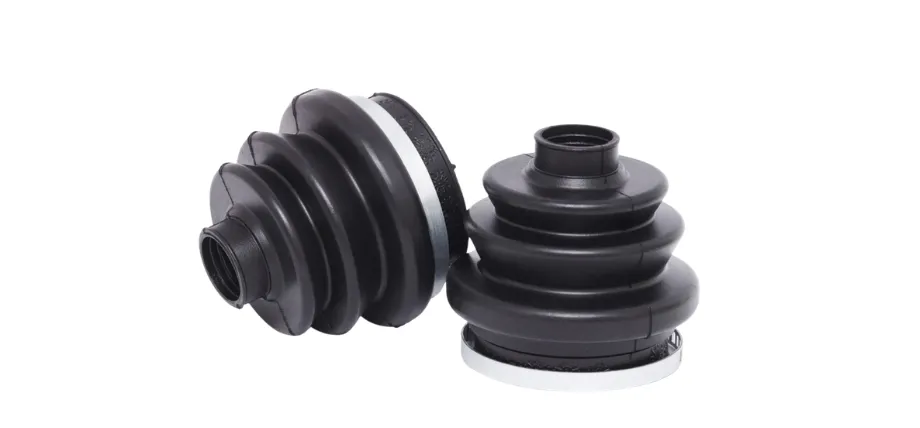
Flexible molded axle bellows
Injection molding produces great surface finishes with various options that include textures, polished, and matte finishes without excessive post-processing. The post-processing required for both processes is minimal and mainly includes removing minimal trim and run lines.
Post-processing for compression molding includes removing flash from edges and sanding and polishing to achieve the right textures. Overlaal injection mold had minimal post-processing and prioritizes aesthetics, while compression molding focuses on structural applications.
Choosing the Right Process for Your Application
If you’re stuck between choosing injection molding or compression molding, you can look at these quick reference points.
- Injection molding is useful and cost-effective only when the production numbers are high. A typical injection molding run is anywhere between thousands to millions of parts. The lower costs are only achieved with scaling and the benefits of high automation that come with injection molding.
- Injection molding is ideal for complex geometries, intricate details, and tight tolerances that might increase machining costs. Injection molding also provides clean surfaces, eliminating any post-processing.
- Injection molding is suitable for thermoplastics mainly. You can also use some thermosets, which offer versatility.
- Compression molding is preferred for low- to medium-volume production runs. Think about hundreds or thousands of units in production. They are ideal for larger parts, thicker sections, and simpler shapes.
- Another benefit of using compression molding is the option to use fiber-reinforced materials because the uniform pressure ensures dense results.
- Use compression molding only when your designs are not very complicated and when you need straightforward components.
Injection Molding Services
Ancastings provides high-quality, low and high-volume injection molding service for custom parts. We provide sub-mm precision, 0.02 mm, and optimized cycle times for your parts. Our hot runner systems ensure fast cycle times and a broader material selection. Ancastings ensures rapid prototyping-to-production support for your next project.
Request a free quote today!
Frequently Asked Questions
Which Process Is Better for Large-Scale Parts?
Compression molding is better for large parts and thicker sections.
Can I Switch From Compression to Injection Molding Later?
You can switch from compression to injection molding, but it will incur more cost because of tooling, material change, and process validation.