
Drilling and tapping are two different methods to facilitate fasteners like screws or bolts. Though drilling is an independent process, tapping needs pre-drilled holes to insert taps. However, as both processes deal with similar applications, it can lead to confusion. So, this guide will highlight the differences between drilling and tapping to clear your misconceptions.
What Is Drilling?
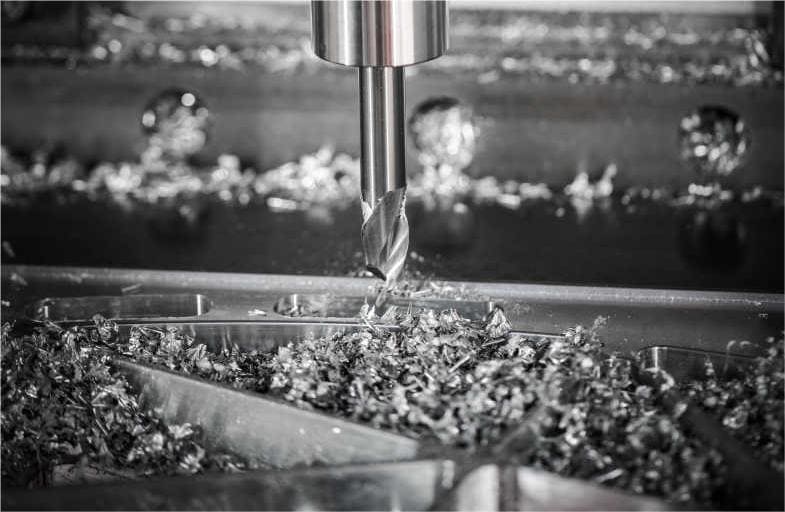
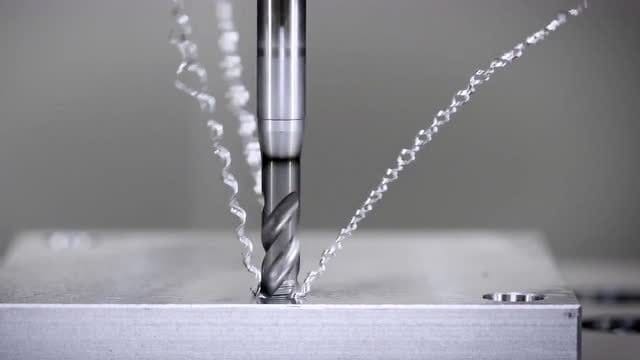
In drilling, holes are created in solid workpieces by inserting drill bits. These drill bits are rotating cutting tools that are attached to the head of the drilling machines.
As you set the machine on the surface and power on it, the drill bit rotates, and its sharp head creates holes in the surface. The drilled holes are used for screwing, bolting, wiring, plumbing, and many more.
What Is Tapping?
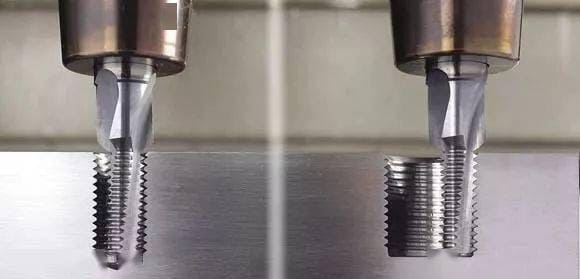
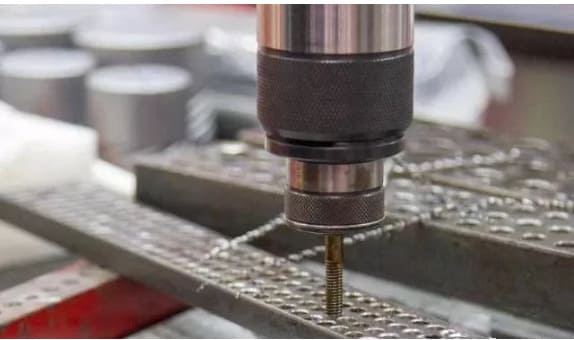
In the tapping process, small cutting tools known as ‘tap’ are inserted into a pre-drilled hole to create internal threads. This forms a matching pattern corresponding to the fastener, like a screw or bolt. Thus, the fasteners remain secure and strongly attached. However, tapping leaves a small gap on the underside of the tapped hole.
Drilling vs. Tapping: Differences
Function & Purpose
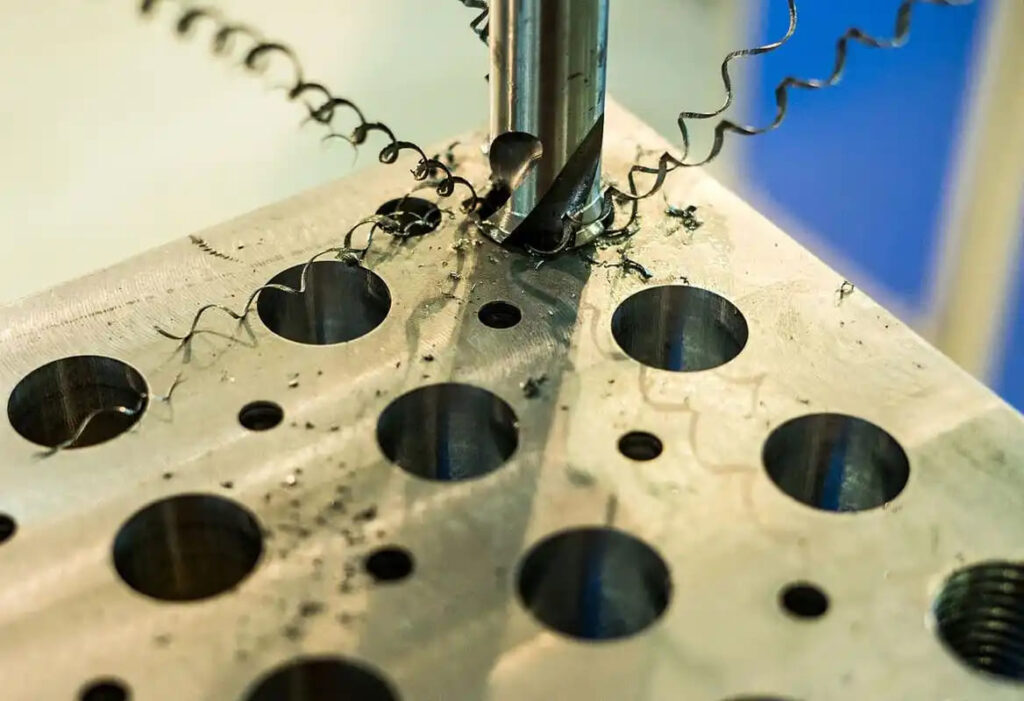
Can you insert a screw into the wall just by pressing it? Definitely not; the strong wall won’t create holes just by a press of a screw. So, drilling a hole is essential here to ensure the screw/ bolt inserts into the wall/surface smoothly. Its function is to create a round hole in the workpiece. Thus, it forms a foundation for fastening, plumbing, wiring, or machining processes like reaming and tapping.
In contrast, the purpose of tapping is to ensure secure fittings of the screws or bolts into the pre-drilled holes. It cuts internal threads into a pre-drilled hole needed for fastening.
Speed
The speed of drilling depends on the material of the surface where you make the hole. Here, drilling speed refers to the speed of the spindle measured in RPM. You need to use high speed for drilling softer materials like wood or plastic. Again, for harder materials like steel, the speed must be kept low to avoid tool wear and overheating.
Besides, the diameter of the hole is also a crucial factor when it comes to drilling speed. Larger holes require slow speed for greater control. Below, we have suggested the drilling speed for different types of materials:
| Material | Recommended Speed (SFM) For Drilling |
|---|---|
| Aluminum & Its Alloy | 200-300 |
| Brass & Bronze (Ordinary) | 150-300 |
| Bronze (High Tensile) | 70-150 |
| Die Casting (Zinc Base) | 300-400 |
| Iron-Cast (Soft) | 75-125 |
| Iron-Cast (Medium Hard) | 50-100 |
| Iron (Hard Chilled) | 10-20 |
| Iron (Malleable) | 80-90 |
| Magnesium and its alloy | 250-400 |
| Monel Metal or High-Nickel Steel, Stainless Steel |
30-50 |
| Plastic or Similar material | 100-300 |
For the best results, the tapping speed should range between 10-30% of the corresponding drilling speed. You should consider the thread size here. Keep the speed slow for more stability if you are working on larger threads. However, smaller threads usually tolerate slightly higher speeds.
Based on different materials, the recommended tapping speeds are as follows:
| Material | Speed (SFM) For Regular Tap | Speed (SFM) For Emuge Full-Speed Tap |
|---|---|---|
| Gray Cast Iron | 65 | 250 |
| Cold Extrusion Steel | 65 | 330 |
| Free Cutting steel | 50 | 265 |
| Heat-Treatable Steel | 15 | 130 |
| Stainless Steel | 15 | 75 |
| Cast Aluminum Alloy | 130 | 260 |
| Copper-zinc (short Chipping) | 100 | 330 |
| Copper-Zinc (Long Chipping) | 50 | 330 |
Pre-Drilling Requirements
Drilling is a standalone process. However, tapping requires pre-drilling. That is, you can say before you go through tapping, you need to implement drilling. Then, insert the tap in the top pre-drilled holes.
Tools Used
A drill press or hand drill is used in drilling that holds the drill bit to create holes. These drill bits can be of different types like- twist drills, spade bits, and step drills. Besides, they are made of varying materials: high-speed steel (HSS), cobalt, carbide, etc. In some cases, reamer is also used in drilling to enlarge or smoothen the edges of the holes.
In tapping, a tap holder or tapping machine is used to hold the tap. Different types of tap are used based on application. Common tap types include:
| Type Of Tap | Used For |
|---|---|
| Taper Tap | Starting threads and reducing cutting forces |
| Plug Tap | Cut threads deeper into the hole |
| Bottoming Tap | Cut threads to the bottom of the hole |
Moreover, tapping often requires a cutting fluid or lubricant. This is used to reduce friction and heat to ensure smooth tread cutting. Again, for manual tapping, you will need a tap wrench or handle for rotating the tap. Such tapping is ideal for smaller-scale and DIY projects.
Precision and Complexity
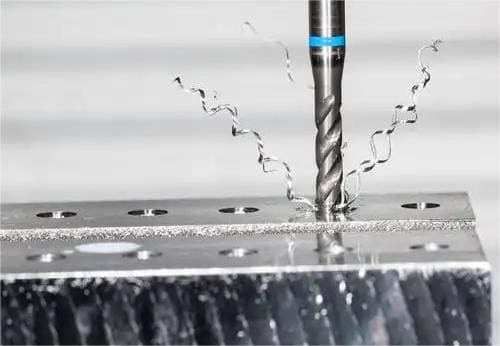
Drilling is a comparatively less complex process than tapping. Anyone can easily conduct drilling using a drilling machine. In contrast, tapping needs more precision as it has to cut threads into pre-drilled holes. The screws or bolts can come out anytime if the tapping is not done appropriately.
Process: How To Do
How To Do Drilling?
Step 1: Select a drill bit considering its length, material, and type that fits your application best.
Step 2: Clean the area where you want to drill. And mark the location with a pencil.
Step 3: Attach the drill bit with the drilling machine and adjust the speed.
Step 4: Hold the drill machine perpendicularly if you want straight holes. And if you need angled holes tilt the machine while drilling.Step 5: Start drilling at low speed and gradually accelerate the speed until you get a hole of the desired depth and diameter.
How to Use Do Tapping?
Step 1: Choose a tap that fits best for your application.
Step 2: Drill a pit hole on the surface that is of appropriate size to fit the tap.
Step 3: Apply lubricant oil to the hole and the tap.
Step 4: Insert the tap inside the hole by rotating it with a tapping machine or manually clockwise.Step 5: After completing the threading, reverse and remove the tap.
Application
Drilling is used in different industries for assembling parts, wiring, installations, and more. For instance, in automotive, different parts are joined together by drilling holes and screwing them up. Common applications include the following:
- Furniture manufacturing
- Shipbuilding
- Automotive body parts joining
- HVAC ductwork assembly
- Installing siding and metal roofing
Tapping is applied in an application that has a pre-drilled hole. It is done to create threaded holes in different applications for securing screws. For instance, for joining automotive parts, threaded holes in engine parts, chassis, and body panels are created by tapping. Other applications include the following:
- Plastic assemblies
- Construction projects
- Automotive bodyworks
- Tool and die-making
- DIY home improvements
Drilling & Tapping: Similarities
- You can use drilling and tapping for joining metal, wood, plastic, and parts made of other material
- Both the drilling and tapping processes can be automated by integrating with CNC machines
- You can join metals of different thickness using drilling and tapping screws
- Drilling and tapping processes are widely used in different industrial applications like- automotive, aerospace, manufacturing, and more.
Limitations Of Drilling And Tapping
Limitations Of Drilling
- Drilling deals with high-speed machinery and pointed drill bits that can cause safety hazards if not handled properly.
- Drilling on very hard metal can crack it
- Smaller drill bits are prone to breaking if you fail to maintain appropriate speed.
- You will need to go through additional finishing steps if the drilling holes are rough
Limitations Of Tapping
- Tapping is very challenging for blind holes
- The joints don’t remain robust for a long period when tapping thread is used in softer materials like aluminum
Wrapping Up
Whether you are running any construction or manufacturing process, drilling and tapping are two essential processes you must deal with. Though both can run through manual operation, integrating them with CNC machines automates the process and boosts productivity.
However, if you want to manufacture drilling and tapping screws or bolts, RICHCON provides you with professional CNC machining services. We can process any type of parts made of steel, aluminium, alloy steel, titanium and other materials. Please contact us at any time to obtain professional solutions.
FAQs
Can you drill and tap stainless steel?
Yes, you can drill and tap stainless steel, but you must use high-speed steel (HSS) or cobalt drill bits for drilling.
Is tapping done before drilling?
No, drilling is done before tapping. To insert taps, you need pre-drilled holes.
What is the minimum drill depth for tapping?
The drilling depth for tapping should be at least one full thread or one pitch longer than the chamfer of the tap.
Which process is faster: drilling or tapping?
If you are dealing with hard-to-reach areas, drilling is usually a faster process than tapping. However, it depends on the application and material of the surface.
Can I tap without drilling first?
No, you need pre-drilled holes for inserting the tap. So, you can’t tap without drilling.
Can drilling and tapping be done in a single step?
It is possible to drill and tap at a single step using a drill tap bit or a drill/tap kit.