

Gas welding stands as one of the oldest and most versatile techniques. It has played a significant role in numerous industries, including construction, automotive, manufacturing, and more. Gas welding harnesses the power of heat, combustion, and skilled craftsmanship to create strong and reliable welds.
This article will delve into the world of gas welding, exploring its process, techniques, applications, and benefits.
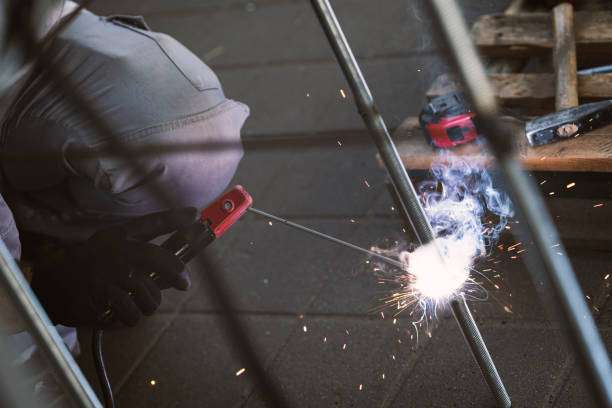
Man with a tool. Close-up of a welding machine at work.
Gas Welding
Gas welding is a widely used welding technique that utilizes a flame generated by the combustion of a fuel gas, such as acetylene or propane, mixed with oxygen. This section provides a detailed overview of the gas welding process and the essential equipment involved.
1. The Gas Welding Process: A Fusion of Heat and Filler Material
Gas welding involves the fusion of two metal pieces by applying heat and adding a filler material. The process can be summarized in the following steps:
- Preparation: The metal surfaces to be joined are cleaned and prepared to ensure proper adhesion and weld quality.
- Flame Generation: A gas and oxygen mixture is ignited to create a flame. The fuel gas, such as acetylene or propane, is regulated to achieve the desired heat intensity.
- Heat Application: The flame is directed to the joint area, applying heat to melt the base metal.
- Filler Material Addition: As the base metal reaches the melting point, a filler rod is introduced to the joint to create the weld bead.
- Welding Motion: The welder manipulates the torch and filler rod to control the size and shape of the weld pool, ensuring proper fusion between the base metal and filler material.
- Solidification: The molten metal cools and solidifies, forming a strong bond between the two metal pieces.
2. Gas Welding Equipment and Tools
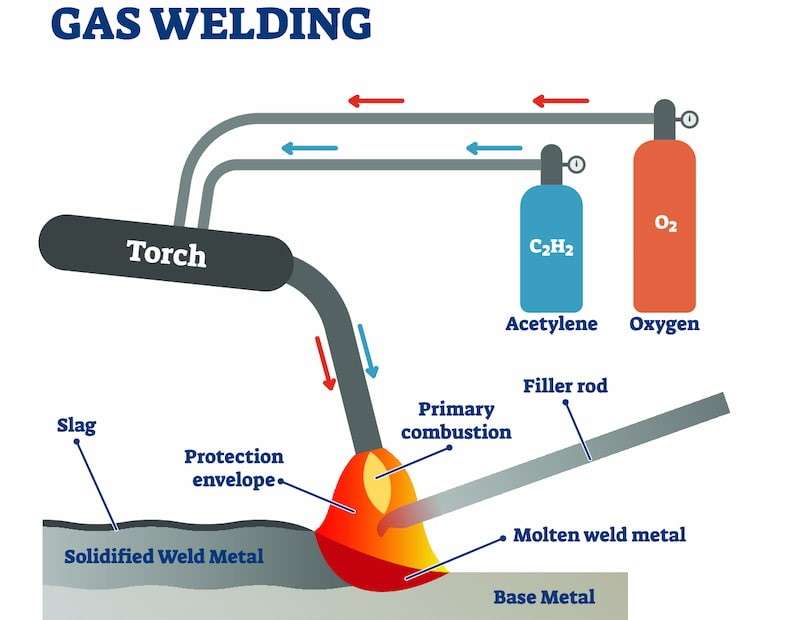
Different parts of gas-welding equipment
Gas welding requires specific equipment to generate and control the flame, as well as to ensure safety during the welding process. Here are the key components of gas welding equipment:
| Equipment | Description |
|---|---|
| Gas Welding Torch | The primary tool for gas welding; combines fuel gas and oxygen to produce a controlled flame |
| Fuel Gas Cylinder | Stores the fuel gas, such as acetylene or propane, in a pressurized cylinder |
| Oxygen Cylinder | Stores the oxygen gas in a separate cylinder, providing combustion support and sufficient oxygen supply |
| Regulators | Controls the flow rates and pressures of the fuel gas and oxygen |
| Welding Hoses | High-pressure hoses that connect the cylinders to the welding torch |
| Filler Rod | Metal alloy rod used to add material to the joint during welding |
| Protective Gear | Includes welding helmets, goggles, gloves, and flame-resistant clothing |
Gas welding equipment may vary depending on the specific application and the type of fuel gas used. It is essential to follow safety guidelines and manufacturer instructions when operating gas welding equipment to prevent accidents and ensure efficient welding processes.
Gas Welding Techniques
Gas welding encompasses various techniques that enable welders to achieve precise and high-quality welds. Let’s discuss some common gas welding techniques in detail.
1. Oxy-Acetylene Welding: The Versatile Method
Oxy-acetylene welding, also known as OAW, is one of the most widely used gas welding techniques. It involves the combustion of acetylene gas mixed with oxygen to generate a hot flame for welding. Here are key aspects of oxy-acetylene welding:
- Flame Characteristics: The oxy-acetylene flame has three distinct zones: the inner cone, the outer cone, and the neutral flame. The neutral flame, with a balanced ratio of oxygen and acetylene, provides the ideal conditions for welding.
- Versatility: Oxy-acetylene welding can be applied to a wide range of metals, including steel, cast iron, copper, and aluminum. It is versatile and well-suited for various welding applications.
- Manual Control: The welder has precise control over the flame and the addition of filler material, allowing for greater control over the welding process and weld quality.
- Portability: Oxy-acetylene welding equipment is relatively portable, making it suitable for on-site repairs and field welding applications.
2. Oxy-Propane Welding: A Viable Alternative
Oxy-propane welding, also referred to as oxy-fuel welding (OFW), is an alternative to oxy-acetylene welding. It employs propane gas instead of acetylene, providing similar results in terms of flame temperature and control. Key aspects of oxy-propane welding include:
- Flame Characteristics: The oxy-propane flame has similar characteristics to the oxy-acetylene flame, with an inner cone, outer cone, and neutral flame. The neutral flame is ideal for welding operations.
- Cost-Effectiveness: Propane gas is more readily available and often less expensive than acetylene, making oxy-propane welding a cost-effective option.
- Safety Considerations: Propane is considered safer than acetylene, as it is less prone to unstable combustion and flashback incidents. However, proper safety precautions must still be followed during welding operations.
3. Flame Adjustment Techniques: Controlling the Heat
Precise control of the flame is crucial in gas welding to achieve optimal heat distribution and minimize potential defects. Here are some flame adjustment techniques commonly employed in gas welding:
- Neutral Flame Adjustment: Adjust the oxygen-to-fuel gas ratio to achieve a neutral flame with a distinct inner cone, outer cone, and a light-blue feather at the tip.
- Carburizing Flame: Increasing the fuel gas flow results in a flame with a reducing atmosphere, allowing for the carburization of the weld metal.
- Oxidizing Flame: Increasing the oxygen flow creates an oxidizing flame, which promotes oxidation and removal of impurities.
Let’s Start A New Project Today
Applications of Gas Welding: From Artistic Creations to Industrial Fabrications
Gas welding is a versatile process that finds applications in various industries, from artistic creations to industrial fabrications. This section explores the diverse range of applications where gas welding excels.
1. Art and Sculpture
Gas welding offers artists and sculptors the freedom to create intricate and unique designs using metal as their medium. The precision and control provided by gas welding techniques allow for the creation of detailed sculptures, decorative pieces, and custom metal artwork. Some common applications include:
- Metal Sculptures: Gas welding enables artists to join metal components seamlessly, allowing for the creation of sculptures with complex shapes and designs.
- Metal Furniture: Gas welding techniques are often used to fabricate custom metal furniture, including tables, chairs, and decorative metalwork.
- Architectural Metalwork: Gas welding is employed in the creation of ornamental metalwork for architectural applications, such as railings, gates, and decorative elements.
2. Automotive and Aerospace Industries
Gas welding plays a significant role in the automotive and aerospace industries, where precision and strength are paramount. Some key applications include:
- Exhaust Systems: Gas welding is commonly used in the fabrication of exhaust systems, ensuring leak-free joints and the ability to withstand high temperatures and vibrations.
- Fuel Tanks: Gas welding techniques are employed in the manufacturing of fuel tanks for automobiles and aircraft, ensuring secure and reliable connections.
- Aircraft Structures: Gas welding is utilized in the construction and repair of aircraft structures, including fuselage sections and wing components, ensuring strong and lightweight joints.
3. Pipe Welding and Fabrication
Gas welding is widely employed in the welding and fabrication of pipes in various industries. It offers advantages such as precise control and versatility in joining different types of pipes. Common applications include:
- Plumbing and HVAC: Gas welding is used for joining copper pipes in plumbing and HVAC systems, ensuring durable and leak-free connections.
- Oil and Gas Pipelines: Gas welding techniques are employed in the construction and repair of oil and gas pipelines, ensuring reliable and strong welds that can withstand harsh operating conditions.
- Process Piping: Gas welding is utilized in industrial settings for welding process piping systems, including those used in chemical plants, refineries, and power generation facilities.
4. Metal Fabrication and Repair
Gas welding is widely utilized in metal fabrication and repair processes, providing flexibility and efficiency in joining metal components. Key applications include:
- Sheet Metal Fabrication: Gas welding is employed in the fabrication of sheet metal components, such as cabinets, enclosures, and structural parts.
- Equipment Repair: Gas welding is utilized in the repair of machinery, equipment, and metal structures, allowing for the restoration of their functionality and integrity.
- Welding of Dissimilar Metals: Gas welding techniques are used to join dissimilar metals, enabling the fabrication of hybrid structures and the repair of components with different metal compositions.
Related: Sheet Metal Fabrication for Custom Products: How it Can Bring Your Designs to Life
5. Jewelry Making
Gas welding techniques find application in jewelry making, allowing for the precise joining of precious metals. Some common applications include:
- Ring Sizing and Repair: Gas welding techniques are employed in resizing rings and repairing damaged jewelry, ensuring seamless and durable connections.
- Custom Jewelry Design: Gas welding enables jewelry designers to create custom pieces, combining different metals and intricate designs with precision.
Tips for Successful Gas Welding: Enhancing Your Skills
Gas welding requires practice, skill, and attention to detail to achieve successful welds. Here are some valuable tips to help you enhance your gas welding skills and ensure successful welding results:
| Safety Precautions | Proper Equipment Setup | Mastering Technique and Control | Monitoring and Inspection | Continuous Learning and Practice |
|---|---|---|---|---|
| Tips | Wear Protective Gear | Choose the Right Gas and Filler Metal | Maintain Consistent Arc Length | Monitor Weld Pool |
| Ensure Adequate Ventilation | Prepare the Workpiece | Control Welding Speed | Inspect Weld Quality | |
| Handle Gas Cylinders Safely | Optimize Gas Flow and Pressure | Practice Torch Movement | Clean Weld Surfaces | |
| Notes | Use appropriate personal protective equipment (PPE) | Select the appropriate shielding gas and filler metal | Achieve uniform penetration and avoid overheating the workpiece | Ensure proper fusion and penetration |
| Weld in a well-ventilated area or use local exhaust ventilation | Clean the workpiece to remove contaminants | Master proper torch movement techniques | Inspect visually and perform non-destructive testing | |
| Follow proper procedures for handling and storing gas cylinders | Set gas flow and pressure according to the manufacturer’s recommendations | Develop muscle memory and achieve desired weld bead characteristics | Clean weld surfaces to remove slag or impurities |
Conclusion: Embrace the Art & Science of Gas Welding
In conclusion, gas welding stands as a versatile, accessible, and time-tested welding technique that offers numerous advantages in various applications. Mastering the art of gas welding requires a combination of technical knowledge, skill, and practice. By understanding the process, techniques, and applications of gas welding, welders can unlock endless possibilities in creating strong and reliable welds. Whether you are working on automotive repairs, artistic creations, or industrial fabrications, gas welding provides the means to bring your visions to life.
At Ancastings, we are passionate about providing exceptional welding services, including gas welding, to meet the diverse needs of our clients. With our expertise and commitment to quality, we ensure precise and reliable welds for various projects. Contact Ancastings today to experience the excellence of our welding services or get sheet metal fabrication quotes.
FAQ’s
What types of metals can be welded using gas welding?
Gas welding can be used to weld a wide range of metals, including carbon steel, stainless steel, cast iron, copper, and aluminum. The specific welding technique, gas selection, and filler metal may vary depending on the type of metal being welded.
Is gas welding suitable for both thick and thin materials?
Gas welding is suitable for both thick and thin materials. However, it may require different techniques and settings to achieve optimal results. Thicker materials may require multiple passes and proper joint preparation to ensure a strong and sound weld.
What safety measures should I follow when performing gas welding?
When performing gas welding, it is important to follow proper safety measures. This includes wearing appropriate personal protective equipment (PPE), ensuring proper ventilation, handling gas cylinders safely, and following safe practices to prevent accidents or exposure to hazardous fumes.