
Medical device OEMs often treat sterilization as a final, separate step after component design and CNC machining are complete. This common oversight can extend sterilization cycle durations, increase validation costs, and even force redesigns late in product development. The geometry, surface finish, material selection, and internal features defined during CNC design directly control how efficiently steam, ethylene oxide (EtO), hydrogen peroxide plasma, or gamma radiation penetrates a part. Small changes in machined features can shorten cycle times, reduce per-unit sterilization expenses, and simplify regulatory validation for European, North American, Japanese and Australian medical markets.
Sterilization processes are validated to achieve a sterility assurance level (SAL) of 10⁻⁶, meaning the probability of a surviving microorganism is no more than one in one million. The hardest-to-reach feature on a machined medical component sets the entire cycle’s duration, as outlined in ISO 11135 for EtO and ISO 17665 for steam autoclaving. A PMC study examining surgical instrument reprocessing found that complex instrument trays with enclosed cavities required longer sterilization cycles and consumed more water and electricity than simplified designs, driving measurable operational cost increases in hospital sterile processing departments (CSSDs). For contract manufacturers and medical OEMs, this principle applies equally: the worst-case geometric feature dictates cycle parameters, validation scope, and ongoing sterilization expenses.
How CNC Geometry Decides Sterilization Cycle Length
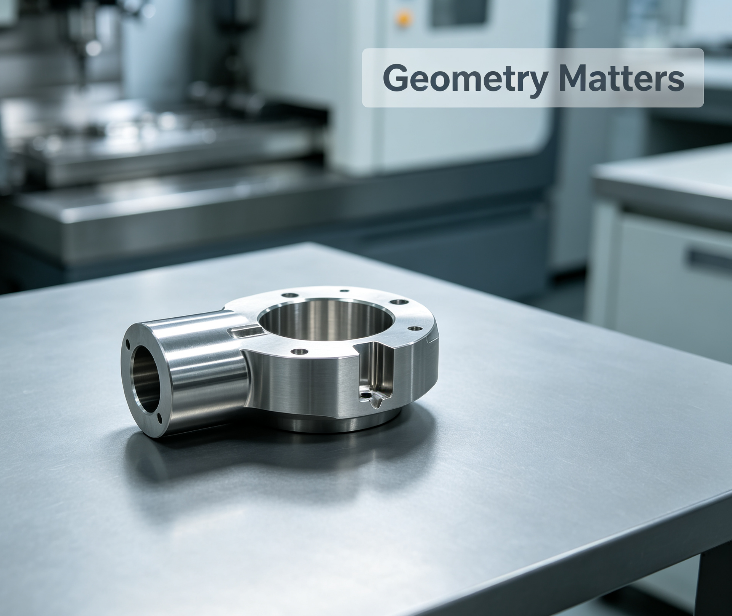
Blind holes, deep narrow lumens, undercuts, trapped pockets, and overlapping tight gaps are the most common design features that slow sterilant penetration. Steam autoclave cycles rely on vacuum pulses to remove air before saturated steam can reach every surface. If a CNC-machined part includes closed blind cavities without drain paths, air becomes trapped inside these pockets. Additional vacuum purge cycles become mandatory, extending total cycle time significantly. Research published in PMC on steam sterilizer validation demonstrated that parts with trapped sharps or enclosed cavities required a total cycle time of 2 hours and 20 minutes, compared to just 95 minutes for general waste loads with open geometries, because trapped air prevented uniform steam penetration.
This is where design for manufacturability (DFM) during CNC programming delivers tangible sterilization benefits. Experienced medical CNC engineers will add small vent or drain holes, replace fully blind cavities with through holes, and add generous internal radii to eliminate dead zones. These simple machining adjustments do not compromise component function but remove the “worst-case” sterilization challenge. Without these modifications, the validation lab must run longer fractional cycle studies to prove microbial kill inside trapped pockets, which increases validation labor and testing fees.
Part stacking and nesting for sterilization batches also depend on CNC geometry. Bulky, irregular machined profiles reduce the number of components that fit into each sterilizer chamber load. Fewer units per batch increases per-unit sterilization cost. A 2023 PMC study on sustainable manufacturing for CNC and additive manufacturing highlighted geometric complexity as a core variable that impacts batch capacity, cycle time and unit production cost simultaneously. When engineers optimize CNC part profiles to stack neatly without blocking sterilant flow, OEMs can pack more components into each chamber, cutting per-unit sterilization overhead without changing the sterilization method itself.
Material Selection, Residual Stress and Post-Cycle Dimensional Stability
Material choice, locked in before CNC machining, creates a second major link between part design and sterilization performance. Medical-grade 316L stainless steel, Ti-6Al-4V titanium, and PEEK are widely specified for reusable surgical instruments and implant components because they withstand repeated autoclave cycles at 134°C without permanent deformation. Polymer materials such as POM are frequently used for single-use assemblies, but they are heat-sensitive and require EtO or low-temperature plasma sterilization rather than steam.
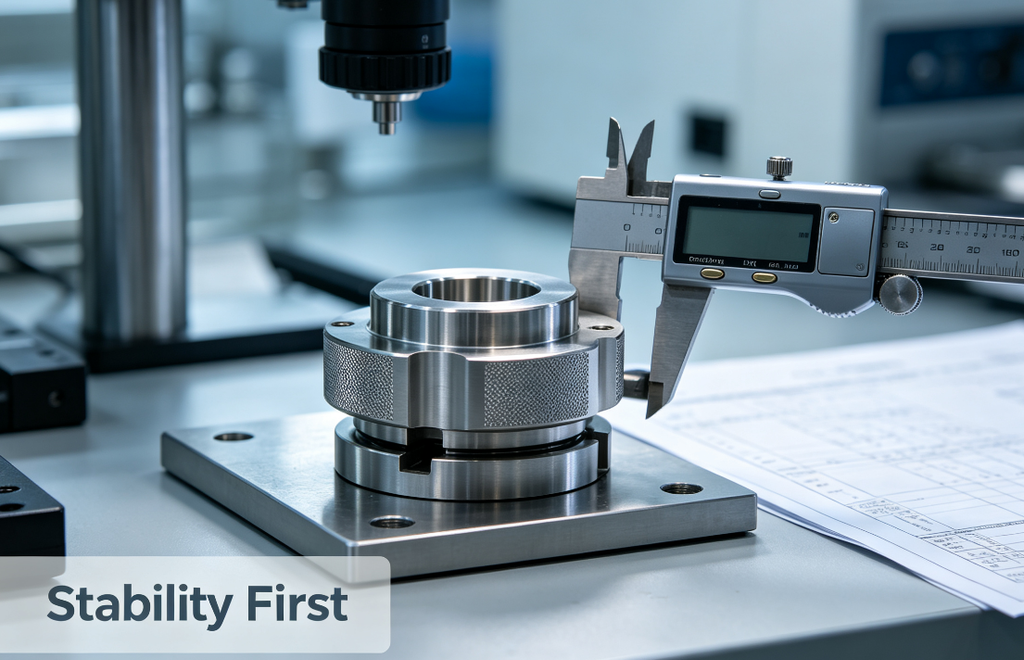
A critical and frequently overlooked factor is residual stress introduced during CNC milling and turning. Heavy material removal rates without stress-relief operations can leave internal stress inside machined parts. When exposed to high heat during autoclave cycles, residual stress releases and causes dimensional drift. A PMC study on heat sterilization of polymer surgical guides demonstrated that non-annealed polymer components experienced measurable warpage after standard autoclave cycles, while properly stress-relieved, machined counterparts maintained their geometry through repeated exposure. For metal parts, passivation after CNC machining removes free iron and prevents corrosion during repeated steam cycles; poor surface integrity from aggressive machining can create micro-pitting that harbors bioburden and extends required exposure times.
Surface finish specified on the CNC drawing also impacts sterilization. Rough surfaces with deep machining scratches trap organic debris and microbes. To compensate, validation teams may extend hold times to ensure full sterilant contact. For reusable surgical instruments, medical manufacturers typically specify Ra 0.4 µm or better on contact surfaces. Smooth, uniformly machined surfaces reduce bioburden retention, simplify cleaning before sterilization, and can reduce the required exposure hold time in validated cycles.
The Cost Impacts of Poor CNC Design Decisions
Sterilization costs fall into two buckets: one-time validation expenses and recurring per-unit processing fees. Both rise when CNC geometry creates hard-to-sterilize features. Validation for EtO sterilization can cost 40,000 for a new device, and complex geometries expand the scope of fractional cycle testing and process challenge device (PCD) work required to meet ISO 11135 requirements. Each additional test iteration adds lab fees and delays product launch timelines.
Recurring operational costs include sterilant gas, electricity, water, labor, biological indicators, and packaging. A PMC study on surgical set reprocessing calculated that optimized, simplified instrument designs reduced sterilization cycle count by more than 50% over 1,000 surgical procedures, cutting water consumption by 320,000 liters and electricity usage by 5,770 kWh, with combined utility savings of over €1,300 across the program. While this research focused on hospital CSSD workflows, the same economics apply to contract sterilization houses serving medical OEMs. Longer cycles mean fewer batches per day, higher utility consumption, and higher per-unit pricing passed to the device manufacturer.
Parts requiring EtO face an additional cost penalty: mandatory aeration time to remove toxic residual ethylene oxide. Deep, narrow lumens or porous surface defects trap EtO gas, extending aeration hold times from days to over a week. This increases warehousing lead time and working capital requirements for finished inventory. CNC design that ensures open gas flow paths reduces aeration duration and cuts finished goods holding costs.
Practical DFM Steps for Medical CNC Parts to Optimize Sterilization
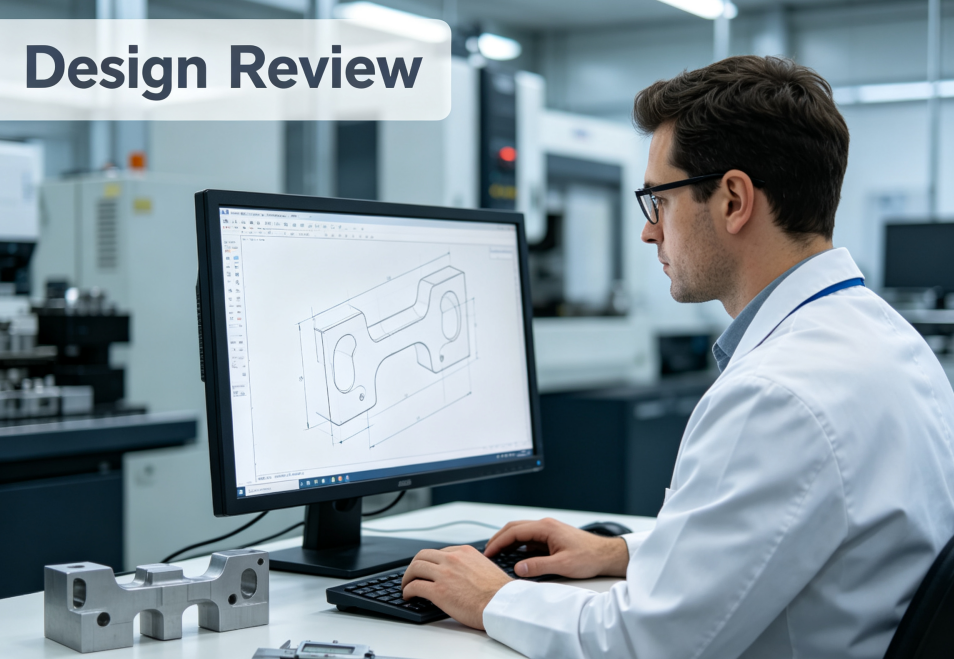
The most effective cost and cycle improvements happen at the design review stage, before the first CNC cut. Working with an ISO 13485 certified CNC machining partner like Ancastings Precision during design reviews helps OEMs avoid costly late-stage changes.
First, eliminate deep blind cavities and add drain or vent paths wherever possible. If blind holes are functionally required, add radiused edges and minimize depth-to-diameter ratios to avoid trapped air or gas. Second, specify stress relief operations for both metal and polymer components before final precision machining. This prevents dimensional shift during thermal sterilization and reduces validation failures. Third, define surface finish requirements based on bioburden risk, not just mechanical fit. Smooth, polished machined surfaces reduce cleaning time and bioburden load before sterilization. Fourth, design part geometry for efficient chamber nesting, so more components fit into each sterilization batch without blocking sterilant penetration. Fifth, align material selection with the intended sterilization method early in the design cycle. Selecting POM for a part intended for autoclave use will lead to warpage and total redesign, while specifying PEEK for single-use gamma-sterilized components may add unnecessary material cost.
Real-World Example: Surgical Instrument Component
A European medical OEM designed a reusable laparoscopic handle machined from 316L stainless steel. The initial CNC drawing included a deep blind pocket for internal assembly, with no drainage path. During sterilization validation, trapped air inside the pocket prevented consistent steam penetration. The lab was forced to extend the autoclave hold time and run extra fractional cycle testing, adding 12 weeks of delay and $28,000 in validation costs.
Working with the CNC supplier’s engineering team, the OEM modified the design to add two small drain holes and radius all internal corners. The revised CNC-machined component eliminated the trapped air pocket. Validation testing was completed using the standard pre-vacuum steam cycle, cutting cycle time by 22 minutes per batch and removing the requirement for extended hold periods. The OEM reduced per-unit sterilization fees and avoided redesign delays, while still meeting all ISO 13485 and biocompatibility requirements. This case illustrates how small CNC design adjustments can remove sterilization bottlenecks before validation begins.
Closing Thoughts
Sterilization should never be treated as an afterthought for CNC-machined medical components. The geometry, surface finish, residual stress, and material choices made during design and machining define the minimum sterilization cycle time, validation scope, and long-term per-unit sterilization cost. Poorly optimized CNC designs can extend cycle times, inflate validation spending, delay regulatory approvals, and increase ongoing operational costs for medical OEMs selling into North America, Europe, Japan and Australia.
By integrating sterilization requirements into DFM reviews with your medical CNC machining partner, you can reduce cycle duration, lower sterilization expenses, and streamline regulatory validation. Early collaboration between your design team and ISO 13485 certified CNC engineers identifies sterilization risks before production starts, avoiding expensive redesign work after prototypes are already machined.