Introduction
Titanium and its alloys remain the dominant material for orthopedic implants, dental fixtures, and surgical hardware across global medical device manufacturing, owing to excellent biocompatibility, high specific strength, and superior corrosion resistance within physiological environments. Even so, hydrogen embrittlement (HE) represents an insidious failure mode for CNC machined titanium medical hardware.
Sub ppm level hydrogen uptake during machining, chemical surface treatment, or post processing can generate subsurface microcracks that evade conventional dimensional inspection, only propagating under cyclic invivo loading months or years after implantation.
Peer reviewed clinical and materials science publications hosted on PubMed PMC document multiple implant failure case studies where hydrogen induced hydride precipitation contributed to premature fracture of titanium alloy components, despite parts passing incoming dimensional quality checks. For manufacturers selling into Europe, North America, Japan and Australia, ISO 13485 enforced traceability and patient safety obligations oblige contract CNC machining partners to understand hydrogen absorption pathways and implement validated mitigating process controls.
This article examines how shop floor CNC machining workflows introduce hydrogen, reviews documented clinical failure risks, and details practically implemented process controls used within medical grade precision manufacturing.
What Is Hydrogen Embrittlement in MedicalGrade Titanium?
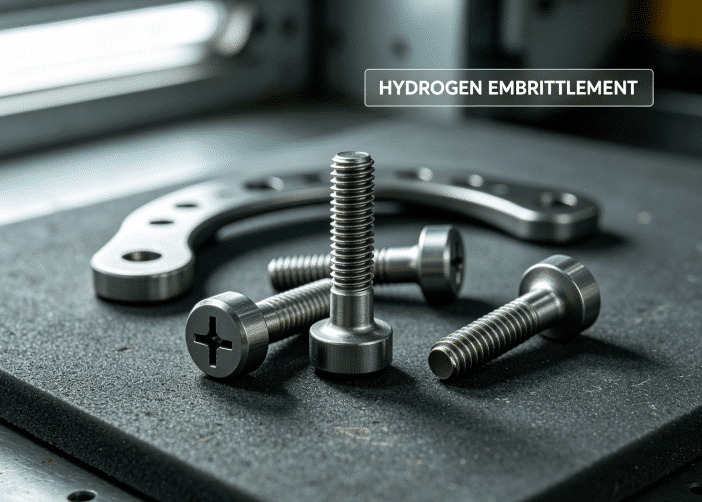
Hydrogen embrittlement describes material degradation occurring when diffused hydrogen atoms precipitate as brittle titanium hydride (TiH₂) platelets within the titanium metal matrix. Unlike uniform electrochemical corrosion, hydride related damage develops beneath component surfaces; visual inspection and basic dimensional metrology frequently cannot detect early stage embrittlement damage.
Under cyclic mechanical stress present inside the human body, hydride rich zones act as crack initiation sites, reducing fracture toughness and fatigue cycle performance of otherwise well fabricated parts.
Medical relevant titanium grades, including Grade 2 commercially pure titanium, Grade 5 (Ti6Al4V ELI) and Grade 9 alloys, carry widely accepted industry hydrogen thresholds of 150 ppm maximum for implant grade applications. Alpha phase and alpha beta titanium microstructures exhibit intrinsically low hydrogen solubility at ambient temperature; once local hydrogen concentrations exceed solubility limits, hydride platelets nucleate preferentially within high stress regions: thread roots, sharp machined radii, and fine feature grooves typical of surgical and implant hardware. PMC indexed materials research confirms that residual machining stress further accelerates hydride nucleation by lowering the threshold hydrogen concentration required for precipitation at local stress risers.
Core CNC Machining Causes of Titanium Hydrogen Embrittlement
Published laboratory and manufacturing process studies confirm that the majority of hydrogen embrittlement events observed within medical component batches originate from manufacturing process inputs, rather than as received raw material defects. Four dominant shop floor mechanisms drive hydrogen pickup during CNC production.
1. Improper Cutting Fluid Selection
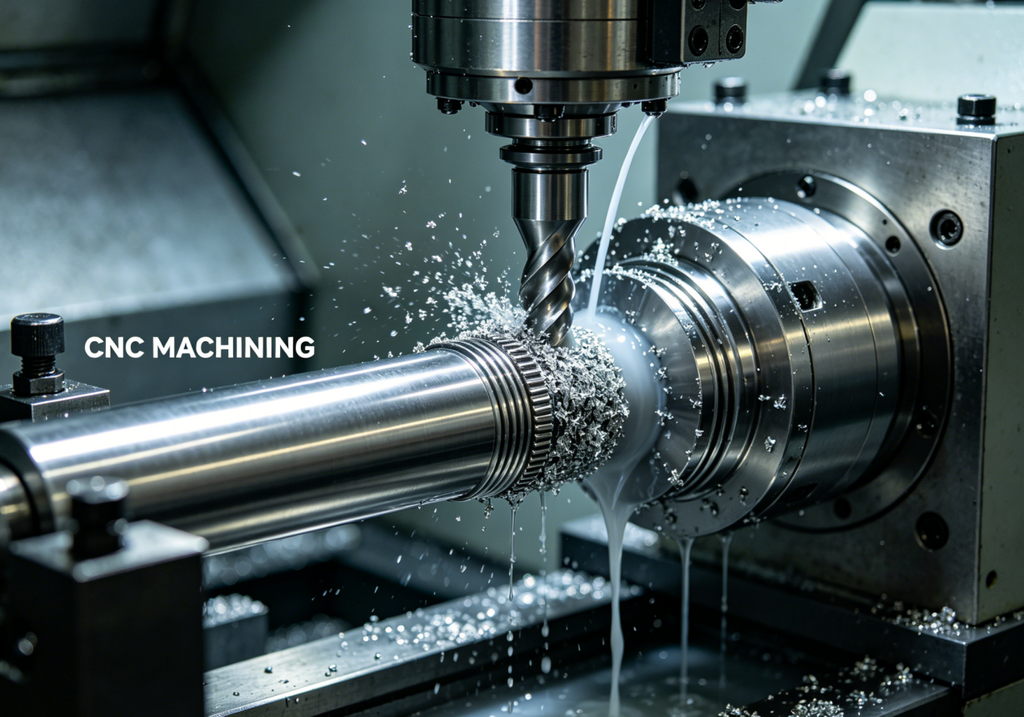
Water based metalworking fluids containing chloride based additives or high decomposition potential hydrogen rich additives liberate atomic hydrogen at the high temperature tool chip interface during titanium cutting operations. Titanium’s chemical affinity drives absorption of liberated hydrogen into freshly exposed machined subsurface layers. Excessively worn, dull cutting inserts raise cutting zone temperature and frictional deformation, expanding hydrogen uptake depth beneath the machined surface. Generic non medical formulation coolants, commonly deployed within general purpose CNC workshops, frequently contain additive chemistries unsuitable for titanium medical component production.
2. Uncontrolled Machining Heat & Residual Stress
Titanium alloys possess low thermal conductivity; most cutting heat accumulates within the workpiece surface layer rather than dissipating through chips or cutting tools. Experimental measurements cited in PMC materials papers show workpiece surface temperatures above 80 °C significantly increase hydrogen diffusion rates into titanium subsurface material. Aggressive feed rate and depth of cut parameters generate not only elevated temperatures but also significant near surface residual tensile stress. Residual stress gradients promote hydrogen migration toward stress concentrated features, concentrating hydride formation exactly at component locations most vulnerable to service load fracture.
3. Risky Post Machining Chemical Treatment
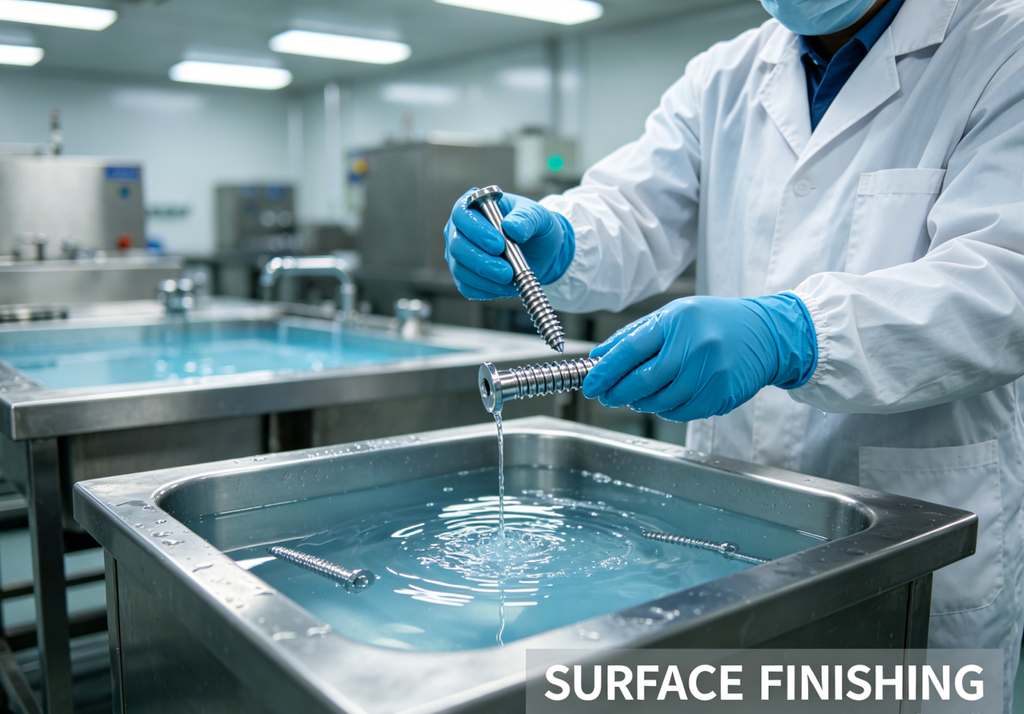
Acid based pickling processes used to remove alpha case surface contamination and tool induced surface damage constitute a well documented major hydrogen introduction source for titanium medical parts. Without tight process windows for bath temperature, immersion duration, and pH control, acidic surface treatments drive substantial hydrogen ingress. Many low volume machine shops apply legacy pickling recipes developed for industrial titanium components without adaptation for implant safety requirements, creating hidden subsurface damage that only manifests under long term cyclic physiological loading.
4. Inadequate Raw Material & Process Inspection
As received titanium bar stock may already hold hydrogen concentrations approaching the 150 ppm implant grade limit. When subsequent machining and chemical processing steps add further hydrogen content, finished components cross safe material thresholds. Many general CNC manufacturers skip quantitative hydrogen content verification on incoming stock, relying only on material certificate documentation rather than supplementary batch level verification testing. This gap creates avoidable patient safety risks for end device manufacturers.
Critical Risks of HE in Titanium Medical Components
For implantable medical hardware, hydrogen embrittlement carries uniquely high stakes consequences supported by documented case reports within clinical engineering literature:
- Implant fracture: Hydride brittled microstructures initiate crack growth under physiological cyclic loading, producing sudden fracture of orthopedic fixation hardware, dental abutments, and spinal system components.
- Degraded fatigue performance: Even non catastrophic hydride precipitation reduces fatigue cycle lifetime, shortening functional service duration for permanently implanted devices.
- Secondary biocompatibility hazards: Subsurface microcracks act as microbial harbouring crevices; local crevice corrosion may develop around crack features, triggering inflammatory tissue responses in vivo.
- Regulatory and commercial consequences: Components compromised by hydrogen embrittlement fail ISO 13485 related material validation requirements, exposing medical device OEMs to field return events, recall obligations, and regulatory audit non conformances.
Proven CNC Machining Solutions to Prevent Titanium Hydrogen Embrittlement
Evidence based mitigation relies on full process control spanning incoming material qualification, CNC machining parameters, surface finishing workflows, and batch verification, aligned with international medical device manufacturing expectations.
1. Medical Grade Material Pre Inspection
Incoming titanium bar and billet receives quantitative hydrogen content testing, holding baseline hydrogen levels comfortably below the 150 ppm implant grade maximum. Only certified implant relevant alloy grades (Grade 2, Ti 6Al 4V ELI Grade 5, Grade 9) progress toward component production. Certificate of analysis documentation is cross checked against batch test results rather than accepted at face value alone.
2. Low Hydrogen CNC Machining Parameter Optimization
Machining parameters are tuned to minimise cutting zone temperature build up. Chloride free, low hydrogen release metalworking fluids specified for medical titanium processing are deployed throughout CNC operations. Tool change schedules enforce consistently sharp cutting inserts to minimise frictional heating and subsurface plastic deformation, both of which amplify hydrogen absorption risk.
3. Controlled Post Machining Finishing
Unregulated aggressive acid pickling is replaced by tightly controlled electropolishing and buffered chemistry finishing workflows. Bath temperature, immersion dwell time, and pH are strictly bounded within validated process windows derived from titanium medical component best practice guides. These workflows remove alpha case surface layers while limiting hydrogen ingress, preserving both surface biocompatibility and bulk material mechanical integrity.
4. Full Process Quality Traceability
Finished batch verification includes hydrogen content testing, metallographic microstructural inspection, and stress relevant mechanical validation as required by project specifications. All process parameter records, material test results, and finishing batch logs are retained for full traceability, supporting ISO 13485, FDA, and CE marked medical device regulatory submissions.
Why Choose Ancastings Precision for Medical Titanium CNC Machining
Most general purpose CNC machining suppliers prioritise dimensional tolerance achievement alone and overlook subsurface material integrity risks such as hydrogen embrittlement. As a contract manufacturer serving international medical device OEMs, Ancastings Precision combines tight dimensional control with material integrity process governance:
- ISO 13485 aligned medical manufacturing workflows
- End to end hydrogen embrittlement risk mitigation for titanium components
- Incoming material verification and full batch traceability
- Custom CNC production for implants, surgical instruments, and medical equipment hardware
- Process documentation compatible with EU, US, Japanese, and Australian medicaldevice regulatory frameworks
Conclusion
Hydrogen embrittlement constitutes a quiet, high consequence failure mechanism for CNC machined titanium medical components, frequently introduced via inadequately controlled machining and post processing operations. PMC hosted clinical materials literature confirms that components passing dimensional inspection can still harbour hydride driven subsurface damage capable of causing late service implant failure. For global medical device original equipment manufacturers, selecting a CNC machining partner that implements validated, traceable hydrogen mitigation workflows is critical to patient safety and regulatory compliance. By combining rigorous incoming material screening, thermally optimised CNC machining recipes, tightly bounded surface finishing processes and batch level verification testing, contract manufacturers can substantially reduce hydrogen embrittlement risk and deliver mechanically reliable titanium medical hardware.