
Insert molding is an advanced manufacturing process that creates an integrated composite structure. This technology combines the advantages of multiple materials, significantly enhancing the strength, functionality, and durability of products. Typically, insert molding is extensively used in industries such as electronics, automotive, and medical devices to manufacture complex parts. Therefore, this article will delve into the working principles of insert molding, common materials, design guidelines, pros and cons, applications, and more. The goal is to provide a comprehensive understanding of this technology and its value in practical production.
What is Insert Molding?
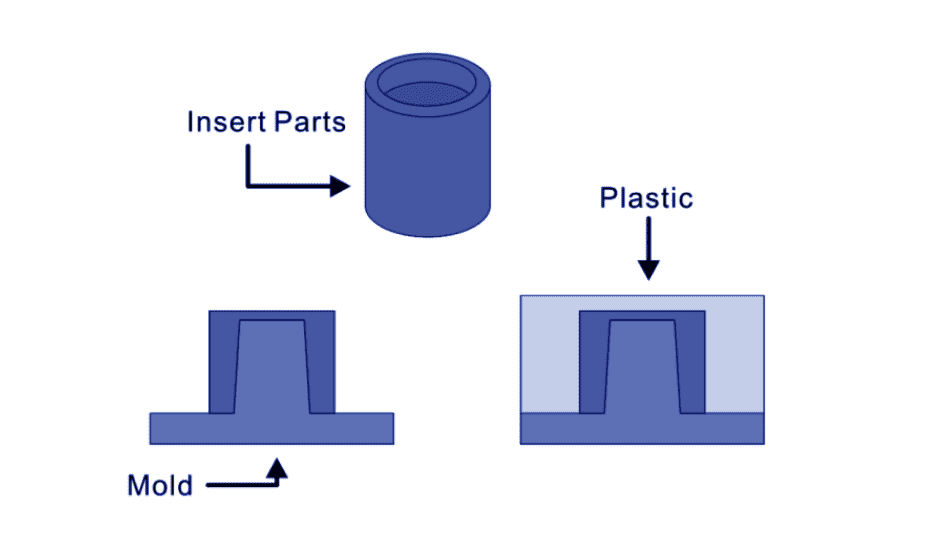
Insert molding merges plastic injection molding with the incorporation of pre-formed inserts, such as metal, ceramic, or other materials, into a single unified component. In this process, the operator places the insert into a mold cavity and subsequently injects molten plastic around it. As the plastic cools and solidifies, the insert becomes permanently embedded within the plastic part, resulting in a strong and cohesive structure.
This technique is particularly beneficial because it enhances the functionality, durability, and performance of products. For instance, metal inserts offer strength and conductivity, while the surrounding plastic component provides lightweight characteristics and design flexibility.
Moreover, the process demands precise design and engineering to ensure the correct placement of the inserts along with material compatibility. When executed effectively, insert molding not only streamlines production but also reduces assembly steps and enhances product reliability. Therefore, it presents a valuable solution to the modern challenges of manufacturing.
How does Insert Molding Work?
This process involves placing pre-formed inserts into a mold and then encapsulating them with molten plastic. Below is a detailed breakdown of the insert molding process:
1. Insert Preparation
The first step in insert molding is preparing the inserts. Inserts can be made of various materials, such as screws, threaded inserts, or plastic components. They can also include electronic parts like sensors or circuit boards. Before placing the inserts into the mold, they may require pre-cleaning or surface treatments, such as coating or plating, to ensure proper bonding with the plastic material. The inserts are then precisely placed into the designated positions within the mold.
2. Mold Closing
Once the inserts are positioned, the mold is closed. The mold design must ensure that the inserts remain stable and do not move or deform during the injection process. To achieve this, molds are often equipped with locating pins, clamps, or other mechanisms to secure the inserts in place. Proper mold closing is critical to maintaining the accuracy and integrity of the final part.
3. Injection Molding
The next step is injecting the molten plastic into the mold. First, operators select a suitable thermoplastic material, such as ABS, PC, or nylon, and heat it until it reaches a molten state. Afterward, they inject the molten plastic into the mold cavity under high pressure. As the plastic flows into the mold, it effectively surrounds and encapsulates the inserts, filling every intricate detail of the mold cavity. During this process, precise control of pressure and temperature is essential to ensure proper bonding between the plastic and inserts.
4. Cooling and Solidification
After the molten plastic is injected, the mold remains closed to allow the plastic to cool and solidify. The cooling time depends on factors such as the type of plastic material, the thickness of the part, and the mold design. During this stage, the plastic shrinks slightly as it cools, forming a strong bond with the inserts.
5. Ejection
Once the cooling process is complete, the mold opens, and the finished part is ejected or removed. Ejection must be done carefully to avoid damaging the part or the inserts. In addition, some molds are equipped with ejector pins or other mechanisms that gently push the part out of the mold.
6. Post-Processing
The post-processing can include deburring, which includes removing any flash or excess plastic from the edges of the part. Surface finishing, such as painting, plating, or texturing, may also be applied to enhance the part’s appearance or functionality. Finally, the part undergoes quality inspection to ensure it meets specifications, including dimensional accuracy, insert positioning, and the strength of the bond between the plastic and inserts.
Common Materials for Insert Molding
The choice of materials for both the insert and the plastic is crucial to ensure the final product meets the desired performance. Below are some common materials:
1. Materials for Inserts
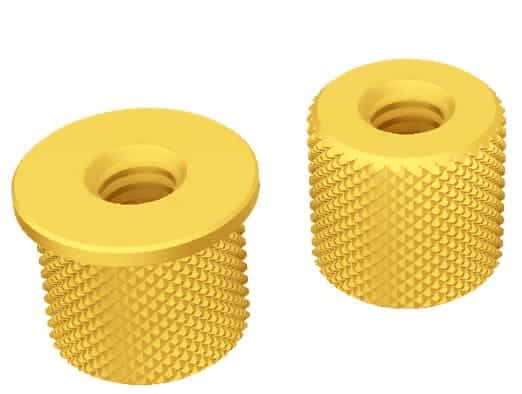
Metals:
- Stainless Steel: Manufacturers often choose stainless steel for its corrosion resistance and strength, making it suitable for medical devices, automotive components, and industrial applications.
- Brass: Brass inserts are popular in electrical connectors and plumbing fittings because of their excellent conductivity and resistance to corrosion.
- Aluminum: Due to its lightweight and corrosion-resistant properties, aluminum is ideal for aerospace and automotive industries.
- Copper: Engineers frequently use copper inserts in electrical applications due to their high conductivity and thermal properties.
- Steel: Carbon steel or alloy steel inserts are common in high-strength applications, such as fasteners and structural components.
Plastics:
- Thermoplastics: In some cases, manufacturers use plastic inserts to create multi-material plastic parts. These inserts can be made from materials like PEEK, nylon, or polycarbonate, depending on the application’s requirements.
2. Materials for Molding (Thermoplastics)
- Polypropylene (PP): Manufacturers often use PP for its chemical resistance and flexibility, making it common in automotive parts, consumer goods, and packaging.
- Acrylonitrile Butadiene Styrene (ABS): ABS is a tough, impact-resistant plastic that is widely used in automotive components, electronic housings, and consumer products.
- Polycarbonate (PC): PC offers high impact resistance and transparency, making it suitable for applications like medical devices, lenses, and electronic components.
- Nylon (Polyamide): Nylon is known for its strength, wear resistance, and thermal stability, making it fit for gears, bearings, and automotive parts.
- Polyethylene (PE): PE is commonly employed in applications requiring chemical resistance and low friction, such as in food packaging and medical devices.
- Thermoplastic Elastomers (TPE): TPEs are popular when flexibility and elasticity are required, such as in seals, gaskets, and soft-touch grips.
- Polyether Ether Ketone (PEEK): PEEK is a high-performance thermoplastic that engineers use in demanding applications like aerospace and medical implants.
3. Material Selection Considerations
- Compatibility: The materials chosen for the insert and the plastic must be compatible in terms of thermal expansion, bonding, and chemical resistance to ensure a strong bond and long-term performance.
- Application Requirements: The choice of materials depends on the specific application, including factors like mechanical strength, thermal stability, electrical conductivity, and environmental resistance.
- Cost: Material selection also considers cost-effectiveness, especially for high-volume production.
Insert Molding Design Guide
To ensure the success of your insert molding project, it’s essential to follow a well-thought-out design guide. Below are key considerations and best practices for designing parts for insert molding.
1. Insert Design Considerations
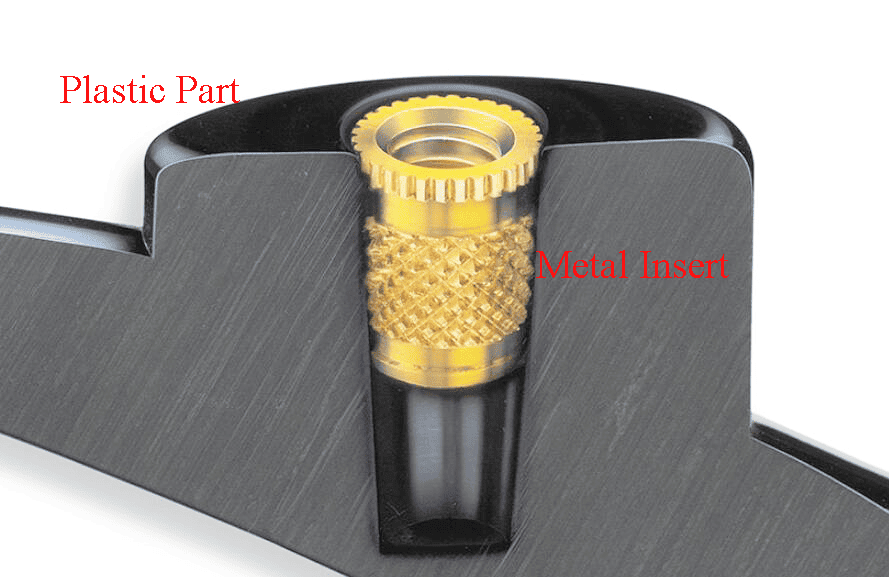
Material compatibility is critical when designing inserts. The materials for the insert and plastic must work well together in terms of thermal expansion and chemical resistance. For example, stainless steel inserts pair well with high-temperature plastics like PEEK or nylon. The geometry of the insert also matters; features like knurls, grooves, or undercuts enhance mechanical bonding, while smooth surfaces may require adhesives or surface treatments. Precise insert placement is crucial to avoid defects such as voids or weak bonds. Simple, symmetrical designs are easier to handle and more cost-effective.
2. Mold Design Considerations
The mold design plays a significant role in insert molding. Proper gate placement ensures even flow of molten plastic around the insert, reducing the risk of incomplete filling or air traps. Adequate venting is essential to allow air to escape during injection, preventing defects like burns or voids. The ejection mechanism must be efficient to remove the part without damaging the insert or plastic. Durable mold materials like hardened steel or aluminum are recommended, especially for high-temperature applications. A well-designed mold improves part quality and extends tooling life.
3. Part Design Considerations
Uniform wall thickness is key to ensuring even cooling and reducing warping or sink marks. Draft angles of 1-2° should be included to facilitate easy ejection from the mold. Ribs and bosses can strengthen the part without adding excessive material, but they must be designed carefully to avoid stress concentrations. Minimize undercuts, as they complicate mold design and increase costs. If necessary, use side-action molds or collapsible cores. Specify the desired surface finish early, as textured or polished surfaces may require additional mold treatments.
4. Process Considerations
Automating insert placement improves consistency and reduces labor costs, while manual insertion can lead to variability and defects. Optimize injection parameters like pressure, temperature, and cooling time to ensure proper bonding and minimize defects. Rigorous quality control is essential; inspect inserts for defects before molding and verify the integrity of the final part. Collaboration with your manufacturing partner is key to fine-tuning the process and achieving the best results.
Pros and Cons of Insert Molding
While it offers numerous advantages, it also comes with some limitations. Here’s a concise overview of the pros and cons:
Pros of Insert Molding
- Enhanced Strength and Durability: Insert molding creates a strong bond between the insert and plastic, resulting in durable, high-performance parts ideal for demanding applications like automotive or industrial components.
- Reduced Assembly Time and Costs: By combining multiple parts into one, insert molding eliminates secondary assembly, reducing labor costs and speeding up production.
- Design Flexibility: The process allows for the integration of different materials, enabling complex, multifunctional designs that are difficult to achieve with traditional methods.
- Improved Aesthetics and Functionality: Parts have a clean, finished appearance, and features like threaded inserts or sensors can be embedded directly into the component.
- Lightweight and Compact Design: It combines strong inserts with lightweight plastics, making it ideal for industries like aerospace and automotive where weight reduction is critical.
- Cost-Effective for High-Volume Production: Once the mold is ready, insert molding is highly efficient for large production runs, ensuring consistent quality and lower per-unit costs.
Cons of Insert Molding
- Complex Design and Process: Careful planning is needed to address thermal expansion, material compatibility, and insert placement, increasing design complexity.
- Limited Material Options: Not all materials are compatible, and additional testing or treatments may be required to ensure a strong bond.
- Risk of Defects: Issues like insert misalignment, weak bonding, or air traps can occur, requiring rigorous quality control.
- Longer Cycle Times: Pre-placing inserts can increase cycle times, reducing production efficiency for high-volume runs.
- Challenges with Complex Inserts: Intricate or delicate inserts may require specialized equipment or manual handling, increasing complexity and costs.
Applications of Insert Molding
This process is widely used across various industries due to its efficiency and performance benefits. Below are some key applications:
1. Automotive Industry
- Electrical Connectors: Insert molding produces connectors with embedded metal contacts, ensuring reliable conductivity and durability.
- Sensors and Switches: Components like throttle sensors and gear shift knobs use insert molding for precise functionality.
- Lightweight Parts: Brackets and fasteners made with insert molding reduce vehicle weight and improve fuel efficiency.
2. Medical Devices
- Surgical Instruments: Tools like scalpel handles combine metal tips with plastic grips for precision and comfort.
- Implantable Devices: Insert molding creates biocompatible components for pacemakers and orthopedic implants.
- Diagnostic Equipment: Fluid connectors and syringe bodies rely on insert molding for leak-proof performance.
3. Consumer Electronics
- Connectors and Ports: USB ports and power jacks use insert molding for durable, reliable electrical connections.
- Wearable Devices: Smartwatches and fitness trackers integrate sensors and buttons using insert molding.
- Housings: Electronic enclosures often incorporate threaded inserts for reduced assembly.
4. Industrial Equipment
- Gears and Bearings: Insert molding combines metal cores with plastic exteriors for strength and wear resistance.
- Fluid Handling: Valves and pumps use insert molding for corrosion-resistant, durable components.
- Tool Handles: Tools like screwdrivers benefit from ergonomic plastic handles with metal working ends.
5. Aerospace Industry
- Lightweight Components: Insert molding creates strong, lightweight parts like brackets and fasteners for aircraft.
- Sensor Housings: Durable housings for aerospace sensors withstand extreme conditions.
- Cable Management: Connectors and conduits ensure secure connections in aircraft systems.
6. Telecommunications
- Fiber Optic Connectors: Insert molding ensures precise, durable connections for fiber optics.
- Antenna Components: Weather-resistant housings and mounts are made using insert molding.
- Network Equipment: Routers and modems use insert-molded parts for connectors and housings.
7. Special Application
- Film Insert Molding
- Film insert molding is a process that embeds decorative films into the injection molding process. It is commonly used for products requiring aesthetically pleasing surfaces, such as automotive interiors and home appliance panels. The films can feature printed patterns, textures, or metallic finishes, providing a high-end visual effect.
- RV Trim Molding Insert
- In the recreational vehicle (RV) industry, RV trim molding inserts and RV vinyl insert trim moldings are prevalent applications. Through insert molding, metal or plastic inserts are combined with decorative materials like vinyl to create durable and visually appealing interior components.
Insert Molding Vs. Overmolding
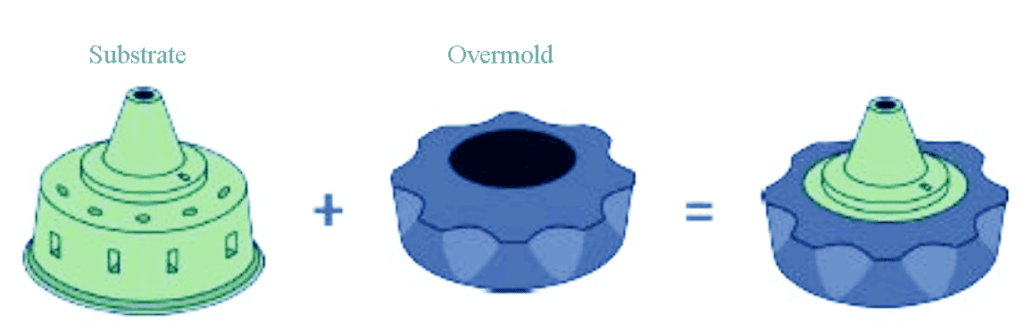
As we mentioned before, insert molding is a process where a pre-formed component (referred to as an “insert”) is placed into a mold cavity, and molten plastic is injected around it. The insert can be made of metal, ceramic, or another material, and it becomes permanently encapsulated within the molded plastic part. Overmolding, on the other hand, involves molding a layer of plastic over an existing substrate, which can be another plastic part or a different material. This process typically requires two or more injection molding steps. The first step creates the substrate, and the second step molds an additional layer over it. Overmolding is often employed to improve grip, add soft-touch surfaces, or create multi-material parts.
| Aspect | Insert Molding | Overmolding |
| Process Steps | Single-step process: Inserts are placed into the mold, and plastic is injected around them. | Multi-step process: Requires at least two molding cycles (substrate + overmold). |
| Material Combination | Combines plastic with non-plastic inserts (e.g., metal, ceramic). | Combines multiple plastic materials or plastic with other substrates. |
| Bonding Mechanism | Mechanical bonding: Plastic encapsulates the insert. | Chemical or mechanical bonding: Overmold adheres to the substrate. |
| Applications | Used for adding functional components like threaded inserts, electrical contacts, or reinforcement. | Used for ergonomic improvements, aesthetic enhancements, or multi-material functionality. |
| Design Complexity | Relatively simple, as it involves a single material and insert. | More complex, requiring compatibility between substrate and overmold materials. |
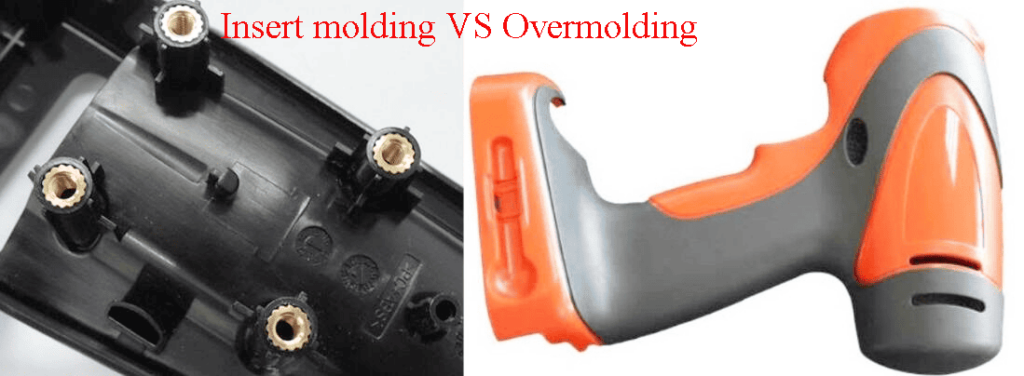
Injection Molding Vs. Insert Molding
Injection Molding is a widely used manufacturing process primarily for mass-producing plastic parts. It works by injecting molten plastic material into a mold cavity, where it cools and solidifies under high pressure to form the desired shape. This process is suitable for creating parts with complex geometries and is widely applied in industries such as automotive, consumer electronics, and medical devices.
The main advantages of Injection Molding include high production efficiency, suitability for large-scale manufacturing, consistent part quality, high precision, and the ability to achieve intricate designs. However, it has high initial tooling and machinery costs and is typically limited to single-material parts.
In contrast, Insert Molding is a process where pre-formed inserts are placed into a mold, and plastic is injected to encapsulate them. It is mainly used for applications requiring the combination of different materials, such as threaded inserts or electrical connectors. Although insert molding involves more complex mold design and processing, it reduces assembly steps and enhances part strength and reliability.
Custom Insert Molding Services at Ancastings
Ancastings Precision offers custom insert molding services, integrating metal, ceramic, or plastic pieces into molten thermoplastic to create robust parts. Our CNC machining capabilities enable precision customization of inserts, enhancing the strength and functionality of the final product. This process reduces assembly costs and eliminates the need for post-molding operations, making it a cost-effective solution for producing complex components. Our expertise in insert molding supports a wide range of applications, ensuring high-quality and durable parts for various industries.
Conclusion
Insert molding offers greater flexibility and functionality in product design by combining inserts with plastic materials. Its advantages include improved product strength, reduced assembly steps, lower costs, and enhanced durability. However, the process also faces challenges, such as high precision requirements for insert positioning and limitations in material compatibility. Despite these challenges, the widespread use of insert molding in industries like electronics, automotive, and medical devices highlights its importance. By opting for professional custom insert molding services, businesses can further optimize production processes and meet diverse product needs.
FAQs
Insert molding combines plastic with non-plastic parts, typically metal, to create strong components. It’s used in aerospace, automotive, medical devices, and more.
Insert molding places an insert into the mold before injecting plastic, while overmolding is a two-step process where one plastic piece is molded over another.
Materials include metal inserts like stainless steel and aluminum, along with plastics such as ABS and polycarbonate.
Benefits include enhanced strength, cost efficiency, design flexibility, and reduced assembly time.