
For engineers tasked with part design, tool compatibility, or process optimization, having a deep understanding of an injection molding machine is essential—not optional. The molding lifecycle—from polymer plastication to final ejection—lives or dies by the calibrated synergy of mechanical, thermal, and hydraulic subsystems. Tonnage and clamp force metrics alone are meaningless without understanding how barrel temperatures, screw design, and valve gates interact with your specific thermoplastic’s rheology and the mold’s thermal profile. It’s not just about machine tonnage or clamp force—it’s about how each module interacts with the mold for injection molding machine and the thermoplastic used.
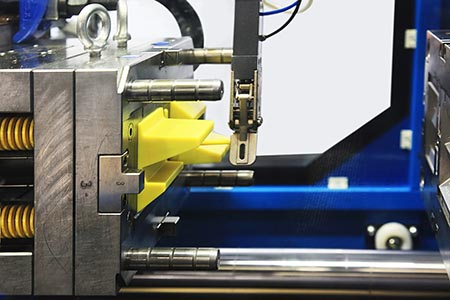
Clamping Unit: The Non-Negotiable Anchor of Mold Integrity
The clamping unit maintains mold closure against injection pressures (500-2,500 bar). Its performance dictates dimensional accuracy, tool longevity, and cycle efficiency.
System Selection Criteria
- Toggle Clamps:
- Best for: High-volume production (e.g., thin-wall packaging)
- Advantages: 30% faster cycles, 25% less energy
- Limits: Limited tonnage control for precision parts
- Hydraulic Clamps:
- Best for: Medical/aerospace (±0.02mm tolerances)
- Advantages: Real-time pressure control, mold protection
- Tradeoffs: Higher maintenance, slower dry cycles
Tonnage Calculation Critical
Force (tons) = Projected Area (in²) × Cavity Pressure (psi) × 1.2
Consequences:
- Under-clamping: Flash → 100% scrap
- Over-clamping: Mold deflection → dimensional drift
Overlooked Stability Factors
- Platen leveling (>0.02mm/m deviation causes uneven wear)
- Tie-bar stretch compensation (critical for large molds)
- Mold breathing control (prevents part sticking)
Pro Tip: For optical/medical molds, verify <5µm platen deflection at max tonnage.
Injection Unit — Where Resin Meets Precision and Process Control
The injection unit is the heart of the plasticizing process in an injection molding machine, where raw thermoplastic is transformed into a controlled, high-pressure melt stream and delivered precisely into the mold for injection molding machine. Its performance directly impacts part quality, cycle consistency, and material efficiency.
- Barrel and screw assembly: This rotating screw inside the heated barrel governs the plasticizing rate, shear characteristics, and material homogeneity. Screw design—whether general-purpose, mixing, or barrier-type—must be matched to the resin’s viscosity and thermal behavior to ensure uniform melt.
- Heaters and thermocouples: Strategically placed across heating zones, these maintain tight thermal profiles for each resin type. Inconsistent melt temperature leads to sink marks, short shots, or incomplete packing—especially in parts with varying wall thicknesses.
- Injection nozzle: Serves as the final gateway between the melt and the mold. Its alignment, pressure sealing, and temperature control are critical to prevent material leakage, drooling, or burn marks at the gate. Special nozzle tips may be used for valve gating or shear-sensitive materials.
Modern injection units are far more intelligent than their predecessors. They feature servo-driven injection motions, multi-stage pressure profiling, and screw decompression to relieve backpressure and improve gate freeze-off control. These capabilities reduce internal stresses, warpage, and cosmetic defects—especially in high-cavitation tools or geometrically complex parts.
Ultimately, the synergy between the injection unit and the mold for injection molding machine defines how well material flow, cavity fill, and part cooling are balanced. For engineers seeking to optimize performance, understanding the micro-behaviors inside this unit is essential—not optional.
Mold Interface and Mounting Systems
The mold-machine interface represents far more than mechanical coupling—it’s the critical junction where thermal stability, kinematic accuracy, and process control converge. Proper configuration prevents catastrophic failures and ensures ±0.02mm part consistency across 100,000+ cycles. Engineers must validate three core subsystems:
1. Tie-Bar Geometry Compliance
- Clearance Verification: Measure mold width against actual tie-bar spacing (not brochure specs). Insufficient clearance forces undersized tooling, sacrificing cavitation.
- Deflection Risks: Bars exceeding 1,500mm span require strain gauging. Elastic deformation >0.1mm invites non-parallel clamping forces.
- Industry Standard: For automotive molds >5-ton mass, specify machines with 1,000+ mm tie-bar clearance and <0.08mm/m deflection tolerance.
2. Ejector System Synchronization
- Platen Alignment: Laser-verify parallelism (<0.03mm/m deviation). Misalignment wears ejector pins at 3× normal rates.
- Force Balancing: Programmable ejector strokes must distribute force within 5% variance across all pins to prevent core shifts.
- Maintenance Trigger: Monitor hydraulic ejectors for >10% pressure drop—indicates seal failure risking incomplete part release.
3. Ancillary Integration Protocols
| Interface | Critical Spec | Failure Consequence |
|---|---|---|
| Waterlines | 4+ independent circuits | ±3°C mold temp variation → sink marks |
| Sensors | ISO 13849-compliant I/O modules | Unlogged pressure spikes → short shots |
| Vacuum Ports | >25″ Hg with 0.5s response | Gas traps → burn marks on optical surfaces |
Mounting System Selection Matrix Explained
| System Type | Changeover Time | Max Mold Mass | Ideal Use Case |
|---|---|---|---|
| T-Slot (Manual) | 45-90 min | 8 tons | Low-mix production (<5 mold swaps/month) |
| Quick-Change | <8 min | 3 tons | Pilot runs, medium-mix (20 mold swaps/day) |
| Automated PIN | 90 sec | 15 tons | High-mix (>50 tools monthly), lights-out production |
Ejection System — Precision Demolding Without Damage
Demolding is one of the most underestimated phases in the injection molding cycle—but its impact on part integrity, cycle time, and mold longevity is critical. The ejection system is tasked with removing the molded component cleanly and consistently, without deforming geometry or damaging delicate features.
Most injection molding machines employ either:
- Hydraulic or pneumatic ejector pins, actuated via position sensors or stroke feedback systems, to deliver controlled ejection force and precise sequencing.
- Mechanical knockout bars, which are more suitable for rugged molds and highstrength materials, especially in large-format or thick-walled parts.
The mold for injection molding machine must be engineered in full synchronization with the ejection stroke—particularly in applications involving deep draw cavities, undercuts, or threaded cores. Timing errors or misaligned ejector plates can lead to part sticking, stress cracking, or even catastrophic tool failure. Moreover, inadequate ejection planning often results in excessive mold wear and frequent maintenance interruptions.
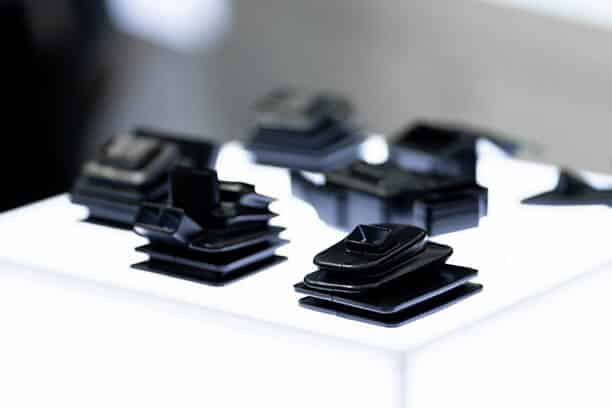
For high-cavity molds or parts with complex demolding geometry, additional systems like air-assist, stripper plates, or collapsible cores are integrated—requiring seamless interaction between the mold and the machine’s ejection mechanism.
Control System — The Digital Backbone of Modern Molding
In today’s smart factories, the control system of an injection molding machine is no longer a passive operator interface—it’s an active orchestrator of precision manufacturing. Built on CNC or PLC platforms, these systems regulate hundreds of real-time parameters, ensuring every shot meets exacting standards.
Core monitoring functions include:
- Injection velocity, screw position, and back pressure control, critical for cavity fill and packing repeatability
- Thermal zoning and mold temperature feedback, often across 8–24 zones, for consistent shrinkage and dimensional accuracy
- Ejector stroke sequencing and part detection, reducing part deformation and preventing mis-ejects
- Integrated diagnostics and machine learning analytics, enabling predictive maintenance and minimizing unplanned downtime
When engineers evaluate mold-machine compatibility, the control unit must support not just basic operations but advanced data capture, closed-loop control, and remote monitoring. This is especially non-negotiable in regulated industries like medical, aerospace, and automotive, where traceability, SPC compliance, and audit-ready process records are required.
Conclusion
An injection molding machine’s true capability is unlocked only through seamless symbiosis with your mold – where thermal dynamics, clamping precision, and material behavior operate as one system. This integration isn’t theoretical; it’s measurable in:
- 25% shorter cycle times from synchronized cooling profiles
- 200,000+ cycle mold longevity through force distribution control
- <0.15% scrap rates via closed-loop cavity pressure monitoring
For engineers refusing to compromise, Ancastings Precision’s injection molding machines deliver this unity through:
- Thermal Sync Technology™: Active platen temperature matching (±1°C) to eliminate differential expansion
- Mold Force Intelligence: Real-time tonnage mapping across 16 mold zones
- Quick-Change RFID Systems: 90-second mold swaps with automated parameter recall
Whether you’re sourcing a new machine or optimizing your existing process, consider both the mold for injection molding machine and the machine’s capabilities as a single unit—not separate decisions. Precision doesn’t tolerate disconnects.