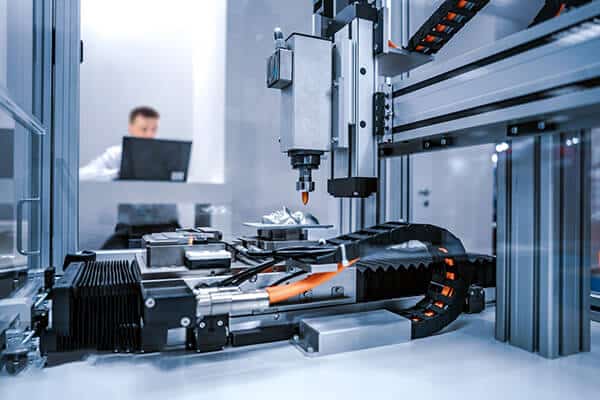
In high-precision industrial fabrication, laser tube cutting has revolutionized how complex tubular components are produced. Unlike traditional methods, this technology delivers unparalleled accuracy, intricate detailing, and minimal material waste. However, realizing its full potential hinges on intelligent design. A part poorly designed for the laser cutting process can lead to increased costs, production delays, and compromised quality. This laser tube cutting design guide dives deep into best practices, limitations, and opportunities—helping engineers and designers leverage the full capabilities of modern CNC laser tube cutting machines.
What Is Laser Tube Cutting?
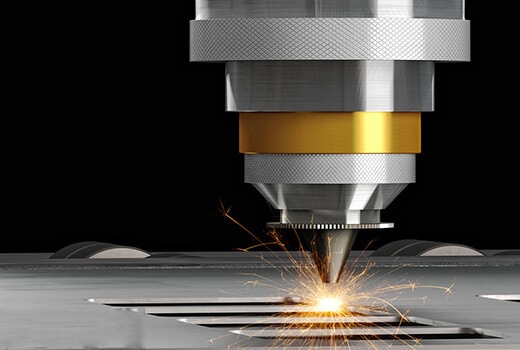
Laser tube cutting is a process that uses high-powered laser beams to cut, drill, or engrave metal tubing with exceptional precision. Unlike traditional methods, this technique allows for intricate geometries, repeatable tolerances, and clean, burr-free edges—all in a single setup.
Thanks to advanced automation and 3D tube profiling capabilities, CNC laser tube cutting machines can handle square, round, rectangular, and even custom tube shapes across various materials, including stainless steel, aluminum, and carbon steel.
Core Design Considerations for Laser Tube Cutting
Designing for laser tube cutting requires understanding the process’s capabilities and constraints. Adherence to these principles is non-negotiable for efficient production.
1. Tube Diameter and Wall Thickness
Consistency is King: CNC laser tube cutting machines excel with uniform wall thickness. Avoid designing parts requiring drastic transitions within a single cut piece; consider segmenting such components.
Know Your Limits: While modern lasers handle a wide range (thin gauge to thick-walled tubes), consult your fabricator’s capabilities. Extremely thin walls (<1mm) risk warping, while very thick walls demand higher power and slower speeds, impacting cost. Specify standard tube sizes whenever possible.
Material Matters: Different alloys (steel, stainless, aluminum) react uniquely to laser energy, affecting cut quality, heat input, and potential for dross. Design features like small holes or tight notches may need adjustment based on material.
2. Minimum Feature Size and Kerf Width
The kerf (the width of material removed by the laser beam) typically ranges from 0.1mm to 0.3mm, depending on the laser’s power and nozzle diameter. Features smaller than the kerf may not be achievable or may weaken the structural integrity of the part. A good rule of thumb: hole diameter should be ≥ 1x wall thickness (often ≥ 1.5mm practical minimum). Smaller features risk poor quality or are impossible.
To ensure cut clarity:
- Maintain a minimum slot width of 2x the kerf size
- Avoid excessive fine detailing unless structurally necessary
3. Nesting and Part Orientation
Proper part orientation inside the tube—and across batches—significantly improves material efficiency. Nesting strategies can reduce scrap, minimize heat distortion, and enable continuous feeding in automated CNC laser tube cutting machines.
Efficient nesting on the raw tube length minimizes scrap. Design parts with consistent end profiles and consider nesting multiple parts end-to-end within a single tube length where feasible. Communicate if specific grain direction (e.g., for subsequent tube bending) is critical.
4. Cut Path Complexity and Laser Access
Avoid underestimating the impact of cut path complexity. Designs with multiple internal cuts, tight corners, or deep recesses may require slower feed rates or secondary operations. Optimize geometry for single-pass cutting when possible.
For example:
- Replace sharp 90° corners with radii
- Limit unsupported internal cuts in long tubes
5. Material Selection and Coating Consideration
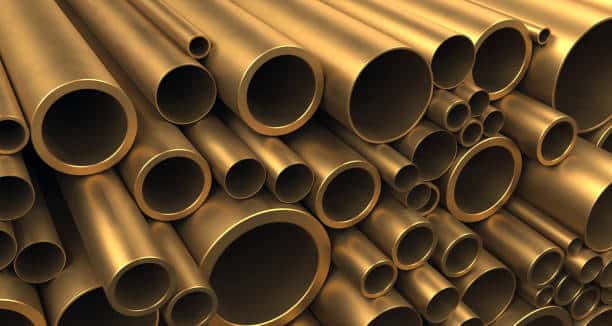
Different materials react uniquely to laser energy. Aluminum reflects more and requires higher power; mild steel responds well at standard power levels. Pre-coated tubes (e.g., powder-coated or galvanized) may cause beam scattering or noxious fumes and should be processed with care or post-coated instead.
Laser Tube Cutting vs. Traditional Methods
For engineers and procurement specialists evaluating manufacturing processes, understanding the fundamental advantages of laser technology over legacy methods is crucial for optimizing cost, quality, and time-to-market. The table below will dissects the key differentiators, moving beyond hype to quantify the operational superiority of CNC laser tube cutting machines.
| Factor | Laser Tube Cutting | Mechanical Sawing / Drilling |
|---|---|---|
| Precision | ±0.1 mm | ±0.5 mm |
| Speed | Fast for complex cuts | Slower, especially for profiles |
| Flexibility | Supports custom geometry | Limited to standard shapes |
| Labor Intensity | Low (automated) | High (manual handling) |
| Post-Processing | Minimal | Often required |
Achieving the full benefits of laser tube cutting requires expertise in both design for manufacturability (DFM) and precision operation. Ancastings Precision, a leader in advanced CNC machining service and tube fabrication, leverages state-of-the-art CNC laser tube cutting machines alongside deep engineering knowledge. Their team collaborates closely with clients to optimize designs for laser cutting, ensuring manufacturability, cost-efficiency, and flawless integration with subsequent processes like bending and welding.
In many industrial applications, tube bending follows laser cutting as part of the fabrication workflow. The order matters: cutting first allows for flat-pattern features like slots, tabs, or notches that align perfectly during bending. Combining laser tube cutting and tube bending unlocks unprecedented capabilities for creating high-precision, structurally efficient tubular assemblies. Yet, poor integration leads to tolerance stack-ups, feature distortion, and costly rework.
Design for bending by:
- Placing features at neutral axis where deformation is minimal
- Avoiding cuts near bend lines to prevent cracking
- Using bend radii appropriate to the tube diameter and wall thickness
Smooth Workflow = Better Parts
- Design the final bent shape in CAD.
- Software “unfolds” it + maps features onto the straight tube.
- CNC laser tube cutting machine cuts it.
- CNC bender uses the same data to bend accurately.
- Result: Features land exactly where needed after bending. No misaligned holes!
When to Choose CNC Laser Tube Cutting Machines
CNC laser tube cutting machines are the preferred solution when precision, scalability, and design complexity converge. These systems offer unmatched versatility and production efficiency, making them essential across industries such as automotive, aerospace, construction, and medical device manufacturing.
Consider CNC laser tube cutting when:
- High-volume production demands consistently tight tolerances across thousands of identical parts, minimizing dimensional variation and quality control issues.
- Your design requires multi-axis cuts, intricate notching, bevels, or coped joints, which are difficult—or impossible—to achieve with traditional cutting tools.
- Superior edge quality and clean finishes are necessary right off the machine, eliminating the need for time-consuming secondary deburring or grinding.
- You’re operating in a high-throughput environment with automated loading and unloading systems, where CNC integration ensures continuous, lights-out production with minimal operator intervention.
- You need to reduce material waste through intelligent nesting and optimize raw tube usage, contributing to both sustainability and cost savings.
From one-off custom components to high-volume production runs, CNC laser tube cutting machines deliver unparalleled consistency, accuracy, and operational efficiency. By reducing manual setup, shortening lead times, and enabling advanced geometries, these systems support agile, just-in-time manufacturing strategies without sacrificing quality or scalability.
Conclusion
Precision in design leads to precision in production. By understanding the nuances of laser tube cutting—from kerf and wall thickness to bending integration—you’ll make informed choices that improve product quality and shorten lead times.
Partner with Ancastings to unlock the full potential of CNC laser tube cutting machines and integrated sheet metal solutions—engineered for today’s manufacturing challenges and tomorrow’s innovations.