Carbon steel, known for its strength, durability, and affordability, is widely used in numerous applications. Whether it’s the lugnuts securing your vehicle’s tires or the beams supporting the bridges you encounter, carbon steel is frequently utilized. Furthermore, it holds great significance as a material in industrial CNC machining.
The classification of carbon steel is typically based on its carbon content, resulting in low carbon steel, medium carbon steel, and high carbon steel. These classifications provide insights into their respective carbon compositions. Now, let’s explore what these classifications mean for the characteristics of each type individually and know their differences. This article will discuss each type separately before making a comparison between them.
Difference between Low, Medium, and High Carbon Steels
Iron and carbon are the primary components of steel, with carbon playing a crucial role in imparting strength to the alloy. Pure iron lacks significant strength or hardness, hence the addition of carbon is necessary to enhance these properties in steel.
The initial form of iron used in steel production contains a relatively high carbon content. It can reach as high as 2.1%, which is the maximum amount of carbon that allows the material to retain its classification as steel.
Nevertheless, iron can undergo further processing to reduce its carbon content. This manipulation of carbon content brings about changes in various material properties, such as:
- Strength: It refers to the capacity of a material to withstand a load, which is measured by its yield point and tensile strength. The yield point represents the stage at which deformation occurs in the material without fracturing, while tensile strength indicates the level of stress required to break the material.
- Ductility: It measures the extent to which a material can be stretched or elongated without getting brittle. This property is evaluated through elongation, which quantifies the percentage increase in length that a material can undergo before reaching the point of failure.
- Hardness: It refers to the resistance of a material against wear and its ability to be machined effectively. This characteristic is often assessed using scales such as the Rockwell hardness scale or Brinell hardness scale.
The carbon content in steel is usually decreased to classify it into three primary categories: low (or mild), medium, and high carbon steel.
- Low Carbon Steel: This kind of steel is characterized by low carbon content, resulting in excellent weldability, malleability, and ductility. It finds widespread use in large structures such as bridges and buildings, as well as wire products and car bodies. It’s easy to work with and typically does not undergo heat treatment.
- Medium Carbon Steel: In contrast to low carbon steel, medium carbon steel contains higher levels of carbon and manganese. This leads to increased strength and hardness but decreased ductility. It is commonly employed in applications such as machined parts, railway tracks, and gears. Medium carbon steel can undergo heat treatment to enhance its strength. Welding medium carbon steel is more challenging compared to low carbon steel. It is highly valued for medium-strength applications.
- High Carbon Steel: This category boasts the highest carbon content among the three, resulting in exceptional strength and hardness. However, it tends to be brittle and difficult to weld due to its high carbon content. High carbon steel is frequently used in tool construction, such as drills, taps, and hammers. It is more prone to thermal cracks and hard to weld because of its high carbon content.
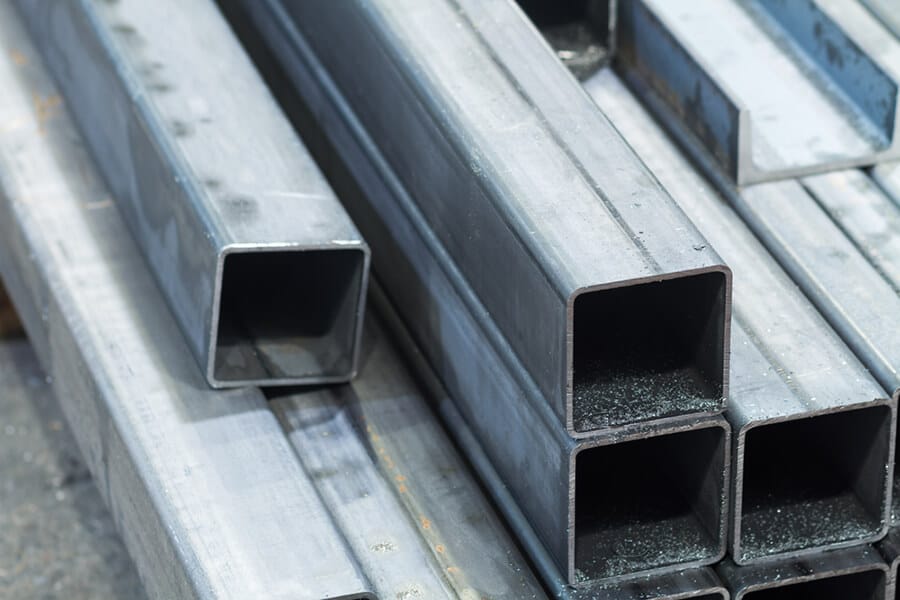
The primary distinction among these three types of carbon steels lies in their carbon content, leading to variations in their respective characteristics. The table below provides a summary of their carbon content and corresponding properties.
| Types of Carbon Steel | Carbon Content | Characteristics |
| Low carbon steel | 0.05% to 0.32% | Ductile Malleable Tough Easily joined and welded Poor corrosion resistance |
| Medium carbon steel | 0.30% to 0.60% | Stronger Harder Less ductile Less malleability Good corrosion resistance |
| High carbon steel | 0.60% to 1.7% | Very strong Very hard Poor ductility Poor malleability Better corrosion resistance |
What Is Low Carbon Steel?
Low carbon steel, also referred to as mild steel, contains a relatively lower proportion of carbon in comparison to other steel variants. Typically, its carbon content ranges from 0.05% to 0.32% by weight. Consequently, low carbon steel exhibits lower strength, hardness, and brittleness, while possessing greater malleability and ductility when compared to high carbon steel.
One significant advantage of mild steel is its cost-effectiveness. Due to its lower requirement for carbon and other alloying elements, it is generally less expensive than other types of steel. Additionally, mild steel is more widely available and easier to work with than higher carbon steels, contributing to its popularity across a multitude of applications.
Properties of Low Carbon Steel
While the melting point of low carbon steel remains relatively consistent, each grade possesses slightly varied properties. However, we can still provide a range of values to offer a general understanding of the overall characteristics of this material.
| Property | Value |
| Density | 0.103 – 0.292 lb/in³ |
| Tensile Strength, Yield | 20300 – 347000 psi |
| Fracture Toughness | 30.0 – 105 ksi-in½ |
| Shear Modulus | 10200 – 11600 ksi |
| Melting Point | 2600°F |
| Thermal Conductivity | 176 – 645 BTU-in/hr-ft²-°F |
Grades of Low Carbon Steel
The United States recognizes three primary standards for all carbon steels:
- ASTM International: Formerly known as the American Society for Testing and Materials, this organization is responsible for the development and publication of voluntary consensus technical standards on an international scale.
- AISI: The American Iron and Steel Institute holds a prominent position in driving the advancement and application of new steel and steelmaking technologies.
- SAE: Formerly the Society of Automotive Engineers, SAE International is an organization that focuses on the development of standards related to automotive engineering.
Among these three, ASTM is the most commonly utilized standard. As an example, one specific standard within the ASTM framework is ASTM A307, which specifies the requirements for carbon steel bolts, studs, and threaded rods with a tensile strength of 60,000 psi.
Within this standard, there are two grades:
- Grade A: This grade is suitable for general applications that do not require high strength or are subject to minimal stress.
- Grade B: Designed for applications where higher strength is necessary, such as flanged joints in piping systems.
Standards play a crucial role in ensuring that materials meet the necessary performance criteria for their desired applications. Conversely, grades are specific classifications within these standards that further define the properties and characteristics of the material.
Each grade possesses unique attributes determined by factors such as mechanical properties, chemical composition, and heat treatment. For instance, in the table below, you will observe the same standard – SAE J403 – with three different grades, reflecting the variation in carbon content across these grades.
The chart below concludes some commonly used grades of low carbon steel:
| Standard | Grade | Application |
| SAE J403 | 1006 | Wire products and fasteners |
| SAE J403 | 1008 | Sheet metal work, automotive components, and wire products |
| SAE J403 | 1010 | Cold heading, automotive components, and sheet metal work |
| ASTM A36/A36M | A36 | Structural steel grade used in buildings, bridges, construction equipment |
| ASTM A53/A53M | B | Structural and pressure applications, such as water and gas transmission |
| ASTM A516/A516M | 70 | Boilers and pressure vessels |
| ASTM A1011/A1011M | 33 | Sheet metal work, automotive components, and construction materials |
| ASTM A513/A513M | 1010 | Automotive parts, machinery components |
Types of Low Carbon Steel
Various types of low carbon steels exist, each with different carbon content levels. Here are some examples of different types and their respective applications:
| Type | Industry | Application |
| Low carbon structural steel | Construction | Buildings, bridges |
| Low carbon sheet and strip steel | Sheet metal work | Automotive body panels, appliances, and other uses that require thin, flat material |
| Low carbon tubing and piping steel | Construction, automotive, heavy equipment, oil and gas | Mechanical tubes, pipes for fluid transport, and structural tubing |
| Low carbon pressure vessel steel | Heavy equipment, machinery manufacturing | Boilers, pressure vessels, and other uses where material must withstand high internal pressures |
| Low carbon galvanized steel | Construction, HVAC, automotive | Roofing, automotive body panels, ductwork |
| High-strength low-alloy (HSLA) steel | Construction | Building frames, bridges, and support structures |
Applications of Low Carbon Steel
Usually, low-carbon steel undergoes minimal heat treatment and is commonly utilized in the production of various agricultural machinery, building components, containers, boxes, and furnace bodies. This steel type is typically shaped into angle steel, channel steel, I-beam, steel pipe, steel strip, or steel plate.
In the case of high-quality low carbon steel, it is rolled into thin plates for manufacturing deep-drawn products like automobile cabs and engine covers. Additionally, it is also rolled into bars for the production of mechanical parts that have low strength requirements.
What Is Medium Carbon Steel?
Medium carbon steel typically contains around 0.3 – 0.6% carbon content. It encompasses a majority of high-quality carbon structural steel as well as some ordinary carbon structural steel. This type of steel is predominantly utilized in the manufacturing of various mechanical parts, and some are employed in engineering structural components.
Medium carbon steel exhibits favorable thermal processing and cutting capabilities. However, its welding performance is inferior, necessitating preheating prior to welding. This steel displays higher strength and hardness compared to low carbon steel, yet lower plasticity and toughness than mild steel. Cold-rolled or cold-drawn material may be used directly without heat treatment, although it can also undergo heat treatment. Medium carbon steel that undergoes quenching and tempering demonstrates excellent overall mechanical properties.
Properties of Medium Carbon Steel
Each grade of medium carbon steel possesses distinct properties that set it apart from other grades within this category. The table provided below outlines a range of values for various properties associated with medium carbon steel.
| Property | Value |
| Density | 0.280 – 0.285 lb/in³ |
| Tensile Strength, Yield | 35500 – 252000 psi |
| Fracture Toughness | 73.7 – 130 ksi-in½ |
| Shear Modulus | 10400 – 11900 ksi |
| Melting Point | 2597– 2800°F |
| Thermal Conductivity | 152 – 361 BTU-in/hr-ft²-°F |
Grades of Medium Carbon Steel
Medium carbon steel products conform to specific standards, within which various grades are classified. Below are examples of commonly used grades of medium carbon steel and the corresponding standard to which they belong:
| Standard | Grade | Application |
| SAE J403 | 1045 | Gears, shafts, machine parts |
| SAE J404 | 4140 | Gears, axles, aircraft landing gears, and drilling equipment |
| ASTM A29 | 4140 | Gears, axles, and shafts |
| ASTM A829 | 4140 | Gears, axles, and drilling equipment |
| ASTM A434 | Class BD (AISI/SAE 4140) | Bolts and other fasteners, connecting rods, gears, and shafts |
| ASTM A29 | 1045 | Axles, bolts, studs, and other machinery parts |
| ASTM A576 | 1045 | Bolts, studs, couplings, bushings, shafts and gears |
Types of Medium Carbon Steel
Medium carbon steel encompasses several common types, each with its own set of applications. Some examples of medium carbon steel types and their respective applications are:
| Type | Industry | Application |
| Medium carbon structural steel | Construction, Manufacturing | Buildings, bridges, heavy-duty equipment |
| Medium carbon sheet and strip steel | Sheet metal work | Machinery parts, Automotive parts |
| Medium carbon tubing and piping steel | Construction, automotive, heavy equipment | Mechanical tubes, pipes for fluid |
| Medium carbon pressure vessel steel | Oil and gas, food and beverage, pharmaceutical | Pressure vessels |
| Medium carbon alloy steel | Automotive, Heavy machinery | Gears, shafts, axles, connecting rods |
| Medium carbon quenched and tempered steel | Automotive, Construction, Heavy machinery | Gears, axles, transmissions, crane booms, excavation arms |
Applications of Medium Carbon Steel
Medium carbon steel is commonly employed in the production of high-strength moving components like pump pistons, steam turbine impellers, heavy machinery shafts, worms, air compressors, gears, and more. It is also utilized in the manufacturing of surface wear parts, crankshafts, machine tool spindles, rollers, bench tools, and other similar items.
What Is High Carbon Steel?
High carbon steel, commonly referred to as tool steel, possesses a carbon content that typically ranges from 0.6 to 1.7%. This steel variant is recognized for its excellent corrosion resistance, owing to its elevated carbon content. The increased carbon imparts high tensile strength, hardness, and wear resistance to the steel, making it well-suited for applications that require superior strength and wear resistance.
Nonetheless, the higher carbon content renders these steels more brittle and less ductile, making them susceptible to cracking under certain circumstances. Welding high carbon steel presents additional challenges compared to steels with lower carbon content, due to the increased risk of cracking and brittleness in the heat-affected zone.
Properties of High Carbon Steel
Due to variations in standards and grades, there is no single value that encompasses the properties of high carbon steel. However, the following provides a broad range of what can be expected in terms of its properties.
| Property | Value |
| Density | 0.0163 – 0.298 lb/in³ |
| Tensile Strength, Yield | 39900 – 484000 psi |
| Fracture Toughness | 12.0 – 150 ksi-in½ |
| Shear Modulus | 11300 – 12000 ksi |
| Melting Point | 2,800-2,900°F |
| Thermal Conductivity | 1132 – 361 BTU-in/hr-ft²-°F |
Grades of High Carbon Steel
Grades of high carbon steel are categorized within specific standards. Listed below are some of the frequently utilized grades of high carbon steel:
| Standard | Grade | Application |
| ASTM A29/A29M | AISI/SAE 1060 | Springs, gears, axles, heavy-duty machinery components |
| ASTM A29/A29M | AISI/SAE 1065 | Springs, cutting tools, industrial knives, and blades |
| ASTM A29/A29M | AISI/SAE 1070 | Springs, automotive suspension components, agricultural machinery parts |
| ASTM A29/A29M | AISI/SAE 1080 | Heavy-duty springs, automotive components, heavy machinery parts |
| ASTM A295 | AISI/SAE 52100 | Bearing steel used in the manufacture of ball and roller bearings |
| ASTM A600 | AISI/SAE M2 | High-speed tool steel used for cutting tools, drills and taps |
| ASTM A686 | AISI/SAE W2 | Water-hardening tool steel used for cutting tools, dies, punches, and woodworking tools |
Types of High Carbon Steel
This chart includes types and applications of high carbon steel:
| Type | Industry | Application |
| Plain high carbon steel | Manufacturing, automotive, construction | Springs, knives, cutting tools, brake components |
| High carbon tool steel | Manufacturing, metalworking, woodworking | Cutting tools, punches, dies, injection molding tools, extrusion dies, router bits |
| High carbon bearing steel | Industrial machinery, automotive, aerospace | Ball and roller bearings for engines; also, transmissions, wheels, heavy machinery, gearboxes, pumps |
| High carbon spring steel | Electronics, automotive, manufacturing | Leaf springs, coil springs, machinery, springs for electronic devices |
Applications of High Carbon Steel
High carbon steel finds predominant usage in applications that demand exceptional durability and wear resistance. This includes the manufacturing of knife blades or saw blades, where toughness is not a significant concern since these components are not subjected to substantial impacts that may cause them to break. In contrast, structural components like I beams, which are made from medium or low-carbon materials, require different properties to withstand the loads and impacts they may experience.
Learn More about Our CNC Machining Steel Service
Conclusion
Each grade of carbon steel – low, medium, and high – possesses unique characteristics that render them suitable for different applications, determined by their specific properties and welding requirements.
Low carbon steel is widely recognized as the most weldable grade due to its relatively high ductility, which ensures adequate strength levels. This makes it an ideal choice for structural components like I beams or similar load-bearing structures that necessitate a combination of strength and formability within a single material.
On the other hand, medium and high carbon steels offer improved hardness and strength, but exhibit weak formability and toughness compared to low carbon grades. These properties lend themselves well to applications that require superior wear resistance, such as tools like saw blades and knives, which benefit from abrasive wear protection.
Understanding the behavior of each grade during the fabrication process is crucial in selecting the appropriate grade for your specific application. Seeking guidance from professionals, such as the experts at Ancastings Precision who offer custom CNC machining services, can ensure that you receive professional suggestions on material selection and an integrated solution for your projects. Get an instant quote to start your project right now!
Other Articles You May Be Interested in:
Polycarbonate vs. Acrylic: Their Difference
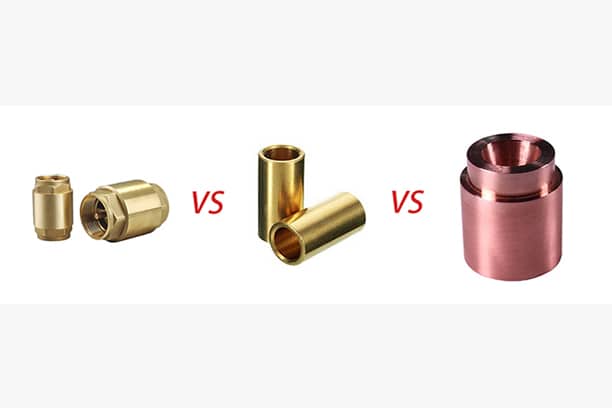
Bronze vs. Brass vs. Copper: Their Difference