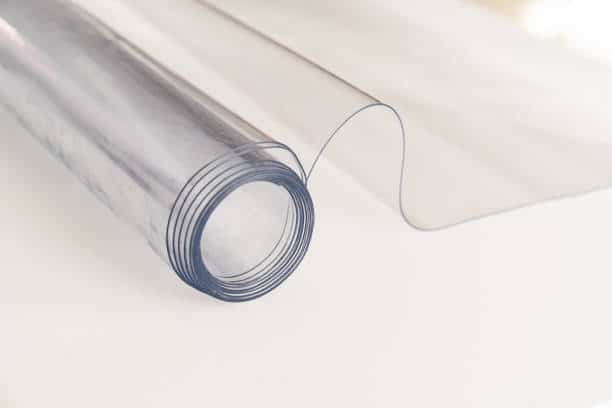
When it comes to working with plastic CNC machining or materials, the thickness of the plastic is an important factor to consider. If you are not sure how to convert plastic film thickness gauge measuring units, such as Mil, MM, or other units, this guide will offer you the calculation formula as well as the plastic gauge thickness chart for reference.
Plastic Film Thickness Gauge to Mil Conversion Chart
To convert these thickness units, you can refer to this method: a mil is 1000 times an inch, the gauge is (100) x (mils), and to go from mils to microns, you have to multiply by mils x 25.4. Therefore, the formula for calculating the plastic specification is as follows:
- Mil = 1000 x Inch
- Micron = Mil x 25.4
- Micron = Gauge x 0.254
- Gauge = 100 x Mil
- Gauge = Micron x 3.937
Here, we offer a gauge conversion chart for your reference, helping you find your plastics’ proper thickness with specific data.
| Gauge | Mil | Micron | Millimeter | Inch | Centimeter |
| 30 | 0.30 | 7.6 | 0.0076 | 0.0003 | 0.000762 |
| 35 | 0.35 | 8.9 | 0.0089 | 0.00035 | 0.000889 |
| 40 | 0.40 | 10.2 | 0.0102 | 0.0004 | 0.001016 |
| 45 | 0.45 | 11.4 | 0.0114 | 0.00045 | 0.001143 |
| 50 | 0.50 | 12.7 | 0.0127 | 0.0005 | 0.00127 |
| 55 | 0.55 | 14.0 | 0.0140 | 0.00055 | 0.001397 |
| 60 | 0.60 | 15.2 | 0.0152 | 0.0006 | 0.001524 |
| 55 | 0.65 | 16.5 | 0.0165 | 0.00065 | 0.001651 |
| 70 | 0.70 | 17.8 | 0.0178 | 0.0007 | 0.001778 |
| 75 | 0.75 | 19.1 | 0.0191 | 0.00075 | 0.001905 |
| 80 | 0.80 | 20.3 | 0.0203 | 0.0008 | 0.002032 |
| 90 | 0.90 | 22.9 | 0.0229 | 0.0009 | 0.002286 |
| 100 | 1.00 | 25.4 | 0.0254 | 0.001 | 0.00254 |
| 110 | 1.10 | 27.9 | 0.0279 | 0.0011 | 0.002794 |
| 120 | 1.20 | 30.5 | 0.0305 | 0.0012 | 0.003048 |
| 130 | 1.30 | 33.0 | 0.0330 | 0.0013 | 0.003302 |
| 140 | 1.40 | 35.6 | 0.0356 | 0.004 | 0.003556 |
| 150 | 1.50 | 38.1 | 0.0381 | 0.0015 | 0.00381 |
| 160 | 1.60 | 40.6 | 0.0406 | 0.0016 | 0.004064 |
| 170 | 1.70 | 43.2 | 0.0432 | 0.0017 | 0.004318 |
| 180 | 1.80 | 45.7 | 0.0457 | 0.0018 | 0.004572 |
| 190 | 1.90 | 48.3 | 0.0483 | 0.0019 | 0.004826 |
| 200 | 2.00 | 50.8 | 0.0508 | 0.002 | 0.00508 |
| 300 | 3.00 | 76.2 | 0.0762 | 0.003 | 0.00762 |
Tips:
- Gauge is usually used for thickness below 1mil.
- Mil is the unit of measurement in the United States, and Micron (um or Micrometer) is the thickness measurement in the metric system.
- Measurements in microns are normally rounded to the nearest whole number. For instance, 7.62 microns is often expressed as 7.6.
- When it comes to work with flexible barrier plastics, the mil to micron conversion is mostly the most crucial conversion.
- Gauge measurements for plastic differ from wire gauges for plastic gauge measurement, the larger the micron/gauge/millimeter, the thicker the film.
Do not want to check these data one by one? This Gauge to Mil Conversion Calculator is an ideal tool to help you to get results rapidly and correctly.
What Thickness of Plastic Film Do I Need?
If you are unfamiliar with plastic measurements, you may feel confused about how to convert the gauge units. The plastic gauge thickness is a measure of the thickness of a plastic film, sheet, or other plastic material. It is typically expressed in mils (thousands of an inch), with a higher number indicating a thicker material. The plastic gauge thickness is a critical factor in many applications, as it affects physical properties such as strength, flexibility, and durability.
The benefits of controlling plastic gauge thickness include improved product performance, reduced waste, lower costs, consistency, and the ability to use thinner materials for the same application. Especially for beginners in designing and developing products, the gauge to mil conversion chart does help them target the proper thickness of plastics.
Learn more about our CNC machining materials
Start Your Plastic CNC Machining Project Now
If you’re looking for a manufacturer to solve your Plastic CNC Machining needs, Ancastings is your premier choice. We have stocked a broad range of various kinds of plastic materials in a variety of finishes and thicknesses for your choice. And our experts are ready to help you select the exact materials and thickness suitable for your projects, ensuring you get the highest quality of CNC machined plastic components conforming to the specifications your project needs.
If you have any questions about your machining project, the online quote is available.
Other Articles You May be Interested in:

Difference Between Thermoset & Thermoplastic

UV-Resistant Plastics: Difference between Polypropylene and Nylon