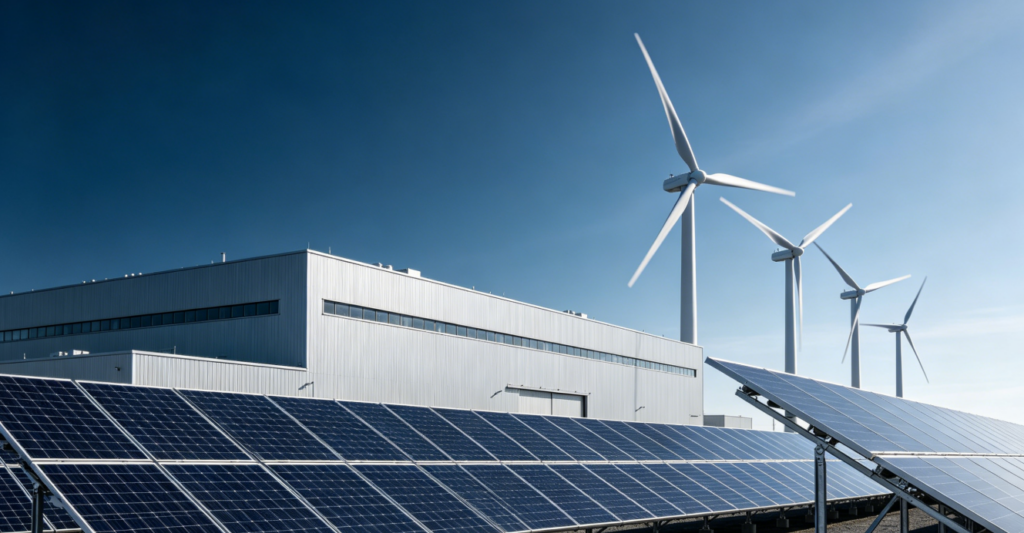
The global energy industry is changing fast. As Europe, North America, and Japan move more quickly toward renewable energy infrastructure, the need for strong, high-precision mechanical parts is higher than ever. Wind turbines—especially the large offshore ones used in the North Sea and along the Atlantic coast—are great examples of engineering. They work under constant mechanical stress and harsh environmental conditions that can cause corrosion.
Every wind turbine blade that spins efficiently relies on a set of large CNC-machined parts (main shafts, gearbox housings, and slew bearings). These parts must meet very tight tolerances—measured in microns, not millimeters. At Ancastings Precision, we connect the needs of heavy industry with Swiss-level precision. While we’re well-known for making complex medical devices, our large-scale machining abilities are a perfect fit for the renewable energy supply chain.
The Backbone of Wind Energy: Why Precision in Large Parts Matters
In the nacelle of a multi-megawatt wind turbine, there is no room for mistakes. A single main shaft or planetary gear carrier can weigh several tons. It needs to transfer huge amounts of torque while staying perfectly aligned.
The Cost of Inaccuracy
If a large turbine shaft is machined even slightly off in concentricity or surface finish, the results are disastrous: more friction, faster bearing wear, and unplanned downtime. For offshore wind farm operators, maintenance costs are much higher because of logistical challenges. So component longevity is a must.
This is where specialized CNC machining providers stand out. It’s not just about having a big machine—it’s about keeping tight tolerances over a 78-inch length. Ancastings’ facility is set up to handle these challenges. We make sure parts like main shafts, bearing housings, and torque arms are consistent enough to last 20+ years.
Ancastings’ Heavy-Duty Machining Capabilities for Turbine Applications
Wind energy components are a special type of manufacturing: large, complex, and high-value. Many general machine shops have the right spindle but lack the space or multi-axis capability to handle them. Ancastings Precision solves both problems.
5-Axis Complexity for Optimized Aerodynamics
While shafts need length, other components need contouring. The hub of a wind turbine—where the blades attach—has a complex shape that needs 5-axis CNC machining. Ancastings’ 5-axis capabilities let us machine complex angles and surface profiles without repositioning the part.
For smaller energy systems, like micro-turbines or hydrokinetic generators, 5-axis machining is essential. It’s used to make impellers and rotors that work well with fluid dynamics. We use advanced toolpath strategies to make sure every curve and blade profile matches the engineering design exactly. This directly improves the system’s energy capture efficiency.
Material Expertise for Harsh Environments
Wind turbines are like material science test sites in real-world conditions. Their components must stand up to extreme temperature changes, salt spray corrosion, and constant vibration fatigue. Choosing and machining the right material is crucial.
| Material Grade | Typical Wind Turbine Application | Machining Consideration |
| 4140/4340 Alloy Steel | Main Shafts, Gears, Fasteners | High strength and can be heat-treated. Ancastings maintains tight tolerances even when the material moves during stress relief. |
| 316 Stainless Steel | Hydraulic Manifolds, Control Panels | Excellent corrosion resistance. Machining needs sharp tools and controlled feeds to prevent work hardening. |
| Duplex & Super Duplex SS | Offshore Platform Hardware, Fasteners | Great resistance to chloride stress corrosion cracking (CSCC). Ancastings has the rigidity to machine these tough alloys efficiently. |
| Titanium Alloys | Lightweight Sensor Mounts, Nacelle Components | Critical for reducing weight. Our team uses specific toolpath strategies to avoid heat buildup, which is common when machining titanium. |
Quality Assurance and Traceability in Energy Components
The energy sector—especially the European market—requires full traceability and documentation. Whether it’s a prototype for a new turbine design or a production run of 1,000+ bearing housings, quality control is part of every step.
Ancastings’ workflow for these critical components includes:
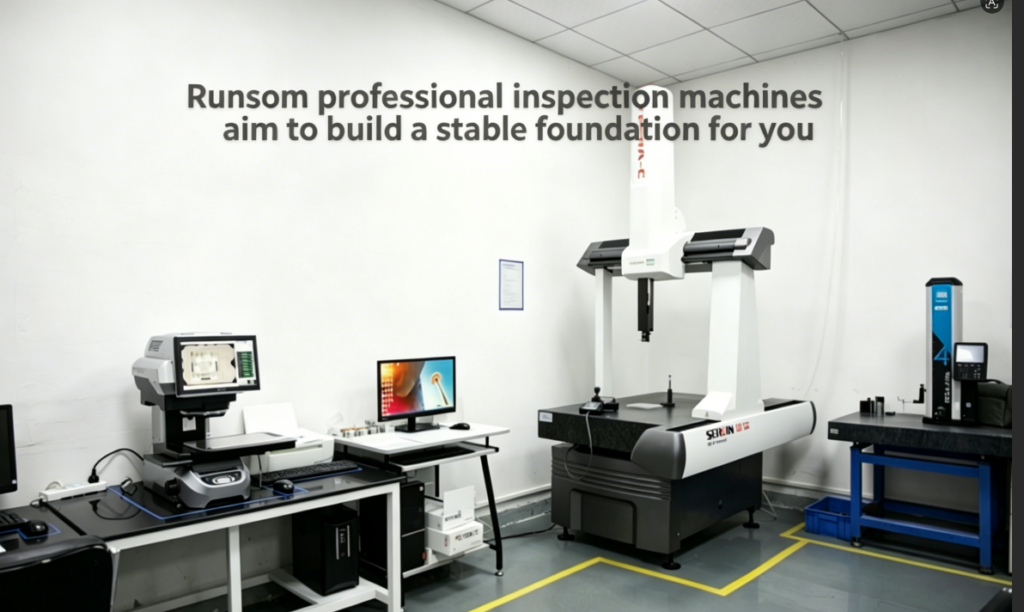
- Dimensional Verification: Using advanced CMM (Coordinate Measuring Machines) to check that features on a 70-inch part match the CAD model within ±0.0005 inches.
- Material Certifications: Providing material mill test reports (MTRs) to make sure we meet industry standards for pressure and stress.
- Surface Finish Analysis: Ensuring the surface roughness meets exact specs for bearing seats and seal surfaces.
This strict approach means that when a component leaves our facility in China and arrives at an assembly plant in Hamburg or Houston, it’s ready to install right away—no rework needed.
From Prototype to Production: Scalable Solutions for Energy Innovators
The renewable energy industry isn’t just for established turbine OEMs. It’s also driven by startups developing next-generation kite power, tidal energy, or smaller community wind projects. These innovators often struggle to move from a working prototype to large-scale production.
Ancastings Precision specializes in closing this gap. We offer:
- Rapid Prototyping: CNC machining functional prototypes from solid billet to test the design before investing in expensive casting tools.
- Low-Volume Production: Filling the gap as demand grows.
- Full-Scale Manufacturing: Supporting high-mix, low-volume (HMLV) production runs common in heavy machinery and energy sectors.
Ancastings’s case sharing: Solving Differential Surface Treatment Challenges for Large Energy Storage Enclosures
In renewable energy and energy storage systems, equipment enclosures serve far more than just a packaging function—they are the first line of defense, protecting sensitive electronic components from corrosion, electromagnetic interference, and harsh environmental exposure. Recently, Ancastings Precision partnered with an energy equipment manufacturer to overcome a particularly challenging process hurdle. This case exemplifies our engineering collaboration capabilities in complex surface treatment and precision manufacturing.
Project Background and Challenge
The project involved a large metal box kit designed to house critical energy storage control systems. The lid and box required perfect precision mating, but the true technical challenge lay in the surface treatment specifications:
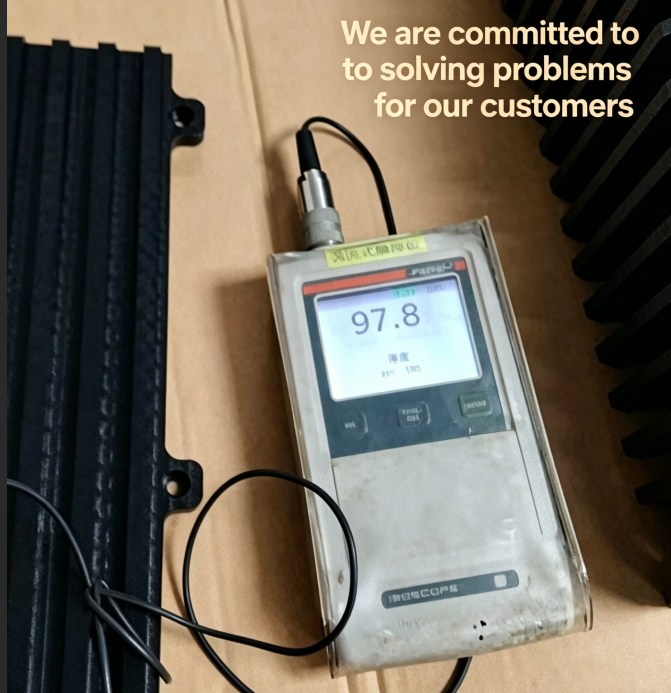
Exterior Requirement: Black hard anodized finish with a coating thickness of 80-100μm (industry standard is typically around 40μm). This exceptional thickness requirement was specified to ensure long-term corrosion resistance in coastal, high-salinity, and high-humidity environments typical of energy installations.
Interior Requirement: The interior surfaces must remain completely uncoated to ensure electrical grounding continuity and to preserve the tight assembly tolerances of internal precision guide rails, which would be compromised by coating thickness.
Core Contradiction: Achieving ultra-thick exterior coating alongside a zero-coating interior on the same component is a challenge that conventional anodizing processes struggle to address.
Three Iterations to Breakthrough
We conducted multiple rounds of collaborative testing with the client, ultimately arriving at a robust solution:
| Attempt Phase | Process Method | Outcome Assessment |
| First Attempt | Full immersion anodizing with internal sealing rings for masking | Interior uncoated area successfully protected; however, exterior thickness reached only 50μm, falling short of the 80-100μm requirement. |
| Second Exploration | Separate anodizing of upper and lower components | Exterior thickness achieved target; however, interior masking failed, unable to achieve precise protection of uncoated areas. |
| Final Breakthrough | Introduction of CNC laser marking for precision masking | High-precision laser pretreatment enabled precise masking of interior areas during the anodizing process, while exterior thickness consistently reached 80-100μm. |
After repeated testing and process parameter optimization, we successfully delivered batches fully compliant with client specifications. This solution has now been integrated into our standard process capabilities and is available for similar energy equipment production runs.
This case directly addresses core challenges faced in wind, solar, and energy storage manufacturing:
Weathering Resistance: Energy equipment deployed in offshore, desert, or high-altitude locations demands exceptionally thick anti-corrosion coatings.
Coexisting Functionalities: Enclosures must simultaneously provide shielding, grounding, heat dissipation, and structural support—making differential surface treatment a critical requirement.
Assembly Precision: Managing fit-up clearances on large-format components after thick coating application is a widespread industry pain point.
Ancastings Precision is committed to working alongside our clients to break through technical barriers through engineering collaboration. Whether it’s complex anodizing specifications or large-scale 5-axis machining challenges, we are dedicated to delivering solutions.
Ensuring a Reliable Energy Transition with Precision
As the world demands cleaner energy, the machines that capture that energy must be built to last. Choosing a manufacturing partner for large-scale, high-tolerance CNC work is a key decision.
At Ancastings Precision, we combine the size of 78-inch machining envelopes with the precision of 5-axis technology. We invite procurement specialists and engineering leads in the wind and energy sector to see how our capabilities can support your next project.
Need a quote on a large turbine component or a complex 5-axis housing? Contact our engineering team today to discuss your specific material and tolerance needs.