
In the fast-evolving world of medical robotics, we understand that every detail matters. A 0.01mm error isn’t just a defect—it’s a safety risk that can impact lives. This is why many surgical teams continue to place their trust in CNC machining over 3D printing for critical end-effectors.
From the precision of the da Vinci Surgical System to advanced robotic prosthetics and automated lab equipment, every innovation relies on tightly manufactured, high-performance components.
For engineering and procurement teams at medical device companies, the challenge remains consistent: sourcing components that hold microscopic tolerances, meet biocompatibility standards, and maintain long-term mechanical integrity. Precision CNC machining has become essential to making medical robotics work reliably at scale.
In this guide, we break down the real role CNC machining plays in robotic medical systems, the materials driving next-generation devices, and how Ancastings Precision delivers the accuracy needed for life-critical applications.
Why CNC Machining Remains the Top Choice for Medical Robotics
Additive manufacturing and 3D printing have come a long way for prototyping, but when it comes to production-grade end-use parts for medical robots, CNC machining is still the preferred solution. The reason comes down to the non-negotiable demands of the medical industry.
Unmatched Precision and Tight Tolerances
Medical robots—especially those used in minimally invasive surgery—depend on parts that move smoothly and accurately at sub-millimeter levels. Even a 0.01mm deviation can affect surgical safety and performance. Achieving a ±0.005mm tolerance on a 5-axis titanium joint is no small feat—it requires rigorous thermal drift management. In medical robotics, even a 2°C fluctuation in spindle temperature can lead to part rejection. At Ancastings, we mitigate this through real-time thermal compensation and environmental climate control to ensure every linkage performs identically, so robotic joints, linkages, and sensor housings fit consistently every single time.
Superior Surface Finish
Microscopic uneven surfaces can harbor bacteria and compromise sterilization. Medical components require exceptionally smooth finishes to withstand autoclaving and repeated cleaning. CNC machining naturally delivers high-quality surface finishes down to Ra 0.8 or better, which can be further refined with electropolishing or passivation when needed.
Broad Material Compatibility
Unlike many forming or printing processes, CNC machining works with nearly every material used in medical devices. That includes high-strength Grade 5 titanium, implant-grade stainless steel, and advanced medical plastics such as PEEK.
Key Components We Manufacture for Medical Robotic Systems
Every great robotic system is the sum of its parts. At Ancastings Precision, we take pride in focusing on the most complex and critical components that bring these systems to life

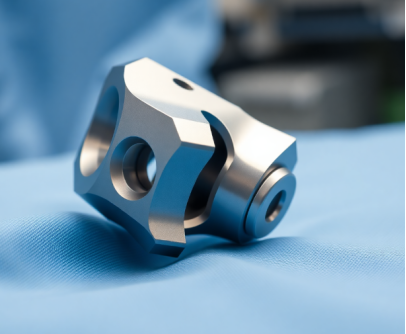
Figure 1: High-precision robotic surgical arm components machined to sub-millimeter tolerances, ensuring smooth multi-axis motion during minimally invasive procedures.
Robotic Surgical Arm Joints and Linkages
The arm assemblies of surgical robots need to be lightweight yet extremely rigid. Using 5-axis CNC machining, we produce complex geometries in a single setup, minimizing errors and ensuring smooth, predictable multi-axis motion in surgical use.
End-Effector Tool Holders
The end-effector acts as the functional tip of the robot, holding scalpels, cautery tools, and grippers during procedures. These parts require precise internal channels and high-strength threads to securely hold interchangeable tools under real surgical loads.
Sensor Housings and Electronic Enclosures
Medical robots use dozens of sensors to detect position, force, and environment. We machine custom enclosures from aluminum and stainless steel that protect sensitive electronics from moisture, heat, and electromagnetic interference—all while keeping the overall design compact.
Precision Gear Systems and Actuators
Smooth, responsive motion starts with high-quality gears. Our CNC milling and turning services produce precision gears with minimal backlash, giving surgeons the haptic feedback needed to perform remote procedures confidently.
Material Selection for Biocompatibility and Long-Term Performance
Choosing the right material means balancing mechanical performance with strict FDA and ISO compliance requirements.
Beyond mechanical strength, we evaluate materials based on their sterilization lifecycle. For instance, we ensure our 316L surface treatments can withstand repeated VHP (Vaporized Hydrogen Peroxide) plasma cleaning without degradation.
| Material | Key Benefits | Typical Applications |
| Titanium (Grade 5 / Ti-6Al-4V) | Biocompatible, high strength-to-weight, corrosion-resistant | Orthopedic implants, robotic prosthetics, surgical instruments |
| Stainless Steel (316L) | Low-carbon, excellent chemical & corrosion resistance | Robotic frames, end-effectors, sterilization trays |
| Medical-Grade PEEK | Radiolucent, heat-resistant, lightweight | Insulators, bushings, non-conductive tool components |
| Aluminum (6061 / 7075) | Cost-effective, lightweight, highly machinable | Structural frames and external housings for larger systems |
Technical note: For robotic components made from POM (Acetal) that require engraved labeling, we generally recommend CNC engraving instead of laser marking. This avoids surface charring and creates clean, deep grooves ideal for color filling.
Advanced Manufacturing Capabilities at Ancastings Precision
We’ve built our workflow to support clients across North America, Europe, and Japan, ensuring our high-performance CNC equipment stays up to the task for complex medical geometry.
5-Axis CNC Machining
Many medical robotic components feature organic shapes and undercut features. Our 5-axis machines allow us to access five sides of a part in one operation, reducing setup time and improving accuracy by eliminating repeated re-fixturing.
Swiss-Type Lathe Machining
For small, slender pins and connectors used in robotic sensors, our Swiss-type turning is specifically tuned for the high slenderness ratios common in robotic pins. By supporting the workpiece right next to the cutting tool, we eliminate part deflection, maintaining extreme concentricity on components as small as 1mm in diameter—even at higher production volumes.
Rigorous Quality Control
Every part leaving our facility goes through structured inspection:
- Dimensional verification using CMM
- Surface roughness testing to support sterilization
- Material certification to confirm medical-grade alloy authenticity
How Ancastings Precision Addresses Real Industry Challenges
Medical robotics comes with unique pressures: fast development cycles, strict regulatory oversight, and the need to scale production without losing quality.
Supporting Faster R&D with Prototyping
We believe that communication is the key to success. We know early designs often change as innovation moves forward. Our team is always here to provide Design for Manufacturing (DFM) feedback early in development to help optimize geometries, lower costs, and shorten lead times.
Global Logistics & Regulatory Understanding
With clients across Europe, North America, Japan, and Australia, we understand international shipping requirements and the documentation needed for medical-grade components.
Partnering for the Future of Medical Robotics
The reliability of a medical robot starts with its smallest components. Precision in joints, consistency in materials, and quality in manufacturing all directly affect patient safety and device performance.
After years of milling complex parts for the medical sector, we’ve learned that standard CNC practices aren’t enough. It takes a specific understanding of how Grade 5 Titanium reacts under high-speed spindles and how to maintain ISO-level cleanliness across the entire production floor. Whether you’re developing a next-generation exoskeleton or scaling production for a surgical tool, our team has the capability to bring your design to life with the precision it demands.
Ready to move forward with your medical robotics project? Get in touch with Ancastings Precision today for a detailed quote and technical consultation. Let’s build the future of healthcare—together.

SEO Meta Description
Standard CNC practices aren’t enough for the medical sector. It takes a specialized understanding of how Ti-6Al-4V reacts under high-speed spindles and how to maintain ISO-level cleanliness. Whether you are navigating a complex DFM challenge or scaling a surgical platform, our team provides the technical consultation to bring your design to life.