
Silicone rubber moldings are a unique blend of flexibility, durability, and resilience, and have earned their reputation by consistently delivering quality and precision.
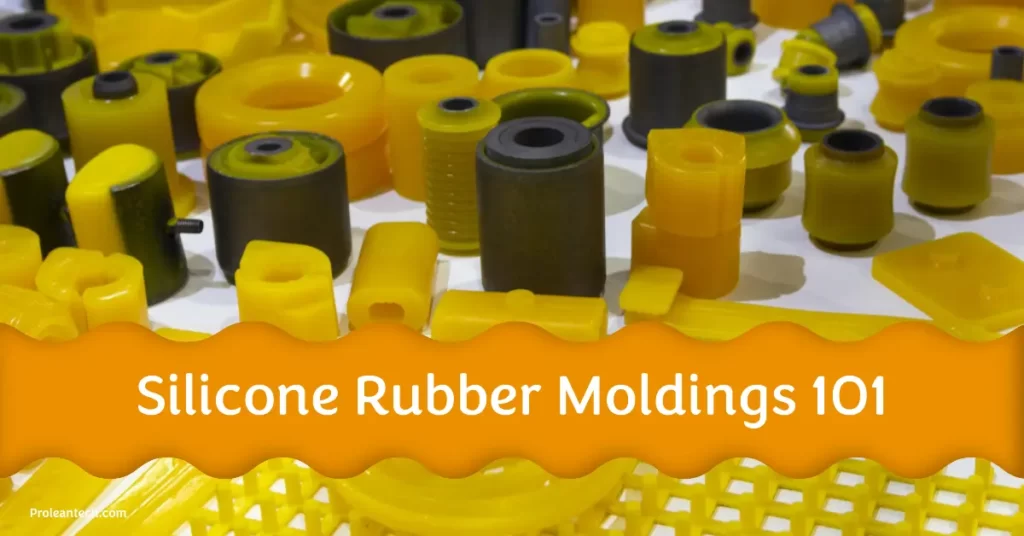
Silicone rubber moldings, a fusion of science and practicality, serve as the backbone of countless industries, thanks to their versatile applications. From the automotive sector to medical applications, the influence of silicone rubber moldings is both vast and varied. As the demand for intricate designs, enduring materials, and cost-effective solutions surges, silicone rubber moldings stand out as a pivotal answer.
Fundamentals of Silicone Rubber Moldings
Silicone rubber stands apart from conventional rubber types, primarily because of its origin and unique properties. Derived from silica, found abundantly in sand and quartz, silicone rubber undergoes a series of chemical processes to attain its final form. Unlike organic rubbers made from petrochemicals, silicone rubber boasts of inorganic chains. This structure gifts it with unparalleled temperature resistance, making it functional in both freezing cold and scorching heat. Additionally, its water-resistance and non-reactivity make it a prime choice for myriad applications, from kitchen utensils to life-saving medical devices.
Furthermore, silicone rubber’s elasticity ensures that it can be molded into intricate designs without compromising its structural integrity. It is also resistant to UV light, ozone, and even certain chemicals, enhancing its lifespan and making it a robust material choice for numerous applications.
Click to download: Silicone rubber for mold making, prototype casting, and pad printing
The Rising Popularity of Silicone Rubber
There are multitudes of reasons behind the soaring popularity of silicone rubber in today’s industries. Let’s navigate through some of the paramount factors:
- Diverse Application Range: Its innate properties, such as high temperature and chemical resistance, make it suitable for various sectors. Whether it’s the healthcare sector requiring biocompatible materials or the automotive industry needing heat-resistant parts, silicone rubber caters to them all.
- Eco-friendliness: As industries gravitate towards sustainable solutions, silicone rubber stands out. Its production emits fewer carbon footprints compared to its counterparts, and its longevity reduces the need for frequent replacements, making it an environmentally conscious choice.
- Unparalleled Flexibility: Silicone rubber can be molded into an array of intricate designs, giving designers the liberty to bring their most complex visions to life.
- Health and Safety: Silicone rubber’s non-toxic and hypoallergenic traits make it a favored material in the food and medical sectors. Its ability to withstand sterilization processes without degrading ensures it remains safe for both consumers and patients.
- Economic Viability: While the initial costs might seem substantial, the durability and reduced maintenance expenses associated with silicone rubber products make them cost-effective in the long run.
- Global Accessibility: As silicone rubber’s demand grew, so did its production and distribution. Today, industries across the globe have easy access to high-quality silicone rubber, facilitating its omnipresence in products we use daily.
Silicone Rubber Molding Process
Overview of the Molding Process
Silicone rubber molding involves transforming raw silicone rubber into final products that echo precision and utility. Let’s venture into the fundamental steps that form the bedrock of this procedure:

- Material Selection: Depending on the end application, the right type of silicone rubber is chosen. Factors like durability, elasticity, and heat resistance are paramount.
- Mixing and Coloring: The raw silicone is mixed with desired colorants or other additives to achieve the desired hue or properties.
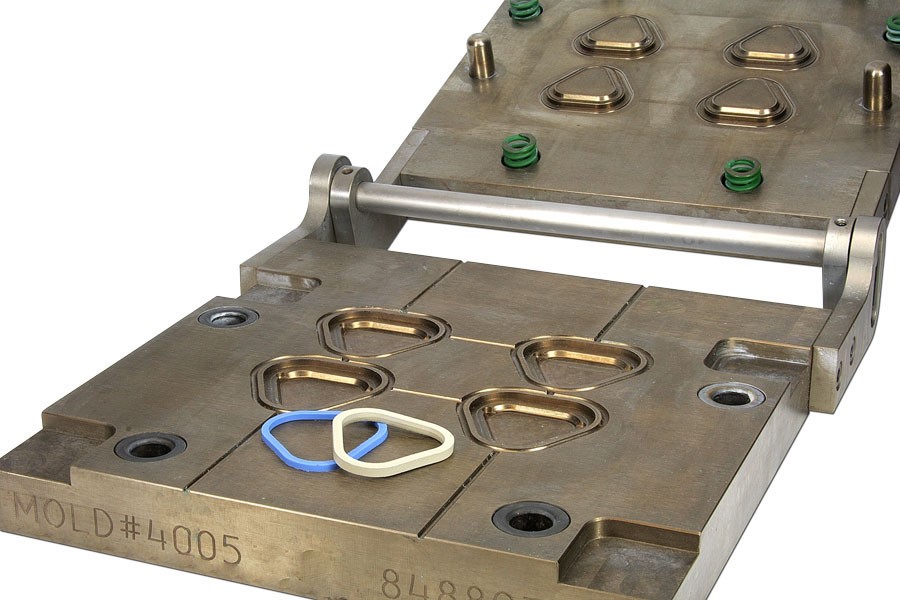
- Mold Creation: Prior to the actual molding, a mold (often made from metals like aluminum) reflecting the final product’s design is crafted meticulously.
- Molding: The silicone rubber mixture is then introduced into the mold. Depending on the process (like compression, transfer, or injection molding), the rubber is cured using heat and pressure.
- De-molding and Inspection: Post curing, the molded part is extracted, followed by rigorous quality checks. Imperfections, if any, are rectified or discarded.
- Post-processing: This might involve additional steps like painting, joining components, or applying surface treatments to enhance the product’s aesthetics or functionality.
Key Equipment in Silicone Rubber Molding
Navigating the expansive realm of silicone rubber molding is incomplete without understanding the instrumental machinery that empowers the process. These machines ensure efficiency, precision, and uniformity in the products. Below is a detailed list of equipment crucial to the silicone rubber molding journey:
- Mixing Machines: These ensure that the raw silicone, colorants, and other additives are uniformly blended. Achieving a homogenous mix is pivotal for the end product’s consistency.
- Molds: Often crafted from metals like aluminum or steel, molds are the heart of the molding process. Their design, precision, and quality directly influence the final product.
- Molding Presses: These machines, depending on the molding method, exert the necessary pressure and heat to cure the silicone rubber. Examples include compression molding presses and injection molding machines.
- Curing Ovens: Post molding, these ovens ensure that the product is completely cured, solidifying the silicone and ensuring its durability.
- Trimming and Finishing Equipment: Once de-molded, the silicone products might have excess material or require additional finishing touches. Machines like laser cutters or trim tables come into play here.
- Inspection Machines: Quality assurance is paramount. Advanced machines equipped with cameras and sensors inspect the products for defects or discrepancies.
- Storage Units: While often overlooked, proper storage solutions for both raw silicone and final products are imperative. It ensures the material remains uncontaminated and the products undamaged.
Different Types of Silicone Rubber Moldings
Silicone rubber molding has emerged as an imperative process in numerous industries, attributing to silicone’s impressive range of properties. From automotive parts to medical devices, the versatility of silicone rubber molding stands unrivaled. At its crux, there are several types of molding methods, each with its unique advantages and applications. Let’s dive deep into two prominent methods: Compression Molding and Liquid Silicone Rubber (LSR) Molding.
Compression Molding Silicone Rubber
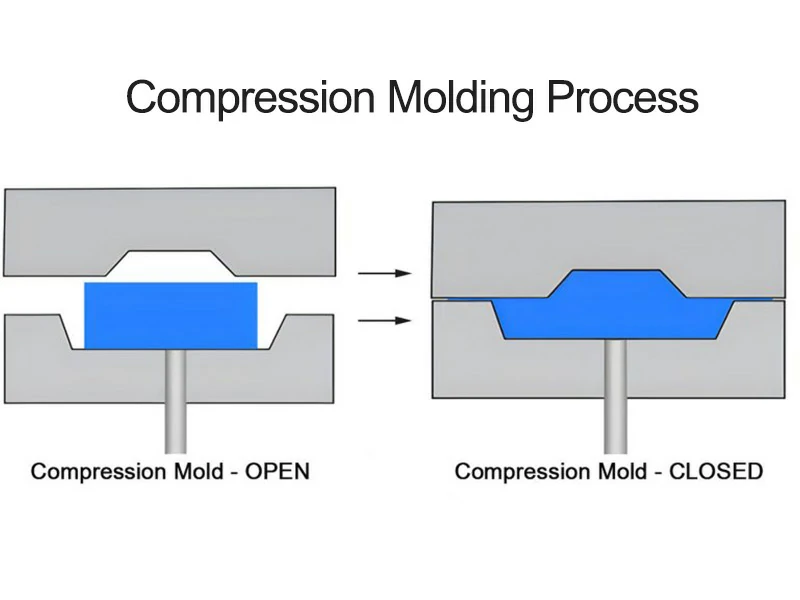
Compression Molding Principal
Tracing back to the early days of silicone rubber molding, compression molding remains a stalwart. This method is particularly suited for medium-hardness compounds and offers several advantages in specific scenarios.
- Process Steps:
- Material Preparation: Silicone rubber is preheated and cut to match the mold’s size.
- Mold Charging: The pre-cut material is placed manually into the mold cavity.
- Molding: The mold is closed and subjected to heat and pressure, allowing the silicone to take the mold’s shape.
- Curing: The silicone rubber is cured under sustained pressure and temperature.
- De-molding: Post curing, the molded product is removed.
- Key Advantages:
- Economical for small batches.
- Minimal waste generation.
- Versatility in accommodating various materials and formulations.
- Simplicity and ease of operations.
- Limitations:
- Slower cycle times compared to other methods.
- Manual material placement might lead to inconsistencies.
Applications:
- Seals and gaskets.
- Key-pads for electronic devices.
- Medical equipment components.
Liquid Silicone Rubber (LSR) Molding
.webp)
Liquid Silicone Rubber (LSR) Molding, a subset of injection molding, is synonymous with precision and efficiency. Employing liquid silicone rubber as its prime material, this method stands out for producing intricate designs with impeccable consistency.
- Process Steps:
- Material Preparation: Liquid silicone rubber, being a two-component system, requires its parts to be mixed thoroughly.
- Injection: The mixed liquid silicone is injected into the mold cavity.
- Molding: With precise control over temperature and pressure, the mold ensures the silicone adopts its design.
- Curing: Given the thermosetting nature of silicone, it solidifies upon heating.
- De-molding: The final product, post curing, is ejected from the mold.
- Key Advantages:
- High precision and repeatability.
- Efficient for mass production.
- Reduced cycle times.
- Capable of producing intricate designs with tight tolerances.
- Limitations:
- Initial setup cost can be high.
- Requires specialized equipment for mixing and injecting.
Applications:
- Medical devices like catheters and seals.
- Automotive components such as sensors and valves.
- Baby care products like nipples and pacifiers.
Table: Comparative Analysis of Compression vs. LSR Molding
| Parameter | Compression Molding | LSR Molding |
|---|---|---|
| Material State | Solid/semi-solid | Liquid |
| Speed | Slower | Faster |
| Precision | Moderate | High |
| Cost for Small Batches | Economical | Higher Initial Cost |
| Suitability for Complex Parts | Limited | Excellent |
| Waste Generation | Minimal | Depends on sprue and runner design |
Let’s Start A New Project Today
Silicone Rubber Moldings in Modern Industries
The modern industrial landscape is in a perpetual state of flux, driven by innovations, demand shifts, and technological advancements. Amidst these changing dynamics, silicone rubber moldings have carved a niche for themselves, gaining prominence in multiple sectors. Notably, the medical and automotive industries are witnessing a transformative impact due to the advantages of silicone rubber moldings. Let’s explore the expansive applications of silicone rubber moldings in these two pivotal industries.
Medical Applications
The medical field, with its stringent requirements for sterility, durability, and safety, has welcomed silicone rubber moldings with open arms. This acceptance stems from the material’s biocompatibility, resistance to bacterial growth, and versatility in application.
- Catheters and Tubing: The non-reactive nature of silicone rubber makes it a prime choice for catheters and medical tubing. Being body-friendly, these items don’t cause allergic reactions, ensuring patient safety.
- Implantable Devices: From cochlear implants to pacemakers, silicone rubber’s biocompatibility and resilience to bodily fluids make it an ideal choice for devices that are implanted into the human body.
- Surgical Instruments: The ability to sterilize silicone rubber without it degrading allows surgical tools with silicone components to be reused, promoting both safety and sustainability.
- Seals and Gaskets: Ensuring that medical devices are sealed effectively is paramount. Silicone rubber moldings provide airtight and leak-proof seals, essential for devices like infusion pumps or respirators.
- Wearable Medical Devices: The comfort and flexibility of silicone rubber are instrumental in wearable devices like glucose monitors or insulin pumps. Its adaptability ensures the wearer’s comfort without compromising the device’s functionality.
The sheer adaptability and biocompatibility of silicone rubber moldings have undeniably revolutionized medical applications. The material meets the stringent standards of the medical industry, ensuring both functionality and safety.
Table: Key Applications of Silicone Rubber in the Medical Sector
| Application | Importance |
|---|---|
| Catheters and Tubing | Biocompatibility ensures no allergic reactions |
| Implantable Devices | Durability in the face of bodily fluids |
| Surgical Instruments | Can be sterilized and reused multiple times |
| Seals and Gaskets | Provides airtight seals for critical medical devices |
| Wearable Devices | Balances functionality with wearer comfort |
Automotive Innovations
As the automotive industry pivots towards sustainability, efficiency, and enhanced user experience, silicone rubber moldings are playing an integral role in this transition. The material’s thermal stability, durability, and flexibility make it a favorite among automotive engineers and designers.
- Gaskets and Seals: Given the high temperatures and pressures within engines, silicone rubber is the go-to material for gaskets and seals, preventing leaks and ensuring optimal engine performance.
- Sensors and Electric Insulation: With cars becoming smarter, there’s an upsurge in electronic components. Silicone rubber moldings provide insulation, ensuring these sensitive parts remain unaffected by external factors.
- LED Headlights: The translucency of certain silicone rubbers, combined with their heat resistance, has led to their use in LED headlights, ensuring longevity and luminance.
- Airbags: Safety is paramount in automotive design. The flexibility and rapid response of silicone rubber make it invaluable in the deployment mechanisms of airbags.
- Interior Components: From knobs and buttons to protective mats, silicone rubber offers both aesthetics and functionality, enhancing the driving experience.
The automotive sector’s evolution, be it electric vehicles or smart cars, heavily leans on materials that are durable, efficient, and adaptable. Silicone rubber moldings, with their plethora of advantages, fit this bill perfectly, solidifying their position in automotive innovations.
Table: Key Applications of Silicone Rubber in the Automotive Industry
| Application | Importance |
|---|---|
| Gaskets and Seals | Ensures optimal engine performance by preventing leaks |
| Sensors and Insulation | Protects sensitive electronic components |
| LED Headlights | Combines luminance with durability |
| Airbags | Ensures rapid and safe deployment mechanisms |
| Interior Components | Enhances aesthetics and user experience |
Rapid Prototyping Services
Injection Molding Service
Conclusion
Silicone rubber moldings have steadily evolved from being a niche material to an integral component in the ever-evolving industrial landscape. Their unmatched versatility, resilience, and adaptability position them as the go-to choice across diverse sectors, notably in the demanding realms of the medical and automotive industries.
Whether it’s the promise of safety and biocompatibility in medical applications or the guarantee of durability and efficiency in automotive innovations, silicone rubber moldings have proven their mettle time and again. As we move towards a future where the blend of functionality and sustainability becomes paramount, silicone rubber’s role is set to amplify. In essence, as industries continue to push the boundaries of innovation, the alliance with silicone rubber moldings is bound to grow deeper, heralding a future driven by efficiency, safety, and adaptability.
FAQs
Is silicone molding expensive?
Silicone molding offers cost-effective solutions, especially for bulk productions, though initial mold setup might have associated costs.
What are the advantages of silicone rubber molding?
Silicone rubber molding offers precision, flexibility, durability, and resistance to extreme conditions, making it ideal for various applications.
How to make a mold for silicone rubber?
Making a mold involves selecting a model, preparing the mold frame, mixing the silicone rubber compound, pouring it, and allowing it to set.
How to remove mold from silicone rubber?
Cleaning mold off silicone rubber involves using a mixture of water and white vinegar or a mild detergent and gently scrubbing the affected area.
What industries commonly use silicone rubber moldings?
The medical, automotive, electronics, and culinary sectors frequently utilize silicone rubber moldings.
Can I create silicone rubber molds at home?
Yes, with the right silicone rubber mold-making kit and following safety guidelines, you can create molds at home.