
“Simple and CNC machining operations are vital in the modern global manufacturing industry, producing everything from basic household furnishings and tools to sophisticated components for cutting-edge aviation and defense systems.”
Suppose you’re considering a professional career as a machining operator or designer. That might be a sensible choice for this manufacturing era or if you want to develop essential skills to make straightforward components and items for domestic and personal use. You can set the path with the aid of this article.
In this article, we will discuss some simple machining projects as well as the steps to install a small hobbyist machine shop in your house.
7 Simple Machining Projects
1. Cube
It is the most straightforward project to start machining with since you learn about cutting-chamfering, drill presses, and positioning for intended uses with this.
You need a little steel or aluminum piece for this project to create a single die with six faces. Start by cutting the metal piece on a simple lathe or CNC, depending on the machine you access, for a cube with 50 mm sides and six faces. Chamfer the edges after creating a perfect cube. Next, it’s time to use a drill press to tailor the required indents and make indents on the faces.
2. Soft-parallels
One of the crucial machining operations is milling and drilling holes are often utilized in producing various components. While it may appear easy, drilling holes into a workpiece requires precision to avoid damage to the workbench or drill bit.
You will better grasp parallelism and the drilling process by creating short parallels. But, first, you require the strips of the aluminum bar to make the soft parallels (soft material). After choosing the strips, ensure they are all parallel to one another and drill two holes in each strip in the same position.
3. Hammer
Take the carbon steel round workpiece and first trim it to a size of 4 inches in diameter and 5 inches in length. Now chamfer both ends of the edges. The hole in the center of the head needs to be made next, so mark the area, flatten it out before drilling, and then drill through the workpiece.
Trim the rod to a 1-inch diameter for the handle, keeping the length comfortable. Additionally, you can drill a hole through the handle’s bottom to fit an Allen key. Finally, make the lower end of the handle a little bit flat and chamfer the edges if you find the round handle uncomfortable for handling.
4. Tap guide
For the development of precise cutting skills, the tap guide project is the best and most straightforward project for you. A tap guide is a metal block with holes in it, and it is used for guiding the drill into a workpiece when cutting a new part. First, cut the metal block in a rectangular shape with considerable thickness and chamfer the edges.
Now, drill the hole from one end to the other in a diminishing diameter pattern. Next, make a V-shaped cut through the block’s bottom so that each hole aligns with the “V” cut’s apex.
5. Metal Lathe Spring Center
To proceed with the lathe spring center project, take a spring about 0. 35 to 0.5 inches in diameter. Another material you need will be a metal rod of aluminum or steel. Now cut down the metal rod, drill the hole slightly larger than the spring diameter, and chamfer the edges.
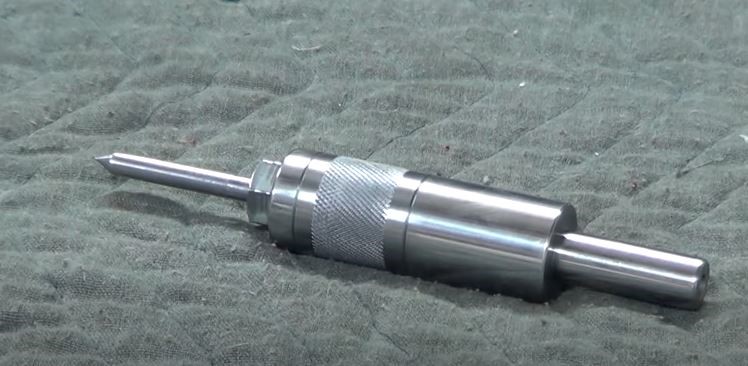
Lathe spring center
Next, you need to make a screw-on tap that goes on the drilled hole, where it taps the plunger. To create the plunger, trim the metal rod so that one end matches the spring’s diameter, which goes into the hole, and the other end should have a step-up diameter matching the diameter of the rod you had previously drilled. Next, create a sharp tip on the side with a bigger diameter.
6. Make your own ring
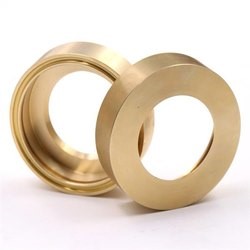
Finger ring
Let’s do a fun project now. It’s a ring-making project which you can wear on your finger. First, take the small rod of brass with the required diameter. According to the need, fix the length and cut with the help of the cutting tool. After this:
- Trim the material to the size.
- Drill on the center of the workpiece.
- Finally, use a deburring tool for the shiny finishing.
Along with the cutting and drilling, this project will also help you to understand surface finishing.
7. Mini-fire Piston
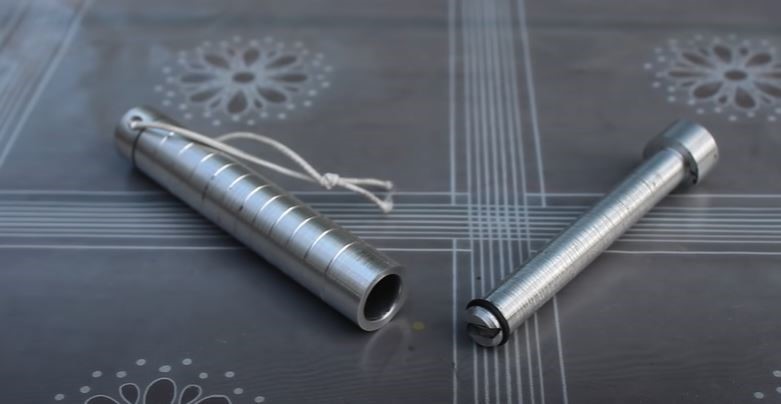
Mini-fire piston
For this project, you need a 20 to 25 mm diameter aluminum rod and 2 x 7 mm rubber ring seals. The piston is made of three parts, so cut them length-wise. Now start with the middle part of the piston, trim down the diameter to 15 mm, and drill a 10 mm hole through the whole piece.
- On one end, tap the thread to seal it with a cap. After this trim, the rod to a 9 mm diameter made some grooves and two lite chamfers on both sides.
- Trim the end on one side to get the needed diameter and cut external threads.
- Make a tiny groove on one end of the piston so that the char cloth will fit snugly, and drill a hole in the cap end to attach the rope.
- You can test it out by placing an excellent fire starter piece of char cloth at the piston’s tip.
Try Ancastings Now!
Hobbyist Machine Shop
If you ask design and manufacturing professionals how they got their start in the field, a frequent response you’ll get from many of them is that they had an interest in putting anything together from scratch. If you share that sentiment, follow these instructions to set up a hobbyist machine shop in your house.
- Estimate your Budget: First, you must consider your budget and how much you have to invest in your hobbyist machine shop. You need to have between $ 1000 to $5000 of funding to start with your shop.
- Available space: The next thing is the available space in your house. Before going for the types of equipment and machinery, look for the area and size you can manage in your home. If you don’t consider the space, you might buy expensive equipment that is hard to fix& install in your home.
- Equipment set-up: Now choose the equipment based on your budget and available space for your hobbyist machine shop. The following are the essential items;
- Acetylene torch: It is very useful for cutting or welding most metals. It will be beneficial if you plan to weld components for the projects.
- MIG Welding: MIG welding is the best choice among the various options. It is inexpensive and can be used for multiple materials, from aluminum and steel to brass.
- A band saw: It will be convenient to perform cutting operations for the thinner rod and strips since you can not use the lathe for every cutting action.
- Lathe: The lathe will be the heart of your hobbyist machine shop since you will create various shapes with this. A small-size lathe (7×10 inches) is the best option to start. However, if you have the budget, you can go further.
- Grinder: A little grinder should be on your bucket list because aesthetic elegance is essential for your projects.
- Milling machine: Although more expensive than other equipment, it is necessary for many tasks, including drilling, routing, and various milling processes. To begin your creations, you will need small blocks & sheets of steel, aluminum, and brass.
Try Ancastings Now!
Conclusion
For your first machining jobs, using a lathe, milling machine, or home CNC machine for a short period is insufficient; you must select the appropriate tool and operation. Visit tools and drawings from time to time and improve your technical knowledge by becoming familiar with them.
In this article, I’ve discussed some simple tasks that you can start with either a manual or a CNC machine. However, if you are unfamiliar with these tools and machines, take the time to learn the steps and begin with absolute confidence to prioritize your safety. In addition, if you need any machining-related service, you can rely on our company. We can provide on-demand manufacturing services for your project. So, if you find any obstacles with your machining project, don’t hesitate to contact us.
FAQ’s
Can I create simple machining projects by myself?
Yes, you can. You can do the simple project yourself with some machining equipment and basic technical knowledge.
What are some simple machining projects that can be carried out with a lathe or CNC machine?
Simple projects that can be completed with a lathe and CNC machine include the cube, mini-fire piston, tap guide, soft parallels, and jewelry rings.
What is the budget range for my hobbyist machine shop?
The budget of a hobbyist machine shop ranges from $ 1000 to $5000.