
“CNC milling techniques use computerized controls to drive the movement of machinery, ensuring precision in producing components. With advancements in technology, various CNC milling techniques have emerged with unique characteristics and advantages.”
 Every CNC milling technique offers unparalleled precision, efficiency, and versatility, making it a cornerstone of modern manufacturing. However, to unlock the full potential of this advanced machining technique, it is essential to understand its intricacies and best practices.
This comprehensive guide will give you an in-depth understanding of the CNC milling process and six primary CNC milling techniques, covering various aspects.
Types of CNC milling machines
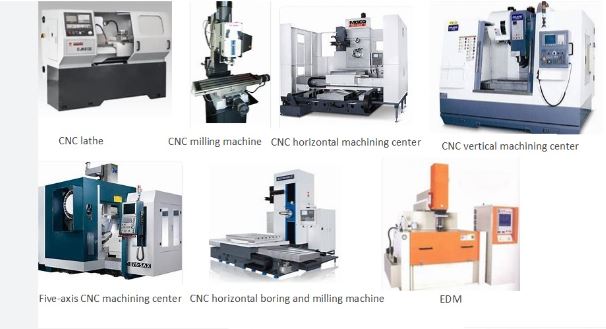
Different types of CNC milling machines
Before going into CNC milling techniques, let’s be familiar with various machines. CNC milling machines have evolved remarkably, diversifying in capabilities and purposes. Different milling machines cater to diverse production needs, each with unique features and functionalities.
- Vertical Milling Machines
Often recognized as the most common type, vertical milling machines have vertically oriented spindles. This orientation means the cutting tool moves up and down, aligning with the machine’s vertical axis. Turret mills and bed mills primarily characterize vertical mills. Turret Mill contains a stationary spindle and a table that moves in both directions; the table moves only in the perpendicular direction to the spindle’s axis.
Vertical machines are generally preferred for their versatility. They are instrumental when dealing with individual pieces and small batch sizes. Whereas the table moves only in the perpendicular direction to the spindle’s axis in
- Horizontal Milling Machines
As the name suggests, these machines have horizontally oriented spindles, compelling the mounted cutting tools to move left and right. Horizontal milling machines are particularly adept at Heavy-duty cutting and handling more significant pieces of material. These machines often come equipped with multiple cutting tools, enabling them to execute several tasks simultaneously.
- Knee-type Milling Machines
These machines owe their name to an adjustable knee-like structure supporting the worktable. This design facilitates vertical movement and adjustments of the work table. Some noteworthy features include
- A robust design, ideal for heavy milling.
- Capability to handle various operations ranging from simple tasks to complex procedures.
Knee-type milling machines are incredibly versatile and are the backbone many manufacturing setups.
- C-Frame Milling Machines
These are more robust than knee-type milling machines and are usually used in industrial settings. Their heavy-duty nature is defined by “A single-column design provides greater rigidity and larger working area for handling significant operations.”
- Planer-type Milling Machines
Characterized by a dual motion capability, these machines have a table that moves linearly while the cutting operation remains stationary. Highlights of this type include Handling several workpieces concurrently and the ability to handle larger tasks with ease and precision.
- Special Milling Machines
Specific tasks demand a unique approach. Enter the world of special milling machines. These are designed for specific tasks, such as:
- Rotary Table Machines: Designed for circular cutting operations.
- Drum Milling Machines: Crafted for camshaft and die production.
- Tracer Controlled Machines: Suitable for intricate designs and reproducing models.
Now, let’s move to six primary CNC milling techniques in detail.
1. Face Milling
The face milling technique uses the bottom face or the frontal portion of the milling cutter, typically characterized by multiple cutting points or edges. This differs from peripheral milling, where the cutter’s side is employed. The primary objective of face milling is to achieve a flat, pristine surface, often seen as the final finishing touch in many components.
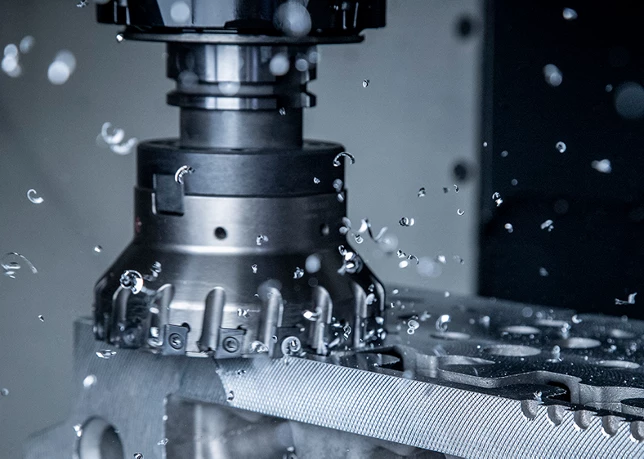
Face milling on stainless steel
Face milling finds its application in diverse sectors. Industries seeking smooth finishes and accurate flat surfaces, such as automotive, aerospace, and consumer electronics, predominantly rely on this technique. Additionally, the process is ideal for removing layers from materials, achieving a desired thickness, or simply preparing the surface for subsequent operations. However, the roughness could be slightly high with CNC face milling( Ra 0.83 approx.)
The following are the critical aspects of CNC milling;
- Cutter Orientation and Design: The cutter’s design is paramount. Large-diameter cutters cover a wider surface area, facilitating faster operations. Conversely, smaller diameter cutters offer better precision, especially for detailed tasks.
- Depth of Cut: The depth of cut pertains to how deep the cutter penetrates the workpiece. A shallow depth yields smoother finishes, while a more profound amount can expedite material removal but may compromise surface quality.
- Axial and Radial Depth: Axial depth defines how far the tool penetrates the workpiece along the axis. Radial depth, on the other hand, denotes the cutter’s engagement width. Balancing these depths is crucial to obtain optimal results.
- Cutting Parameters: Speed, feed, and depth play pivotal roles. For instance, faster speeds might lead to faster operations but could adversely affect the finish and tool life. Fine-tuning these parameters is essential for both efficiency and quality.
Table: Snapshot of machining parameters for face milling
| Parameter | Ideal Range | Remarks |
| Cutting Speed | 50-200 m/min (metals) | Varies based on material; higher speed might reduce the finish |
| Feed Rate | 0.1-0.5 mm/tooth | Faster feeds can accelerate wear |
| Depth of Cut (axial) | 1-5 mm | Deeper cuts might compromise the finish |
| Depth of Cut (radial) | 1-20 mm | Broader cuts can introduce more heat |
Advantages of Face Milling
While face milling offers several benefits, a few are particularly noteworthy. The following are the significant benefits of face milling in manufacturing.
- Superior Surface Finish: One of the most compelling advantages is the impeccable surface finish it delivers, which is often essential for end products.
- Versatility: The technique is adaptable and capable of handling various materials, from metals like aluminium and steel to non-metals like wood and plastics.
- Efficiency: Given the correct parameters and tools, face milling can be rapid, especially when large diameters are involved.
However, like all machining processes, face milling isn’t without challenges. The tool wear could be a significant concern. Prolonged operations or inappropriate parameters can lead to reduced tool life. At high speeds or with improper setups, vibrations can occur, affecting the quality of the output. Furthermore, excessive heat can be generated, especially with metals. This might necessitate cooling mechanisms or operation pauses to prevent warping or other thermal damage.
So, the balancing act of tools, parameters, and materials determines its success. Proper knowledge, experience, and continuous monitoring are crucial to harnessing its full potential.
2. Angular Milling
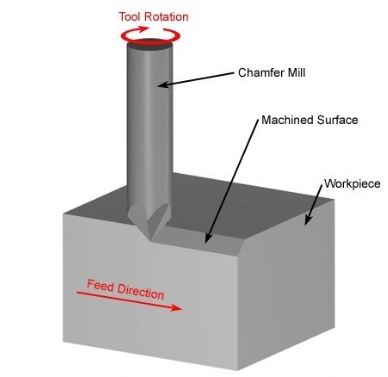
Angular-milling mechanism
Angular milling, often termed angle milling, is a method within CNC machining. This technique revolves around the milling of angular surfaces at a specified angle to the workpiece’s periphery. Notably, it diverges from standard flat or face milling, which predominantly focuses on horizontal surfaces.
Table: Snapshot of machining parameters for angular milling
| Parameter | Ideal Range | Remarks |
| Cutting Speed (Metal) | 60-250 m/min | Adjust based on material hardness; softer metals might require slower speeds. |
| Feed Rate | 0.05-0.4 mm/tooth | Influenced by material and cutter type |
| Angle Tolerance | ±0.05° to ±0.1° | Precision is crucial, especially in joinery and precision components |
Angular milling operates by utilizing single-angle milling cutters or double-angle milling cutters based on the task’s requirement. The machine’s worktable or the workpiece is swivelled to a certain angle, allowing the milling cutter to achieve the desired slope or rise on the material. This orientation is especially beneficial when the required grade isn’t perpendicular to the workpiece’s surface.
Now, let’s discuss where strictly angular milling is applied;
- Crafting V-grooves: Commonly used in structural designs and for aesthetic purposes.
- Manufacturing Dovetails: Essential in joinery, particularly in furniture making.
- Creating Chamfers: To eliminate sharp edges, enhance aesthetics, or prepare parts for welding.
- Sloped or Slanted Surfaces: For design or functional purposes in various engineering components.
Benefits of Angular Milling
As you know, angular features are prevalent in various parts and equipment of diverse industries, but why is angular milling preferable to other approaches;
- Flexibility: Capable of achieving many angles as opposed to the constraints of other milling types.
- Precision: With the proper setup, extremely accurate angles can be achieved, which is pivotal for components requiring tight tolerances.
- Versatility: Suitable for various materials, from metals to wood, enhancing its adaptability across sectors.
However, angular milling comes with its own set of challenges despite its merit. Proper alignment can sometimes be time-consuming, and there might be constraints on how deep or how large an angle can be milled.
3. Pocket Milling
At a fundamental level, pocket milling is characterized by its objective: to hollow out a section of the workpiece. It is a subtype of milling that involves removing material from a workpiece, resulting in a cavity or “pocket.”
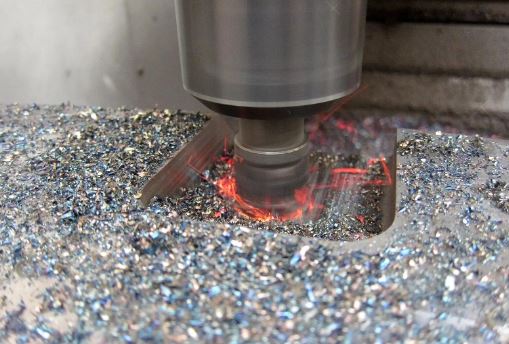
Pocket milling
The desired shape could be anything from basic rectangles and circles to more intricate designs. Depending on the design requirements, the cavity produced can be shallow or deep, and the pocket walls can be vertical or sloped.
The following are the critical aspects of pocket milling
- Tool Selection: The choice of the cutter is pivotal. End mills are commonly employed for this purpose, especially when intricate shapes or tight corners are involved.
- Depth Considerations: The depth of the pocket plays a significant role in tool selection and cutting parameters. Deep pockets might necessitate specialized tools or multiple passes.
- Machining Strategy: A strategy is imperative. Generally, the milling commences from the pocket’s centre, spiralling outwards. This prevents the cutter from plunging directly into the material, ensuring a smoother operation.
- Finishing Passes: Post the initial material removal and completing passes to ensure the pocket meets the required dimensional and surface finish specifications.
Table: Snapshot of machining parameters for pocket milling
| Parameter | Ideal Range | Remarks |
| Cutting Speed (Metal) | 50-200 m/min | Varies with material; harder metals might need slower speeds |
| Feed Rate | 0.05-0.4 mm/tooth | Influenced by tool type and material |
| Pocket Depth Tolerance | ±0.01 mm to ±0.05 mm | Precision varies with the application; deeper pockets may have larger tolerances. |
Advantages of Pocket Milling
While discussing pocket milling, it’s essential to underscore its multifaceted advantages:
- Versatility: The technique shines in its ability to craft myriad shapes, from simple to complex.
- Precision: With modern CNC machinery, pockets can be milled with exceptional accuracy, adhering to tight tolerances.
- Material Conservation: Pocket milling can be more material-efficient than drilling, which removes and discards material.
Despite its numerous advantages, pocket milling presents its set of challenges. It can lead to significant heat generation while milling the metals, possibly affecting the workpiece and tool’s integrity and causing vibration & chatter in machining. From my experience as a mechanical engineer, “Pocket milling is akin to sculpting, where the artist doesn’t just focus on the surface but, brings the material’s hidden potential to light.”
4. Profile Milling
It can be defined as tailoring a workpiece’s outer boundary to adhere to the desired form. During the process, tools travel along the workpiece’s contour; this technique aims to sculpt, reshape, or refine the object’s external profile. Typically, the end mills or face milling cutters come into play, given their adaptability to various shapes and sizes.
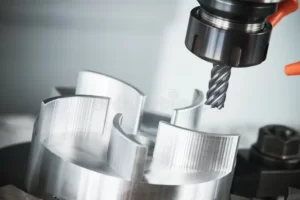
Profile milling process
Key Aspects & Applications
Diverse industries ranging from aerospace to consumer electronics exploit the virtues of profile milling. In aerospace, for instance, the need for components with precise aerodynamic shapes necessitates this technique. Consumer goods, especially those with ergonomic designs, also lean heavily on profile milling to achieve comfortable and aesthetically pleasing contours.
The following are the critical aspects of Profile Milling;
- Cutter Selection: Opting for a suitable cutter is crucial. Due to their versatile cutting edges, end mills are often the tool of choice, especially for complex profiles.
- Depth and Width of Cut: These parameters are pivotal. They need meticulous calibration based on the material and desired finish to avoid undue stress on the tool and the workpiece.
- Coolant Use: The importance of coolants can’t be stressed enough. Especially during prolonged operations, they prevent overheating, ensuring the tool’s longevity and the workpiece’s quality.
- Feed Rate and Cutting Speed: Both are paramount in achieving the desired surface finish. Too fast, and the finish may be compromised; too slow, and it could lead to tool wear.
Table: Snapshot of machining parameters for profile milling
| Parameter | Ideal Range | Remarks |
| Cutting Speed (Metal) | 50-220 m/min | Optimized based on the material’s hardness, more rigid materials demand slower speeds. |
| Feed Rate | 0.03-0.5 mm/tooth | Predicated on the cutter’s size and material being milled. |
| Profile Tolerance | ±0.005 mm to ±0.03 mm | Precision hinges on the application; intricate profiles often demand tighter tolerances |
Try Ancastings Now!
5. Contouring with CNC Milling
Contouring in CNC milling is a combination of several complex Milling tool movements. Each movement, each curve, and each depth is planned and executed accordingly. It is used to produce detailed and intricate contours on a workpiece. Unlike traditional methods that focus solely on horizontal or vertical cuts, contouring navigates the complexities of three-dimensional spaces, ensuring the workpiece resonates with both functionality and aesthetics.
Table: Snapshot of machining parameters for profile milling
| Parameter | Typical Range | Remarks |
| Cutting Speed (for metals) | 60-230 m/min | Optimized based on the hardness of the material; stainless steel often demands slower speeds. |
| Feed Rate | 0.02-0.6 mm/tooth | Based on tool type and design intricacy. |
| Contouring Tolerance | ±0.003 mm to ±0.02 mm | Precision hinges on the CNC machine’s capabilities and the application’s demands. |
The CNC-milling contouring finds its place in a multitude of industries. Aerospace components, with their complex aerodynamics, lean heavily on this technique. The medical field, where prosthetics and surgical instruments demand intricate designs, also taps into the potential of contouring.
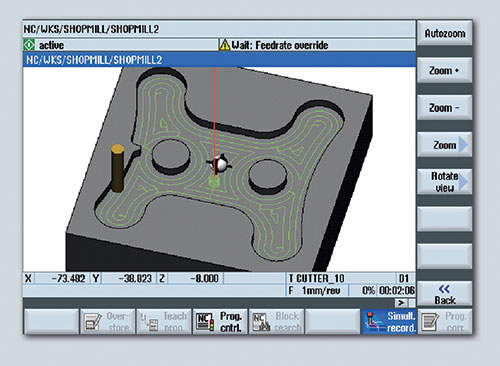
Processing the CAD drawing for CNC milling contouring
It is used in these several sectors because of the following advantages;
- High Precision: Modern CNC machines, with their advanced feedback systems, ensure that the contours are milled with impeccable accuracy.
- Versatility: Be it a sinuous curve or a sharp edge, contouring can handle a broad spectrum of designs.
- Efficiency: Automated CNC operations streamline the contouring process, reducing production times.
6. Thread Milling
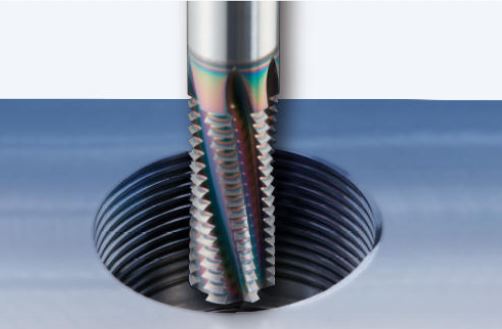
Internal thread milling
Thread milling is a CNC machining process employed to produce threads in workpieces. This process enables the creation of both internal and external threads with impeccable accuracy and finishes by leveraging specialized cutting tools known as thread mills.
Table: Thread Milling Parameters
| Parameter | Typical Value | Remarks |
| Cutting Speed | 50-150 m/min | Depends on the material. Harder materials typically require slower speeds. |
| Feed Rate | 0.2-0.6 mm/tooth | Based on thread pitch and tool size. |
| Thread Tolerance | ±0.002 mm to ±0.01 mm | Precision is often dictated by the industry’s demands and the CNC machine’s capabilities. |
The thread milling process can also characterized by the helical interpolation of the thread mill around the workpiece circumference. As the mill rotates, it simultaneously moves linearly, creating threads by carving out successive helical paths. The result? Threads that are clean, sharp, and consistent.
Advantages of Thread Milling
Treadmills are the protagonists in this operation. Their design, often helical, mirrors the thread’s profile, ensuring an accurate rendition of the thread’s pitch and form. Unlike traditional taps, thread mills are versatile and capable of producing a variety of thread sizes and types with just one tool. Let’s take a look at the prime advantages of this milling technique.
- Versatility: A single tool can craft multiple thread sizes, making it a cost-effective choice for diverse applications.
- Precision: CNC-controlled movements ensure threads are accurate to the micron.
- Flexibility: It can handle various materials, from soft aluminum to tough stainless steel, without a hitch.
- Better Finish: As the tool cuts, it leaves behind threads with superior surface finishes, minimizing post-processing needs.
Read more: A Comprehensive Comparison of Grooving and Threading Techniques
Comparison of Different CNC Milling Techniques
The nuances between each milling method are significant, influencing decisions from tool selection to operational parameters. While some techniques prioritize surface finish, others emphasize the intricacy of design or the creation of specific geometries. The table below presents a comparative overview, shedding light on the unique attributes and applications of six pivotal CNC milling techniques.
Table: Comparison of Various CNC Milling Techniques
| Milling Techniques | Primary Application | Strengths | Common Materials Used | Tooling Essentials | Challenges & Considerations |
| Face Milling | Surface finishing & flattening | Efficient material removal; smooth surface finish | All metals; Plastics | Cutter with multiple teeth; larger diameter | Need for precise leveling; potential for tool wear |
| Angular Milling | Creating angled surfaces & edges | Precise angular cuts; versatile designs | Metals; Hardwoods; Plastics | Single-angle milling cutters or double-angle milling cutters | Calibration for angle; material constraints |
| Pocket Milling | Recessed areas & cavities | Accurate depth control; efficient material removal | All metals; Plastics; Hardwoods | End mills; specialized pocket milling tools | Complex tool paths; potential tool breakage |
| Profile Milling | External periphery & contouring | Producing complex shapes; precision detailing | Metals; Hardwoods; Plastics | Ball end mills; rounded or specialized tips | Complex tool paths; material considerations |
| Contouring with CNC milling | Detailed contours & 3D shapes | High precision; aesthetic allure | Metals; Plastics; Aerospace alloys | Ball end mills; diverse profile tools | Speed & temperature management; intricate tool paths |
| Thread Milling | Internal & external threads | Precision threads; superior finish | All metals; some plastics | Thread mills; helical tools | Tool wear; high machine requirements |
Click here to download: Various CNC Milling Operations & Techniques
Precise CNC Milling Techniques at Ancastings
Ancastings has been in the on-demand manufacturing sector for more than a decade, continuously pushing the boundaries of what’s achievable. With a commitment to excellence, Ancastings’ CNC milling services are not just about removing material from a workpiece; it’s about sculpting it with accuracy, ensuring every cut, groove, and contour speaks volumes about quality and craftsmanship. Whether it’s the intricate threads from thread milling or the flawless surfaces from face milling, Ancastings’ expertise is evident in every micron.
What sets Ancastings’ CNC milling services apart isn’t just advanced machinery but the synthesis of cutting-edge technology with seasoned expertise. Our engineers & technicians ensure each milling technique is optimally applied for results that are both functional and aesthetically impeccable.
Ancastings’ CNC Milling Service Highlights
- Precision-First Approach: Every project is executed with micrometric precision.
- Diverse Milling Techniques: From angular to thread milling, Ancastings’ repertoire is vast.
- Advanced Machinery: State-of-the-art multi-axis CNC machines ( 5-axis) for exceptional results.
- Expert Technicians: A team with deep domain knowledge and 20+ years of experience in the industry.
- Quality Assurance: Rigorous checks to ensure each piece matches the highest standards.
Summing Up
CNC milling is a powerful manufacturing process that offers unparalleled precision, efficiency, and versatility. It is possible to create precise & complex geometries with suitable CNC milling techniques. In addition, it requires several considerations for efficient CNC milling work, tool path strategy, use of the right software and tools, and more.
At Ancastings, we offer precise CNC milling service for a range of industries. Our advanced CNC milling machines and expert engineers can help you gain an advantage over competitors in the market, from prototyping to large-scale production. Contact us today to learn more about how we can help you unlock the full potential of CNC milling.
Read more: The Custom CNC Milling: Perfectly Crafted to Precision
FAQs
What is CNC milling?
CNC milling is a machining process that employs computerized controls to remove material and shape workpieces.
How is face milling different from flat milling?
Face milling uses the cutter’s face to create surfaces, while flat milling focuses on achieving flat surfaces using the sides or periphery of the cutter.
Which technique is best for intricate designs?
Form milling is ideal for intricate designs as it uses specialized cutters to create unique contours.
Can CNC milling work with different materials?
Yes, CNC milling can work with a wide range of materials, including metals, plastics, and wood.
How does Ancastings’ CNC Milling service stand out?
Ancastings’ service combines expertise with advanced machinery, ensuring precision, quality, and timely delivery for all CNC milling projects.
Are there other CNC milling techniques beyond the six mentioned?
Yes, while this article highlights six major techniques, other specialized methods cater to niche requirements in the industry, such as slot milling, peripheral milling, and many more.