
“Slot milling makes narrow grooves and channels for diverse applications, but it requires a balance between feed rate and spindle speed for optimal results and tool life”
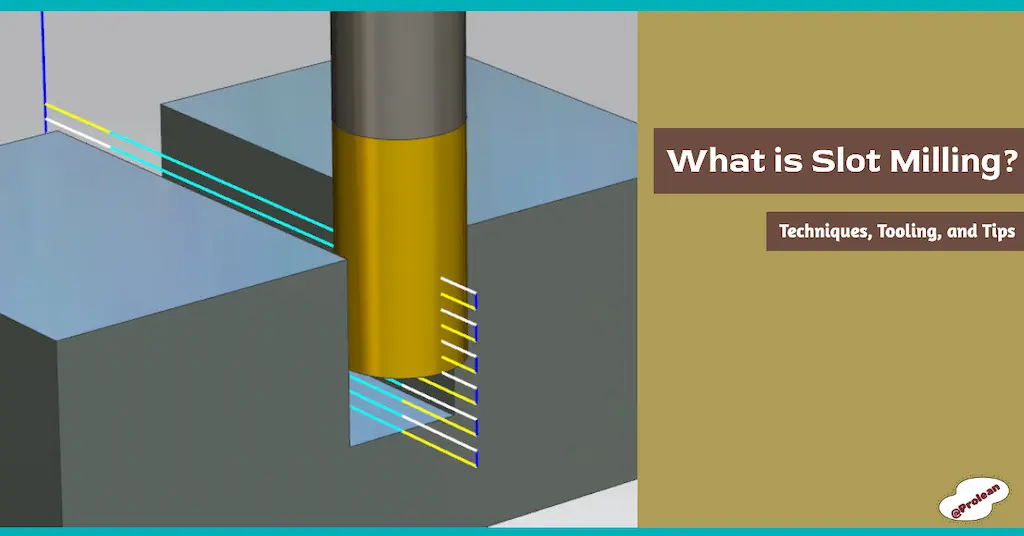
A lathe or machining center executes different milling operations with the use of suitable machine setup and tooling, slot milling is one of them. A “slot” is a narrow opening or groove of any shape or size. It is important in maintaining assembly alignment, fastening, flexibility, heat and stress distribution, weight reduction, and many other purposes.
CNC Milling is popular in the creation of slots in workpieces of distinct materials, metal, plastic, composites, etc. This article will guide you through the basics, tooling, and different slot milling techniques.
What is Slot Milling?
Slot milling is and machining process that uses a rotating cylindrical cutter with multiple cutting edges to to create narrow, elongated cuts or channels (slots) on a workpiece using a CNC lathe or machining center. Based on the CNC milling techniques used for slot cutting, cutters can be different also.
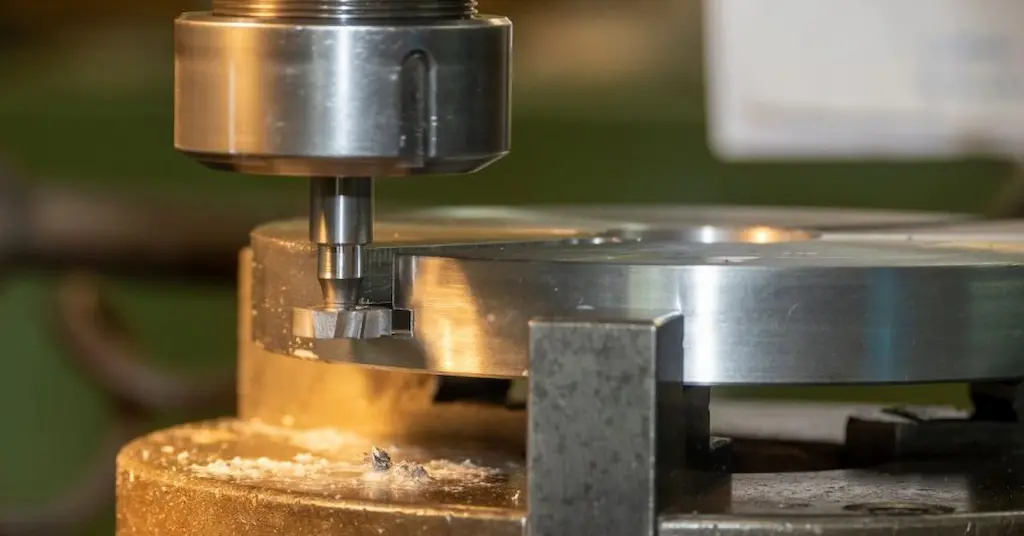
Slot milling on steel workpiece
The slot milling tool or cutter rotates and removes the material layer by layer. Meanwhile, the cut depth and width can be controlled by adjusting the cutter’s feed rate and position. This slot machining process is popular in industries like automotive, aerospace, and mold-making to create precise grooves, keyways, and channels in diverse components.
Based on the complexity of the slot shape and profile, the tool path can become complex. However, they can be simulated in CAM software to optimize the tool path in CNC milling operations. The tool path determines the accuracy and finish of the slot surface.
- Conventional Tool Path: Simple paths and involves slot cutting along its axis. The path can cause relatively higher vibration and radial force.
- Trochoidal Tool Path: This type of path is complex but provides more stability during slot milling and can also process hard-to-machine materials.
- Plunging Tool Path: It means Axial machining cuts like drilling with the slot milling cutters.
Try Ancastings Now!
Slot Milling Techniques and Tooling
You can use different slot milling techniques, which differ in their capability for different slot sizes and profiles, tooling, and geometries.
Here is a brief elaboration of key techniques;
- End Milling
This technique creates slots of various depths and sizes by rotating the end mill or shell mill cutters on the face of the workpiece. The tool is attached to the spindle and it can machine across the milling axis depending on machine capability(3,4,5, etc). The teeth of the workpiece rotates and feeds the material. Meanwhile, the spindle guides the direction.
- Closed sots
- Non-linear slots
- Deep Slots
- Side Milling
It is like peripheral milling and creates liners slots and grooves. Typically, a horizontal milling machine performs the side milling. The slot milling cutter tooth on the periphery of the tool rotates and removes the material to create accurate slots. The arbor support to the tool withstands the possible deflections and excessive vibrations.
- Open Slots
- Horizontal Slots
- Cutting Off
- Gang Milling
This type of milling operation can cut multiple parallel slots simultaneously. A single arbor can mount multiple slot milling tools and can cut the workpiece at once. Additionally, It also reduces tool changes and setup times. Gang milling is particularly useful for the manufacturing of large parts or components that require several slots or complex geometric features.
- Multiple Parallel slots
- Deep and wide slots
- Stepped and dovetail slots, etc.
- T-Slot Cutting
As the name suggested, T-slots refer to “T-shaped” slots or grooves on the workpiece. After preparing the shank surface, a T slot cutter can quickly cut the shape of closed slots. Meanwhile, it does not need the shank surface for the open slots. T-slot machining is used in machine frames and bases, enclosures, work tables, etc.
- Open and Closed T-shaped slots
- Woodruff Key Slot Cutting
It refers to the “Slot and Key” mechanisms for interlocking purposes. The Woodruff slot milling cutters create the slots where the counterpart key sections perfectly fit. In the assembly and even for the stress distribution, one part contains the key section and another part contains the slot section, together forming a strong interlocking joint.
- Half-circle key slots
- Curvrd key slots
- Curved bottom slots
Summary Table: Slot Milling Techniques and Crossponding Tools
| Techniques | Slot Milling Tools |
| End Milling | End mills, shell mills |
| Side Milling | Slot milling cutters, side-and-face cutters |
| Gang Milling | Multiple slot cutters on a single arbor |
| T-Slot Cutting | T slot cutter |
| Woodruff Key Slot Cutting | Woodruff key cutters |
Tips for Successful Slot Milling
The following are some tips you can follow to avoid defects and inconsistency;
- Careful Entry of Slot Milling Tool
The fast cutting speed while the edges make initial contact with the workpieces can cause excessive vibration and misalignments. So, follow smooth reduction speeds at the entering point.
- Chip Evacuation
Machining slots in two passes provides enough space for chip evacuation, which results in a better surface finish and minimal tool wear. Furthermore, the chip build-up can generate excessive heat, especially during close slot milling.
- Cutting Force & Feed Rate
Maintain a suitable cutting force that is enough to engage the material but does not over-exert on workpiece. Additionally, the feed rate optimization is equally important. If the feed rate is low, it slows down the slot machining speed. Whereas the tool can build heat if the rates are too high.
- Use Down Milling
Until it is not absolutely necessary, use the down milling method. It facilitates better chip evacuation and machining stability.
What are the Uses of Slot Milling?
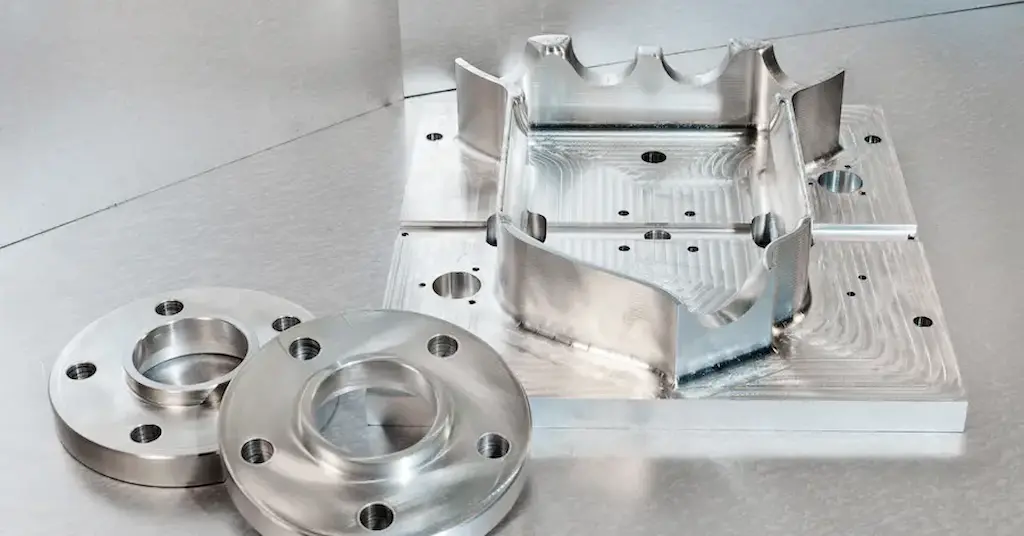
Slot-milled custom parts
There are several critical functions of slot features in mechanical components, such as facilitating assembly guidance, torque transmission for keyways, providing cooling and drainage points, etc. Additionally, custom milling also requires slots, grooves, and other similar geometrical features.
The following are some examples of slot milling applications;
- Keyways in automotive transmission shafts
- Grooves in injection molds and sand-casting dies
- Ventilation and cable management slots in electrical enclosures
- T-slots on the machine base and workbench
- Slots for gear teeth and root clearance
- Assembly mounting & interlock mechanisms
- Channels for the flow of fluid in hydraulic systems
Read More: CNC milling metal
Try Ancastings Now!
Conclusion
Different techniques and tooling are available for slot milling operations, each with its own tooling and unique capabilities. The choice depends on the shape, size, or profile of the slot desired for your application. Furthermore, slot features are useful across industries in complex parts manufacturing and the creation of assembly features. Meanwhile, the slots also serve specific functions like cooling, ventilation, cable management, etc.
Ancastings is a leading CNC manufacturer based in China. We have an advanced CNC milling factory with multi-axis lathes, machining centers, and custom tooling arrangements. These facilities allow us to create complex parts with slots, grooves, channels, and other features. If you need related machined parts, upload your design and request a quote for our CNC Milling Service today!