
Snap Fit Design Guidelines
Snap fit design is a cost-effective, reliable, and assembly-friendly fastening method widely used in modern product engineering.
Whether you are creating components for electronics, medical devices, or motor vehicle applications, snap-fit joints offer an efficient way to secure parts without screws, adhesives or welding.
However, the one thing that makes the snap-fit design revolutionary is its ability to simplify the assembly process, reducing production time, weight, and overall cost.
At Ancastings, we specialize in helping manufacturers integrate customized snap-fit mechanisms in their product designs.
With our team of 40+ engineers and advanced CNC capabilities, we deliver plastic and metal parts that meet structural and aesthetic requirements for industries ranging from aerospace to consumer electronics.
This snap fit design guide will break down the design process, types, best practices, and industry-specific insights—so you can make informed choices that lead to better product integrity, cost-efficiency, and faster go-to-market.
Must Read: CNC Machining Complete Guide
What is the Snap-Fit Method?
Understanding the Snap-Fit Method
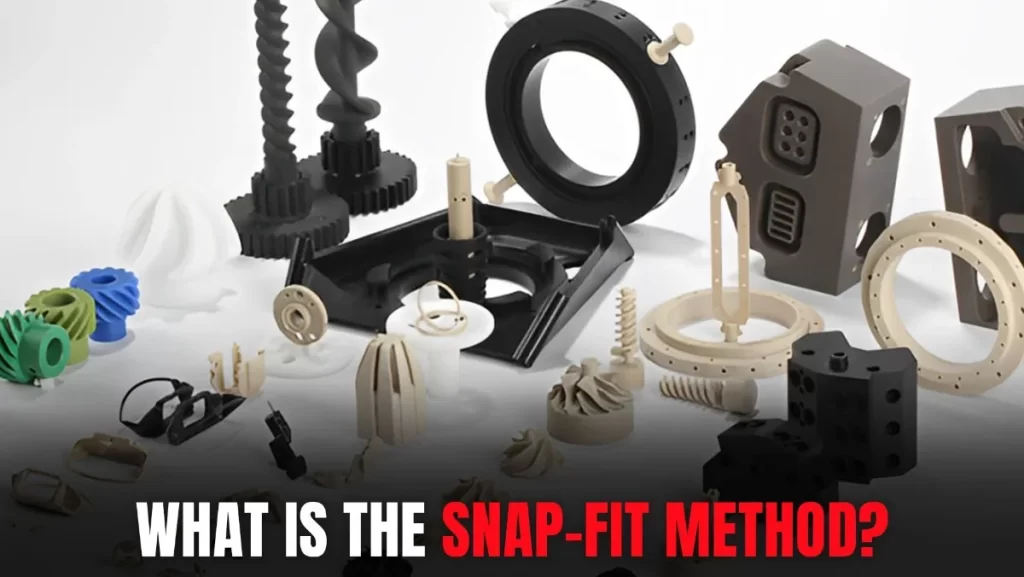
The snap-fit method is a mechanical assembly process where parts are joined together using molded features, like hooks, cantilevers, or undercuts, that snap into place when pressed together.
These features allow parts to lock together with elastic deformation and return to their original shape, with no additional fasteners required.
This is especially popular in plastic part manufacturing, allowing designers to simplify designs and ensure functionality and repeatability.
The process is best suited for thermoplastic materials due to their elasticity, but metal snap fits are used in high-strength applications.
Snap-fit performance depends upon material choices, tolerance, and manufacturing precision, so the validation design before moving into production is needed. Contact our precision plastic and CNC manufacturing specialists for your assemblies.
Understanding the Snap-Fit Mechanism in Manufacturing
A snap-fit mechanism typically consists of two parts:
- The Hook or Arm – a protruding feature that flexes and locks into place.
- The mating slot or groove is a cavity or undercut where the hook latches.
When assembled, the flexible feature deflects, fits into the mating part, and then returns to its original shape to lock the parts together. This is ideal for:
- Quick assembly/disassembly
- Cost-effective fastening
- Compact design without external hardware
Ancastings uses simulations and finite element analysis (FEA) to validate snap-fit integrity under thermal, vibrational, and mechanical loads for industries like automotive or aerospace.
Explore now: https://ancastings.com/automotive-steel-and-usage/
What Is a Snap-Fit Model?
Snap-Fit Model Design Features
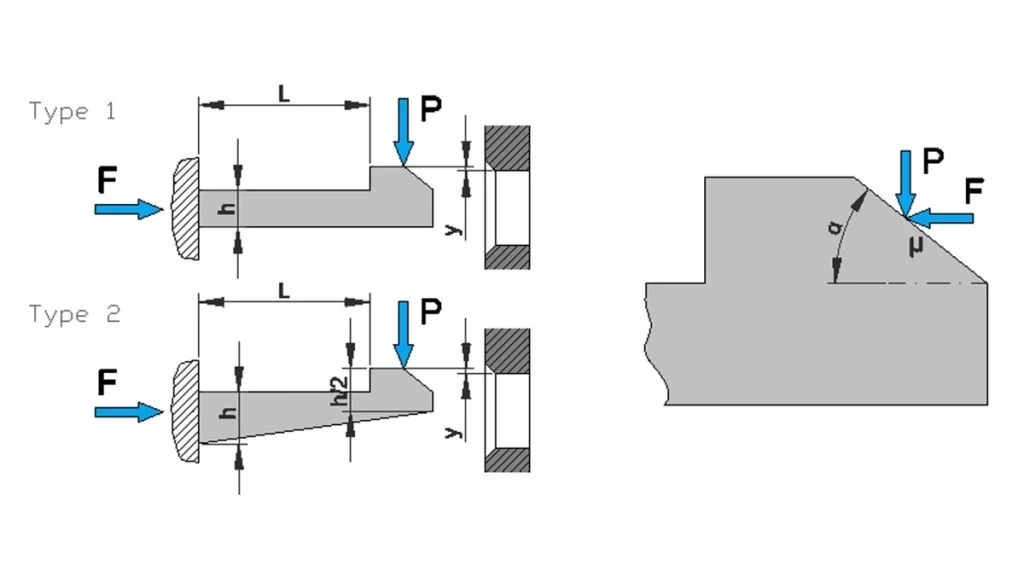
In design engineering, a snap-fit model is the CAD or simulation representation of how a snap-fit will behave under the joint load. This model includes:
- Material elasticity and stress-strain behavior
- Part tolerances
- Clearance/gap optimization
- Snap angle and insertion force
Snap-fit models allow engineers to refine their designs before tooling or production.
At Ancastings, we provide support for creating snap-fit models using CAD software like SolidWorks and Fusion 360, and we optimize them with our Design for Manufacturability (DFM) review.
Try Ancastings Now!
What Are the Types of Snap-Fits? (And Which One Works for Your Industry)
Snap-fit joints are not one-size-fits-all. Choosing the correct snap fit parts is essential for the task, durability, and cost-efficiency. Here are the most common types:
| Type | Mechanism | Common Use Cases | Material Compatibility |
| Cantilever | Flexing the beam arm | Electronics, automotive interior trims | Plastics, metals |
| Annular | Circular snap ring | Pipes, caps, rotating enclosures | Mostly plastics |
| U-Shaped | Dual-beam deflection | Toys, medical, casing assemblies | Thermoplastics |
| Torsion | Rotational snap | Hinged assemblies, electrical connectors | Plastics |
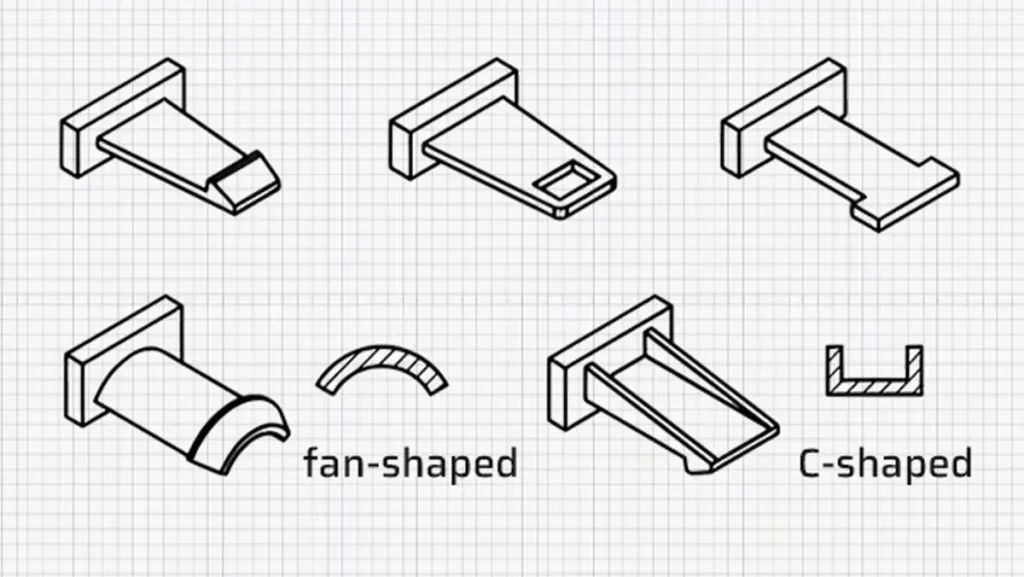
1. Cantilever Snap Fit
Cantilever Snap Fit Design
This is the most common type, with one beam or arm that snaps into a receiving slot. Cantilever snap fits are good for:
- Consumer electronics (battery compartments, covers)
- Automotive clips and interior trims
2. Annular Snap Fit
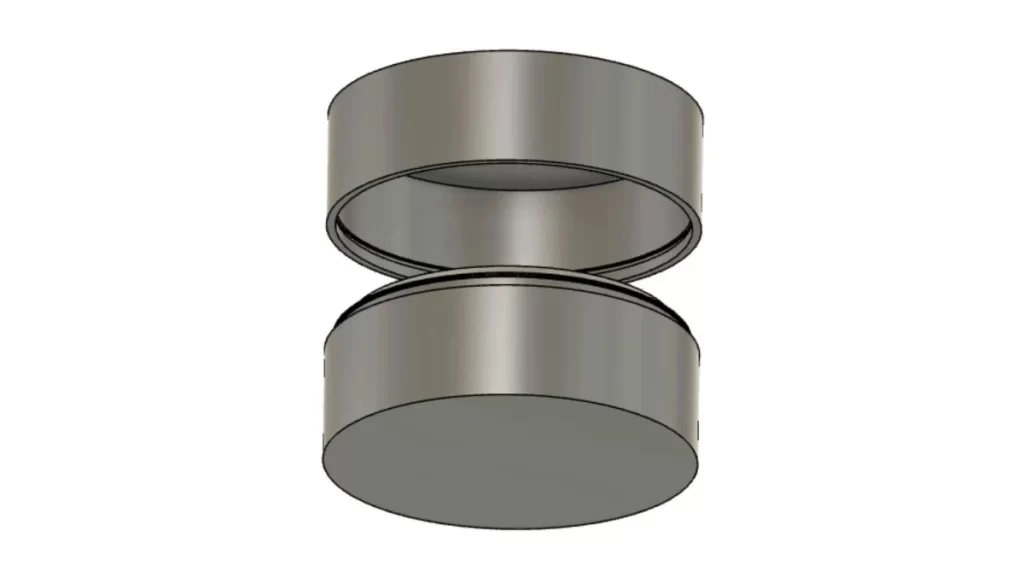
Annular Snap Fit
These are circular or cylindrical features where a ring or groove holds parts together. Good for:
- Pipe fittings
- Bottle caps
- Round housings
3. U-Shaped Snap Fit
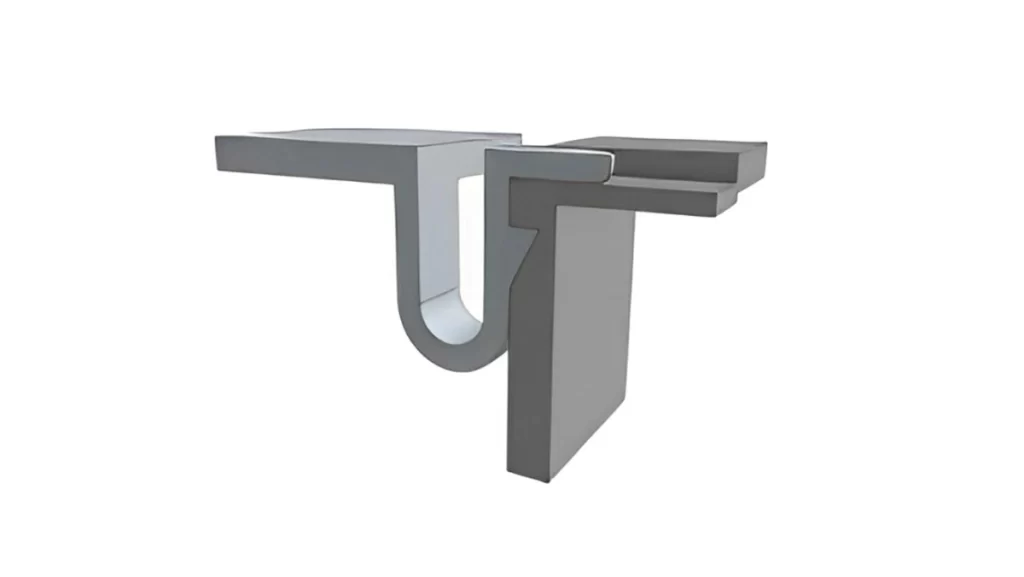
U-shaped Snap Fit Joint
The two-beam or arm design provides more flexibility and holding power. Found in:
- Toy enclosures
- Medical device housing
4. Torsion Snap Fit
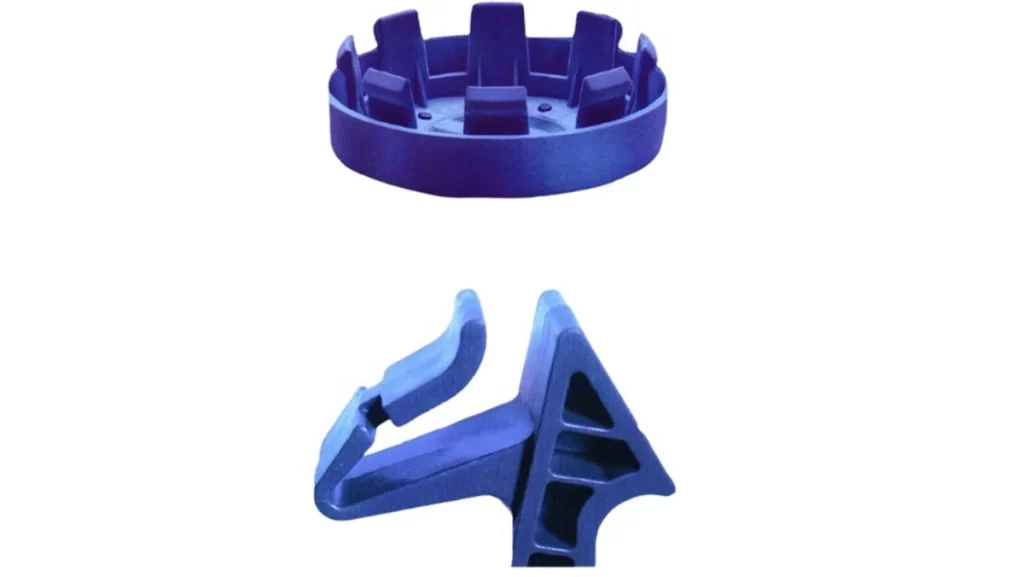
Torsion Snap Fit
Uses twisting forces to lock parts together. Good for applications where rotation is involved during assembly.
- Electrical connectors
- Hinged enclosures
Snap Fit Calculations & Structural Insights
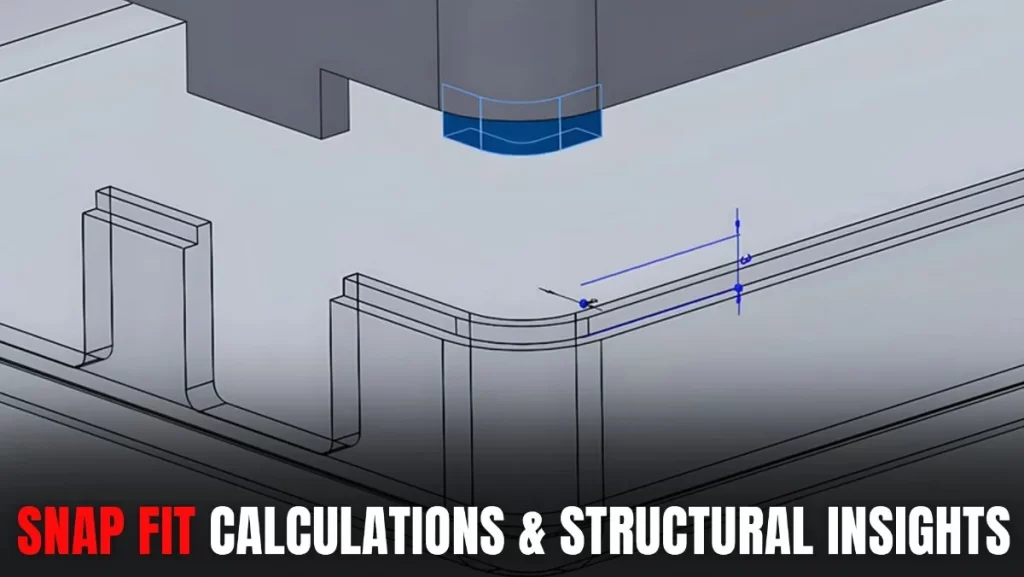
Snap Fit Calculations & Structural Insights
Designing a snap fit isn’t just about shape; it’s about precision. Engineers must consider stress, strain, and fatigue when building snap-fit models. Here’s how we approach snap-fit calculations:
Key Terms You Should Know
- L – Length of the beam
- t – Thickness of the beam
- b – Width at the base
- E – Elastic modulus (material stiffness)
- δ – Deflection (how much the beam bends)
- F – Force applied
- I – Moment of Inertia (resistance to bending)
Snap-Fit Deflection (Cantilever Type)
δ = (Force × Length³) ÷ (3 × Elastic Modulus × Moment of Inertia)
Moment of Inertia (I)
I = (Width × Thickness³) ÷ 12
These values help predict how much the snap arm will bend when force is applied.
Example: Cantilever Snap-Fit
Let’s say we have a plastic clip with:
- Elastic modulus (E) = 2,000 MPa
- Length (L) = 20 mm
- Thickness (t) = 2 mm
- Force (F) = 5 N
Using the formula, we calculate how much the arm bends. This helps ensure the design stays within safe limits.
δ = (F × L³) ÷ (3 × E × I)
Where:
I = (b × t³) ÷ 12 (Moment of Inertia)
By plugging in these values, we can predict how much the arm will deflect under load, ensuring the design stays within safe mechanical limits.
Common Calculations in Snap-Fit Design
- Permissible Undercut = (Width × Thickness) ÷ 2
(This is the max amount the snap can catch or hook under a ledge.) - Maximum Stress = (Force × Length × 2 × Thickness) ÷ Moment of Inertia
(Stress checks help ensure the snap won’t crack.) - Maximum Strain = Max Stress ÷ Material’s Elastic Modulus
(Strain tells us how much stretching the material can handle.) - Deflection Force = (3 × E × I × Allowed Deflection) ÷ (Length³)
(This tells us the force needed to push the snap into place.) - Mating Force = Deflection Force × (1 + Friction Factor)
(This is the real-world force needed, considering friction.)
– Annular Snap Fit Calculation
Permissible Undercut = (Allowable Stress × Root Area) ÷ Applied Load
Mating Force = Torque ÷ Radius
Best Engineering Practices for Snap Fit Design
Ancastings follows strict design guidelines to ensure snap-fit features’ functionality, longevity, and manufacturability.
- Add fillets: Prevent internal sharp corners that act as stress risers.
- Use tapers: Reduce insertion force and improve alignment.
- Lugs and stops: Prevent over-insertion.
- Uniform wall thickness: Crucial in plastic snap fits to avoid sink marks or warping.
- Material selection: Choose elastic thermoplastics like ABS, Nylon, or Polycarbonate for snap-fit reliability.
We recommend Fatigue Analysis for snap fits that will be assembled/disassembled frequently.
Try Ancastings Now!
Common Snap Fit Design Challenges (And How We Solve Them)
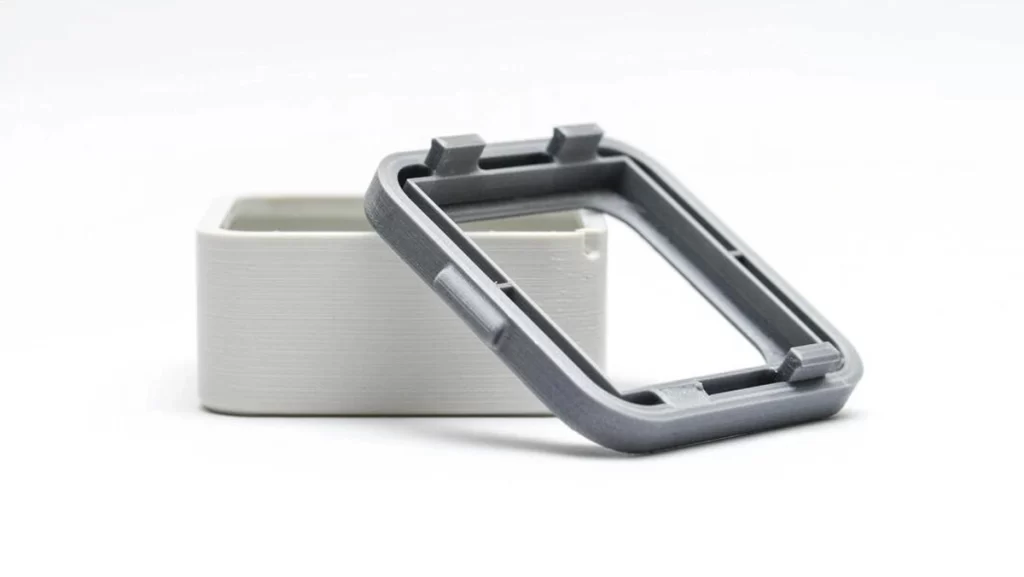
Common Snap Fit Design Challenges
Even the best snap-fit design can fail if stress and tolerances aren’t appropriately managed. Here are some common issues:
- Creep and relaxation: Plastics under long-term stress deform permanently.
- Stress concentration: Poor radius at snap features increases the risk of breakage.
- Tolerance stacking: Accumulated tolerance issues = poor fit.
Ancastings’ Solution:
- FEA-based stress testing
- Material recommendations
- DFM optimization during prototyping
How to Manufacture Snap-Fit Joints: From Prototyping to Production
Manufacturing Snap-fit joints requires control of material behavior and tolerances. We use:
- Injection Molding – For high-volume plastic snap-fit parts
- 3D Printing – For low-volume prototyping and design validation
- CNC Machining – For snap-fit parts in metal or hybrid applications
Each is chosen based on volume, material, and functional requirements.
Refer to our detailed breakdown on Types of CNC Machines to select the proper setup for your snap fit production.
How to Install and Maintain Snap-Fit Joints?
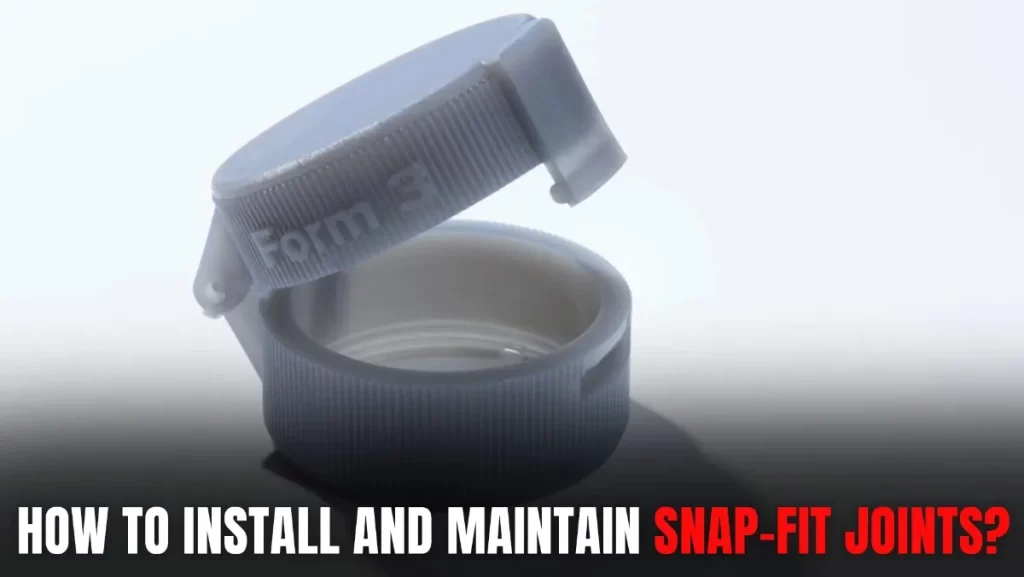
Installing and Maintaining Snap-Fit Joints
Installing and maintaining snap-fit joints correctly ensures long-term performance, especially in plastic assemblies.
Here’s how to do it right without damaging the parts or the fit.
-Installation Tips
- Align components before applying force
- Use press fixtures for production
- Don’t deform excessively
-Maintenance Tips
- Don’t pry or use sharp tools during disassembly
- Check for fatigue in high-cycle assemblies
- Replace worn-out snap features during scheduled maintenance
Benefits and Drawbacks of Using Snap-Fit in Plastics
Snap-fit design in plastics is a fast and cost-effective way to assemble parts without tools or hardware. However, it also has limitations that can impact long-term durability and precision.
| ADVANTAGES | LIMITATIONS |
| Fast assembly without tools or adhesives | Material limitations (only elastic materials work) |
| Cost savings through part count reduction | UV or heat degradation |
| Lightweight design with integrated locking | Fatigue and creep from repeated use |
| Recyclable by eliminating mixed materials | Limited holding strength for heavy load applications |
Applications of Snap Fit Design in Industry
From automotive clips to medical device housings, snap fits are used everywhere. Industries we support at Ancastings include:
- Aerospace – Lightweight and reliable interior components
- Automotive – Dashboard panels, wire harness covers
- Electronics – Battery lids, sensor holders
- Medical Devices – Enclosures, device holders
- Consumer Goods – Toys, appliances, furniture
Alternatives to Snap Fit: When Not to Use It
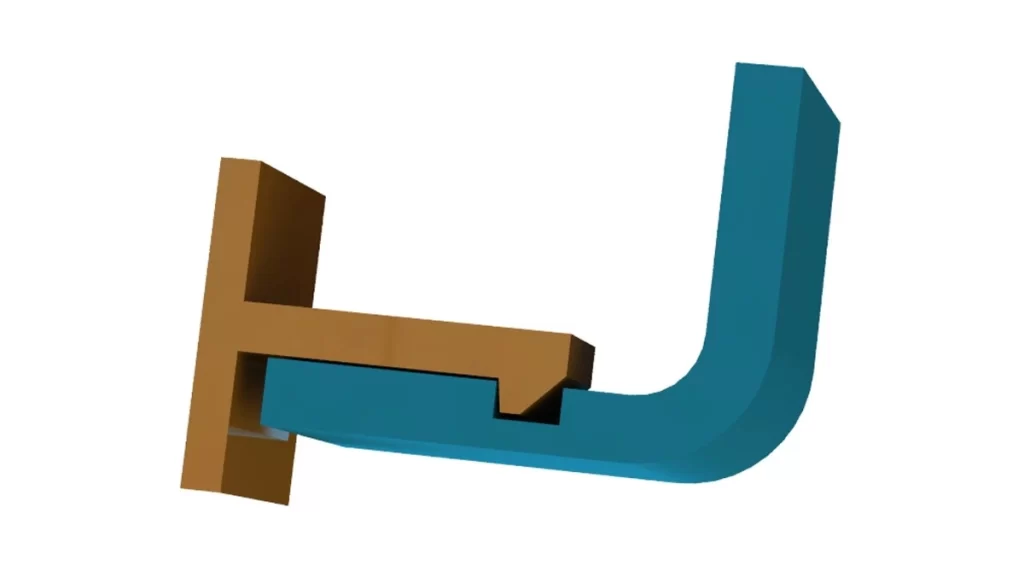
Alternatives to Snap Fit
While snap-fit joints are incredibly versatile, sometimes other methods are more appropriate:
- Screws or rivets for structural integrity
- Ultrasonic welding for sealed joints
- Adhesives for complex surfaces
- Living hinges are where repeated movement is expected
Final Thoughts: Why Ancastings Is Your Go-To Partner for Snap Fit Components
Snap fit isn’t just about fast assembly—it’s about the balance of performance, material cost, and manufacturability. At Ancastings, we don’t just machine parts—we offer design insight, simulation support, material expertise, and global manufacturing.
Our certified processes (ISO 9001:2015), fast turnaround, and engineering support mean your snap-fit parts will work the first time—and every time.
Get a Custom Pricing Estimate tailored to your project needs or explore our full range of CNC Machining Services to bring your snap-fit designs to life.
Contact our experts to optimize your snap-fit designs today.
FAQs
Q1. What are the benefits of snap-fit?
The top benefits of Snap-Fit include being cheap, having fast assembly, no tooling, and being lightweight.
Q2. What are the disadvantages of snap fits?
Creep, material fatigue, and limited load bearing are unsuitable for high-stress uses.
Q3. What is an alternative to snap-fit?
Screws, welding and adhesives are alternatives depending on structural or environmental needs.