
Sometimes it gets very difficult to pick between stainless steel and carbon steel for your plans. If you choose the wrong one it can seriously affect your work’s productivity and increase its cost. In this post we will cover top differences between stainless and carbon steel and pros and cons of each.
What is Stainless Steel?
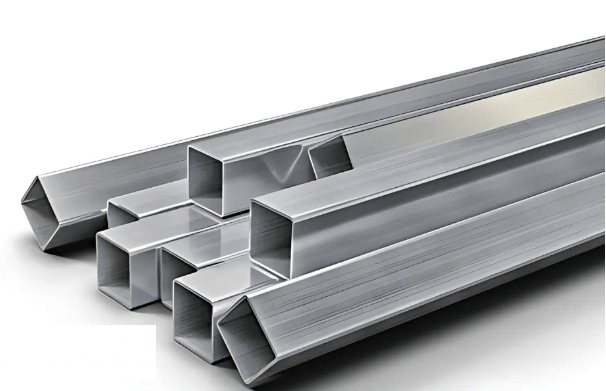
Stainless steel is an iron alloy which constitutes of chromium and other elements like nickel and molybdenum. Its main feature is a self healing chromium oxide layer that forms on the surface when exposed to air and gives safety against corrosion and rust.
What is Carbon Steel?
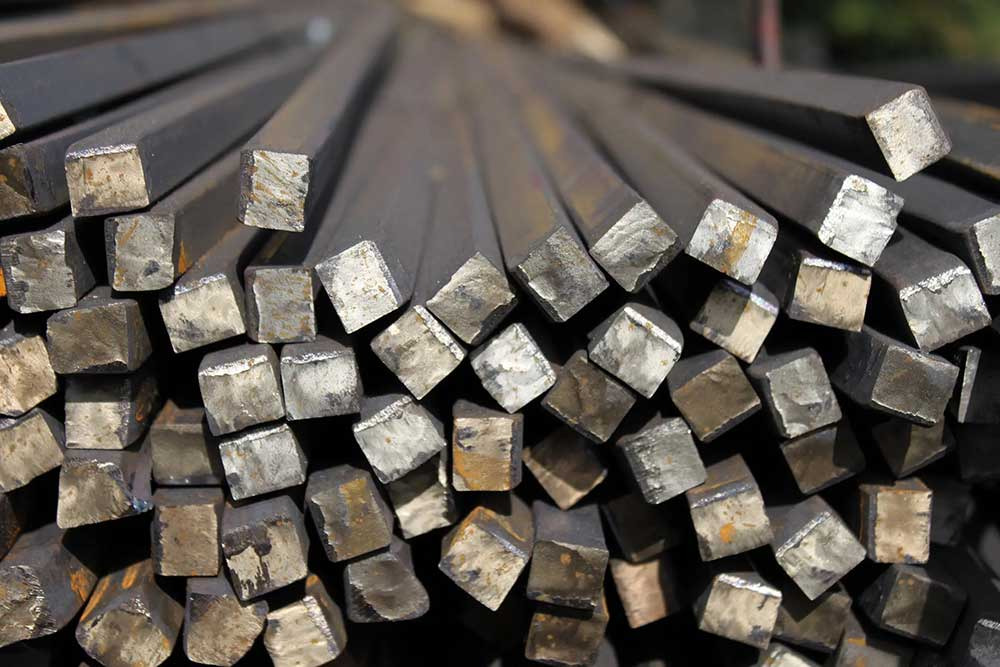
Like Stainless steel, carbon steel is also iron based alloy, but here carbon is the main alloying and it also has small amounts of silicon, copper and manganese. The face-centered cubic crystal structure permits carbon atoms to enter the iron lattice which makes it a harder and more durable material for industrial use cases.
5 Key Differences between Stainless Steel and Carbon Steel
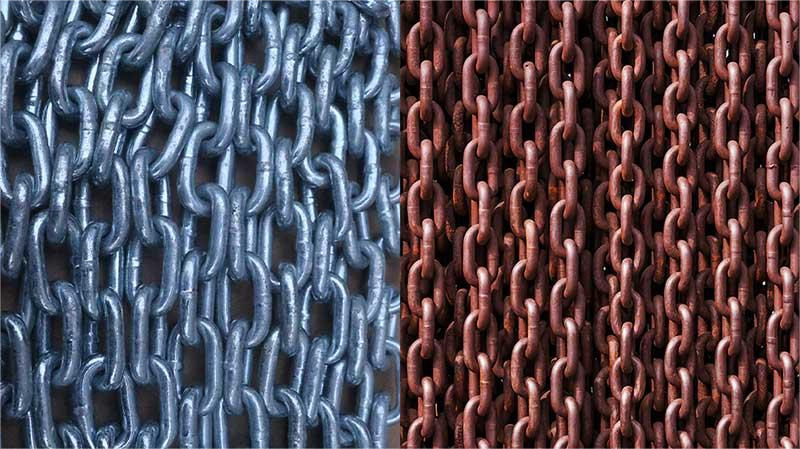
Let’s look at the main differences between stainless steel and carbon steel through 5 key engineering parameters that can impact material selection.
1. Mechanical Properties
- Tensile Strength: Carbon steel has higher tensile strength (600–1200 MPa) than stainless steel (500–1000 MPa). So it’s better for high stress structural operations.
- Hardness: Stainless steel is harder (150-350 HB) than carbon steel (120-300 HB) due to increased amount of chromium which makes a rigid crystalline structure.
- Ductility: Stainless steel has greater ductility with elongation range of 30–50%. On the other side, carbon steel has elongation range of only 10-30% because of its maximum carbon content.
- Toughness: Stainless steel not only has higher toughness and impact resistance than low-carbon steel but it also has better ability to endure energy before fracturing when it is subjected to stress.
- Elasticity (Modulus of Elasticity): Carbon steel shows greater stiffness (200-210 GPa) as compared to stainless steel (190-200 GPa). So it has better resistance to elastic deformation.
- Wear Resistance: Carbon steel is more abrasion and wear resistant than stainless steel which also makes it suitable for cutting tools and high wear applications.
- Fatigue Resistance: Stainless steel is more fatigue resistant at cycles above 10^7, whereas carbon steel is better at shorter term cyclic loading conditions below 10^7 cycles.
2. Chemical Properties
Composition
| Element | Stainless Steel (%) | Carbon Steel (%) |
|---|---|---|
| Iron | 66-75 | 97-99 |
| Chromium | 10.5-30 | 0.1-0.5 |
| Carbon | 0.03-0.15 | 0.05-2.1 |
| Nickel | 2-10 | 0.05-0.25 |
| Manganese | 1-2 | 0.3-1.65 |
| Silicon | 0.5-1 | 0.1-0.6 |
Corrosion Resistance
Stainless steel makes self healing chromium oxide layer for maximum corrosion protection, but carbon steel has no passive film and needs surface treatments to avoid oxidation.
Reactivity with Acids and Chemicals
Stainless steel resists most acids except hydrochloric acid, whereas carbon steel forms hydrogen gas upon reaction with acid during the chemical procedure.
3. Thermal Properties
- Melting Point: Carbon steel is among those materials which have higher melting temperatures (1371–1593 °C) than stainless steel (1370–1530 °C).
- Thermal Shock Resistance: Carbon steel has better thermal shock resistance since it has 3 times faster heat conductivity than stainless steel which concentrates heat and produces localized thermal stresses.
- Heat Resistance: Stainless steel retains its structural soundness at temperatures more than 1000°F (538°C). On the other hand, carbon steel loses its strength above 426 °C due to crystallization.
- Thermal Expansion: Because of the austenitic structure and high nickel content, stainless steel is much more easily stretched to (17 x 10⁻⁶/K) than carbon steel (12 x 10⁻⁶/K).
- Specific Heat Capacity: Carbon steel possesses a lower specific heat capacity (460–500 J/kg·K) than stainless steel which is 500–520 J/kg·K. So the stainless steel is capable of absorbing more heat.
4. Applications of Stainless Steel and Carbon Steel
The different properties of stainless steel and carbon steel give a lot of advantages in particular industries, from aerospace parts to heavy machinery.
- Automotive Industry: Stainless steel because of its outstanding corrosion resistance is used for trim, engine components, and exhaust systems, whereas carbon steel is used for body panels, chassis, and suspension systems due to its durability and strength.
- Construction and Structural Engineering: Stainless steel is used in buildings and infrastructure for handrails, architectural finishes, decorative cladding, and window frames, while carbon steel is used to make the roof, the reinforcement, and the columns.
- Manufacturing and Heavy Machinery: Carbon steel is primarily used for shafts, structural components, and machine frames when high strength is important. On the contrary, stainless steel is used in production of parts like pumps, valves, and food processing equipment that are regularly subjected to severe environment.
- Aerospace Industry: The use of stainless steel is common in such parts that need high temperature and corrosion resistance, for example, turbine blades, exhaust systems and fuel tanks. On the other hand, carbon steel is used in the production of brackets, structural components, and fasteners.
- Oil and Gas Industry: For pipelines, accessories and offshore constructions, stainless steel is the best option as it does not get rust, while carbon steel is used in the production of the pipe, flowlines, OCTG and structural components due to its ability to sustain heavy-duty situations.
5. Cost of Stainless Steel vs Carbon Steel
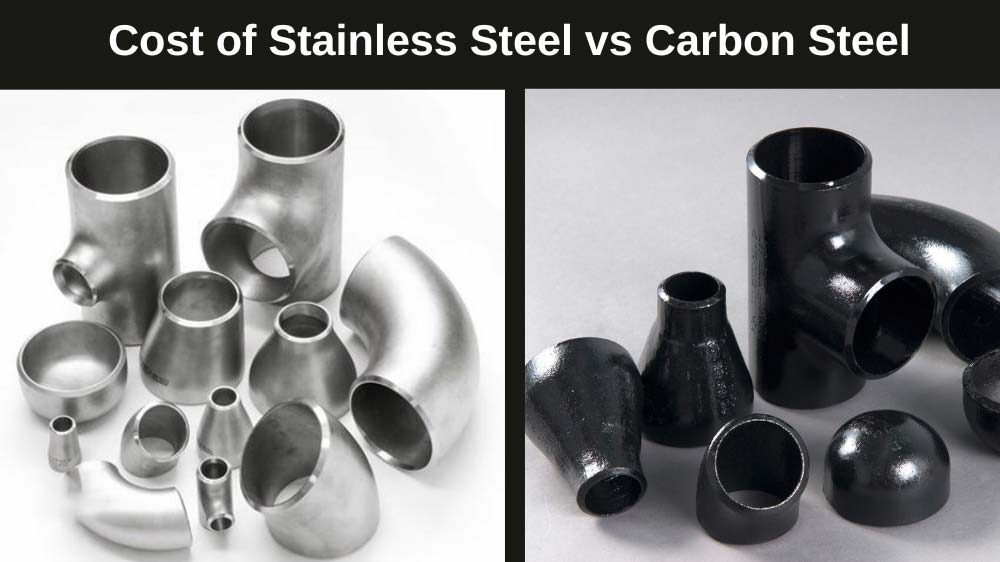
Stainless steel is more expensive ($1,150-1,800 per ton) than carbon steel ($400-680 per ton) due to alloying elements and manufacturing process. While carbon steel has a lower initial cost, its long term maintenance cost for corrosion protection can equalize the initial cost advantage.
Stainless Steel vs Carbon Steel – Data Sheet
| Properties | Carbon Steel | Stainless Steel | Comments |
|---|---|---|---|
| Density (g/cm³) | 7.75-8.05 | 7.90-8.10 | Type 316 and 304 stainless steels show highest density, while AISI 1020 carbon steel shows lowest. |
| Hardness (Brinell) | 120-300 | 150-350 | Type 440C stainless and AISI 1095 carbon steel can reach maximum hardness values. |
| Tensile Strength – Ultimate (MPa) | 370-700 | 520-1500 | 17-4PH stainless and AISI 4340 carbon steel demonstrate peak tensile strength. |
| Tensile Strength – Yield (MPa) | 250-450 | 210-1100 | 2205 duplex stainless and AISI 4140 carbon steel show greatest yield strength. |
| Elongation at Break (%) | 10-30 | 30-50 | Type 304L stainless and AISI 1010 carbon steel show maximum elongation properties. |
| Modulus of Elasticity (GPa) | 200-210 | 190-200 | AISI 1060 carbon steel and 17-4PH stainless steel display optimal elastic modulus. |
| Thermal Conductivity (W/m·K) | 36-54 | 16-24 | AISI 1018 carbon steel and Type 430 stainless steel provide best thermal conductivity. |
| Melting Point (°C) | 1425-1540 | 1400-1450 | AISI 1095 carbon steel and Type 310 stainless steel maintain highest melting points. |
Advantages and Disadvantages of Stainless Steel and Carbon Steel
Each steel type has its own technical advantages and limitations. Here are some important ones.
Stainless Steel
Pros:
- Stainless steel can resist deformation under heavy loads and preserves its structure at high temperature which provides long term reliability.
- Stainless steel has better surface finish and doesn’t need additional coatings to uphold its metallic look.
- The chromium oxide layer of stainless steel doesn’t need high maintenance as just regular cleaning is enough to keep surface in good condition.
- Stainless steel’s non porous surface (Ra < 0.3µm) inhibits microbial colonization, which is important for medical and food operations.
Cons:
- The higher density of stainless steel makes components much heavier and also limits its applications in industries where weight to strength ratio is important.
- Stainless steel is normally more costly than other materials like carbon steel, in terms of raw material cost.
Carbon Steel
Pros:
- Carbon steel has simpler forming processes, faster machining speeds and needs less specialized tooling for complicated shape manufacturing.
- Heat treatment can further improve carbon steel hardness and strength through tempering and quenching which facilitates customization of mechanical properties for particular applications.
- Carbon steel is completely recyclable at 1600 °C with minimum property loss and 75% less energy than steel production.
- Carbon steel helps speed up welding processes and makes stronger joints with almost no distortion at all.
Cons:
- Carbon steel needs regular inspection, coating application and pH monitoring above 10.5 to avoid structural degradation and oxidation.
- Carbon steel forms iron oxide quickly when exposed to moisture and oxygen and needs further coatings or cathodic protection to prevent itself from structural degradation.
Stainless Steel vs Carbon Steel – Which One You Should Choose?
The choice between stainless steel and carbon steel depends on your requirements. In environments where corrosion resistance and hygiene are the important criteria, stainless steel is the right option because of its durability as well as the ability to resist rust and staining.
For toughness, cost effectiveness and strength, carbon steel is the better option. It provides outstanding hardness and can withstand heavy mechanical stress. When you make your decision, consider mechanical load, maintenance requirements and environmental exposure to pick the best material for you.
Conclusion
Stainless steel and carbon steel both have their own uses in industries for their particular nature. Stainless steel is used when sanitization and corrosion resistance are important but carbon steel shines where greater strength is needed.
If you want any kind of stainless steel and carbon steel related CNC machining services, then Ancastings is the best option. You can contact us anytime for your particular needs.
FAQs
Which steel is easier to weld?
Carbon steel is the kind of steel that is comparatively easier to weld using different processes like MIG and TIG welding with less effort and in much shorter time.
Are both stainless steel and carbon steel magnetic?
Every carbon steel is magnetic. But whether stainless steel is magnetic or not depends on its crystal structure as martensitic and ferritic grades are magnetic whereas austenitic grades are non magnetic.
How do I Save Carbon Steel from rusting?
You should use protective coatings, zinc plating or galvanization. Use water resistant sealants and try to keep proper ventilation.
Which steel is difficult to machine?
Compared to carbon steel, stainless steel is more hard to machine as it needs greater cutting temperature and more work hardening.
Can we use stainless steel and carbon steel together?
Yes you can, but use buffers like nylon washers or protective coatings to avoid galvanic corrosion when they come in contact.